
A practical NASH plan often begins with a difficult clinical reality: a person may lose weight, improve glucose control, and still have ongoing liver inflammation or fibrosis risk. That is why NASH, now commonly grouped under the term MASH, needs more than a generic “fatty liver” plan. The aim is to protect liver tissue, reduce metabolic stress, support digestion and elimination, and keep medical monitoring active throughout treatment.
NASH/MASH is the inflammatory form of metabolic fatty liver disease. It involves excess fat in the liver along with hepatocyte injury and inflammatory activity, and it may progress into fibrosis, cirrhosis, or hepatocellular carcinoma in vulnerable patients. In Ayurvedic language, this pattern is best approached through the combined lenses of impaired Agni, Ama accumulation, Meda-Kapha excess, Pitta involvement, Rakta-Yakrit stress, and Srotas obstruction. The herbs below are not a substitute for hepatology care; they are best used as a structured adjunct under qualified supervision.
Yakrit Roga: The Classical Framework for Liver Support
Classical Ayurvedic texts describe liver-related disease through terms such as Yakrit, Kamala, Pandu, Udara, Plihodara, and Yakritodara. Charaka Samhita, Chikitsasthana, Chapter 13 discusses Udara Roga and includes Yakritodara within the broader abdominal-disease framework, while emphasizing Agni impairment, Dosha involvement, abdominal enlargement, and chronicity. This does not make NASH a direct one-to-one classical diagnosis; it gives a practical diagnostic language for assessing digestion, tissue metabolism, abdominal heaviness, Pitta signs, bowel pattern, and systemic strength.
The Ayurvedic sequence for NASH support is therefore not a single “liver detox.” It begins with Nidana Parivarjana, meaning removal of causative factors such as excess refined carbohydrate, frequent snacking, alcohol, deep-fried foods, sedentary routine, and sleep disruption. It then uses Deepana-Pachana to restore digestive efficiency, Meda-Kapha management through lightening and scraping measures, Pitta-Rakta support for inflammatory heat, and gentle Rasayana support after digestion and bowel function have stabilized.
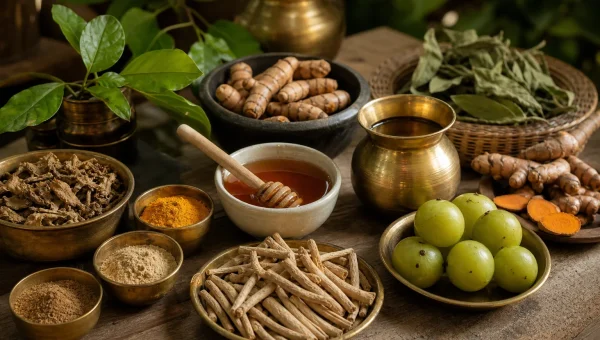
The Five Key Herbs for NASH Support
The following herbs are useful to discuss with an Ayurvedic physician when NASH/MASH is present with metabolic syndrome, elevated liver enzymes, fatty infiltration, or fibrosis risk. The safest plan is individualized by constitution, bowel pattern, liver-test trend, medications, fibrosis stage, and the presence or absence of autoimmune liver disease.
1. Katuki (Picrorhiza kurroa) — The Bitter Yakrit Herb
Katuki, classically named Katuka, is one of Ayurveda’s important bitter herbs for Yakrit-related and Pitta-Kapha patterns. The Ayurvedic Pharmacopoeia of India describes Katuki as Katu-Tikta in taste, Laghu in quality, Ushna in potency, Katu in post-digestive effect, and having actions such as Dipani, Bhedini, Pittahara, and Jvarahara. Its classical uses include Kamala, Daha, Jvara, Arocaka, and Kushta, making it especially relevant when liver stress is accompanied by poor appetite, heaviness, sluggish bowel movement, heat, and metabolic stagnation.
For NASH support, Katuki is best viewed as a targeted physician-guided herb rather than a daily wellness supplement. It suits patients with Pitta-Kapha obstruction, poor bile flow symptoms, constipation tendency, coated tongue, and a feeling of abdominal heaviness. Because it is bitter, potent, and mildly purgative in many individuals, it should not be casually combined with multiple other strong liver herbs.
Classical dose range: the Ayurvedic Pharmacopoeia lists Katuki powder at 1-3 g. Extract dose should be decided by a practitioner according to product strength and patient tolerance. Use authenticated, cultivated or responsibly sourced material, because Picrorhiza kurroa is a conservation-sensitive Himalayan plant. Avoid self-use during pregnancy, severe diarrhea, frailty, advanced cirrhosis, or decompensated liver disease.
2. Bhumi Amla / Tamalaki (Phyllanthus fraternus; Phyllanthus niruri group) — The Pitta-Meda Liver Support
Bhumi Amla, classically listed as Tamalaki in the Ayurvedic Pharmacopoeia of India, is identified there as Phyllanthus fraternus Webster, with Phyllanthus niruri Hook.f. non Linn. noted in synonymy. It is described as Madhura-Tikta-Kashaya in taste, Laghu and Ruksha in quality, Shita in potency, Madhura in post-digestive effect, and having actions such as Mutrala, Rocana, Dahanashani, and Pittashamaka. Classical indications include Amlapitta, Pandu, Prameha, Trsha, Mutraroga, and related Pitta-Meda presentations.
In a NASH-oriented plan, Bhumi Amla is most useful where fatty liver is accompanied by Pitta signs such as acidity, heat, thirst, irritability, bitter taste, or burning sensation, along with metabolic markers such as prediabetes or dyslipidemia. Botanical identity matters because commercial “Phyllanthus” products may vary by species, plant part, extraction method, and strength.
Classical dose range: the Ayurvedic Pharmacopoeia lists Tamalaki fresh juice at 10-20 ml and powder at 3-6 g. When combined with Katuki, dosing should be conservative and supervised, especially if liver enzymes are already abnormal or the patient is taking antidiabetic, anticoagulant, lipid-lowering, or hepatology medicines.
3. Guduchi (Tinospora cordifolia) — The Rasayana and Metabolic Support
Guduchi is described in the Ayurvedic Pharmacopoeia of India as Tikta-Kashaya in taste, Laghu in quality, Ushna in potency, Madhura in post-digestive effect, and having actions such as Balya, Dipana, Rasayana, Sangrahi, Tridoshashamaka, Raktashodhaka, and Jvaraghna. Its listed indications include Jvara, Kushta, Pandu, Prameha, Vatarakta, and Kamala, placing it in a useful position for chronic metabolic, inflammatory, and liver-associated patterns.
For NASH support, Guduchi is best suited when liver stress is accompanied by fatigue, low resilience, Prameha tendency, inflammatory reactivity, recurrent low-grade feverishness, or post-illness weakness. It is not merely a “liver cleanser”; it is a Rasayana-type support that should be chosen according to constitution, digestion, bowel pattern, and immune history.
Classical dose range: the Ayurvedic Pharmacopoeia lists Guduchi stem powder at 3-6 g and decoction prepared from 20-30 g of the drug. Because liver injury has been reported in some people using Tinospora products, especially where autoimmune hepatitis is known or suspected, Guduchi should be used only with professional guidance in NASH. Stop and seek medical review if jaundice, dark urine, severe itching, unusual fatigue, right-sided abdominal pain, or liver-enzyme worsening appears.
4. Kumari / Kanyasara (Aloe barbadensis, Aloe vera) — The Bhedana and Metabolic Adjunct
Kumari is widely known as aloe, but Ayurvedic and commercial aloe preparations are not all the same. The Ayurvedic Pharmacopoeia of India lists Kanyasara as the dried juice of leaves of Aloe barbadensis Miller, with actions such as Bhedi, Pittanirharana, Rajahpravartaka, and Jvaranut, and indications that include Udararoga and Yakrdvikara. This classical preparation is stronger and more purgative than ordinary food-grade inner aloe gel.
In a NASH plan, aloe is useful only when selected carefully. Fresh inner leaf gel or properly processed decolorized aloe products are very different from aloe latex, the yellow bitter layer near the rind. Oral aloe latex is not appropriate as a daily liver tonic and may cause cramping, diarrhea, electrolyte disturbance, kidney injury, or dangerous dehydration in susceptible people.
Classical dose range: the Ayurvedic Pharmacopoeia lists Kanyasara powder at 125-500 mg. For home use, do not scrape or consume the yellow latex layer. Patients with diarrhea, kidney disease, pregnancy, inflammatory bowel disease, advanced liver disease, or use of diuretics, digoxin, diabetes medicines, or anticoagulants should avoid unsupervised aloe use.
5. Amalaki (Emblica officinalis / Phyllanthus emblica) — The Gentle Rasayana Foundation
Amalaki is one of Ayurveda’s most important Rasayana herbs and is generally better suited for longer-term support than harsher purgative herbs. The Ayurvedic Pharmacopoeia describes Amalaki as having five tastes except Lavana, with Amla prominent; Laghu and Ruksha qualities; Shita potency; Madhura post-digestive effect; and actions such as Tridoshajit and Rasayana. Its listed uses include Amlapitta, Prameha, Daha, and Raktapitta-related presentations.
For NASH support, Amalaki is especially useful where metabolic liver disease coexists with acidity, heat, oxidative stress, dyslipidemia tendency, or fatigue after digestion has become irregular. It can be used as a foundation herb in many plans because it is gentler than Katuki or aloe latex-type preparations and pairs well with dietary correction.
Classical dose range: the Ayurvedic Pharmacopoeia lists dried Amalaki powder at 3-6 g and fresh juice at 5-10 ml. Patients on antidiabetic or anticoagulant medicines should still discuss regular use with a clinician, because metabolic markers and medication needs may change as diet and weight improve.
A Stage-Based Adjunct Plan
NASH/MASH staging should be guided by a hepatologist using liver enzymes, platelet count, FIB-4, ultrasound, transient elastography, MRI-based assessment, biopsy when indicated, and metabolic-risk review. Ayurveda can be layered as an adjunct, but the intensity of herbal therapy must decrease as cirrhosis risk increases.
| Clinical Situation | Ayurvedic Emphasis | Herbs to Discuss | Monitoring |
|---|---|---|---|
| MASLD / fatty liver without fibrosis or active inflammation | Agni correction, Meda-Kapha reduction, daily movement, early metabolic correction | Amalaki, Guduchi, or Tamalaki according to constitution and symptoms | ALT, AST, GGT, HbA1c, fasting lipids, waist circumference, and weight trend |
| Early NASH/MASH with F1-F2 fibrosis or persistent enzyme elevation | Deepana-Pachana, Pitta-Meda management, bowel regularity, strict diet correction | Short supervised Katuki course with Tamalaki or Amalaki; avoid stacking many extracts | Liver panel at clinician-set intervals; FIB-4 and elastography as advised |
| Significant fibrosis, commonly F2-F3 | Conservative adjunctive care, no aggressive cleansing, coordinated medical management | Individualized low-intensity plan; consider whether the patient is eligible for approved hepatology treatment | Hepatologist review, fibrosis assessment, platelet count, liver panel, diabetes and lipid control |
| Cirrhosis risk or F4 / decompensated liver disease | Safety-first supportive care only | No self-directed purgatives, detoxes, latex aloe, or strong multi-herb protocols | Specialist-led surveillance for complications, varices, ascites, encephalopathy, and liver cancer risk |
Dietary Protocol: The Agni-Meda Connection
No herbal plan for NASH can succeed without dietary and lifestyle transformation. In Ayurvedic terms, the core work is Langhana for Meda-Kapha excess, Deepana-Pachana for weak or obstructed Agni, and removal of Ama-forming habits. This means reducing refined flour, sugar, sweet drinks, frequent snacking, deep-fried foods, excess dairy sweets, alcohol, and heavy late dinners. Meals should be warm, simple, protein-adequate, fiber-rich, and built around vegetables, legumes when tolerated, whole grains in measured portions, and bitter or astringent foods such as methi, karela, leafy greens, turmeric, and amla.
Modern liver-care targets align with this discipline: sustained weight reduction can reduce liver fat, greater weight loss may improve inflammatory activity, and larger sustained reduction is associated with better fibrosis outcomes. A Mediterranean-like dietary pattern, avoidance of sugary beverages and ultra-processed foods, and regular physical activity are central. A practical minimum exercise target is more than 150 minutes per week of moderate activity or an equivalent vigorous routine, adjusted for age, fitness, cardiac status, and joint health.
For further reading on the metabolic connection between gut, inflammation, and skin, see the article on the gut-skin axis and Rakta Pitta theory. The Daruharidra and berberine comparison to metformin is also relevant for the metabolic syndrome component of fatty liver disease.
When to Stop Herbs and Seek Medical Review
Stop herbal products and seek medical care promptly if jaundice, dark urine, pale stool, severe itching, new right-upper-abdominal pain, persistent vomiting, swelling of the legs or abdomen, confusion, black stools, vomiting blood, rapid unexplained weight loss, or sudden worsening fatigue occurs. Also stop and review the plan if ALT, AST, bilirubin, INR, or platelet count worsens after starting an herb.
Safety disclaimer: NASH/MASH is a serious progressive liver condition that requires medical diagnosis and monitoring. Ayurvedic herbs should be used as adjuncts, not replacements for hepatology care, diet therapy, weight management, diabetes control, lipid management, and approved medical treatment when indicated. Consult a qualified Ayurvedic practitioner and a healthcare provider before using Katuki, Guduchi, Bhumi Amla, Kumari, Amalaki, or any liver formula, especially during pregnancy, breastfeeding, autoimmune hepatitis, cirrhosis, kidney disease, gallbladder disease, diabetes-medication use, anticoagulant use, immunosuppressant use, or when taking statins, GLP-1 medicines, SGLT2 inhibitors, or resmetirom.
References
- Sigeitalia (sigeitalia.it)
- FDA
- Charaka Samhita — Udara Chikitsa
- Ayurvedic Pharmacopoeia of India
- Ayurvedic Pharmacopoeia of India
- Ayurvedic Pharmacopoeia of India
- A study of standardized extracts of Picrorhiza kurroa Royle ex Benth in experimental nonalcoholic fatty liver disease (2010), PubMed Central
- Iucnredlist (iucnredlist.org)
- Ayurvedic Pharmacopoeia of India
- Phyllanthus Niruri Standardized Extract Alleviates the Progression of Non-Alcoholic Fatty Liver Disease and Decreases Atherosclerotic Risk in Sprague-Dawley Rats (2017), PubMed Central
- Effects of one-year supplementation with Phyllanthus niruri on fibrosis score and metabolic markers in patients with non-alcoholic fatty liver disease: A randomized, double-blind, placebo-controlled trial (2023), PubMed Central
- Mechanism of protective effect of phyllanthin against carbon tetrachloride-induced hepatotoxicity and experimental liver fibrosis in mice (2015), PubMed
- NCBI
- Tinospora Cordifolia (Giloy)-Induced Liver Injury During the COVID-19 Pandemic-Multicenter Nationwide Study From India (2022), PubMed Central
- Metabolic effects of aloe vera gel complex in obese prediabetes and early non-treated diabetic patients: randomized controlled trial (2013), PubMed
- Anti-inflammatory and anti-oxidant effects of aloe vera in rats with non-alcoholic steatohepatitis (2020), PubMed Central
- Mayoclinic (mayoclinic.org)
- A randomized, double blind, placebo controlled, multicenter clinical trial to assess the efficacy and safety of Emblica officinalis extract in patients with dyslipidemia (2019), PubMed Central
- Hepatoprotective properties of the Indian gooseberry (Emblica officinalis Gaertn): a review (2013), PubMed
- NCCIH
the Liver Agni restoration protocol does the phased dietary approach (removing Kapha-forming foods before adding Pitta-pacifying ones) have a clinical timeline?
That’s a legitimate concern for sure, but the article actually does mention fibroscan as a baseline assessment in the protocol — the Ayurvedic approach here seems to be positioned as adjunctive rather than a substitute for conventional staging. The timeline question you raise about the dietary phasing is what I’m more curious about.
That’s reassuring to hear alongside the cirrhosis caution raised above. Did you continue fibroscan monitoring throughout, or rely on LFTs alone? Three months is a short window for structural change but an ALT drop that significant suggests something real is happening.
@Stephanie the cited herb evidence for NASH is mostly small animal or in-vitro studies. human clinical trial data for Kutki or Bhumyamalaki in NASH specifically is very limited.
for NASH with fibrosis (F2-F3 on fibroscan), does the herbal protocol change? the hepatocyte turnover rate affects herb metabolism.
At F2-F3 I’d imagine the Pitta-reducing herbs need to be more aggressive and the dietary restriction tighter — but I’m curious whether the author modifies Kutki dosage at that stage given the hepatotoxicity concerns at higher doses in already-compromised liver tissue. That seems like the clinical tightrope here.
nASH can progress to cirrhosis. any protocol that delays confirmation of fibrosis stage via fibroscan or liver biopsy risks allowing silent progression. नमस्ते
The distinction this post draws between NAFLD and NASH management is something I’ve not seen addressed in Ayurvedic writing before — most articles treat them as interchangeable. The emphasis on active hepatocyte damage rather than just fat accumulation changes the herb selection considerably if I’m reading this right.
is the Bhumyamalaki protocol safe alongside statins which are sometimes prescribed for NAFLD with concurrent dyslipidemia?
The case study here is striking — a patient who did everything right by conventional metrics (weight loss, HbA1c improvement) and still had NASH progression. It’s exactly the kind of metabolic gap the Pitta-Kapha framing might help explain. Has the author seen similar presentations where weight loss alone was insufficient?
Kutki is CITES-listed and sometimes adulterated. the article should address Andrographis paniculata (Kalmegh) as a more accessible substitute.
@Rakesh is the Bhumyamalaki protocol safe alongside statins which are sometimes prescribed for NAFLD with concurrent dyslipidemia?
@Susan for NASH with fibrosis (F2-F3 on fibroscan), does the herbal protocol change? the hepatocyte turnovrr rate affects herb metabolism.
NASH advice should stay careful. liver fat with inflammation is not the same as simple digestion issue
the cited herb evidence for NASH is mostly small animal or in-vitro studies. human clinical trial data for Kutki or Bhumyamalaki in NASH specifically is very limited.
Noted.
The case study really shows how NAFLD can evolve despite weight loss and improved HbA1c, highlighting the shift to NASH.
the advanced NASH protocol makes more clinical sense than the generic NAFLD articles. thr Pitta-Kapha combination framing matches my clinical presentation and my hepatologist is open to the adjunctive approach.
Interesting.
kutki + Kalmegh + Bhumyamalaki combination alongside dietary changes my ALT dropped from 87 to 52 in 3 months. not definitive bur encouraging.
I found the breakdown of the five herbs especially helpful for understanding dosing, especially the caution around Katuki.
@Steve kutki is CITES-listed and sometimes adulterated. the article should address Andrographis paniculata (Kalmegh) as a more accessible substitute.
@Anjali the cited herb evidence foe NASH is mostly small animal or in-vitro studies. human clinical trial data for Kutki or Bhumyamalaki in NASH specifically is very limited. 🙏
@Karthik doing this.
the Liver Agni restoration protocol does the phased dietary approach (removing Kapha-forning foods before adding Pitta-pacifying ones) have a clinical timeline? tbh
One question I have is whether the Guduchi dosage interacts with common diabetes meds like metformin.
@Anjali the Liver Agni restoration protocol does the phased dietary approach (removing Kapha-forming foods before adding Pitta-pacifying ones) have a clinical timeline?
@Rekha the Liver Agni restoration protocol does the phased dietary approach (removing Kapha-forming foods before adding Pitta-pacifying ones) have a clinical timeline?
testing slowly is fine but liver cases need repeat labs. otherwise nobody knows if it is working
Will try!
After reading about Katuki’s endangered status, I’ll look for certified cultivated sources before trying any supplement.
@Nandini kutki is CITES-listed and sometimes adulterated. the article should address Andrographis paniculata (Kalmegh) as a more accessible substitute.
@Ravi the cited herb evidence for NASH is mostly small animal or in-vitro studies. human clinical trial data for Kutki or Bhumyamalaki in NASH specifically is very limited.
one week plan is too short for NASH maybe. better to show 12 week food and walk framework
It seems the protocol emphasizes diet as much as herbs, which matches what I’ve heard about Mediterranean eating patterns for liver health.
@Aarti nASH can progress to cirrhosis. any protocol that delays confirmation of fibrosis stage via fibroscan or liver biopsy risks allowing silent progression.
Perhaps the most surprising point was that simple steatosis treatments often fail for NASH because inflammation and fibrosis need different approaches.