
Long-simmered bone broth belongs in an Ayurvedic kitchen as a strengthening, Vata-soothing food, not as a fashionable cure-all. Its closest classical category is Mamsa Rasa, meat essence or meat soup, a preparation valued for nourishment when Agni can handle it. Prepared with gentle heat, ghee, digestive spices, and patience, it is most appropriate in cold weather, during recovery, and in people who feel dry, depleted, or Vata-aggravated. For those who do not eat meat, the sesame-mudga dal below gives a lighter, vegetarian way to support the same nourishing intent.
Bone Broth and Asthi Dhatu: The Ayurvedic Connection
Ayurveda describes seven dhatus: Rasa, Rakta, Mamsa, Meda, Asthi, Majja, and Shukra/Artava. Asthi Dhatu, the bone tissue, is the fifth in this sequence, so bone nourishment is not separate from digestion, daily food quality, tissue-building capacity, and the state of Vata dosha. A warming, unctuous, well-spiced broth supports this traditional logic by combining nourishment with digestibility rather than asking a weak Agni to process a heavy food without help.
The closest classical frame for bone broth is Mamsa Rasa, a meat-soup preparation described as strengthening, satisfying, and nourishing. Charaka also includes meat soup among foods used for Brimhana, the building and strengthening approach used when the body is depleted. This does not make broth a one-cup cure for bone weakness; it makes it a sensible winter food when the person, season, and digestive capacity all match the preparation.
Cold seasons are traditionally treated as a time for deeper nourishment because digestive fire is considered stronger when external cold restrains bodily heat inward. In Hemanta and Shishira, warm, unctuous, nourishing foods with sweet, sour, and salty tastes are favored when digestion is strong. In hot weather, during heaviness, or when Agni is dull, the same broth should be reduced, made lighter with chicken bones, or replaced with a simpler Mudga soup.
From a nutrition perspective, bone broth is mainly a warm protein-and-gelatin-rich food made by simmering collagenous bones and connective tissue. During cooking, collagen breaks down toward gelatin and yields amino acids such as glycine, proline, and hydroxyproline. It may contain small amounts of minerals depending on the bones and cooking method, but it should not be treated as the sole calcium source for bone health. Its practical value lies in warmth, protein, unctuousness, steady use, and the way spices make a dense food easier to digest.
Traditional Ayurvedic-Style Bone Broth Recipe
This recipe keeps the original spirit of a long-cooked strengthening broth while making the method more aligned with Ayurvedic digestion principles. The ghee and spices are not decorative: they make the broth warmer, more aromatic, and easier to digest, especially for Vata-prone people in the colder months.
Prep time: 15 minutes
Cook time: 8-12 hours for chicken bones; 12-18 hours for goat bones
Yield: About 8 cups
Dosha suitability: Best for Vata when Agni is good; suitable for Pitta in moderate amounts with less pepper and ginger; Kapha should use smaller portions with stronger spices and avoid daily heavy use
Ingredients:
- 1 kg mixed bones, such as goat marrow and knuckle bones, or a chicken carcass for a lighter broth
- 12 cups water
- 1-2 tablespoons lemon juice or apple cider vinegar
- 1 tablespoon Ghee
- 1 inch fresh Ardraka (ginger), sliced
- 1/2 teaspoon Haridra (turmeric) powder
- 1 teaspoon Jeeraka (cumin) seeds
- 1/4-1/2 teaspoon Maricha (black pepper), cracked
- 2 bay leaves
- 1 teaspoon Saindhava Lavana (rock salt), or to taste
- A small pinch of Hingu (asafoetida)
Method:
- If using raw bones, place them in a pot, cover with cold water, bring to a boil for about 10 minutes, then drain and rinse. This gives a cleaner-tasting broth.
- In a heavy-bottomed pot or slow cooker, warm the ghee. Add cumin seeds and let them become aromatic. Add ginger, turmeric, and asafoetida, and stir briefly on low heat.
- Add the bones, fresh water, and lemon juice or vinegar. The mild acidity helps draw flavor from the bones and connective tissue, but the broth should still be understood primarily as a protein-and-gelatin food, not as a mineral supplement.
- Add bay leaves, cracked black pepper, and rock salt.
- Bring to a gentle boil, then reduce to the lowest steady simmer. Keep the pot partially covered.
- Simmer chicken bones for 8-12 hours or goat bones for 12-18 hours. Skim foam during the first hour if needed.
- Strain through a fine mesh sieve. When cooled, a good broth may become jelly-like because of gelatin extracted from collagen-rich tissue.
Storage: Cool promptly, refrigerate in clean glass jars, and use within 3-4 days. For longer storage, freeze in small portions and use within 3-4 months. Reheat thoroughly on the stove until hot before drinking.
How to consume: Start with 1/2 cup warm broth, especially if you are new to it. If digestion feels clear and light, increase to 1 cup. Morning or early evening is suitable for many Vata-prone people, while Kapha types usually do better with a smaller portion, more ginger, and no late-night use. It can also be used as the liquid base for soups, rice gruel, or thin dal.
Why the Spices Matter
The spices in this broth are chosen to make a heavy, nourishing food more compatible with Agni. Their role is to warm, awaken appetite, reduce gas, and keep the broth from becoming dull or clogging in the digestive tract.
- Turmeric (Haridra): Traditionally described with bitter and pungent taste, dry quality, heating potency, and pungent post-digestive effect. In this recipe, it adds warmth, color, and a cleansing edge to an otherwise dense preparation.
- Black pepper (Maricha): Used in small culinary quantity to sharpen the broth and complement turmeric. Its piperine content is one reason black pepper is commonly paired with turmeric in modern formulations.
- Ginger (Ardraka): A classic fresh spice for kindling appetite and supporting the digestion of heavier foods. It is especially useful when Vata coldness, bloating, or sluggish digestion accompanies depletion.
- Cumin (Jeeraka): Light, warming, aromatic, and traditionally used for Dipana and Pachana, meaning it supports appetite and digestion.
- Asafoetida (Hingu): A strong Vata-Kapha pacifying spice used in tiny amounts for gas, heaviness, and the digestion of dense foods. It should be used sparingly because of its intensity.
- Ghee: Adds unctuousness, improves palatability, and makes the broth more Vata-friendly. Use modestly if Kapha is high or digestion feels slow.
The Vegetarian Asthi-Nourishing Sesame Mudga Dal
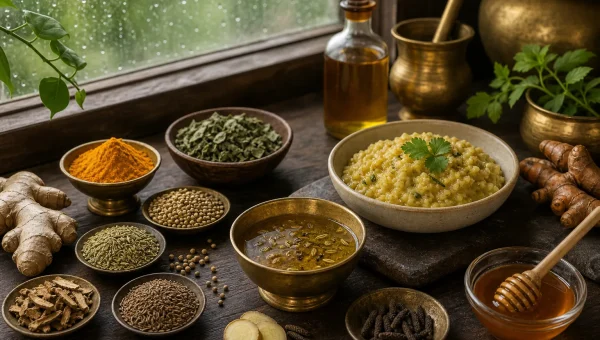
No vegetarian preparation is identical to bone broth, but a carefully prepared dal can support the same winter-nourishing intention. This version uses Mudga for digestibility, Tila for strength and unctuousness, moringa leaves for mineral-rich food value, and the same Agni-supportive spices used in the broth.
Prep time: 10 minutes, plus soaking
Cook time: 40-45 minutes
Yield: 4 servings
Dosha suitability: Generally balanced when served warm and well-spiced; reduce sesame and ghee for Kapha; reduce black pepper and ginger for high Pitta
Ingredients:
- 1 cup Mudga (whole moong dal), soaked for 4 hours
- 1/4 cup white Tila (sesame seeds), lightly toasted and coarsely ground
- 1 tablespoon tahini or sesame paste, optional
- 1-2 tablespoons Ghee
- 1/2 cup fresh moringa leaves (Shigru Patra), or 1 tablespoon moringa leaf powder
- 1/2 teaspoon Haridra (turmeric)
- 1 teaspoon Jeeraka (cumin) seeds
- 1 inch fresh ginger, grated
- 4 cups water, plus more as needed
- Rock salt to taste
- A few drops of lemon juice after cooking, optional
Method:
- Drain the soaked moong dal. Warm ghee in a heavy pot and add cumin seeds.
- When aromatic, add grated ginger and turmeric. Stir briefly on low heat.
- Add the dal and water. Bring to a boil, then simmer covered until the dal becomes soft and begins to break down.
- Stir in the ground sesame seeds and optional tahini. Add more hot water if the dal becomes too thick.
- Add moringa leaves during the last 5 minutes of cooking so they soften without losing their fresh character.
- Turn off the heat, add rock salt, and finish with a few drops of lemon juice if desired.
- Serve warm as a soup-like dal rather than a dry, heavy preparation.
The sesame is important but should be used intelligently. Classical sources describe Tila as heavy, unctuous, warming, strengthening, Vata-pacifying, and supportive in conditions involving bone injury or weakness. Because it is also heavy, it is best toasted, ground, cooked, and paired with ginger, cumin, and turmeric rather than eaten cold in large quantities. Moringa leaves add a calcium-rich green component, while moong keeps the preparation lighter than most other legumes.
Practical Guidance for the Season
Start with the lighter version of the protocol. If you eat meat, begin with chicken bone broth at 1/2 cup daily for several days before moving to goat bone broth or larger portions. If you are vegetarian, take the sesame-mudga dal three or four times per week in winter, served warm and soupy. In both cases, the sign of suitability is clear digestion: warmth, comfort, steady appetite, and no heaviness after eating.
For Vata-prone people, these foods pair well with regular warm oil care such as Abhyanga, adequate sleep, consistent meal timing, and protection from cold wind. For Kapha-prone people, keep portions smaller, use more ginger and black pepper, and avoid combining broth with very heavy meals. For Pitta-prone people, use less pepper, avoid excess sourness, and favor moderate portions rather than daily intensity.
Bone-supportive food works slowly because it belongs to a deeper nourishment strategy, not a quick external fix. Broth, sesame dal, ghee, spices, sleep, sunlight, movement, and good digestion all matter. The goal is not to force heaviness into the body, but to provide steady, warm, well-digested nourishment through the season that most welcomes it.
Nothing in this article diagnoses or treats a medical condition. Use these preparations as educational food guidance and consult a qualified Ayurvedic practitioner or healthcare provider before starting herbs, supplements, detoxes, or therapeutic protocols, especially if pregnant, managing a medical condition, recovering from surgery, following sodium restrictions, or taking medication.
References
- Rkamc (rkamc.org.in)
- Easyayurveda (easyayurveda.com)
- Easyayurveda (easyayurveda.com)
- Health (health.clevelandclinic.org)
- Health (health.harvard.edu)
- Essential and toxic metals in animal bone broths (2017), PubMed Central
- 24-Week study on the use of collagen hydrolysate as a dietary supplement in athletes with activity-related joint pain (2008), PubMed
- Ia800501 (ia800501.us.archive.org)
- Influence of piperine on the pharmacokinetics of curcumin in animals and human volunteers (1998), PubMed
- Foodstruct (foodstruct.com)
- Foodstruct (foodstruct.com)
- M (m.andrafarm.com)
- NIH Office of Dietary Supplements
- NIH Office of Dietary Supplements
- Fsis (fsis.usda.gov)
- Hopkinsmedicine (hopkinsmedicine.org)
Elumbu Rasam is what my family has called it for generations too. The low flame from morning to evening is exactly how my grandmother prepared it. This article finally gives me the Ayurvedic pharmacological explanation for why it worked the way it did.
I would like more detail on Bone Broth in Ayurveda. The practical details matter more than people think.
I would like more detail on Bone Broth in Ayurveda. Small daily changes are easier to follow than a perfect plan.
Is there a vegetarian alternative that achieves similar Asthi Dhatu nourishing effects? I don’t eat meat but I have osteopenia and the bone tissue support principle interests me as a therapeutic direction.
The slow cooking extraction of collagen and the gelatin it forms on cooling is chemistry that supports the therapeutic claims around joint and gut health. The mechanism isn’t mystical. It’s just food biochemistry that modern processed food culture abandoned.
What’s the ideal cooking duration for maximum glycosaminoglycan extraction? I’ve seen recommendations from 4 hours to 24 hours and the variation makes me unsure whether my 8-hour preparations are achieving the full therapeutic benefit.
The post-fracture healing application is what I tried when my father had a hairline stress fracture last year. Added the Ayurvedic broth preparation to his diet alongside standard management. His orthopedist was surprised at the healing speed at the six-week imaging.
The image of a clay pot simmering all day in a Kerala kitchen really brings the tradition to life.
I’d want clarity on the gelatin versus collagen peptide debate. Boiled broth contains gelatin which requires intestinal digestion to release collagen peptides. Commercial hydrolyzed collagen is pre-digested. For someone with compromised gut function, does the traditional broth preparation actually deliver collagen peptides effectively?
my joints are noticeably better since I started making weekly bone broth with the spice additions from this recipe. been doing it for four months. previous interventions for the same joint complaints hadn’t moved the needle after two years. this did.
Learning that Asthi Dhatu is the fifth tissue layer helped me see why bone health takes time.
The gut barrier support from bone broth gelatin is the application I find most evidence-based. The glutamine and proline content directly support enterocyte function. Joint health effects are more contested.
I appreciate the explanation about sequential nourishment from plasma to bone.
I was dismissive of bone broth as a trend until I read the Charaka classification you reference here. When the preparation is specified in classical pharmacological texts with therapeutic indications that match what modern glycobiology would predict, it deserves more respect than trend status.
The winter timing makes sense because Agni is stronger when it’s cold.
Adding turmeric and black pepper together seems like a smart way to boost absorption.
I wonder how the ginger influences digestion of such a rich broth.
The vegetarian dal with sesame and moringa looks like a thoughtful alternative for plant based eaters.
Using apple cider vinegar to pull minerals from bones is a step I hadn’t considered before.
Storing the broth in glass jars and reheating gently on the stove preserves its quality.
I liked the tip to start with chicken bones if you’re new to the practice.
The recommendation to drink a cup warm before breakfast feels easy to incorporate.
kitchari fast for 3 days reset something in my gut. hard to describe but lighter and clearer
would love a follow-up article on the same topic but for elderly patients
I wish more doctors knew about this approach
I tried something similar on my own without guidance and had side effects. really recommend consulting a vaidya first
Seeing the reference to Charaka Samhita gave the practice a solid historical base.
not sure if its the herbs or the diet changes that made the difference
नमस्ते, this is exactly what I was looking for 🙏
For joint support committing to three months of regular consumption seems reasonable.
would prefer more citations in the text itself
💯 the basic concepts here match what I learned in my yoga teacher training
Will try
tried the fennel seed protocol after meals for 3 weeks. bloating reduced significantly but my appetite increased a lot too
tried 3 of the suggestions here. 2 worked well, 1 made no difference. good enough ratio for me
🙌 useful info but hard to find a practitioner who does this type of treatment outside major cities
My nutritionist sent me this link 🌿
💯 been doing this for 6 months, amazing difference in energy levels
triphala at night works but gives me cramps if I take more than 500mg. the article suggests 3g which seems high
Useful post on Bone Broth in Ayurveda. I appreciate that it does not oversell the result.
Useful post on Bone Broth in Ayurveda. The main idea is clear even if someone is new to Ayurveda.
has anyone noticed IBS symptoms getting worse on high hing doses? I had that reaction
🙌 the mandagni vs vishmagni distinction is what I was missing. I thought all slow digestion was the same
which of these approaches works best for Kapha constitution? the article mixes all three doshas
the translation of Sanskrit terms throughout helps a lot for those of us learning this system
Good read
does anyone know if these herbs are safe while on blood thinners? would really appreciate a response
Thanks!
✨ agni concept finally clicked for me reading this. it explains why I digest the same food differently depending on stress levels
IBS protocol section should address SIBO separately. the treatments overlap but they’re not the same condition
Very helpful, thank you ठीक है
the seasonal rotation idea is something I had never considered before धन्यवाद
not sure about some of the claims here. would like to see proper citations for the traditional references
just found this via Google search, is the protocol here still the current recommendation? 🙌
Doing this
been following this blog for 6 months and this is one of the more grounded posts
the quality of herbs varies so much between brands. really hard to replicate these results
does the approach differ for someone with multiple doshas elevated at once?
good information but the references section would make this much more credible