Hair Oiling After Gym: Getting the Timing and Oils Right for Active Men
Hair oiling can fit a serious training schedule, but it has to be timed around sweat, sebum, and washing. In Ayurveda, oiling is not treated as a random cosmetic habit: murdhni taila (oiling the head), abhyanga (oil massage), and bathing are part of daily-regimen thinking, with oiling used to support the scalp, hair roots, comfort, and resilience, while bathing removes sweat and dirt. For active men, the practical question is not whether oiling is “good” or “bad,” but how to make hair oiling gym workout scalp care clean, light, and compatible with frequent sweating.
The traditional idea of snehana works best for gym-goers when the amount of oil is reduced, heavier oils are reserved for rest days, and sweat is rinsed before any scalp oil is applied. This keeps the Ayurvedic intent intact—nourishing and protecting the scalp—without leaving a heavy film through repeated workouts.
Why Post-Workout Scalp Care Matters
Exercise increases body heat and sweating. Sweat is mostly water, but it also carries electrolytes and small compounds such as urea; when it dries on the scalp, it can leave a salty residue that mixes with sebum, dust, and styling products. The scalp is naturally rich in hair follicles and sebaceous glands, and sebum helps lubricate the skin and hair. The problem for many active men is not sebum itself, but leaving sweat, oil, and product residue layered together around the scalp after repeated workouts.
Ayurvedically, this is a simple sequence problem: remove sveda and mala first, then apply sneha. Oiling a sweaty scalp before rinsing is not the same as oiling a clean, slightly damp scalp. The first adds heaviness; the second gives the scalp a controlled, nourishing application.
Men who are prone to dandruff, itching, greasy flakes, or seborrheic dermatitis should be especially careful with heavy oiling. Seborrheic dermatitis commonly appears in oily areas such as the scalp, and Malassezia yeasts are lipid-loving organisms involved in dandruff and seborrheic dermatitis patterns. This does not mean all oils must be avoided, but it does mean short-contact, light oiling is usually a better choice than leaving thick oil on the scalp through the next workout.
The Timing Decision: When to Oil, When to Wash
The best timing depends on whether you are training that day, whether your scalp is oily or dry, and whether you are using a light carrier oil or a heavier classical taila. For most active men, the cleanest rule is: do not oil the scalp before a sweaty workout; rinse after training; then oil only if the scalp is clean enough to receive it.
Before a workout: Avoid scalp oiling before vigorous lifting, running, cycling, sports practice, or any session that makes you sweat heavily. Oil, sweat, and friction from helmets, caps, headbands, or towel rubbing can leave the scalp feeling coated. If your hair lengths are very dry, a tiny amount of oil can be used on the ends only, but keep it away from the scalp before training.
Immediately after a workout: Rinse first. Use lukewarm water and gentle fingertip contact to remove sweat and residue from the scalp. Do not scratch with nails. After rinsing, towel-dry until the scalp is damp rather than dripping wet. If you want to oil on a training day, apply a small amount of light oil to the scalp or hair roots after this rinse, not before it.
Evening after training: This is often the best time for active men. Train, rinse or wash, let the scalp settle, then apply a measured amount of oil for one to three hours before washing out, or leave a very light application only if your scalp tolerates it well. Men with oily or dandruff-prone scalps should usually wash oil out the same day.
Rest-day oiling: Rest days are the right time for a deeper Ayurvedic oiling. Bhringaraja taila, Ksheerabala Taila, sesame-based oils, or other practitioner-chosen formulations can be applied more generously on a clean scalp and washed out after a few hours. Overnight oiling is best reserved for men whose scalps are dry, calm, and not prone to itching, greasy flakes, or morning training sweat.
Oil Selection by Hair and Scalp Type
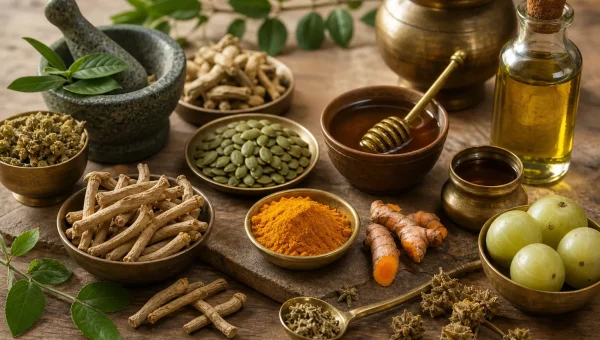
For gym-going men, the best oil is not automatically the heaviest or most traditional one. The base oil matters as much as the herb. Classical Ayurveda gives Bhringaraja a keshya role, and the Ayurvedic Pharmacopoeia describes Bhringaraja with katu and tikta rasa, ruksha and tikshna guna, ushna virya, katu vipaka, and actions including keshya and tvachya. For active men, Bhringaraja can be used in lighter bases such as jojoba, grapeseed, or argan rather than always relying on a heavy sesame base.
| Scalp Situation | Better Oil Choice | How to Use | Wash Timing |
|---|---|---|---|
| Normal scalp, regular training | Bhringaraja in jojoba or grapeseed base | Apply 2-5 ml after a post-workout rinse, mainly to the scalp and roots | Leave 1-3 hours; wash out if scalp feels heavy |
| Oily, itchy, or dandruff-prone scalp | Very light jojoba base with properly diluted Nimba or a mild practitioner-chosen scalp oil | Use a small amount only on the scalp; patch test first | Keep contact short, about 30-60 minutes, then wash out |
| Pattern thinning with frequent workouts | Bhringaraja in jojoba, grapeseed, or argan base | Use gentle scalp massage on thinning zones without rubbing hard | Leave 1-3 hours; do not treat oiling as a replacement for medical care |
| Dry, tight, non-greasy flaking | Sesame-based oil, Ksheerabala Taila, or a mild Bhringaraja taila on rest days | Apply more slowly with gentle massage when no heavy workout follows | Leave a few hours; overnight only if the scalp remains comfortable |
Jojoba is technically a liquid wax rich in wax esters, so it often behaves lighter than many fixed oils. Grapeseed oil is a light cosmetic carrier with fatty acids and phenolic compounds. Argan oil contains unsaturated fatty acids and natural compounds such as tocopherols, polyphenols, squalene, and sterols, making it a useful non-classical carrier when a lighter feel is needed.
Nimba is best treated as a targeted scalp herb, not as a heavy daily oil. Classically, Nimba leaf is described as tikta in taste, ruksha in quality, shita in potency, and katu in post-digestive effect, with traditional use in conditions involving skin, wounds, and microbial or krimi-type presentations. Because neem oil can irritate sensitive skin in some people, it should not be used undiluted on the scalp; patch testing and dilution are important.
The Post-Workout Scalp Rinse Protocol
The post-workout rinse is the step that makes oiling workable for men who train often. Rinse the scalp with lukewarm water after sweaty sessions, using the pads of the fingers to loosen sweat, salt, and residue. Keep the movement gentle: aggressive rubbing may irritate the scalp and can worsen breakage in wet hair. After rinsing, blot with a towel rather than scrubbing.
Shampoo frequency should be based on how oily or dirty the hair and scalp become. Men with oily, straight hair or heavy sweat may need more frequent shampooing, while men with dry, curly, thick, or textured hair may do better with less frequent shampoo and more conditioning on the hair lengths. If oil has been applied to the scalp, wash it out before the next heavy workout unless the application was extremely light and your scalp remains comfortable.
For men who train twice in one day, keep the first rinse simple: water rinse, towel-dry, and avoid oil if another sweaty session is coming soon. After the final session of the day, wash if the scalp is oily or dirty, then apply a small amount of light oil only if the scalp feels calm.
Weekly Plan for Men Who Train Often
A practical weekly rhythm is easier than deciding from scratch every day. The aim is to keep the scalp clean after sweat, use light oil after rinsing, and reserve deeper oiling for days when the oil can be washed out properly.
- Training days: Do not oil the scalp before the workout. Rinse after training. Use 2-5 ml of a light Bhringaraja, jojoba, grapeseed, or argan-based oil only after the scalp is clean and damp.
- Heavy sweat days: Prioritize rinsing or shampooing over oiling. If the scalp feels greasy, itchy, or coated, wash first and skip oil until the next evening.
- Rest day: Use a deeper oiling session with Bhringaraja taila, Ksheerabala Taila, sesame-based oil, or a practitioner-selected formula. Wash out after a few hours.
- Dandruff-prone weeks: Keep oils short-contact. Avoid thick overnight oiling. If flakes, redness, itching, or scaling persist, seek professional care rather than increasing oil.
- Dry scalp weeks: Use smaller but more regular applications, and avoid harsh scrubbing. Dryness without greasiness usually responds better to gentle oiling than to repeated strong washing.
Ksheerabala Taila is a classical oil preparation made with Bala, sesame oil, cow’s milk, and water, and it is used externally for abhyanga. For a gym-going scalp, it is best placed in the rest-day category because it is more suited to slow massage and wash-out use than to being layered onto a sweaty scalp.
Dietary Support for Training Scalp Health
Topical oiling is only one part of scalp care. Hair growth and shedding are also influenced by overall nutrition, especially during hard training, calorie cutting, low-protein dieting, or periods of low iron, zinc, vitamin D, or other nutrient status. Crash dieting during a cutting phase can aggravate shedding in susceptible men, so hair care during training should include adequate calories, enough protein, and mineral-rich foods rather than relying only on oils.
Sesame seeds and pumpkin seeds can be included as mineral-rich foods in a training diet, and Amalaki is a useful Ayurvedic food-herb when tolerated. Classically, Amalaki is described with multiple tastes, shita virya, madhura vipaka, and rasayana and tridoshajit actions; it is also known for constituents such as ascorbic acid and gallotannins. Use amla powder or preparations within appropriate food-level or practitioner-guided amounts, and avoid high-dose supplementation without guidance.
Supplements such as zinc, iron, vitamin D, or biotin should not be added blindly. They are most useful when intake is low or deficiency is identified. If hair shedding began after a severe diet, illness, new medication, intense training block, or rapid weight loss, investigate the cause rather than trying to fix it with stronger oils.
When to Get Medical Help
Oiling can support scalp comfort and grooming, but it is not a stand-alone treatment for every type of hair loss. Androgenetic alopecia is driven by androgen-sensitive follicle miniaturization, and it may coexist with scalp irritation or inflammation. Men with a receding hairline, vertex thinning, rapid shedding, patchy loss, scalp pain, redness, pustules, thick scaling, or sudden changes in hair density should see a dermatologist or qualified healthcare provider for diagnosis and treatment options.
For related Ayurvedic reading, see the alopecia areata treatment guide, the gym recovery abhyanga guide, and the testosterone and vajikarana comparison post.
Medical disclaimer: This article is for educational purposes and does not diagnose, treat, or cure hair loss, dandruff, seborrheic dermatitis, or any medical condition. Consult a qualified Ayurvedic practitioner, dermatologist, or healthcare provider before using medicated oils, herbs, or supplements, especially if you have scalp disease, allergies, rapid hair loss, a medical condition, or are taking medication. Stop any oil or herb that causes burning, rash, itching, swelling, or worsening flakes.
References
- Charaka Samhita — Matrashiteeya Adhyaya
- Mechanisms and controllers of eccrine sweating in humans (2010), PubMed Central
- Recent developments in sweat analysis and its applications (2015), PubMed Central
- Importance of Stratum Corneum Acidification to Restore Skin Barrier Function in Eczematous Diseases (2024), PubMed Central
- NCBI
- Aad (aad.org)
- Aafp (aafp.org)
- Ayurvedic Pharmacopoeia of India
- Jojoba Oil: An Updated Comprehensive Review on Chemistry, Pharmaceutical Uses, and Toxicity (2021), PubMed Central
- Grape Seed Oil Compounds: Biological and Chemical Actions for Health (2016), PubMed Central
- Frontiersin (frontiersin.org)
- Miracledrinksclinic (miracledrinksclinic.com)
- Neem in Dermatology: Shedding Light on the Traditional Panacea (2021), PubMed Central
- Aad (aad.org)
- Natural Ingredient Resource Center
- Diet and hair loss: effects of nutrient deficiency and supplement use (2017), PubMed Central
- The Role of Vitamins and Minerals in Hair Loss: A Review (2019), PubMed Central
- Zinc status in athletes: relation to diet and exercise (2001), PubMed
- Sesame (Sesamum indicum L.): A Comprehensive Review of Nutritional Value, Phytochemical Composition, Health Benefits, Development of Food, and Industrial Applications (2022), PubMed Central
- Miracledrinksclinic (miracledrinksclinic.com)
- NCBI
- The Inflammatory Aspect of Male and Female Pattern Hair Loss (2020), PubMed Central
- Aad (aad.org)
- NCCIH