Long rides can leave the knees, hips, lower back, wrists, feet, and saddle area feeling dry, tight, irritated, or heavy the next morning. The usual cycling recovery basics still matter: a good bike fit, gradual training load, enough calories, protein, electrolytes, mobility work, and sleep. Ayurveda adds another layer to that recovery: restoring warmth, lubrication, steadiness, digestion, and tissue nourishment after a long period of repetitive movement and wind exposure.
This protocol keeps the practical cyclist’s goal simple: calm aggravated Vata, support Dhatu Poshana or tissue nourishment, protect the joints, and keep the body ready for the next ride without ignoring modern red flags such as swelling, numbness, sharp pain, fever, infection, or persistent loss of function.
Why Long Rides Aggravate Vata
Ayurveda describes Vata with qualities such as dry, cold, light, rough, subtle, and mobile. Long-distance cycling has many of the same qualities: constant movement, wind exposure, repetitive pedaling, vibration through the hands and spine, and prolonged time in one posture. When recovery is insufficient, a rider may feel more cracking, stiffness, restlessness, dryness, fatigue, or variable pain, especially around the joints and lower back.
Classical Ayurveda does not discourage exercise. It praises properly measured exercise for lightness, strength, stability, digestive power, and tolerance. At the same time, the Charaka Samhita warns that excessive exercise can lead to fatigue, depletion, thirst, exhaustion, and other signs of overstrain. For cyclists, the Ayurvedic lesson is not “ride less” by default; it is “recover in proportion to the ride.”
The Post-Ride Protocol: First 90 Minutes
The first phase after a long ride should move the body from cold, dry, mobile, and depleted toward warm, lubricated, grounded, and nourished. Keep the sequence simple: warm oil, warm water, warm food or drink, and rest. Do not apply heat or vigorous massage over acute swelling, fresh injury, open wounds, suspected fracture, infection, or unexplained severe pain.
Step 1: Warm Oil Self-Massage – 10 to 15 Minutes
Warm oil self-massage, or Abhyanga, is one of Ayurveda’s most practical tools for Vata-heavy recovery. Use plain sesame oil, Mahanarayana Taila, Bala Taila, or another oil recommended by a qualified practitioner. Warm 20 to 40 ml of oil by placing the oil container in hot water; the oil should feel comfortably warm, never hot.
Apply the oil to the knees, quadriceps, calves, ankles, soles, lower back, neck, shoulders, wrists, and hands. Use circular movements around the knees and ankles, long strokes along the thighs and calves, and gentle kneading over the palms and forearms. Keep the pressure firm but comfortable. The aim is not to punish sore tissue; it is to restore warmth, circulation, softness, and steadiness after repetitive exertion.
Step 2: Warm Shower or Bath
After the oil has remained on the body for 10 to 20 minutes, take a warm shower. Let warm water run over the lower back, knees, hips, and shoulders. Use mild soap only where needed, because aggressively scrubbing away all the oil defeats the purpose of the massage. Dry the body well and keep the knees, feet, and lower back covered if the weather is cold.
Step 3: A Warm Recovery Tonic
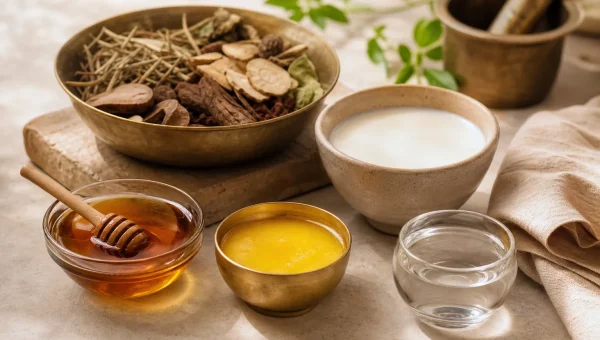
A warm post-ride tonic can be used when digestion is strong and the ingredients suit the rider. A simple Ayurvedic version is 250 ml warm milk or unsweetened almond milk, 1/2 to 1 teaspoon Ashwagandha powder, 1/2 teaspoon Shatavari powder, 1/8 to 1/4 teaspoon Shunthi or dry ginger powder, 1 teaspoon ghee, a small pinch of Pippali powder, and one chopped date or a little date syrup if sweetness is needed.
In Ayurvedic terms, Ashwagandha is valued as Rasayana and Balya, Shatavari is nourishing and unctuous, Shunthi supports digestion and helps prevent heaviness, and Pippali is traditionally used in small quantities to support appetite and assimilation. This is not mandatory for every cyclist. Avoid the herbal version during pregnancy unless prescribed, and use caution with autoimmune disease, thyroid medication, sedatives, acidity, ulcers, heat signs, liver disease, or any medication plan that requires medical supervision.
Joint Protection: The Weekly Protocol
Daily recovery handles the immediate post-ride state, but cyclists also need a weekly rhythm that balances repetitive flexion with lubrication, mobility, strength, and true rest. The following schedule is a practical template, not a rigid prescription. Adjust it to your training load, age, constitution, digestion, sleep, and pain pattern.
| Day | Protocol | Duration | Target |
|---|---|---|---|
| Monday | Full-body Abhyanga with sesame oil, Mahanarayana Taila, or practitioner-selected oil | 25-30 min | Whole-body Vata pacification and recovery |
| Tuesday | Gentle hip mobility, hamstring work, calf release, and glute strengthening | 20-30 min | Reduce repetitive cycling strain |
| Wednesday | Post-ride local Abhyanga on knees, calves, feet, wrists, and lower back | 10-15 min | Acute recovery after training |
| Thursday | Light yoga with hip openers, supported spinal movements, and easy breathing | 20-25 min | Counterbalance cycling posture |
| Friday | Short post-ride oil massage followed by warm food or tonic | 15-20 min | Prevent end-of-week depletion |
| Saturday | Long-ride recovery: warm oil, warm shower, warm meal, hydration, and early sleep | As needed | Deep restoration after load |
| Sunday | Gentle walk, rest, easy stretching, and cooked nourishing meals | As needed | Repair and readiness |
Janu Basti for Cyclist’s Knees
Janu Basti is a traditional Ayurvedic external therapy in which warm medicated oil is retained over the knee for a set period. It is commonly used in Ayurvedic practice for knee stiffness, Vata-type pain, and degenerative knee conditions, but it is best performed by a trained practitioner, especially when pain is persistent, one-sided, swollen, hot, unstable, or associated with locking or injury.
At-Home Adaptation
For regular cycling soreness without swelling or injury, use a safer home adaptation instead of a full dough-dam procedure. Warm a suitable oil, massage the knee gently for a few minutes, place a warm damp towel over the joint, and keep it covered for 10 to 15 minutes. Rewarm the towel as needed, but never use excessive heat. Stop if pain increases, the joint feels hot, or the skin becomes irritated.
- Choose sesame oil, Mahanarayana Taila, Bala Taila, or an oil advised by your practitioner.
- Warm the oil indirectly in hot water until comfortably warm.
- Massage around the kneecap, quadriceps tendon, sides of the knee, calf, and upper shin without pressing sharply into painful points.
- Cover with a warm towel for 10 to 15 minutes.
- Wipe gently, keep the knee warm, and avoid cold exposure immediately after the therapy.
If you have recurrent knee pain from cycling, also check saddle height, cleat position, cadence, training load, hip strength, and ankle mobility. Ayurvedic oil therapies support recovery, but they do not replace assessment of mechanical causes.
Saddle Soreness: Protect the Skin Barrier
Saddle soreness usually comes from friction, pressure, sweat, heat, and repeated compression of the skin and soft tissue. Ayurveda would approach this as local irritation and trauma requiring cleanliness, reduced friction, cooling when inflamed, and protection of the skin barrier. Persistent numbness, open sores, pus, spreading redness, fever, or severe pain needs medical care.
- Before the ride: Wear clean, well-fitting cycling shorts and use a non-irritating anti-chafing barrier on intact skin. Recheck saddle width, saddle tilt, handlebar reach, and riding posture if soreness keeps returning.
- After the ride: Wash gently, dry fully, change out of sweaty clothing, and wear loose breathable fabric. Minor irritation can be soothed with a simple barrier product.
- Ayurvedic support: Jatyadi Ghrita is traditionally used in wound-care contexts, but it should be used only when appropriate and preferably under practitioner guidance. Do not apply herbal oils, ghrita, or powders into deep, infected, or actively bleeding wounds.
- When numbness appears: Reduce pressure immediately and review saddle shape. A cut-out or no-nose saddle may reduce perineal pressure for some riders.
Energy Management: The Ayurvedic Fueling Strategy
Recovery is not only about muscle soreness. Ayurveda places digestion, assimilation, and tissue nourishment at the center of strength. A cyclist who repeatedly under-eats, overuses caffeine, rides in cold wind, and then eats cold or dry food is more likely to feel depleted, stiff, and restless even when the training plan looks good on paper.
Pre-ride, about 90 minutes before: Eat a warm, digestible meal such as cooked oats with ghee, soaked peeled almonds, cardamom, and dates, or rice porridge with ghee and a little rock salt. The meal should be moist, warm, and easy to digest, not heavy enough to disturb the ride.
On the bike: For longer rides, use practical fuel: dates, bananas, rice cakes, electrolyte water, or homemade balls made from dates, nuts, and a pinch of rock salt. Keep heavier herbs for the post-ride window unless prescribed; the ride itself needs digestible energy, not digestive burden.
Post-ride: Use the warm tonic if suitable, then eat a proper meal within a reasonable window: dal-rice with ghee, khichdi, soft-cooked vegetables, sweet potato, paneer or another suitable protein source, and enough fluids. Cold smoothies, dry snacks, and long delays after hard riding are more likely to aggravate Vata.
Winter-Specific Adjustments
Winter riding needs stronger Vata management because cold wind and dryness intensify the same qualities already produced by long-distance cycling. Classical seasonal guidance for Hemanta and Shishira emphasizes warmth, unctuous food, protection from wind, warm bathing, oil massage, adequate nourishment, and avoiding direct exposure to cold air after exertion.
- Before riding: Cover the ears, neck, chest, hands, knees, and feet well. Start the ride properly fueled rather than fasting through a long cold session.
- Nasal care: A small amount of Anu Taila or plain sesame oil as gentle nasal oleation may be suitable for some people accustomed to Pratimarsha Nasya. Avoid it during acute sinus infection, active cold, nasal bleeding, immediately after meals, or without guidance if you have a medical condition.
- After riding: Change out of cold damp clothing quickly, use warm water, apply oil if the body feels dry or stiff, and eat warm cooked food.
- Evening recovery: A cup of warm milk with ghee, or a simple warm meal such as khichdi, can be more Vata-pacifying than cold salads, dry snacks, or chilled drinks after winter riding.
The Real Recovery Edge
The strongest recovery approach combines both worlds. Keep the foam roller, strength work, protein, electrolytes, sleep, and bike-fit discipline. Add Ayurvedic warmth, oiling, seasonal awareness, cooked nourishment, and respect for the body’s signs of depletion. For many cyclists, the simplest starting point is post-ride Abhyanga on the knees, calves, feet, wrists, and lower back after every long or cold ride.
Begin with three sessions rather than trying to adopt everything at once. If your next-morning stiffness, dryness, or lower-back tightness improves, make it part of your long-ride routine. If pain persists, worsens, or becomes sharp, swollen, hot, numb, or unstable, stop self-treatment and get assessed.
Disclaimer: This article is for informational purposes only and is not a substitute for professional medical advice. Consult a qualified Ayurvedic practitioner or healthcare provider before starting herbs, medicated oils, Nasya, Janu Basti, or any new recovery regimen, especially if you have persistent joint pain, swelling, numbness, skin breakdown, chronic illness, pregnancy, liver disease, thyroid disease, autoimmune disease, or take regular medication.
References
- Charaka Samhita — Guna
- Charaka Samhita — Naveganadharaniya Adhyaya
- Concepts of Dhatu Siddhanta (theory of tissues formation and differentiation) and Rasayana; probable predecessor of stem cell therapy (2014), PubMed Central
- Easyayurveda (easyayurveda.com)
- Ayurvedic Pharmacopoeia of India
- Ayurvedic Pharmacopoeia of India
- Examining the effect of Withania somnifera supplementation on muscle strength and recovery: a randomized controlled trial (2015), PubMed
- Effects of an Aqueous Extract of Withania somnifera on Strength Training Adaptations and Recovery: The STAR Trial (2018), PubMed
- Effects of Ashwagandha (Withania somnifera) on Physical Performance: Systematic Review and Bayesian Meta-Analysis (2021), PubMed Central
- Clinical study on Sandhigata Vata w.s.r. to Osteoarthritis and its management by Panchatikta Ghrita Guggulu (2010), PubMed Central
- LWW Journals
- Effectiveness of an Ayurveda treatment approach in knee osteoarthritis – a randomized controlled trial (2018), PubMed
- Charaka Samhita — Tasyashiteeya Adhyaya
- Identification and estimation of bioactive constituents Negundoside, Berberine chloride, and Marmelosin by HPLC and HPTLC for development of quality control protocols for Ayurvedic medicated oil formulation (2021), PubMed Central
- Nasal application of sesame oil-based Anu taila as ‘biological mask’ for respiratory health during COVID-19 (2023), PubMed Central
- Getting to the Bottom of Saddle Sores: A Scoping Review of the Definition, Prevalence, Management and Prevention of Saddle Sores in Cycling (2022), PubMed Central
- Strategies for Reducing the Impact of Cycling on the Perineum in Healthy Males: Systematic Review and Meta-analysis (2021), PubMed Central
- Health (health.clevelandclinic.org)
- Zinc in wound healing: theoretical, experimental, and clinical aspects (2007), PubMed
- Jaims (jaims.in)
- Jaims (jaims.in)
- Nia (nia.nic.in)