Ayurvedic Glaucoma Support: Akshi Roga Protocols and the Evidence Landscape
Ayurvedic glaucoma support must be framed as complementary care for a serious progressive eye disease. Glaucoma damages the optic nerve and can lead to irreversible vision loss; standard care remains ophthalmologist-led intraocular pressure (IOP) control with prescription eye drops, oral medication when indicated, laser therapy, or surgery. Ayurvedic care belongs alongside prescribed treatment, offering individualized Akshi Roga, Netra Rasayana, diet, lifestyle, and breathing-based support without replacing pressure monitoring or conventional intervention.
Glaucoma is not defined only by high pressure. Normal-tension glaucoma is a recognized form in which glaucomatous optic nerve damage occurs even when measured IOP is within the statistically normal range. In such patients, IOP reduction still remains the central medical strategy, while complementary support may reasonably focus on ocular perfusion, oxidative stress, inflammation, sleep, stress regulation, and adherence to long-term eye-drop therapy.
Classical Ayurveda does not contain a modern anatomical diagnosis identical to primary open-angle glaucoma. Adhimantha, described among Sarvagata Netraroga, is marked by severe churning or extracting pain in the eye and is therefore more comparable to painful glaucomatous presentations, especially acute angle-closure patterns, than to often-silent primary open-angle glaucoma. Shushkakshipaka is a dry-eye-type condition, relevant to ocular surface dryness and irritation, but it should not be presented as an Ayurvedic description of raised IOP.
IOP and Ayurvedic Interventions: The Research Landscape
The most responsible evidence-based Ayurvedic frame is add-on care: prescribed glaucoma medicines continue, IOP and visual-field status remain under ophthalmological monitoring, and Ayurvedic interventions are selected for supportive roles such as ocular comfort, oxidative stress support, diet, gentle breath regulation, and classical Netra Rasayana when appropriate.
| Intervention | Clinical or Scientific Context | Relevant Finding | Practical Confidence |
|---|---|---|---|
| Ayurvedic POAG add-on protocol | Small randomized parallel-group clinical trial, AYU 2017, n=30 | Shigru Pallava Arka procedures plus Punarnavashtaka Kwatha and Gokshuradi Guggulu, used with antiglaucoma drops, favored IOP and visual parameters over observation on drops alone | Promising adjunct; not replacement therapy |
| Oral saffron extract | Randomized pilot in stable primary open-angle glaucoma, 34 eyes, 30 mg/day for one month | IOP was lower at weeks 3 and 4 while saffron was used with timolol and dorzolamide; the difference was not maintained after washout | Short-term pilot evidence only |
| Curcumin nanocarrier eye-drop research | Cell and rat-model work published in Scientific Reports, 2018 | Curcumin nanocarriers protected retinal ganglion cells in experimental models and were designed to overcome curcumin’s poor ocular solubility | Preclinical; not a human glaucoma protocol |
| Triphala Ghrita / Netra Tarpana | Ayurvedic ocular-surface literature, especially Shushkakshipaka and dry-eye contexts | Useful as a practitioner-supervised ocular comfort and lubrication-oriented approach, particularly where long-term eye drops aggravate dryness | Ocular-surface support; not IOP treatment |
| Gentle pranayama and diaphragmatic breathing | Yoga and glaucoma literature, including clinical breathing-based adjunct studies | Slow breathing practices may support IOP control and stress regulation when performed without strain or inversion | Adjunctive lifestyle measure |
Curcumin and Haridra: Neuroprotective Interest Without Human Glaucoma Claims
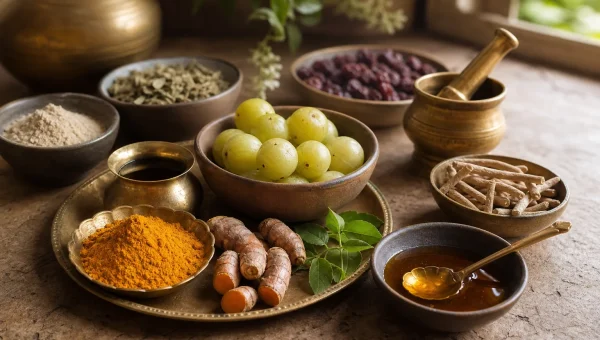
Haridra (turmeric, Curcuma longa) remains relevant in the glaucoma discussion because curcumin has antioxidant and anti-inflammatory biological activity and has been investigated for retinal ganglion cell protection. The verified ophthalmic development is a curcumin-loaded nanocarrier platform studied in cell and rat models, not a completed human glaucoma trial. This places curcumin in a preclinical neuroprotection category rather than in an established glaucoma treatment category.
Patients should not prepare or instill turmeric, curcumin powder, herbal oils, or non-ophthalmic preparations into the eye. The useful experimental work involves specialized ophthalmic formulation, particle control, solubility enhancement, and safety testing. Oral turmeric or curcumin supplementation should be considered only with clinician guidance, especially for people taking anticoagulants, antiplatelet drugs, diabetes medicines, liver-related medicines, or multiple long-term prescriptions.
Triphala Ghrita and Ocular Surface Support
Triphala Ghrita is best placed within the classical Netra Rasayana and ocular-surface care tradition rather than as a pressure-lowering glaucoma therapy. Triphala-based ghrita procedures have a stronger Ayurvedic rationale for dryness, burning, strain, tear-film disturbance, and Shushkakshipaka-type presentations. This is relevant to glaucoma patients because long-term preserved eye drops can aggravate dryness, irritation, and treatment fatigue, which may reduce adherence to prescribed glaucoma therapy.
Topical Ayurvedic eye procedures such as Tarpana and Ashchyotana should be performed only by qualified clinicians using appropriately prepared material in a clean clinical setting. Home instillation of ghee, oils, decoctions, powders, or non-sterile herbal products into the eye is unsafe. Internal ghrita use should also be individualized, especially in people with diabetes, hyperlipidemia, weak digestion, gallbladder disease, liver disease, or active medication use.
Saptamrita Lauh and Classical Netra Roga Support
Saptamrita Lauh is a classical herbo-mineral formulation associated with Netra Roga and Timira traditions. Standard formulation sources list Yashtimadhu, Haritaki, Bibhitaki, Amalaki, Lauha Bhasma, Madhu, and Ghrita as its key components or carriers. Its place in glaucoma care should be understood as physician-supervised Netra Rasayana support when the patient’s constitution, digestion, blood status, and disease stage make it appropriate.
Because Saptamrita Lauh contains Lauha Bhasma, it should not be self-prescribed. A qualified Ayurvedic physician should assess whether an iron-containing herbo-mineral preparation is suitable, especially in patients with iron overload risk, liver disease, pregnancy, anemia under investigation, chronic kidney disease, inflammatory bowel disease, or multiple prescription medicines. It should never be used as a substitute for glaucoma drops, laser, surgery, or scheduled visual-field and optic-nerve monitoring.
Saffron as a Short-Term Adjunct for IOP Support
Saffron (Crocus sativus) has limited but relevant human glaucoma data as an oral add-on in stable primary open-angle glaucoma. In a small randomized pilot study, aqueous saffron extract at 30 mg/day was used for one month alongside timolol and dorzolamide, and IOP was lower during the later weeks of use. The effect did not persist after washout, so saffron should be treated as a short-term adjunctive candidate rather than a stand-alone therapy.
In an Ayurvedic plan, saffron is best handled as a clinician-selected support rather than a generic daily recommendation. It may be inappropriate in pregnancy, in people with bleeding risk, in those taking multiple medicines, or in patients using high-dose supplements. Glaucoma patients should discuss saffron use with both the ophthalmologist and the Ayurvedic practitioner so that IOP, eye-drop adherence, and systemic safety remain clear.
Lifestyle Factors Affecting IOP and Optic Nerve Health
Daily habits matter in glaucoma because optic-nerve protection depends on stable IOP, adequate perfusion, low strain, good sleep, medication adherence, and avoidance of activities that cause avoidable pressure spikes. Ayurvedic pathya can be used here in a practical and modern way: choose routines that are steady, non-straining, digestion-friendly, and supportive of long-term treatment discipline.
Inverted yoga postures: Headstand, shoulder stand, plow pose, long downward-facing dog holds, standing forward bend, and legs-up-the-wall variations can raise IOP quickly during the posture. People with glaucoma or glaucoma suspicion should avoid prolonged or intense inversions unless an ophthalmologist and an experienced yoga therapist have specifically modified the practice for them.
Pranayama: Slow diaphragmatic breathing and gentle alternate-nostril breathing without breath retention are the safest breathing directions for most glaucoma patients. Forceful practices such as Kapalabhati and Bhastrika, strong breath-holding, and Valsalva-like straining should be avoided unless the treating physician has cleared them. The goal is calm regulation, not pressure, heat, or force.
Caffeine: Caffeinated drinks can produce small transient IOP increases in some people with glaucoma or ocular hypertension. A practical Ayurvedic approach is moderation: avoid repeated strong caffeinated drinks, avoid taking them immediately before IOP checks, and reduce intake when target pressure is difficult to maintain or the treating ophthalmologist advises it.
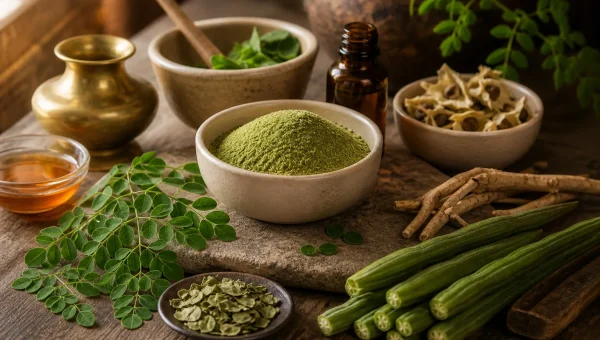
Leafy vegetables and nitrate-rich foods: Green leafy vegetables such as spinach, arugula, beet greens, amaranth greens, and moringa leaves fit well with a Chakshushya-oriented diet when digestion and constitution allow. Higher dietary nitrate and green leafy vegetable intake has been associated with lower primary open-angle glaucoma risk in large cohort data. This supports regular vegetable intake as a protective diet pattern, not as treatment for established glaucoma.
The complementary context of Ayurvedic eye care in the broader Netra Rasayana tradition is detailed in the cataract prevention article, which covers shared diet, ocular comfort, and practitioner-supervised eye-care principles relevant across several chronic eye conditions.
Medical Disclaimer: Glaucoma is a progressive eye disease requiring diagnosis and ongoing management by a qualified ophthalmologist. Do not discontinue, reduce, or delay prescribed glaucoma medication, laser, or surgery without ophthalmological consultation. IOP, optic-nerve status, and visual fields must be monitored regularly during any complementary protocol. Sudden vision changes, severe eye pain, headache with nausea, red eye, or halos around lights require urgent ophthalmological evaluation. Ayurvedic protocols described here are complementary to, not replacements for, prescribed glaucoma treatment.
Nothing in this article diagnoses or treats a medical condition. Use it as educational information and consult a qualified Ayurvedic practitioner or physician before starting herbs, supplements, ghrita, herbo-mineral formulations, detoxes, or therapeutic protocols, especially if pregnant, managing a condition, or taking medication.
References
- Mayoclinic (mayoclinic.org)
- Nei (nei.nih.gov)
- NCBI
- NCBI
- Glaucomatoday (glaucomatoday.com)
- A clinical study on Adhimantha and it’s management with Nayanamrita Lauha and Triphaladi Varti (2010), PubMed Central
- Efficacy of Triphala Ghrita and Goghrita Manda Tarpana in the management of Shushkakshipaka w.s.r. to dry eye syndrome: An open labelled randomized comparative clinical trial (2020), PubMed Central
- LWW Journals
- Clinical study on primary open-angle glaucoma with Ashchyotana, Tarpana and oral medication (2017), PubMed
- The ocular hypotensive effect of saffron extract in primary open angle glaucoma: a pilot study (2014), PubMed Central
- The ocular hypotensive effect of saffron extract in primary open angle glaucoma: a pilot study (2014), PubMed
- Topical Curcumin Nanocarriers are Neuroprotective in Eye Disease (2018), PubMed Central
- Topical Curcumin Nanocarriers are Neuroprotective in Eye Disease (2018), PubMed
- Ijrap (ijrap.net)
- Ierj (ierj.in)
- Dravyaguna notes
- Journals (journals.plos.org)
- Yoga can be dangerous–glaucomatous visual field defect worsening due to postural yoga (2007), PubMed Central
- Effect of yoga on intra-ocular pressure in patients with glaucoma: A systematic review and meta-analysis (2023), PubMed Central
- LWW Journals
- Can Breathing Exercise or Pranayama Affect the Intraocular Pressure in the Short-term? (2021), PubMed
- The effect of caffeine on intraocular pressure: a systematic review and meta-analysis (2011), PubMed
- Effect of coffee consumption on intraocular pressure (2002), PubMed
- Association of Dietary Nitrate Intake With Primary Open-Angle Glaucoma: A Prospective Analysis From the Nurses’ Health Study and Health Professionals Follow-up Study (2016), PubMed Central