
If you have ever found yourself crying for no clear reason, unable to get out of bed before your period, suddenly convinced that your relationship, work, or future is falling apart, and then felt those thoughts lift soon after bleeding begins, you already understand why PMDD is not just “bad PMS.” Premenstrual Dysphoric Disorder is a severe cyclical pattern of emotional, cognitive, and physical symptoms that appears in the late luteal phase and improves after menstruation starts.
PMDD affects approximately 3–8% of people with menstrual cycles in clinical descriptions. It is not a personality flaw, weakness, or ordinary moodiness. Current biomedical models describe PMDD as an abnormal sensitivity to normal ovarian hormone changes, with neuroactive steroid, GABA, serotonin, stress-response, and inflammatory pathways all considered relevant. That distinction matters: the protocol must support the reproductive system, the nervous system, sleep, digestion, and professional medical care when symptoms are severe.
PMDD vs PMS: Why the Distinction Matters for Treatment
Regular PMS may be uncomfortable, but PMDD causes symptoms severe enough to interfere with work, relationships, self-care, and daily functioning. DSM-5 criteria describe a cyclical pattern in which symptoms occur in the final week before menstruation, improve within a few days after menstruation begins, and are minimal or absent in the week after menstruation. At least one prominent mood symptom is present, such as marked emotional lability, irritability, depressed mood, anxiety, or tension, along with additional symptoms that create meaningful impairment.
From an Ayurvedic clinical lens, PMDD is not named as a single classical disease category. For protocol planning, it can be approached as a cyclical disturbance involving Apana Vata, aggravated Pitta, digestive instability, depleted Ojas, the menstrual channel system, and the mind-bearing channels. The fact that symptoms rise before the bleed and ease after menstruation fits the need to regulate Vata movement, cool excess Pitta, nourish reproductive tissues, and stabilize the nervous system across the full cycle. For the broader cycle framework, see our post on cycle syncing with Ayurveda by menstrual phase.
Important: PMDD is a recognized medical condition. Track symptoms for at least two cycles with a daily tool such as the Daily Record of Severity of Problems (DRSP) and take that record to a qualified healthcare provider. Ayurvedic care may complement conventional treatment, but it should not replace diagnosis, crisis support, or medical treatment when symptoms are severe.
The Doshic Framework: Vata-Pitta PMDD
PMDD does not look identical in every person. In Ayurveda, symptom patterning helps determine which supports are emphasized: grounding and regularity for Vata, cooling and softening for Pitta, and nourishment for depleted Ojas.
Vata-dominant PMDD: Anxiety, panic, racing thoughts, insomnia, restlessness, scattered attention, constipation, gas, bloating, cramping, lower back discomfort, and worsening with travel, missed meals, stress, irregular schedules, or too much stimulation.
Pitta-dominant PMDD: Rage, irritability, harsh self-criticism, conflict sensitivity, heat sensations, headaches, acne flare-ups, loose stools, intense hunger, inflammatory symptoms, and worsening with heat, competition, overwork, alcohol, spicy food, or emotional suppression.
Mixed Vata-Pitta PMDD: Alternating anxiety and anger, emotional volatility, panic followed by tearfulness, insomnia with heat or agitation, and shifting physical symptoms. This mixed pattern is common in real-life PMDD presentations and usually requires both grounding and cooling care.
The Core Herb Protocol for PMDD
The following herbs are not a substitute for PMDD treatment from a physician or mental-health professional. They are classical Ayurvedic supports that may be selected by a qualified practitioner according to constitution, cycle pattern, digestion, medications, pregnancy status, liver or thyroid concerns, and symptom severity.
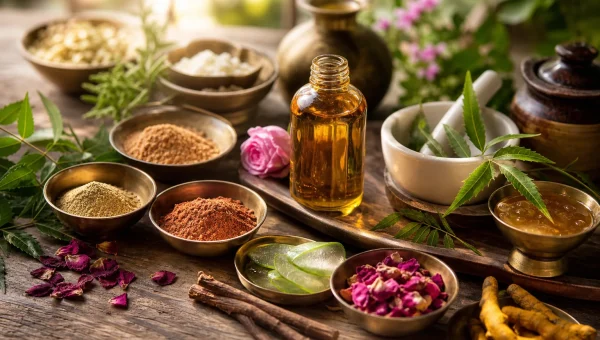
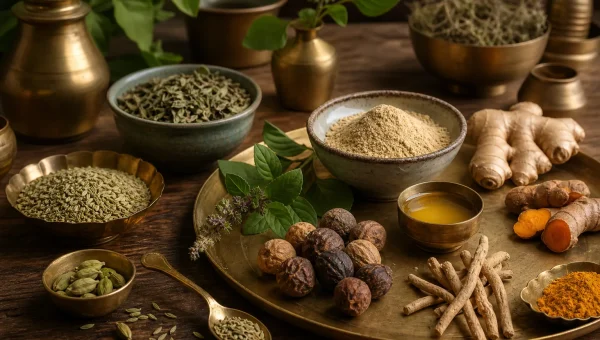
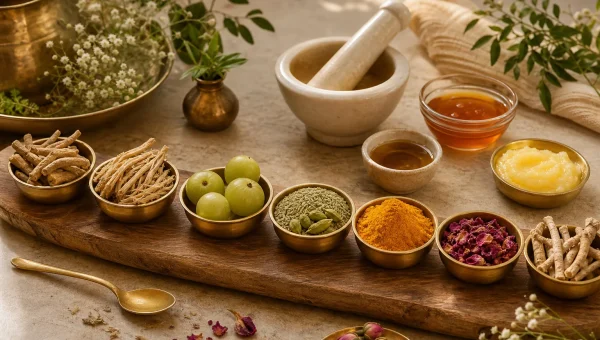
Shatavari (Asparagus racemosus) – Nourishing Reproductive Support
Shatavari root is a central Ayurvedic herb for nourishing and cooling the reproductive system. The Ayurvedic Pharmacopoeia of India describes Shatavari as sweet and bitter in taste, heavy and unctuous in quality, cooling in potency, sweet after digestion, and traditionally used as Balya, Rasayana, Medhya, Pittahara, Vatahara, Vrishya, and Stanyakara. In a PMDD protocol, this makes Shatavari most relevant when symptoms include dryness, depletion, heat, irritability, poor resilience, or a sense of being exhausted by the luteal phase.
Use: A classical adult powder range is commonly listed as 3–6 g of the crude drug. Extract dose varies by preparation, so use practitioner guidance rather than assuming all capsules are equivalent. Shatavari is usually taken with warm water, milk, or a suitable anupana according to the person’s digestion and constitution. For a deeper herb profile, read our article on Shatavari and female reproductive support.
Ashwagandha (Withania somnifera) – Stress Resilience and Vata Support
Ashwagandha root is a strengthening, grounding herb traditionally used in Ayurveda for Vata-related depletion, weakness, stress reactivity, disturbed sleep, and reduced resilience. In PMDD patterns, it is most appropriate when the premenstrual picture is dominated by exhaustion, anxiety, over-arousal, poor sleep, low stamina, and stress-triggered worsening.
Use: Classical powder dosing is commonly given in gram ranges, while modern extracts vary widely in concentration. Adult stress and sleep trials have used different extract doses, so dosing should be individualized. Ashwagandha is not ideal for everyone: use caution or avoid it in pregnancy, breastfeeding, active liver disease, thyroid disorders, autoimmune conditions, heavy sedation, or when using medications that may interact. For dosing and safety context, see our article on Ashwagandha dosage and safety.
Brahmi (Bacopa monnieri) – Medhya Support for Mind and Clarity
Brahmi is classically treated as a Medhya Rasayana, a rejuvenative herb for the mind. The Ayurvedic Pharmacopoeia identifies Brahmi as Bacopa monnieri and lists traditional actions including Medhya and Rasayana, with use in Manasavikara. In PMDD care, Brahmi is most relevant when the luteal phase brings brain fog, anxious rumination, poor concentration, emotional overwhelm, or difficulty returning to mental steadiness.
Use: The Ayurvedic Pharmacopoeia lists a traditional powder range of 1–3 g. Standardized extracts should be chosen and dosed with professional guidance, especially if the person is taking sedatives, antidepressants, anticonvulsants, thyroid medication, or other long-term medicines.
Jatamansi (Nardostachys jatamansi) – Sleep and Emotional Settling
Jatamansi rhizome is described in the Ayurvedic Pharmacopoeia with actions including Medhya and Nidrajanana, and traditional use in Anidra and Manasaroga. In a PMDD protocol, it is especially relevant when late-luteal symptoms include insomnia, agitation, tearfulness, mental heat, emotional reactivity, or inability to wind down at night.
Use: The Ayurvedic Pharmacopoeia lists 2–3 g powder or 5–10 g decoction. Because Jatamansi can be sedating and may interact with medications or other calming substances, it is best used under practitioner guidance, especially alongside SSRIs, benzodiazepines, sleep medicines, alcohol, or hormonal medications.
Herb Summary Reference Table
This table gives a conservative overview of how the core herbs may be positioned inside a practitioner-guided PMDD plan.
| Herb | Primary Ayurvedic Role | Traditional Adult Range | Best Fit | Key Caution |
|---|---|---|---|---|
| Shatavari (Asparagus racemosus) | Cooling, nourishing, reproductive Rasayana | 3–6 g powder | Heat, depletion, irritability, dryness | Use guidance with hormone-sensitive conditions or medications |
| Ashwagandha (Withania somnifera) | Grounding, strengthening, Vata support | Practitioner-dosed powder or extract | Stress reactivity, exhaustion, poor sleep | Avoid or use caution in pregnancy, liver disease, thyroid disorders, and medication use |
| Brahmi (Bacopa monnieri) | Medhya Rasayana for mind and clarity | 1–3 g powder | Brain fog, anxious rumination, mental overwhelm | Use guidance with sedatives, antidepressants, anticonvulsants, or thyroid medication |
| Jatamansi (Nardostachys jatamansi) | Sleep, emotional settling, Medhya support | 2–3 g powder or 5–10 g decoction | Insomnia, agitation, tearfulness, nighttime reactivity | Use caution with sedatives, alcohol, psychiatric medicines, or severe depression |
Diet Modifications by Cycle Phase
The dietary approach to PMDD should be rhythmic rather than random. Ayurveda emphasizes regular meals, warm digestible food, stable digestion, and avoidance of foods that aggravate Vata or Pitta during the vulnerable premenstrual window.
Menstrual and Follicular Phase: Rebuilding Ojas
After bleeding begins and symptoms start to ease, focus on rebuilding strength with warm, moist, easily digestible meals: rice, oats, mung dal, soups, stewed fruits, cooked root vegetables, ghee in appropriate quantity, soaked almonds, dates, and warm milk or plant milk with cardamom if tolerated. The goal is to rebuild Ojas, restore digestive rhythm, and prevent the next luteal phase from beginning from a place of depletion. See our article on Ojas as vital essence in Ayurveda for the deeper framework.
Luteal Phase: The Critical Window
The luteal phase is where regularity matters most. Eat at steady times, avoid skipping breakfast, include protein at each meal, favor complex carbohydrates, and use warm cooked foods that are easy to digest. Vata-dominant patterns do best with soups, kitchari, sesame, ghee, cooked grains, and gentle spices. Pitta-dominant patterns do best with cooling cooked foods, coriander, fennel, coconut in moderation, bitter greens, and avoiding excessive chili, sour foods, and alcohol.
- Reduce: caffeine, alcohol, refined sugar, highly salty foods, very spicy foods, and late-night heavy meals, especially when they worsen sleep, anxiety, heat, cravings, or bloating.
- Increase: calcium-rich foods, magnesium-rich foods, complex carbohydrates, omega-3 sources, cooked leafy greens, and warm evening drinks that suit digestion.
- Stabilize: meal timing, hydration, bowel regularity, and protein intake so that blood-sugar swings do not intensify mood instability.
The Abhyanga Protocol for PMDD
Self-massage with warm oil, or Abhyanga, is one of the most practical Vata-soothing tools in an Ayurvedic PMDD protocol. It provides warmth, touch, rhythm, and sensory grounding at the exact time when the nervous system may feel overstimulated, unsafe, or reactive.
PMDD-Specific Abhyanga Protocol
Oil selection and timing: Begin 10–14 days before the expected period and continue through the first day or two of bleeding if it feels soothing. Use warm sesame oil for Vata-dominant anxiety, restlessness, dryness, or cramping. Use coconut or sunflower oil for Pitta-dominant heat, irritability, burning, or inflammatory symptoms. Mixed patterns may alternate according to the symptom of the day or use a practitioner-recommended Brahmi, Bala, or Shatavari oil.
Method:
- Warm the oil by placing the bottle in warm water for a few minutes.
- Apply oil to the scalp, ears, neck, shoulders, abdomen, lower back, and feet.
- Use long strokes over the limbs and circular strokes over the joints.
- Massage the lower abdomen gently in slow clockwise circles.
- Spend extra time on the soles of the feet before sleep when anxiety or insomnia is prominent.
- Leave the oil on for 15–20 minutes, then bathe with warm water.
- Practice daily if possible, or at least 3–4 times weekly during the luteal phase.
Sleep in the Luteal Phase
Poor sleep can intensify every PMDD symptom. In the final 10 days before the expected period, move bedtime earlier, keep the wake time steady, reduce evening screens, avoid late caffeine, avoid alcohol as a sleep aid, and use a calming routine such as foot oiling, a warm shower, quiet breathing, prayer, journaling, or a warm drink suited to digestion. Our full Ayurvedic sleep protocol covers a complete evening routine.
Movement, Breath, and Emotional Containment
PMDD is not solved by forcing harder exercise during the most vulnerable days. Use movement to regulate, not punish. During the follicular phase, strength training, longer walks, or more vigorous exercise may feel appropriate. During the late luteal phase, choose walking, gentle yoga, hip-opening stretches, restorative poses, and slow breathing practices that downshift Vata and Pitta without creating more heat or depletion.
A simple late-luteal practice is 10 minutes of walking after meals, 5 minutes of slow exhalation-focused breathing, and 5 minutes of legs-up-the-wall or supported rest before bed. For Pitta-dominant anger, add cooling pauses before difficult conversations. For Vata-dominant panic, prioritize warmth, food, touch, and repetition before trying to reason with the mind.
When to Seek Medical Help: This Is Not Optional Information
Ayurvedic care can be a meaningful part of PMDD support, but PMDD can become dangerous when mood symptoms are severe. Professional help is needed when symptoms affect safety, functioning, relationships, work, sleep, or the ability to care for yourself or others.
- Any thoughts of self-harm, suicide, or not wanting to be alive before your period
- Symptoms severe enough to miss work, withdraw from relationships, or feel unable to function
- Rage, panic, depression, or despair that feels uncontrollable
- Symptoms that do not clearly improve within a few days after menstruation begins
- Possible bipolar disorder, major depression, trauma-related symptoms, thyroid disease, perimenopause, substance use, or medication-related mood changes
- No meaningful improvement after three complete cycles of consistent support
Current medical care for PMDD commonly includes symptom tracking, psychotherapy such as CBT, SSRIs, selected hormonal contraceptives, calcium support when appropriate, exercise, sleep care, and lifestyle changes. Fluoxetine, sertraline, and paroxetine are among the SSRIs used for PMDD, and SSRI dosing may be continuous or intermittent depending on the person and clinician. Drospirenone-containing combined oral contraceptives are also used in selected cases. For many people, the best result comes from combining medical care with cycle-aware food, sleep, herbs, stress support, and honest tracking.
Disclaimer: This article is educational and does not diagnose or treat PMDD. Consult a qualified healthcare provider for diagnosis and treatment, especially with severe mood symptoms, suicidal thoughts, psychiatric history, pregnancy, breastfeeding, liver disease, thyroid disease, hormonal medication use, SSRIs, sedatives, anticonvulsants, or other prescriptions. Use Ayurvedic herbs only with qualified guidance and choose quality-tested products because contamination and herb-drug interactions are possible.
You deserve to feel like yourself for all four weeks of the month, not only after your period begins. PMDD is not who you are; it is a severe cyclical condition that deserves serious support. With tracking, medical care when needed, Ayurvedic patterning, nourishing herbs, stable meals, sleep protection, and nervous-system regulation, the luteal phase can become more manageable and less frightening.
References
- NCBI
- NCBI
- Role of allopregnanolone-mediated γ-aminobutyric acid A receptor sensitivity in the pathogenesis of premenstrual dysphoric disorder: Toward precise targets for translational medicine and drug development (2023), PubMed Central
- Towards understanding the biology of premenstrual dysphoric disorder: From genes to GABA (2023), PubMed Central
- Iapmd (iapmd.org)
- Toward the Reliable Diagnosis of DSM-5 Premenstrual Dysphoric Disorder: The Carolina Premenstrual Assessment Scoring System (C-PASS) (2017), PubMed Central
- ACOG
- Management of Premenstrual Disorders: ACOG Clinical Practice Guideline No. 7 (2023), PubMed
- OASH Women’s Health
- Selective serotonin reuptake inhibitors for premenstrual syndrome and premenstrual dysphoric disorder (2024), PubMed
- ACOG
- Health (health.harvard.edu)
- Womensmentalhealth (womensmentalhealth.org)
- NCCIH
- Ayurvedic Pharmacopoeia of India
- Plant profile, phytochemistry and pharmacology of Asparagus racemosus (Shatavari): A review (2013), PubMed Central
- Ayurvedic Pharmacopoeia of India
- An investigation into the stress-relieving and pharmacological actions of an ashwagandha (Withania somnifera) extract: A randomized, double-blind, placebo-controlled study (2019), PubMed Central
- NIH Office of Dietary Supplements
- NCCIH
- Ayurvedic Pharmacopoeia of India
- Effects of a standardized Bacopa monnieri extract on cognitive performance, anxiety, and depression in the elderly: a randomized, double-blind, placebo-controlled trial (2008), PubMed Central
- The Effect of Mechanical Massage and Mental Training on Heart Rate Variability and Cortisol in Swedish Employees-A Randomized Explorative Pilot Study (2020), PubMed Central
- Academic (academic.oup.com)
The description of those three days before my period is exactly my life. The relationship is ending, the career is over, everything is catastrophic, and then it lifts the moment bleeding starts and I can see clearly again. Having a name for that pattern and a protocol for it is something I have needed for 8 years.
I was prescribed SSRIs for PMDD and they helped somewhat but the flatness they created the rest of the month was unacceptable. The Ayurvedic approach of treating the luteal phase specifically rather than medicating the entire cycle makes more physiological sense.
I want to know what the evidence is for Shatavari specifically for PMDD. I have been reading about it but most studies I find are for general PMS, not the severe dysphoric variant. Is there clinical trial data for PMDD specifically?
I have been following the dietary and Brahmi protocol in this article for 4 cycles now. The severity of my luteal phase has not eliminated but has reduced from a 9/10 disruption to about a 5/10. That change has made my relationship survivable during those days.
The Vata movement aspect of PMDD is something my Ayurvedic physician described but I had not fully understood. The upward-moving Prana Vata and its role in the anxiety amplification before periods makes anatomical sense in terms of nervous system hyperactivation.
I tried the self-massage with Brahmi oil in the evenings during my luteal phase. The anxiety that usually peaks in the evenings in the week before my period became manageable within 2 cycles. Whether this is placebo or pharmacological I cannot say, but I will continue.
My partner has PMDD and I am researching options alongside her. The framing in this article about PMDD as a Vata-Pitta disorder in the luteal phase provides a treatment rationale that is missing from the standard SSRI and SNRI approaches I have read about.
I have been dismissed by three gynecologists who said my symptoms were ‘normal PMS’. The PMDD classification finally gave me a diagnosis. But conventional treatment options are limited. The Ayurvedic protocol here addresses something the pharmaceutical options do not: the constitutional pattern underlying the sensitivity.
The breakdown of Vata versus Pitta patterns helped me see why my anxiety spikes while my friend gets irritability.
The article mentions reducing caffeine in the luteal phase. I have noticed that my partner’s symptoms are significantly worse during high-caffeine weeks. The Pitta-aggravating effect of caffeine in an already Pitta-elevated phase is a mechanism I had not considered.
I want to be careful about this kind of content for people with severe PMDD. The condition can involve suicidal ideation during the luteal phase and that requires medical management, not herbal protocol. The article should be clearer about when professional intervention is non-negotiable.
I wonder if taking Shatavari continuously really makes a difference after just one cycle.
My experience combining Ayurvedic support with standard SSRI-luteal phase dosing has been very positive. The herbal protocol improves what the SSRI does not fully address. These approaches do not compete.
Has anyone tried the warm sesame oil massage and noticed better sleep before their period?
The suggestion to reduce caffeine and alcohol in the luteal phase seems practical, though I miss my morning coffee.
I appreciate the emphasis on tracking symptoms with a DRSP sheet before trying any herbs.
Jatamansi at bedtime sounds promising for those restless nights linked to PMDD.
The article makes a clear case that PMDD is neurobiological, not just being ‘hormonal,’ which validates my experience.
I’m skeptical about combining Shankhpushpi with SSRIs without a doctor’s okay, but the caution note is helpful.
Adding ground flaxseed and magnesium-rich greens feels like a doable tweak during the second half of the cycle.
नमस्ते, shatavari for 3 months alongside the dietary changes. my PMDD symptoms in the luteal phase are 50% less intense
I came for PMDD and this answered the main question. Good starting point for a cautious reader.
the fibroid granthi protocal is the most detailed Ayurvedic guide I’ve found. starting this month with guidance from my ob
I tried the PMDD protocol for 4 months, the physical symptoms improved but mood component didn’t change much
🙏 for PMDD specifically, how does the ashwagandha-shatavari combination compare to just shatavari alone
for PMDD specifically, how does the ashwagandha-shatavari combination compare to just shatavari alone
🙌 sorry off-topic but does anyone here have experience using Ayurveda for hair loss
the fibroid granthi protocol is the most detailed Ayurvedic guide I’ve found. starting this month with guidance from my ob
I tried the PMDD protocol for 4 months, the physical symptoms improved but mood component didn’t change much asked this last week
the fibroid protocol, does it work for submucosal fibroids or mainly intramural
the article doesn’t mention that shatavari is not suitable for estrogen-sensitive conditions. important omission
how do you know if Pitta or Kapha is the dominant factor in fibroid growth. the differentiation criteria aren’t clear asked this just now
the fibroid granthi protocol is the most detailed Ayurvedic guide ive found. starting this month with guidance from my ob
how do you know if Pitta or Kapha is the dominant factor in fibroid growth. the differentiation criteria aren’t clear
using the article’s approach to heavy bleeding with lodhra and ashoka. 2 months in, flow normalized significantly
the fibroid protocal, does it work for submucosal fibroids or mainly intramural
Any side effects?
What dose?
i tried the PMDD protocol for 4 months, the physical symptoms improved but mood component didnt change much
For PMDD, consistency seems like the hard part. The safety notes could be expanded a little.
the fibroid protocol, does it work for submucosal fibroids or mainly intramural asked this earlier
I tried the PMDD protocol for 4 months, the physical symptoms improved but mood component didn’t change much asked this recently
for PMDD specifically, how does the ashwagandha-shatavari combination compare to just shatavari alone asked this last week
the fibroid granthi protocol is the most detailed Ayurvedic guide I’ve found. starting this month with guidance from my ob asked this earlier
for PMDD specifically, how does the ashwagandha-shatavari combination compare to just shatavari alone asked this just now
shatavari for 3 months alongside the dietary changes. my PMDD symptoms in the luteal phase are 50% less intense
using the article’s approach to heavy bleeding with lodhra and ashoka. 2 months in, flow normalized significantly asked this earlier
the fibroid protocal, does it work for submucosal fibroids or mainly intramural asked this last week
for PMDD specifically, how does the ashwagandha-shatavari combination compare to just shatavari alone 🙏
shatavari for 3 months alongside the dietary changes. my PMDD symptoms in the luteal phase are 50% less intense asked this recently
I liked the practical side of PMDD. The timing advice is the part I would start with.
the article doesn’t mention that shatavari is not suitable for estrogen-sensitive conditions. important omission asked this recently