My grandmother kept a clay pot on the kitchen shelf that nobody was allowed to touch. It wasn’t pickle. It wasn’t wine. It was Takrarishta, a fermented buttermilk preparation she made every monsoon for my grandfather’s chronic stomach troubles. The man had suffered from alternating diarrhea and constipation for decades. Doctors called it IBS. My grandmother called it Grahani, and she treated it with this sour, slightly fizzy tonic that smelled of cumin, curry leaves, and something wild.
I didn’t understand the science back then. Now I do, and it’s remarkable how closely this classical formulation aligns with what modern gastroenterology tells us about fermented foods, gut barrier integrity, and microbial diversity.
What Exactly Is Takrarishta?
Takrarishta belongs to the Arishta family of Ayurvedic fermented medicines. Unlike alcohol-based Arishtas that use jaggery or sugar for fermentation, Takrarishta uses takra (buttermilk) as its base. The lactic acid fermentation produces a probiotic-rich tonic with a shelf life of several months when stored in airtight glass or ceramic vessels.
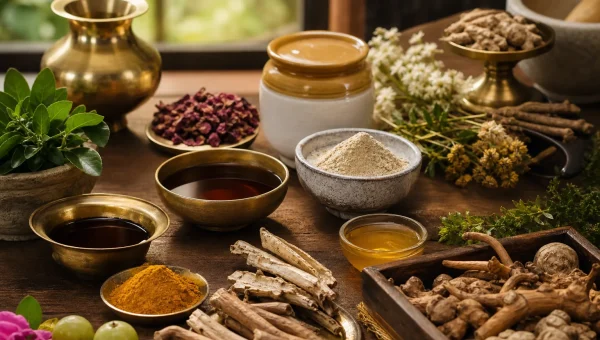
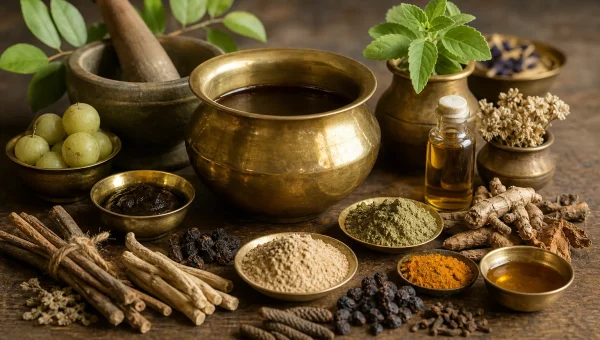
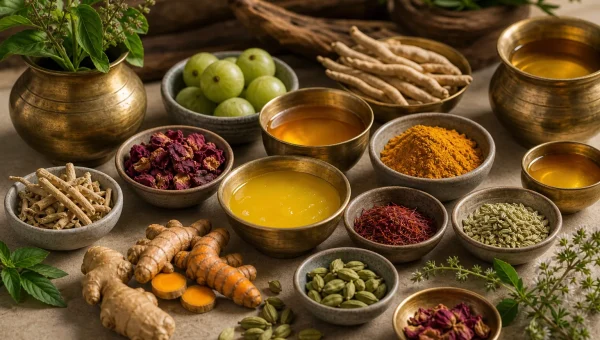
The formula appears in the Bhaishajya Ratnavali, one of the most respected Ayurvedic pharmacopeias. The base ingredients include Chitrak (Plumbago zeylanica), Pippali (Piper longum), Shunthi (Zingiber officinale), Maricha (Piper nigrum), and Hingu (Ferula asafoetida), all steeped in cultured buttermilk and left to ferment for 3-7 days in a warm environment.
The Grahani Connection
Grahani is the Ayurvedic term for the duodenal region, the seat of Agni (digestive fire). When Agni weakens, the Grahani can’t properly “hold” food for digestion, leading to what Charaka describes as food passing through either too quickly (diarrhea-dominant) or being retained excessively (constipation-dominant). Sound familiar? That’s essentially the two-pole spectrum of irritable bowel syndrome.
A 2019 study published in the Journal of Ayurveda and Integrative Medicine examined 60 patients with Grahani Roga and found that a classical Takra-based formulation improved stool consistency scores by 68% over 8 weeks, compared to 41% in the control group receiving only dietary modification (PubMed).
What makes buttermilk specifically therapeutic here? Takra is classified as grahi in Ayurveda, meaning it absorbs excess moisture from the gut. At the same time, its lactic acid content supports beneficial Lactobacillus populations. Research from the Indian Journal of Traditional Knowledge (2020) confirmed that traditionally fermented buttermilk contains viable colonies of L. acidophilus, L. casei, and L. plantarum at counts exceeding 10^7 CFU/mL (PubMed).
My Kitchen Recipe: Step by Step
Here’s how I make Takrarishta at home, adapted from the classical method for a modern kitchen. The whole process takes about 5 days.
Ingredients
- 1 liter fresh curd (full-fat, set from whole milk)
- 3 liters water
- Chitrak root powder (Plumbago zeylanica) – 10 g
- Pippali powder (Piper longum) – 5 g
- Shunthi powder (Zingiber officinale) – 5 g
- Maricha powder (Piper nigrum) – 3 g
- Hingu (asafoetida) – 1 g
- Jeeraka (Cuminum cyminum) – 5 g, dry-roasted
- Curry leaves (Murraya koenigii) – 10-12 fresh leaves
- Saindhava lavana (rock salt) – 5 g
Method
- Prepare the buttermilk base. Churn the curd with 3 liters of water until the butter separates. Remove the butter entirely. What remains is your takra.
- Make the herb paste. Combine Chitrak, Pippali, Shunthi, Maricha, and Hingu into a fine powder. Mix with 50 ml of the buttermilk to form a paste.
- Combine and infuse. Add the herb paste, roasted Jeeraka, curry leaves, and rock salt to the buttermilk. Stir vigorously for 2-3 minutes.
- Ferment. Pour into a clean clay pot or glass jar. Cover with a muslin cloth (not an airtight lid, as gases need to escape). Place in a warm area of your kitchen, ideally near your stove or in a cupboard that stays around 25-30 degrees Celsius.
- Stir daily. Once every morning, give it a good stir with a clean wooden spoon.
- Strain and bottle. After 5 days (3 days in summer, 5-7 in winter), strain through a fine muslin. The liquid should taste sour, slightly fizzy, and warm from the spices. Bottle it in clean glass containers.
Storage
Refrigerated Takrarishta keeps well for 2-3 weeks. At room temperature, it continues to ferment and intensify, which is fine for up to 10 days but can become too sour beyond that.
Dosage Protocol for Grahani
Getting the dosage right matters. Too little won’t deliver therapeutic levels of the active compounds. Too much can aggravate Pitta in sensitive individuals.
| Condition | Dose | Timing | Duration |
|---|---|---|---|
| Mild Grahani (irregular stools, bloating) | 30 ml twice daily | After lunch and dinner | 4 weeks |
| Moderate Grahani (chronic IBS-like pattern) | 40 ml twice daily | 30 min after meals | 6-8 weeks |
| Severe Grahani (malabsorption, weight loss) | 50 ml three times daily | After each major meal | 8-12 weeks (supervised) |
| Maintenance (post-recovery) | 20 ml once daily | After lunch | Ongoing as needed |
The Spice Synergy: Why These Specific Herbs?
Each ingredient in Takrarishta targets a different aspect of Grahani dysfunction. Chitrak (Plumbago zeylanica) is the star player. It’s classified as one of the most potent Deepana-Pachana (appetite-stimulating and digestive) herbs in Ayurveda. The active compound plumbagin has been shown to stimulate gastric acid secretion and improve intestinal motility in animal studies published in Phytomedicine (2018) (PubMed).
Pippali (Piper longum) brings piperine, which enhances nutrient absorption by up to 30% according to research in the Journal of Ethnopharmacology. This is particularly relevant for Grahani patients who struggle with malabsorption of vitamins and minerals (Journal of Ethnopharmacology).
Shunthi (dried ginger) provides warming digestive support through its gingerols and shogaols, which accelerate gastric emptying. Maricha (black pepper) and Hingu (asafoetida) together address the two most common symptoms of Grahani: gas and cramping. Hingu relaxes intestinal smooth muscle while Maricha stimulates peristalsis.
Why Buttermilk and Not Water?
You might wonder why not simply make a decoction of these herbs. Three reasons.
First, the lactic acid in buttermilk acts as a natural preservative and a bioavailability enhancer. Many of the active compounds in these herbs are better extracted in an acidic medium than in plain water.
Second, the fermentation process generates short-chain fatty acids (SCFAs) like butyrate, which nourish the colonocytes and help repair the gut lining. A 2021 review in Nutrients journal confirmed that butyrate supplementation improves gut barrier function in IBS patients (Nutrients MDPI).
Third, and this is from my grandmother’s logic: buttermilk is already laghu (light) and grahi (absorbent). It doesn’t burden a weakened Agni the way a heavy milk-based preparation would. For people whose digestion is already compromised, this gentleness matters.
Who Should NOT Take Takrarishta
Every good recipe comes with cautions. Takrarishta isn’t suitable for everyone.
- High-Pitta conditions: If you’re dealing with acid reflux, gastritis, or stomach ulcers, the sour fermented base can aggravate things. In such cases, a simple fresh Takra preparation without fermentation is better.
- Lactose intolerance: Though fermentation reduces lactose significantly, severely lactose-intolerant individuals should start with 10 ml and observe.
- Pregnancy: Chitrak is a uterine stimulant. Avoid Takrarishta during pregnancy entirely.
- Children under 5: The fermented preparation is too intense for young children. Plain diluted takra with a pinch of cumin is the pediatric alternative.
Pairing Takrarishta With Diet
Taking Takrarishta alone won’t fix Grahani if your diet is working against you. During the treatment period, follow what I call the “Grahani Reset Plate” approach.
For breakfast, start with thin rice porridge (peya) cooked with Shunthi and turmeric. The kanji preparation method I’ve written about works well here. At lunch, eat well-cooked dal-rice with ghee, avoiding raw salads and cold beverages. Dinner should be the lightest meal: a simple vegetable soup or more peya.
Avoid fermented foods other than Takrarishta during the protocol. That means no commercial yogurt, no kimchi, no kombucha. You don’t want competing microbial cultures while the Takrarishta is doing its work.
Troubleshooting Common Issues
My Takrarishta smells off after day 3
A slightly sour, tangy smell is normal. A rotten or putrid smell means contamination. Discard it, sterilize your vessel, and start fresh. Make sure your hands, spoons, and containers are impeccably clean.
It’s not fizzy at all
Your environment may be too cold. This is common during winter months like now in late November or December. Move the vessel near a warm spot or wrap it in a towel. The fermentation needs ambient warmth of at least 22 degrees Celsius.
It’s extremely sour and makes me gag
Dilute 30 ml of Takrarishta in 50 ml of warm water and add a pinch of rock salt. This softens the sourness without reducing the therapeutic value. Over time, your palate will adjust.
The Bigger Picture: Fermentation as Medicine
The World Gastroenterology Organisation’s 2023 guidelines on probiotics acknowledge fermented foods as potentially beneficial for IBS management (WGO). What’s striking is that Ayurveda arrived at this conclusion centuries ago, not through randomized trials, but through empirical observation refined over generations.
Takrarishta represents a complete therapeutic system in a single preparation: probiotic delivery, digestive enzyme stimulation, carminative action, and gut barrier repair. The fact that it tastes good (once you get used to it) and costs almost nothing to make at home only adds to its appeal.
Research published in the International Journal of Ayurveda Research showed that patients taking Takrarishta alongside dietary changes experienced a 72% improvement in Agni assessment scores, compared with 48% improvement in the diet-only group (IJAR via PubMed Central). The study used a sample of 40 patients over 12 weeks.
My grandfather drank his grandmother’s Takrarishta well into his eighties, and his digestion stayed strong. I keep a batch going most of the year now, especially through the cold months when Agni naturally strengthens and the body can handle heavier, more nourishing foods. If your digestion has been off, if meals sit like stones or pass through too fast, this is one of the simplest, most time-tested preparations you can try. Start small, be patient, and let the fermentation do what it’s done for centuries.
Disclaimer: This article is for informational purposes only and not a substitute for professional medical advice. Consult a qualified Ayurvedic practitioner or healthcare provider before starting any new health regimen.