
The Complete Vata Diet Guide: What to Eat, What to Avoid, and Why
Vata dosha is traditionally associated with the elements of air and ether, and Ayurveda describes it as the principle of movement, impulse, circulation, respiration, elimination, and mental quickness. When Vata is balanced, it supports flexibility, creativity, alertness, and adaptability. When it becomes excessive, traditional Ayurvedic assessment often associates it with nervousness, restlessness, dry skin, cracking joints, gas, bloating, hard stools, light sleep, sensitivity to cold, and scattered thinking.
Ayurveda approaches food through qualities as much as ingredients. Vata is classically described as dry, light, cold, rough, subtle, and mobile. A Vata-balancing diet therefore emphasizes the opposite qualities: warm, moist, oily, smooth, grounding, nourishing, and steady. This guide keeps that practical Ayurvedic focus: what to favor, what to reduce, and how to build meals that calm Vata without making the diet rigid or fear-based.
Understanding Vata Through the Six Tastes
The six tastes, or Shad Rasa, are a central Ayurvedic tool for understanding how foods influence the doshas. Each taste is understood as having a dominant elemental pattern, and each taste carries qualities that can either pacify or aggravate Vata depending on quantity, preparation, season, and digestive capacity.
Tastes That Pacify Vata
Vata is most supported by sweet, sour, and salty tastes. These tastes provide grounding, moisture, warmth, nourishment, and downward-moving stability, all of which help balance Vata’s light, dry, mobile, and irregular nature.
- Sweet (Madhura): Dominated by earth and water, the sweet taste is grounding, nourishing, moistening, and building. In a Vata diet, this means naturally sweet foods such as rice, wheat, cooked oats, root vegetables, ripe fruits, milk, ghee, dates, figs, nuts, and seeds rather than refined sugar.
- Sour (Amla): Dominated by earth and fire, the sour taste is warming, moistening, appetite-supporting, and enlivening. Lemon, lime, fresh yogurt, fermented vegetables in small quantities, tamarind, and sour fruits can be useful when they are appropriate for digestion and not combined with milk.
- Salty (Lavana): Dominated by water and fire, the salty taste is warming, moistening, softening, and grounding. Used in moderation, good-quality salt helps make Vata meals more satisfying and less dry.
Tastes That Aggravate Vata
Pungent, bitter, and astringent tastes are not forbidden, but excess use can increase dryness, lightness, roughness, or stimulation. A Vata diet uses them carefully, often in cooked, oily, or spiced preparations rather than in large raw or drying portions.
- Bitter (Tikta): Dominated by air and ether, bitter taste is cold, light, drying, and reducing. Bitter greens and medicinal bitters can have a place in Ayurveda, but excess bitter foods can aggravate Vata when dryness, weakness, constipation, or light sleep are already present.
- Astringent (Kashaya): Dominated by air and earth, astringent taste is drying and constricting. Beans, raw apples, cranberries, pomegranate, crackers, rice cakes, and many raw vegetables can increase gas, bloating, or dryness when Vata is high.
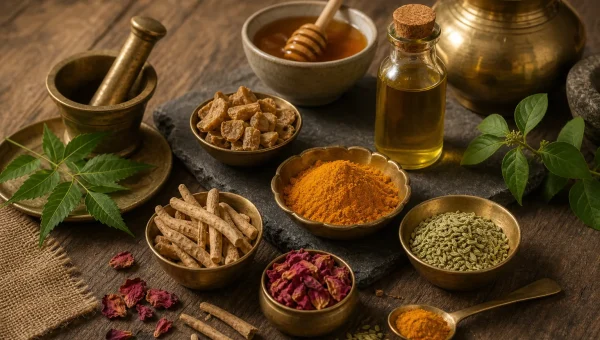
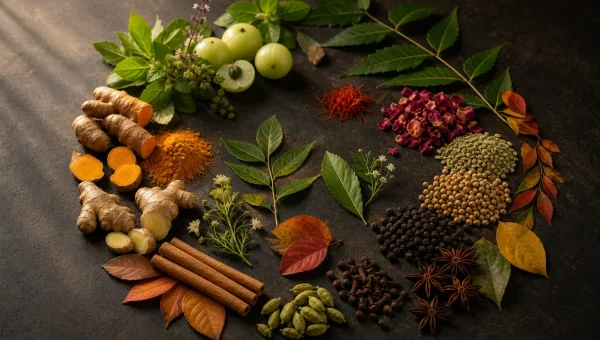
- Pungent (Katu): Dominated by fire and air, pungent taste is hot, light, sharp, and drying. Mild warming spices such as ginger, cumin, fennel, cardamom, cinnamon, and black pepper can support Vata digestion, while excess chili, cayenne, raw onion, or very hot spice blends can be overstimulating.
Vata-Pacifying vs. Vata-Aggravating Foods
The table below is a practical food reference for Vata balance. Preparation matters: warm, well-cooked, moist, lightly oily, and well-spiced versions are generally more Vata-friendly than cold, raw, dry, stale, or puffed versions of the same food.
| Food Category | Vata-Pacifying: Favor | Vata-Aggravating: Reduce or Avoid |
|---|---|---|
| Grains | Basmati rice, cooked oats, wheat, amaranth, quinoa, soft porridge, warm rice pudding | Barley, millet, buckwheat, corn, dry cereals, granola, crackers, rice cakes, puffed grains |
| Legumes | Mung dal, mung beans, red lentils, toor dal, urad dal, hot tofu, warm soy milk with spices | Chickpeas, kidney beans, black beans, black-eyed peas, split peas, dry soy products, cold tofu |
| Vegetables | Sweet potato, pumpkin, beets, cooked carrots, zucchini, okra, asparagus, cooked spinach, green beans | Raw salads, raw carrots, broccoli, cauliflower, cabbage, sprouts, raw onion, radish, bitter greens in excess |
| Fruits | Ripe bananas, avocados, mangoes, grapes, cherries, peaches, cooked apples, soaked dates, soaked figs | Raw apples, green bananas, cranberries, pomegranate, pears, persimmons, watermelon, dry fruit unless soaked or cooked |
| Dairy | Warm milk taken separately, ghee, butter, fresh cheese, cottage cheese, fresh yogurt in suitable quantity | Cold dairy, frozen yogurt, powdered milk, dairy mixed with sour fruits, milk taken with meals |
| Proteins | Eggs, fresh fish, chicken, warm tofu, well-cooked dals; vegetarian diets can balance Vata without meat | Dry meats, jerky-style meats, cold cuts, very heavy meats in excess, under-spiced dense legumes |
| Oils | Ghee, sesame oil, almond oil, olive oil, avocado oil, coconut oil when seasonally suitable | Very low-oil eating, stale oils, heavily processed oils, dry cooking without enough fat |
| Sweeteners | Dates, jaggery, raw honey used without heating, maple syrup in moderation, molasses | White sugar, artificial sweeteners, heated or cooked honey, excessive sweeteners of any kind |
| Spices | Ginger, cumin, fennel, cinnamon, cardamom, black pepper, coriander, turmeric, hing, ajwain | Excess cayenne, excess chili powder, excess raw garlic, horseradish, fenugreek in excess |
| Nuts & Seeds | Soaked almonds, cashews, walnuts, sesame seeds, pumpkin seeds, sunflower seeds, pistachios in moderation | Popcorn, excess dry-roasted nuts, large portions of nuts when digestion is weak |
| Beverages | Warm water, ginger tea, cumin-fennel tea, spiced milk, warm herbal infusions | Iced drinks, carbonated drinks, cold smoothies, excess coffee, excess black tea, alcohol used to stimulate appetite |
Dietary Principles for Vata Balance
Vata is strongly influenced not only by what is eaten, but also by the timing, temperature, texture, quantity, and emotional state around eating. Classical Ayurvedic dietetics emphasizes warm food, unctuous food, proper quantity, eating after the previous meal is digested, suitable combinations, and self-awareness.
Eat Warm, Cooked, and Unctuous Foods
Warm, freshly cooked food is one of the most important Vata principles. Soups, stews, porridges, kitchari, soft rice dishes, cooked vegetables, and dal preparations are easier for Vata digestion than cold salads, dry snacks, or raw meals. Adding ghee, sesame oil, olive oil, or another suitable fat brings the Snigdha, or unctuous, quality that counters dryness.
Maintain Regular Meal Times
Routine is deeply stabilizing for Vata. Eating at consistent times, avoiding skipped meals, and taking the main meal when hunger and digestive strength are clear help reduce the irregularity that often accompanies aggravated Vata. For most people, this means a nourishing breakfast, a steady midday meal, and a lighter warm evening meal rather than grazing, fasting, or eating late at night.
Avoid Incompatible Food Combinations
Ayurveda describes Viruddha Ahara as food combinations that disturb digestion because their qualities, processing, timing, or effects are antagonistic. For Vata, whose digestion is often variable, simple combinations are usually best. Fruits are generally best eaten alone, milk is best taken separately and warm, sour fruits should not be mixed with milk, and honey should not be cooked or heated.
Favor Snigdha, Ushna, and Grounding Qualities
Each meal should include some moistness, warmth, and grounding nourishment. A Vata-friendly plate may include cooked grain, well-cooked dal or protein, soft cooked vegetables, ghee or oil, and gentle spices. Dry crackers, cold leftovers, raw salads, and isolated stimulants may feel light in the moment but often increase Vata’s dry and mobile qualities.
Sample Weekly Meal Plan for Vata Balance
This sample plan uses warm, cooked, moist, and nourishing meals. Portions, spice levels, dairy, gluten, and animal foods should be adjusted to appetite, digestion, constitution, season, and medical needs.
Monday
Begin the week with soft grains, ghee, and sweet root vegetables to build steadiness and warmth.
- Breakfast: Warm oatmeal with ghee, cinnamon, cardamom, soaked almonds, and dates
- Lunch: Kitchari with seasonal vegetables, ghee, cumin, coriander, and a small side of cooked beets with lemon
- Dinner: Sweet potato and carrot soup with ginger and cumin, served with warm chapati
Tuesday
Use mung dal, rice, and soft vegetables to keep digestion light enough while still nourishing Vata.
- Breakfast: Semolina upma with ghee, curry leaves, cumin, and steamed carrots
- Lunch: Basmati rice with mung dal, sautéed zucchini, and turmeric-coriander seasoning
- Dinner: Pumpkin and red lentil stew with ginger, cumin, and a small squeeze of lime
Wednesday
Midweek meals can include warm dairy or dairy-free alternatives, soft grains, and cooked fruits when they suit digestion.
- Breakfast: Warm spiced milk or almond milk with turmeric, ginger, cinnamon, and soaked dates
- Lunch: Vegetable rice with basmati, paneer or tofu, cooked peas, ghee, and mild warming spices
- Dinner: Asparagus and leek soup with warm quinoa pilaf and sesame oil
Thursday
Choose cooked, lightly oily, and easy-to-digest meals that avoid the dryness of roasted snacks or raw salads.
- Breakfast: Poha with peanuts, turmeric, curry leaves, grated ginger, and lemon
- Lunch: Whole wheat roti with ghee, seasoned okra, and warm dal
- Dinner: Rice noodle soup with spinach, ginger broth, and egg or tofu
Friday
End the workweek with satisfying sweet and grounding foods while keeping the evening meal warm and simple.
- Breakfast: Banana pancakes with cardamom and warm stewed fruit
- Lunch: Brown rice or basmati rice bowl with baked fish or paneer, steamed green beans, and sesame-tahini dressing
- Dinner: Creamy tomato-free pumpkin soup or mild carrot soup with warm bread or chapati
Weekend
Weekends are a good time for slow-cooked meals, soaked nuts, stewed fruits, and a relaxed eating environment.
- Breakfast: Warm rice porridge with ghee, cinnamon, soaked raisins, and soaked almonds
- Lunch: Warm grain bowl with roasted root vegetables, mung dal, avocado, sesame dressing, and fresh coriander
- Dinner: Light soup or warm dalia with vegetables, ghee, cumin, and fennel
Three Vata-Balancing Recipes
These recipes use the core Vata logic of warmth, moisture, oiliness, softness, mild spice, and natural sweetness. They can be adjusted for vegetarian, dairy-free, or gluten-free needs.
Recipe 1: Warming Ginger-Carrot Soup
This soup combines sweet vegetables, ghee, ginger, cumin, and a smooth texture, making it suitable for a Vata-pacifying dinner or light lunch.
- 4 large carrots, peeled and chopped
- 1 tablespoon fresh ginger, grated
- 1 tablespoon ghee or sesame oil
- 1/2 teaspoon cumin powder
- 1/4 teaspoon cinnamon
- 3 cups vegetable broth or water
- Salt to taste
Heat ghee in a pot. Sauté ginger and cumin for about 1 minute. Add carrots and broth. Simmer until the carrots are tender. Blend until smooth, add cinnamon and salt, and serve warm with a small swirl of cream or coconut milk if suitable.
Recipe 2: Sesame-Date Energy Balls
These nourishing snacks use natural sweetness, oiliness, and density to support Vata between meals when appetite is strong and digestion can handle a rich snack.
- 10 soft dates, pitted
- 1/4 cup sesame seeds, lightly toasted
- 2 tablespoons almond butter
- 1 teaspoon ghee
- 1/4 teaspoon cardamom powder
- Pinch of mineral salt
Blend the dates into a sticky paste. Mix in almond butter, ghee, cardamom, and salt. Roll into small balls and coat with sesame seeds. Store in the refrigerator, but allow them to come closer to room temperature before eating.
Recipe 3: Vata-Pacifying Golden Milk
Golden milk is a warm, moist, spiced drink that fits Vata’s need for grounding when dairy is tolerated and taken separately from meals.
- 1 cup whole milk or almond milk
- 1/2 teaspoon turmeric powder
- 1/4 teaspoon ginger powder
- 1/4 teaspoon cinnamon
- 1 teaspoon ghee
- 1 teaspoon raw honey, added only after cooling to a drinkable warmth
- Small pinch of black pepper, optional
Warm the milk gently in a saucepan. Whisk in turmeric, ginger, cinnamon, and black pepper if using. Simmer gently without boiling hard. Remove from heat, stir in ghee, and allow the drink to cool slightly before adding raw honey. Drink warm.
Seasonal Adjustments for Vata Diet
Ayurveda adapts diet to season because external qualities influence internal balance. Classical seasonal teaching gives special attention to Vata during the rainy season, especially when wind, cold, weak digestion, and dampness disturb Agni. In many climates, cold, dry, windy weather can also provoke Vata-like symptoms, so the same warm and unctuous approach is useful whenever those qualities dominate.
Rainy, Windy, and Cold Periods
During rainy, windy, or cold periods, Vata benefits from sour, salty, warm, and unctuous foods, along with careful support of digestion.
- Increase warm soups, dals, stews, and ghee-based preparations
- Favor sour and salty accents such as lemon, lime, rock salt, and mild fermented foods when suitable
- Use ginger, cumin, fennel, ajwain, hing, black pepper, and cinnamon in moderation
- Drink warm water or warm herbal teas rather than cold drinks
- Avoid raw salads, dry snacks, excessive fasting, and undercooked beans
Late Winter and Dry Cold Weather
Late winter is cold and rough in quality, so Vata-prone individuals should be especially cautious with light, cold, bitter, pungent, and astringent foods.
- Favor warm grains, root vegetables, cooked dals, ghee, sesame oil, and warm milk if tolerated
- Reduce cold smoothies, raw foods, crackers, puffed grains, and dry roasted snacks
- Keep meals consistent and avoid long gaps between meals
- Use warm water for bathing and keep the body protected from cold wind
- Support the routine with warm oil self-massage when appropriate
Summer and Hot Weather
In hot weather, Vata types still need regular nourishment, but they may not need as much heavy oil or heating spice as in cold weather.
- Continue cooked meals, but make them lighter and more fluid
- Favor sweet, juicy fruits eaten separately from meals
- Use ghee moderately and reduce very heating spices
- Prefer room-temperature or lightly warm drinks over iced drinks
- Use cooling herbs such as coriander, cilantro, and mint without making the meal too dry or raw
Common Mistakes in a Vata Diet
Many diets that appear clean, light, or disciplined can aggravate Vata when they become too cold, dry, irregular, or restrictive. The goal is not heaviness for its own sake, but steady nourishment that digestion can actually handle.
- Excessive raw food: Large raw salads, raw juices, and raw vegetable plates often increase roughness, coldness, and gas for Vata. Light cooking with oil and spices is usually more suitable.
- Juice cleanses and extended fasting: Vata usually responds better to warm, cooked simplicity than to liquid-only fasting. A gentle kitchari-style reset is more compatible than a cold juice cleanse.
- Very low-fat eating: Vata requires unctuousness. Extremely dry meals can worsen dry skin, hard stools, and a feeling of depletion. Use suitable fats according to appetite, digestion, and medical guidance.
- Excess caffeine: Coffee and strong tea can increase stimulation, restlessness, and light sleep. When used, they are better taken in small amounts, not on an empty stomach, and not late in the day.
- Eating while distracted: Working, scrolling, driving, or arguing while eating scatters attention and can disturb Vata digestion. A calm environment and a few steady breaths before eating are simple but powerful supports.
Complementary Practices for Vata Diet
Diet works best when the rest of the day is also Vata-calming. Warm oil self-massage, especially with sesame oil when suitable, supports the opposite qualities of dryness, coldness, and roughness. Gentle alternate-nostril breathing, regular sleep and waking times, warm baths, quiet evenings, and steady daily routines reinforce the same grounding effect as a Vata-balancing diet.
A Vata-balancing diet is not a rigid rulebook. It is a way of reading food through qualities: warm rather than cold, moist rather than dry, cooked rather than raw, steady rather than erratic, and nourishing rather than depleting. The next practical step is simple: make the next meal warm, cooked, lightly oily, gently spiced, and eaten calmly.
This article is for educational purposes only and does not diagnose, treat, or cure any medical condition. Consult a qualified Ayurvedic practitioner, nutrition professional, or healthcare provider before making significant dietary changes, using herbs or supplements, fasting, cleansing, or changing your diet during pregnancy, illness, medication use, or chronic health conditions.
References
- Ayurveda-online (ayurveda-online.net)
- Banyanbotanicals (banyanbotanicals.com)
- Banyanbotanicals (banyanbotanicals.com)
- Banyanbotanicals (banyanbotanicals.com)
- Charaka Samhita — Ahara vidhi
- Banyanbotanicals (banyanbotanicals.com)
- Banyanbotanicals (banyanbotanicals.com)
- Charaka Samhita — Viruddha Ahara
- Charaka Samhita — Atreyabhadrakapyiya Adhyaya
- Banyanbotanicals (banyanbotanicals.com)
- Charaka Samhita — Tasyashiteeya Adhyaya
- Banyanbotanicals (banyanbotanicals.com)
- Banyanbotanicals (banyanbotanicals.com)
- Influence of piperine on the pharmacokinetics of curcumin in animals and human volunteers (1998), PubMed

The safest part of the The Vata Diet advice is keeping it simple. I would like to know how long to try it before judging results.
The seasonal overlay on constitution was new information for me and explains so much about why I feel so different in summer vs winter even though my constitution doesn’t change.
Thank you for asking this! I’ve been too shy to ask the same question and I really needed this answered.
Could you write something about how constitution might shift during major life transitions? I’ve noticed my patterns have changed a lot since menopause and Im curious about the Ayurvedic perspective.
The safest part of the The Vata Diet advice is keeping it simple. Good starting point for a cautious reader.
Is there a recommended age to start introducing children to Ayurvedic self-knowledge? I want my kids to understand their constitution early. Any advice from parents here?
I took this to my Ayurvedic doctor and she confirmed my self-assessment was pretty accurate. Felt good validating my understanding with a professional.
Late to this post but finding it very helpful. The practical step-by-step format makes it easy to follow.
Your explanation of how constitution relates to digestion was the missing piece for me. I’ve been treating symptoms without understanding the root constitution factor
I’ve been using it for a year and can confirm, the results you’re describing are consistent with my longer-term experience.
My husband is textbook Pitta and I’m Kapha and this really helps me understand why we react so differently to the same situations. Even just in terms of how we approach stress.
My Vata is definitely aggravated right now, traveling constantly for work and feeling scattered. This is a good reminder to return to my grounding practices.
I’ve been telling my friends about dosha theory for years but always struggled to explain it clearly. Now I can just send them this article. Perfectly accessible without being dumbed down.
the professional background you bring to this comment is really valuable. Thank you for reading and contributing
Growing up Ayurvedic concepts were just called common sense in my family. Seeing them articulated this clearly makes me appreciate how sophisticated this system really is.
That’s a really important distinction you’ve made. I think a lot of people skip the preparation phase and then wonder why results are inconsistent
The concept is great but the execution could be better. A lot of ‘do this’ without explaining the why behind each step.
I’m a student in an Ayurvedic studies program and I share resources with my cohort. This is going on our reading list. Really solid foundational content
finally an explanation of my Vata imbalance that actually makes sense to me. I’ve read about it before but never connected it to my sleep problems and anxiety the way this article did.
I want to believe this works, but after trying three different Ayurvedic protocols with zero results, I’m starting to think individual mileage varies way more than these articles suggest.
Appreciate you keeping us honest. We’ve noted your feedback about dosage specificity and will address it in a revised version of this article.
Thank you for the honest feedback. You’re absolutely right that individual responses vary, and we should emphasize that more. We’ll update the article to include stronger caveats about individual variation.
The lifestyle recommendations here are practical and specific. A lot of Ayurvedic advice is vague but this gives you actual things to change. Starting with the morning routine
I’m going to share this comment with my skeptical partner. Exactly what I needed to articulate why this works.
I appreciated that you acknowledged the difference between birth Prakriti and current Vikriti. That confusion trips up so many people just starting out.
the practical suggestions at the end are what make this actionable rather than just theoretical. I wrote them all down and will implement them gradually this month
your experience with the diet changes mirrors mine almost exactly. Week two is when it clicks.
I’ve been practicing yoga for 12 years but only discovered Ayurveda two years ago. Wish I’d found it sooner. Posts like this make the learning curve much gentler.
Has anyone else noticed the sleep improvement you mentioned? I’ve been experiencing the same thing
Long-time reader, first comment. Just want to say this site has changed my relationship with my health. The constitutional framework has given me so much useful self-knowledge.
I did not know I was Vata dominant until my mid-30s when the anxiety and insomnia became severe enough to seek answers. Reading a complete diet guide with this level of practical specificity, not just eat warm foods but explaining why cold raw food creates the dryness-mobility cascade that leads to constipation and anxious mind, is the kind of information that changes behavior.
As a yoga teacher I find this foundational knowledge essential for understanding my students. Different students need different approaches and this framework helps me serve them better
Is the Vata diet guide different for someone who is Vata-Pitta vs Vata-Kapha as their secondary dosha? The article seems to address pure Vata type but most people have a secondary dosha that modifies the picture. For Vata-Pitta specifically, how do you balance the warming oils recommended for Vata against the cooling foods needed for Pitta?
Really well structured article. Started reading thinking I knew this topic and ended up learning several new things. The depth here is impressive.
This helped me understand The Vata Diet without too much jargon. The article avoids making it sound like a quick fix.
The raw food community pushed me toward salads, cold-pressed juices, and raw vegetables for years and my digestion got progressively worse. The Vata theory explains it exactly. I am now eating cooked warm meals with healthy fats and my digestion is better than it has been in 10 years.
What is the evidence that cold food specifically aggravates Vata dosha in a way that causes the symptoms described? The gut temperature regulation is primarily controlled by blood supply, not the temperature of ingested food. The cold food restriction seems like it could be traditional belief rather than physiology.
The general advice is sound but the claim that this ‘cures’ or ‘fixes’ the condition is irresponsible wording. ‘May help manage’ is more accurate.
I have added ghee to almost everything I eat since adopting a Vata diet 8 months ago. My energy is more stable, my skin is less dry, and the weight I was afraid to gain has not appeared. The fear of fat in modern nutrition is directly opposed to what Vata types need.
The list of vegetables to avoid for Vata is extremely long and includes most raw vegetables and cruciferous ones. For someone without access to Ayurvedic dietary guidance or cooking support, implementing this diet is quite difficult practically. How do you handle a Vata person who eats in canteens or restaurants?
Having studied both Ayurveda and Western nutrition, I think this article overstates some benefits while ignoring well-established nutritional science.
I want to flag that the recommendation to increase sweet and salty tastes does not mean processed sweets and salty snacks. The classical meaning is natural sweetness from root vegetables, grains, and dairy and natural salt from rock salt and mineral sources. People reading this without that context may misapply it.
The breakdown of sweet, sour, and salty tastes really clarified why I reach for dates and ghee when feeling scattered.
The part about The Vata Diet feels realistic. I would still ask a practitioner before changing medicines.
For Vata types trying this diet, the most important single change in my experience is the morning routine: warm oil self-massage before showering and a warm sesame or almond milk with spices instead of coffee. The coffee switch alone reduced my morning anxiety by about half.
I was diagnosed with IBS-C and the gastroenterologist had no dietary guidance beyond fiber supplements and stress reduction. The Vata diet approach, specifically removing cold dry foods and adding warm oily grounding foods, has reduced my symptoms more than 2 years of low-FODMAP did.
Swapping afternoon iced tea for warm ginger tea might ease bloating.
The part about The Vata Diet feels realistic. I appreciate that it does not oversell the result.
How long does it take to see results following a Vata-balancing diet? I have been doing this for 3 weeks and my anxiety is slightly better but the digestive irregularity has not changed yet. Should I be seeing results this quickly or is this a longer process?
The tip about avoiding fruit with dairy except in cooked preparations made me rethink my usual yogurt parfait.
Seeing the sample meal plan, the Monday kitchari with beet salad looks like something I could actually prepare on a busy weekday.
How do the sesame date energy balls hold up during a morning hike without getting too sticky?
The advice to eat three meals at regular times resonates, especially since skipping breakfast often leaves me restless.
Increasing ghee and root vegetables in autumn makes sense, though portion sizes bear watching.
The reminder to practice abhyanga before bathing feels like a simple way to add nourishment without overhauling my routine.
Doing this
my vaidya recommends something slightly different but the core approach is the same
The section on diet modifications alongside the herb protocol is what makes this more complete than other guides.
The historical context from Charaka Samhita grounding the recommendation was reassuring.
Useful
Just found this post through a search. Is the recommendation still current or has anything changed?
I’ve been dealing with this issue for 2 years and tried multiple things. Starting the approach you outlined here.
The quality of the herb source makes a big difference I’ve found. The article should mention what to look for when buying.
This confirmed what I was already doing intuitively. Nice to have the Ayurvedic framework to understand why.
Will try
I wish you had included more on the Vata-specific approach. The article focuses heavily on Pitta.
Does the treatment timeline change if you’ve had this issue long-term vs recently?
tried this and the results surprised me after only 10 days
I’m a Kapha type and the protocol seems designed more for Vata. Any modifications?
Does this protocol vary by dosha type? I’m Pitta dominant and some of what you describe seems heating.
Same here
The morning routine elements you suggest are already part of my dinacharya. Adding the missing piece you mentioned now.
The specific dosage mentioned in the article, is that for adults only or does it change for elderly users?
I started following the protocol you described 3 weeks back. Early results are encouraging.
Does this interfere with standard medications? I take something daily and want to be careful.
The comparison to modern medicine approach was helpful. My doctor and vaidya recommend different things.
The section on contraindications was the most useful part. I have a pre-existing condition and needed that clarity.
The research citations are good but mostly from small studies. Would like to see larger trial data.
I would like more detail on The Vata Diet. The examples make the advice less abstract.
started last week based on this article. will update in a month
The 3-week timeline seems optimistic based on my experience. More like 6 weeks for me.
my grandmother used to do something similar. not exactly this but the core principle was the same
been using these recommendations from the The Complete Vata Diet Guide article for about 3 weeks now. seeing some improvement.
Does age affect how this works? I’m 52 and wondering if the protocol needs adjustment.