
Kitchari Cleanse: A Simple Ayurvedic Reset Built Around Agni
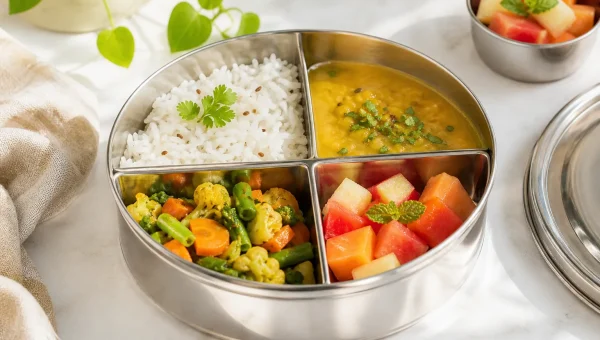
Kitchari is a warm, soft, porridge-like meal made from rice, split mung dal, ghee, and digestive spices. In Ayurveda, its value during a short cleanse comes from simplicity: fewer food combinations, regular warm meals, gentle seasoning, and a texture that is easy for most healthy adults to digest.
This is not a starvation protocol. The aim is digestive rest through simplification, not aggressive calorie restriction. A kitchari cleanse should keep you nourished with three steady meals daily, with optional small servings of broth, tea, or additional kitchari if hunger is present.
Ayurveda explains digestive balance through agni, the principle responsible for digestion, metabolism, and transformation. When digestion is weak or irregular, ama is understood as the product of incomplete digestion and metabolism. A well-cooked, warm, moist kitchari routine is used to support steady agni while avoiding heavy, complex, or irregular meals.
Why Kitchari Works in an Ayurvedic Cleanse
The Ayurvedic logic of kitchari is practical: use a small number of familiar foods, cook them until soft, season them with mild digestive spices, eat at regular times, and avoid the extra digestive burden of heavy, fried, cold, stale, or highly processed meals. Rice supplies easily used carbohydrate, while mung dal contributes plant protein and fiber. As a cereal-legume pairing, rice and dal also provide complementary amino acids.
Green gram, mudga, is regarded as the best among pulses; it is light and is described as reducing kapha and pitta.
– Charaka Samhita, Sutra Sthana 27, Annapanavidhi Adhyaya
Classical Ayurveda also distinguishes between lighter and heavier preparations of rice: rice that is properly cleansed, well cooked, softened, and served warm is considered lighter than rice that is poorly cooked, cold, dense, or stale. For this reason, cleanse-style kitchari should be fresh, warm, soft, and slightly soupy rather than dry or undercooked.
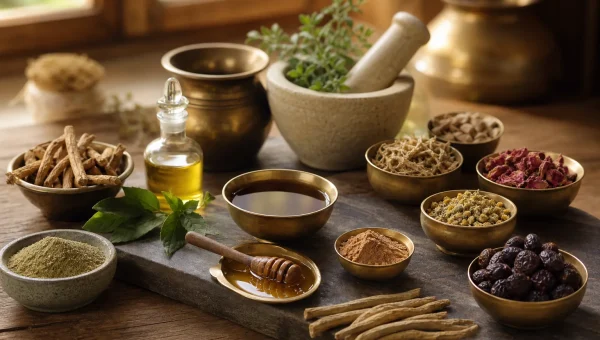
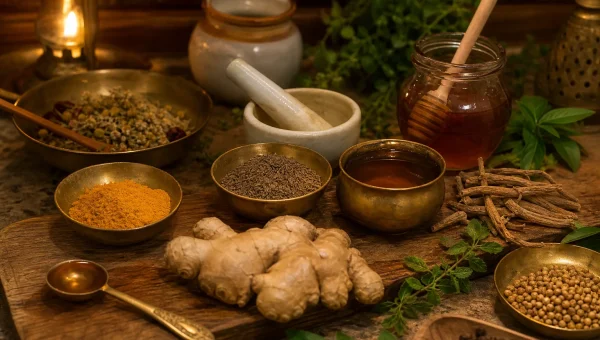
The spice blend is not decorative. Each spice is used in small culinary amounts to support appetite, comfort, and digestibility:
- Turmeric (Haridra): A bitter-pungent culinary spice traditionally used in Ayurveda. In kitchari it is used modestly for color, flavor, and warmth. Black pepper and ghee are often paired with turmeric, but high-dose turmeric or curcumin supplements should not be treated like ordinary food.
- Cumin (Jiraka or Svetajiraka): An aromatic seed used as a digestive spice. It adds warmth and helps make a simple rice-dal preparation more appetizing.
- Coriander (Dhanyaka): A fragrant, gentler digestive spice. Ayurveda describes it as appetizing and aromatic without being excessively sharp.
- Ginger (Ardraka fresh; Shunthi dried): A warming digestive spice used to kindle agni. Reduce or omit it if you have strong heat, acid reflux, burning sensations, or active gastritis.
- Fennel (Mishreya or saunf): A sweet-aromatic seed used after meals and in digestive teas. Fennel should not be confused with Shatapushpa, which refers to dill.
- Black pepper, long pepper, and Trikatu: Warming spices used more in Kapha-type preparations. They are optional and should be avoided or minimized in Pitta aggravation, reflux, ulcers, pregnancy unless supervised, and with sensitive digestion.
Before You Begin: Preparation Essentials
A kitchari cleanse is easiest when the ingredients are simple, the meals are cooked fresh, and the household routine is quiet. Choose a three- to five-day window without travel, heavy exercise, late nights, or demanding social commitments.
Shopping List
Use split yellow mung dal rather than whole green mung beans for the softest texture. White basmati rice is commonly used because it cooks light and soft, though other well-cooked rice may be used if tolerated.
- 2 cups split yellow mung dal
- 2 cups white basmati rice
- Ghee, or coconut oil for a lighter Pitta-style variation
- Whole cumin seeds
- Whole coriander seeds or coriander powder
- Fennel seeds
- Ground turmeric
- Fresh ginger root
- Optional black mustard seeds for non-Pitta preparations
- Fresh cilantro, lime, and rock salt or mineral salt
- Seasonal vegetables such as zucchini, carrots, sweet potato, leafy greens, bottle gourd, or pumpkin
Two-Day Pre-Cleanse Transition
A short transition helps the body adjust before the mono-diet phase. This is especially useful if your usual diet includes caffeine, alcohol, late meals, fried foods, heavy meats, or frequent snacking.
- Day -2: Reduce caffeine, alcohol, sugar-heavy foods, ultra-processed foods, fried foods, and heavy meats. Eat simple cooked meals with grains, vegetables, legumes, soups, and warm water.
- Day -1: Eat light vegetarian meals. Have kitchari for dinner to introduce the texture, spices, and meal pattern before the cleanse begins.
The 5-Day Protocol: Daily Schedule
This five-day plan is a moderate home routine for generally healthy adults. Portions should be adjusted to appetite, constitution, work demands, and bowel regularity. Do not force hunger, excessive water intake, or large amounts of ghee.
Day 1: Transition Day
Use the first day to establish regular meals, warm hydration, light movement, and an early bedtime. The goal is rhythm rather than intensity.
| Time | Activity |
|---|---|
| 6:00 AM | Wake, scrape tongue, and drink warm water. Lime may be added if tolerated. |
| 6:30 AM | Gentle yoga, stretching, or a relaxed walk for 10-20 minutes. |
| 7:30 AM | Breakfast kitchari, about 1-1.5 cups, with ginger or CCF tea. |
| 10:30 AM | Optional: warm herbal tea, plain warm water, or a small cup of thin kitchari broth. |
| 12:30 PM | Lunch kitchari, about 1.5-2 cups, as the largest meal. Add soft cooked vegetables if needed. |
| 3:30 PM | Warm water, CCF tea, or ginger tea if it suits your digestion. |
| 6:00 PM | Dinner kitchari, about 1-1.5 cups, lighter than lunch. |
| 9:00 PM | Chamomile tea or warm milk if tolerated. Aim for sleep by 10 PM. |
Days 2-3: Simplify
Follow the same meal rhythm, but keep the food simpler. Use plain kitchari with moderate ghee and mild spices. Vegetables may be reduced for a stricter cleanse, but they do not need to be removed if doing so causes weakness, constipation, or poor satisfaction.
Therapeutic internal oleation, or snehapana, is a supervised Ayurvedic procedure with indications, contraindications, dosing rules, and signs of proper or improper use. For a home kitchari cleanse, do not self-dose large quantities of ghee on an empty stomach. Use ghee as a food ingredient, commonly 1 teaspoon to 1 tablespoon per serving if tolerated.
Mild changes in appetite, bowel habits, energy, or mood can occur when diet and routine are simplified. Stop the cleanse and seek appropriate guidance if you experience fainting, severe weakness, confusion, chest pain, persistent vomiting, persistent diarrhea, severe headache, allergic reaction, or blood-sugar instability.
Day 4: Rebuild Clarity and Appetite
By the fourth day, assess digestion rather than chasing dramatic detox signs. Useful markers include comfortable hunger before meals, less heaviness after meals, easier elimination, and steadier energy. If digestion feels stable, add one soft cooked vegetable at lunch.
Day 5: Gentle Reintroduction
Continue using kitchari as the base while preparing the body for a broader diet. Add steamed vegetables at lunch and dinner. A small serving of stewed apple or pear may be used at breakfast if fruit suits your digestion.
Three Kitchari Recipes: Dosha-Specific Variations
All three recipes keep the same foundation: rice, split mung dal, water, a small amount of fat, and digestive spices. The variation comes from texture, spice intensity, vegetables, and fat choice. Choose according to current digestion and season, not only your constitutional type.
Recipe 1: Classic Tridoshic Kitchari
This balanced version is soft, warm, mildly spiced, and suitable for many healthy adults. It is the best starting point if you are unsure which variation to choose.
Prep time: 10 minutes | Cook time: 35 minutes | Serves: 4
Ingredients:
- 1 cup split yellow mung dal, soaked for 1-2 hours and rinsed
- 1 cup white basmati rice, rinsed until the water runs mostly clear
- 6 cups water
- 2 tablespoons ghee
- 1 teaspoon cumin seeds
- 1/2 teaspoon fennel seeds
- 1/2 teaspoon turmeric powder
- 1/2 teaspoon coriander powder
- 1/2 inch fresh ginger, grated
- 1/4 teaspoon rock salt or mineral salt, adjusted to taste
- Fresh cilantro for garnish
- A squeeze of lime, optional
Method:
- Warm the ghee in a heavy-bottomed pot over medium-low heat. Add cumin and fennel seeds and stir until aromatic.
- Add ginger, turmeric, and coriander. Stir briefly without burning the spices.
- Add the rinsed dal and rice. Stir for 1 minute to coat them with the spice mixture.
- Add 6 cups water and bring to a gentle boil.
- Reduce the heat, cover partly, and simmer for 25-30 minutes, stirring occasionally.
- Cook until the dal is very soft and the mixture has a porridge-like consistency. Add more hot water for a thinner cleanse-style texture.
- Add salt at the end. Garnish with cilantro and lime if desired.
Recipe 2: Pitta-Soothing Coconut-Coriander Kitchari
This variation is useful in hot weather or when digestion feels sharp, acidic, or overheated. It reduces pungent spices and uses coriander, fennel, cilantro, and a modest amount of coconut for a gentler profile.
Prep time: 10 minutes | Cook time: 40 minutes | Serves: 4
Use the classic recipe as the base, but omit mustard seeds, black pepper, and chilies. Reduce fresh ginger to a small slice or omit it. Replace 1-2 cups of the water with thin coconut milk, add 1/2 teaspoon cardamom if desired, and increase coriander and fennel slightly. Fold in chopped cilantro at the end. Keep the texture soupy, because too much coconut can make the dish heavier.
Recipe 3: Kapha-Light Spiced Kitchari
This variation suits cold, damp, heavy, or sluggish Kapha-type digestion when there is no reflux, burning, ulcer tendency, or strong Pitta aggravation. It is lighter on fat, warmer in spice, and slightly drier than the classic recipe.
Prep time: 10 minutes | Cook time: 30 minutes | Serves: 4
Use 1 teaspoon to 1 tablespoon ghee instead of 2 tablespoons. Increase ginger to 1 inch, add a small pinch of black pepper, and optionally add a small pinch of Trikatu if already prescribed or known to suit you. Use 3/4 cup rice and 1 1/4 cups split mung dal. Add chopped leafy greens in the last 5 minutes. Keep the seasoning warming but not harsh.
Supporting Practices During the Cleanse
Supporting practices should make the cleanse calmer, not more extreme. The best additions are warm hydration, gentle movement, oil massage when appropriate, quiet evenings, and regular sleep.
Abhyanga (Self-Massage)
Apply warm sesame oil for Vata or Kapha tendency, or coconut or sunflower oil for Pitta tendency, before a warm shower. Use long strokes on the limbs and circular strokes around the joints. In Ayurvedic daily routine, abhyanga is valued for calming Vata, supporting comfort, nourishing the skin, and preparing the body for rest.
Skip abhyanga during fever, acute illness, active rash or skin infection, severe indigestion, immediately after meals, or whenever oil application feels unpleasant. Pregnancy, significant medical conditions, and post-surgical recovery require personalized guidance.
Digestive Teas
Warm teas can support hydration and comfort during the cleanse. Sip according to thirst rather than forcing excessive fluid intake.
CCF Tea: Combine 1/2 teaspoon each of cumin seeds, coriander seeds, and fennel seeds. Steep in 2 cups boiling water for 10 minutes, strain, and sip warm through the day.
Ginger-Lemon Digestive: Simmer a few slices of fresh ginger in 2 cups water for 10 minutes. Add a small squeeze of lemon and a pinch of mineral salt if tolerated. Use before meals only when ginger suits your digestion. Avoid this tea if it worsens acidity, burning, or nausea.
Rest and Routine
A cleanse is not the time for intense training, late nights, or a packed schedule. Keep activity gentle: walking, relaxed yoga, stretching, or light mobility. Eat at consistent times, reduce screens in the evening, and aim for a full night of sleep.
Post-Cleanse: The Reintroduction Phase
The exit from a cleanse matters as much as the cleanse itself. Returning immediately to heavy meals, alcohol, fried foods, or irregular eating can overwhelm digestion. Ayurveda emphasizes rebuilding agni gradually after a simplified diet.
Days 6-7: Eat kitchari for breakfast and simple cooked meals for lunch and dinner. Add one new food category at a time, such as steamed vegetables, then another grain, then a familiar legume. Keep meals warm and moderate.
Days 8-10: Reintroduce dairy if tolerated, then nuts, seeds, raw foods, and heavier grains. Save caffeine, alcohol, fried foods, and ultra-processed foods for last, or leave them out if the cleanse has helped reduce cravings.
Who Should Not Do a Kitchari Cleanse
Although kitchari is a simple food, a cleanse changes meal composition, meal timing, and sometimes carbohydrate intake. It is not suitable for everyone without supervision.
- Pregnant or breastfeeding women unless a personal healthcare provider specifically approves it
- Children and teenagers unless supervised by a qualified clinician
- Anyone with an active eating disorder or a history of disordered eating
- Anyone with Type 1 diabetes, insulin-dependent Type 2 diabetes, or diabetes medications that can cause hypoglycemia unless medically supervised
- People who are underweight, frail, recovering from surgery, or recovering from acute illness
- Anyone with significant kidney disease, liver disease, gallbladder disease, inflammatory bowel disease, severe IBS, or known allergy or intolerance to the ingredients
- Anyone taking blood-thinning or antiplatelet medication, especially if using frequent turmeric, ginger, black pepper, or supplement-level spice extracts
Consult a qualified Ayurvedic practitioner and a licensed healthcare provider before beginning any cleanse if you have a medical condition, take prescription medication, are trying to conceive, are pregnant or breastfeeding, or have a history of restrictive eating.
Expected Benefits and What to Track
A kitchari cleanse is best judged by digestion and routine, not by dramatic detox claims. Track simple markers: appetite before meals, heaviness after meals, bloating, bowel regularity, sleep, energy, cravings, and mental steadiness. Weight may temporarily change because meal volume, sodium intake, bowel contents, and hydration change, but fat loss is not the primary purpose of this protocol.
Many practitioners use short kitchari periods at seasonal transitions, especially spring and autumn, in the spirit of ritucharya, Ayurveda’s seasonal regimen for preserving health. More intensive procedures such as medicated ghee, therapeutic purgation, basti, or full Panchakarma should be done only under qualified supervision.
Disclaimer: This dietary protocol is intended for generally healthy adults and does not constitute medical advice. Consult a qualified Ayurvedic practitioner and a licensed healthcare provider before beginning any cleanse or detoxification program, especially if you have a pre-existing medical condition, take prescription medications, are pregnant or breastfeeding, or have a history of disordered eating.
References
- Hopkinsmedicine (hopkinsmedicine.org)
- Charaka Samhita — Agni
- Charaka Samhita — Ama
- Charaka Samhita — Annapanavidhi Adhyaya
- Mung Bean (Vigna radiata L.): Bioactive Polyphenols, Polysaccharides, Peptides, and Health Benefits (2019), PubMed Central
- A review on metabolites and pharmaceutical potential of food legume crop mung bean (Vigna radiata L. Wilczek) (2021), PubMed Central
- Fao (fao.org)
- Ayurvedic Pharmacopoeia of India
- Ayurvedic Pharmacopoeia of India
- Anethum graveolens: An Indian traditional medicinal herb and spice (2010), PubMed Central
- Influence of piperine on the pharmacokinetics of curcumin in animals and human volunteers (1998), PubMed
- NCCIH
- Medsafe (medsafe.govt.nz)
- Curcumin, hemostasis, thrombosis, and coagulation (2018), PubMed
- Charaka Samhita — Snehadhyaya
- Pilot study investigating the effects of Ayurvedic Abhyanga massage on subjective stress experience (2011), PubMed
- Foeniculum vulgare Mill: a review of its botany, phytochemistry, pharmacology, contemporary application, and toxicology (2014), PubMed Central
- NCCIH
- CDC
- Mayoclinic (mayoclinic.org)
- Map (map.nationaleatingdisorders.org)
- Charaka Samhita — Ritucharya
- Ritucharya: Answer to the lifestyle disorders (2011), PubMed Central
this has been sitting in my bookmarks for weeks and I finally read it today. Going to implement starting Monday. Thank you for making this so approachable
three months sounds right from my experience too. Commit to that and then evaluate.
I love how this connects food to season rather than giving one-size-fits-all advice. I always felt worse eating the same things in winter as in summer. Now I understand why
Your experience with the diet changes mirrors mine almost exactly. Week two is when it clicks.
I run a small Ayurvedic cooking class in my city and I share resources with participants. This article is going on the required reading list immediately.
The spice information here overlaps beautifully with what I learned from my Indian mother-in-law. She always cooked this way intuitively. Now I understand the science behind it
The timing guidance around eating is new to me. I’d never considered when I eat as significant as what I eat. Already experimenting with making lunch my biggest meal
The seasonal eating section is so logical once you read it. Eating what grows locally and seasonally is the original human diet. We just forgot somewhere along the way.
This is so helpful to read. I’m just starting out with this and hearing positive experiences helps me stay motivated.
I’m a registered dietitian and while I approach nutrition from a Western evidence-based perspective, I find the Ayurvedic framework fascinating as a complementary lens.
Wonderful to see someone from a medical background engaging with this content thoughtfully
I’ve been following this for three weeks. The first week was an adjustment but by week two I felt notably more energized. The midday slump I used to have has mostly disappeared
My nutritionist and my Ayurvedic practitioner have me working together and articles like this help me bridge the two frameworks in my own cooking.
I switched to eating this way about two months ago and my digestion has completely transformed. I used to have bloating every single day. It’s almost gone now.
it’s wonderful to see both believers and skeptics engaging respectfully in the comments. That’s how we all learn
Reading this later and the The Authentic Kitchari Cleanse advice still feels relevant. I appreciate that it does not oversell the result.
Reading this later and the The Authentic Kitchari Cleanse advice still feels relevant. Would be useful to see a short checklist next.
The grandmothers always knew! I keep finding that traditional knowledge holds up to modern scrutiny
the explanation of why to avoid cold water was the first thing I implemented. Such a small change but I genuinely feel it makes a difference in how I digest my meals.
I appreciate that you explained WHY these foods are recommended, not just what they are. Understanding the reasoning helps me make better choices when I’m in situations not covered by the list.
I came here to say exactly this and you said it better. Completely agree
I tried the morning routine recommended here including the warm water with lemon and ginger and within a week my afternoon energy crash was noticeably better.
I was resistant to giving up raw salads, feels counterintuitive when you’ve been told salads are healthy. But three weeks of warm cooked vegetables and my digestion is so much calmer.
The connection you made between those two things is really insightful. I hadn’t thought of it that way before.
The meal plan here is so practical. I was intimidated by Ayurvedic cooking but seeing it broken down like this makes it feel achievable for a busy working parent.
the lifestyle changes recommended here are excellent. The supplement recommendations, less so. Hard to know what dose actually works.
Started drinking CCF tea after reading this. Two weeks in and my appetite feels more regulated and I’m not craving sweets the way I used to after meals.
The combination approach you described is exactly what my practitioner recommended too. Validation always feels good.
Your skepticism is healthy and welcome. We never intend for our content to replace medical advice, and we’ll make that clearer going forward.
The shopping list format is brilliant. I’ve tried following Ayurvedic diet advice before but always got stuck at the grocery store not knowing what to buy. This solves that
the food combining rules here helped me understand why certain meals left me feeling heavy and uncomfortable even when the individual foods were healthy.
Interesting perspective, but I’ve read contradicting information from other Ayurvedic sources. How does a beginner know who to trust?
Valid concerns. Ayurveda works best as a complementary approach, not a replacement for evidence-based medicine. Thank you for highlighting this important distinction.
Been using cleanse for about 3 months now and the difference in how I feel is real. My practitioner said the same things this article covers so good to have it spelled out.
Is the mung bean and rice ratio adjustable for someone with high protein requirements? I strength train and 5 days on primarily rice and legumes with ghee would significantly reduce my protein intake. Can you add more lentils or does that alter the digestive simplicity principle?
The ghee quantity in the cleanse recipe seems high to people coming from low-fat dietary thinking. In my experience the 2-3 teaspoons per meal of ghee is what makes the cleanse sustainable. It provides satiety and the medium-chain fatty acids support liver function during the cleanse.
For The Authentic Kitchari Cleanse, consistency seems like the hard part. The article avoids making it sound like a quick fix.
This contradicts what my specialist told me at AIIMS. They specifically said cleanse has no evidence base for this condition. Who is right?
I liked the practical side of The Authentic Kitchari Cleanse. I appreciate that it does not oversell the result.
This matches my clinical experience. I’ve recommended cleanse to patients with similar presentations and the response rate is consistent with what the article describes.
While I appreciate the Ayurvedic perspective, some of the dietary advice here contradicts current nutritional research. Balance is key
The spice combination in Kitchari is not just flavor, it is medicine. Cumin, coriander, turmeric, and ginger together address all three doshas and prepare the digestive system for the mung bean. The article explains this but new people to Ayurvedic cooking need to understand the spices are as important as the base ingredients.
I am skeptical that eating the same simple food for 5 days produces meaningfully different outcomes than just a 5-day clean diet generally. The specific properties of Kitchari may be overstated relative to the general benefit of eating simply and consistently for 5 days.
The mention of kitchari surviving 3,000 years caught my eye; I wonder how that compares to other traditional detox foods.
The research cited here is from the 2015-2020 period. Is there more recent work that confirms or updates these findings?
Would this cleanse be appropriate during a period of heavy physical or mental work, or should it only be done during a low-demand week? The reduced protein intake and simplified diet make me think cognitive and physical performance would be lower during the 5 days.
It seems the protocol emphasizes three full meals plus optional servings, which feels less extreme than juice fasts.
One detail I appreciated is the explanation of why turmeric needs black pepper and fat for absorption.
Reading about the abhyanga self-massage made me wonder if sesame oil works better than coconut oil for my skin type.
I’m curious about the reintroduction phase; does adding steamed vegetables on day four really help ease the transition?
The safest part of the The Authentic Kitchari Cleanse advice is keeping it simple. I appreciate that it does not oversell the result.
Tried turmeric after reading multiple articles like this. My acidity didn’t improve and I wasted 3 months. Maybe it works for others but not me.
I use a combination of bibhitaki and amalaki as per my Ayurvedic practitioner’s advice. The article aligns with what she told me.
Started with triphala only and after 2 months added turmeric. The combination seems more balanced for my specific constitution.
I rotate between boswellia and amla based on season. This is how my Vaidya has me using them and it seems more effective than one year-round.
The combination of guduchi and dietary changes worked better for me than either alone. The article should emphasize this more.
I’ve been combining the morning punarnava with an Ayurvedic diet modification my practitioner recommended. The synergy seems real.
The combination of haritaki and dietary changes worked better for me than either alone. The article should emphasize this more.
The combination of moringa and dietary changes worked better for me than either alone. The article should emphasize this more.
The quality of the herb matters enormously. I switched brands after 2 months of no results and things changed. (reading this in 2027, still seems relevant.)
Just got my quarterly blood panel back. Inflammation markers are down from last quarter. Attributing some of that to consistent haritaki use.
The The Authentic Kitchari Cleanse section feels grounded enough to try carefully. The article avoids making it sound like a quick fix.
Switched to organic ashwagandha last month after reading about heavy metal contamination in cheaper brands. More expensive but feels safer.
My blood sugar stability is also connected to my stress levels. The adaptogenic effect of vidari kanda seems to work on both simultaneously.
I was looking for a plain explanation of The Authentic Kitchari Cleanse. A few more examples would still help.
Grew up in a household where moringa was just part of the kitchen. Now understanding the science behind it in adulthood is satisfying.
My grandmother used to give us guduchi every winter. Never knew the full reasoning behind it until I started reading articles like this. ❤️
Was prescribed guduchi by an Ayurvedic doctor in Mumbai. Same dose as mentioned here. Two months later, energy is better.
The cost of a quality Ayurvedic protocol adds up. Factoring that in for anyone budgeting: ashwagandha alone runs me about 800 rupees a month for a good brand.
The The Authentic Kitchari Cleanse angle is useful here. Small daily changes are easier to follow than a perfect plan.
Started this protocol after seeing my skin health get worse over winter. Only 2 weeks in so can’t say much yet.
Found this while researching PCOS management options. Added a few of the suggested herbs to my morning routine. Late to this post but wanted to add my experience.
How long before you’d expect to see results with moringa for skin health? The article doesn’t specify a timeline.
Was prescribed haritaki by an Ayurvedic doctor in Mumbai. Same dose as mentioned here. Two months later, liver is better.