
Repeated urinary symptoms deserve more than a cycle of assumptions. Recurrent urinary tract infection (UTI) is generally defined as two or more episodes within six months or three or more within twelve months. Each episode may be reinfection, relapse, or a different problem that resembles infection. A bacterial UTI is not merely a symptom of a “disrupted channel”: it may require urine testing and prompt antimicrobial treatment. The Ayurvedic concept of Mutravaha Srotas can provide a traditional framework for urine flow, discomfort, obstruction, and susceptibility, but it cannot replace biomedical diagnosis.
Antibiotics remain necessary for many confirmed infections. Previous exposure can select resistant organisms and alter the intestinal microbiota. Research has linked recurrent UTI with gut-microbiome disturbance, but this does not prove a single cause in every patient. Use antibiotics when indicated, guided by culture and susceptibility whenever practical.
Mutravaha Srotas: Anatomy and Function in Classical Terms
Srotas are pathways through which bodily materials are transported, transformed, and eliminated. For Mutravaha Srotas, Charaka names basti and vankshana—the bladder and groin or pelvic region—as the roots. Sushruta gives basti and medhra, the bladder and urinary outlet or genital-urethral region. The claim that Charaka locates the roots in the kidneys and bladder is therefore incorrect. Kidneys are essential in modern anatomy, but they are not Charaka’s stated mula.
Apana Vata is relevant because its classical locations include the bladder, groin, genital region, and anus, and its functions include elimination of urine and stool, ejaculation, menstruation, and childbirth. This supports attention to unobstructed downward movement and timely voiding. It does not mean urgency is always “excess Apana” or retention always “weak Apana”; infection, stones, pelvic-floor dysfunction, medicines, or neurological disease may cause similar symptoms.
Charaka includes habitual suppression of urination among causes of disturbance. Classical signs include excessive urination, obstruction or suppression, altered urine, frequency, and painful passage. These are symptom categories, not substitutes for urinalysis, culture, kidney-function tests, imaging, or specialist assessment.
Classification of Mutravaha Srotas Disorders
Classical terms describe symptom patterns rather than exact modern diagnoses. Mutrakrichra may arise with infection, stone, irritation, or another cause of dysuria. These are not one-to-one equivalences.
| Classical term | Verified sense | Modern question | Caution |
|---|---|---|---|
| Mutrakrichra | Difficult or painful urination | Infection, stone, irritation, or obstruction? | Not synonymous with bacterial UTI or automatically Pitta-dominant. |
| Mutraghata | Obstruction, suppression, or retention | Outlet, prostate, medicine, or neurological cause? | Inability to urinate requires urgent care. |
| Mutrashmari | Urinary calculus or stone | Kidney, ureteric, or bladder stone? | Fever with colicky pain or obstruction is urgent. |
| Mutrotsanga | Interrupted flow with residual urine or delayed dribbling | Incomplete bladder emptying? | Persistent residual urine warrants evaluation. |
| Mutrasamkshaya | Diminished urine formation or flow | Dehydration, kidney injury, or obstruction? | Very low output may require urgent care. |
Mutrakrichra and Recurrent UTI
Mutrakrichra means difficult or painful urination, not “recurrent UTI.” Burning, urgency, frequency, cloudy urine, or blood may occur with UTI, but symptoms alone do not identify the organism or exclude another disorder. In recurrent cases, a clinician should review cultures, susceptibility results, timing of relapse, pregnancy or menopausal status, stone history, incomplete emptying, and possible structural or functional causes.
Ayurvedic assessment can remain useful when descriptive. Burning, heat, yellow or reddish urine, and thirst may be interpreted through pitta and ushna; pain, hesitancy, interrupted flow, and retention may draw attention to vata; heaviness or turbidity may involve kapha. These are traditional observations, not microbiological diagnoses, and should guide supportive care only after active infection and dangerous causes have been addressed.
Verified Ayurvedic Medicines and Their Limits
The Ayurvedic Pharmacopoeia of India (API) is an official standard for the identity, purity, strength, properties, and traditional uses of listed medicines. A pharmacopoeial indication confirms traditional use; it does not prove bacterial eradication or prevention of recurrent UTI in human trials.
Gokshura (Tribulus terrestris fruit): The API records madhura rasa, guru and snigdha guna, shita virya, and madhura vipaka. Actions include ashmarihara and vastishodhana, and traditional uses include mutrakrichra and ashmari. This supports selected classical use, not an antibiotic claim. The alleged 2012 human trial showing reduced UTI symptoms and bacterial counts could not be verified and should not be cited. A fixed extract dose for active infection is inappropriate without professional review.
Punarnava (Boerhaavia diffusa): The API gives madhura, tikta, and kashaya rasa; ruksha guna; ushna virya; and madhura vipaka. Its actions include shothahara and mutrala, while therapeutic uses emphasize shotha and pandu. It may be selected for an Ayurvedic swelling or fluid pattern, but it is not a proven antibacterial treatment for cystitis or kidney infection.
Varuna (Crataeva nurvala stem bark): The API records tikta and kashaya rasa; laghu and ruksha guna; ushna virya; and katu vipaka. Traditional uses include ashmari and mutrakrichra, and Varunadi Kvatha Churna is listed as an important formulation. This does not prove that bark extract dissolves calcium oxalate stones or restores bladder tone.
Gokshuradi Guggulu and Chandraprabha Vati: The official formulation standard lists Gokshuradi Guggulu for traditional indications including mutraghata and ashmari; it does not establish a three-to-six-month recurrent-UTI prevention protocol. Chandraprabha Vati should not be treated as a universal “UTI tablet” with an internet dose. Compound and herbo-mineral medicines require diagnosis, licensed manufacture, quality testing, supervision, and disclosure to clinicians.
Prevention Without Overclaiming
“Strengthening Mutravaha Srotas” should mean reducing avoidable strain and correcting the cause of recurrence, not taking a diuretic indefinitely. Do not habitually suppress urination. Follow individualized fluid advice, especially with heart or kidney disease. Review voiding habits, relevant triggers, residual urine, stones, and diabetes with a clinician. Obtain a urine sample before antibiotics whenever clinically practical.
Guideline-based prevention may include behavioural measures, vaginal oestrogen for suitable peri- or postmenopausal patients, a clinician-directed single antibiotic dose for an identifiable trigger, methenamine hippurate in selected non-pregnant patients, or daily antibiotic prophylaxis when other measures are insufficient. Selection depends on culture history, pregnancy, kidney function, adverse effects, and complication risk.
Yava (barley) water: Charaka discusses barley in contexts such as prameha and thirst, but this does not verify claims that barley water prevents recurrent UTI, coats urinary epithelium, or reduces crystallization. Plain barley water may be a food beverage for someone who tolerates gluten and has no fluid restriction, but it is not treatment for bacterial infection. Lemon and salt are optional foods, not required medicine.
Incontinence: Apana Vata and Pelvic-Floor Care
Ayurveda can discuss continence through Apana Vata, but modern classification remains important. Stress incontinence is leakage with coughing, sneezing, exertion, or movement; urgency incontinence accompanies a sudden compelling urge; mixed incontinence has both. These should not be labelled simply “weak Apana” or “aggravated Apana” without evaluating pelvic-floor function, prolapse, infection, medicines, and neurological causes.
For women with stress or mixed urinary incontinence, NICE recommends supervised pelvic-floor muscle training for at least three months as first-line care. For urgency or mixed incontinence, bladder training for at least six weeks is first-line. Mula Bandha may complement correctly taught awareness, but it is not a replacement for pelvic-health physiotherapy. Ashwagandha, Shatavari, and Brahmi should not be presented as established treatments for sphincter weakness or detrusor overactivity; the fixed doses and GABA-based claims in the original protocol lack adequate clinical support.
A Safer Integrated Sequence
During an acute episode, establish whether infection is likely and whether a culture is needed. Use prescribed antibiotics exactly as directed when bacterial UTI is confirmed or strongly suspected; do not delay treatment while testing herbs. After symptoms settle, determine whether recurrence is relapse, a new infection, or a noninfectious mimic. An Ayurvedic physician can then individualize diet, herbs, or formulations according to symptoms, strength, digestion, comorbidities, and medicines.
Keep a record of symptom dates, culture results, antibiotics and responses, menstrual or menopausal context, triggers, and stone or retention symptoms. This helps practitioners coordinate care.
When Urinary Symptoms Need Prompt Medical Care
Seek prompt assessment for fever or shivering, pain in the side or back below the ribs, vomiting, visible blood in urine, very low or absent urine output, severe pain, pregnancy with urinary symptoms, worsening despite treatment, or recurrent upper-tract infection. Confusion, marked drowsiness, or difficulty speaking requires emergency care.
Ayurvedic care should be supervised by a qualified Ayurvedic physician and coordinated with a healthcare provider. Untreated bacterial UTI can ascend to the kidneys and become serious. Do not replace or postpone indicated antibiotics, urine testing, imaging, or urgent care with herbs, barley water, yoga, or over-the-counter formulations.
Actionable tip: Bring the dates of each episode, culture reports, previous antibiotics, and a list of every herb or supplement to your clinician. Ask whether an underlying cause needs investigation and which prevention option is appropriate. Add Ayurveda only as supervised supportive care.
References
- Nice (nice.org.uk)
- Longitudinal multi-omics analyses link gut microbiome dysbiosis with recurrent urinary tract infections in women (2022), PubMed
- Charaka Samhita — Srotasa
- Charaka Samhita — Vata dosha
- Charaka Samhita — Mutra
- Charaka Samhita — Trimarmiya Siddhi
- Ayurvedic Pharmacopoeia of India
- Natural Ingredient Resource Center
- NCCIH
- Charaka Samhita — Prameha Chikitsa
- Charaka Samhita — Trishna Chikitsa
- Nice (nice.org.uk)
- Nice (nice.org.uk)
- NHS
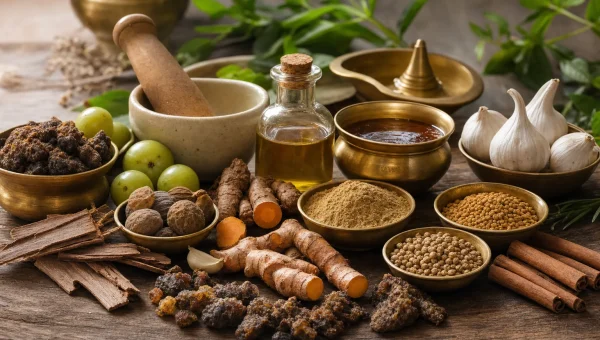
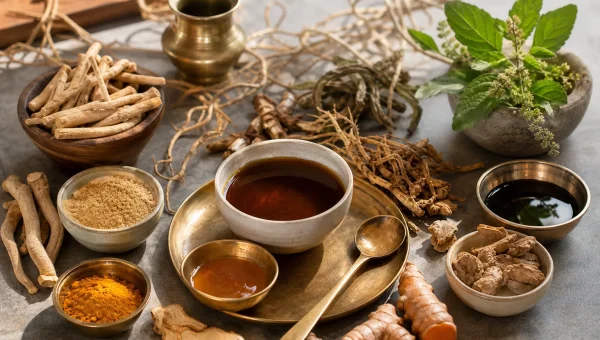
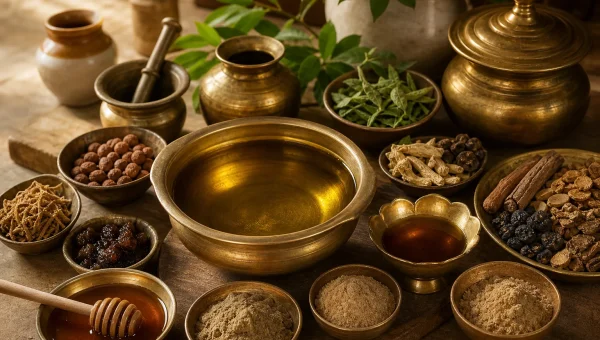
appreciated the part about sourcing quality this herb, not all brands are equivalent tbh
Noted.
how do you store the medicated oil after preparation? Refrigerated or at room temperature honestly
is the protocol appropriate for someone who has just completed chemotherapy?
my practitioner approved this protocol and said the 250mg dose is appropriate for my weight tbh
does the protocol change during the summer Pitta season versus the winter Vata season?
Will try.
is there seasonal guidance for when to start this protocal for best results?
for Mutra Vaha Srotas disorders beyond kidney stones does the protocol apply to interstitial cystitis? my case is not stone-related.
gokshuradi Guggulu dosage isn’t given for children in the article. my 12-year-old has recurrent UTIs.
the article conflates obstruction and depletion of Srotas without giving clear differential indicators.
This describes my situation almost exactly. Three UTI rounds in five months, each antibiotic course shorter-acting than the last. The framing of the infection as a symptom of srotas disruption rather than the disease itself is something no one in a clinical setting has ever explained to me. What does the initial assessment of Mutra Vaha Srotas actually look like — is this something a general Ayurvedic practitioner can evaluate or does it need someone with specific training in this area?
This makes sense for Mutra Vaha Srotas. The article avoids making it sound like a quick fix.
@David the article conflates obstruction and depletion of Srotas without giving clear differential indicators.
I was looking for a plain explanation of Mutra Vaha Srotas. This is the kind of detail readers can test slowly.
the Srotas concept is philosophically interesting but doesn’t map neatly to anatomical channels. treating it as equivalent to lymphatic or urinary systems is an oversimplification.
I found the explanation of Mutravaha Srotas roots in Charaka and Sushruta helpful for clarifying where the classical texts actually locate the bladder and pelvic region.
Spoke to two Vaidyas and neither confirmed this exact protocol. Where does it come from?
my Vaidya in Chennai suggested a slightly different sequence. Regional variation in practice tbh
Thanks!
the article mentions benefits for Pitta-Kapha types but doesn’t address what to do when it doesn’t work tbh
not sure how relevant ancient dosage guidelines are for modern bodies with different baseline health.
Is there a specific time of day that works best for this herb for sleep versus energy benefits? 🌿
I would like more detail on Mutra Vaha Srotas. The practical details matter more than people think.
The section on Mutrakrichra made me think about how painful urination can stem from stones, infection, or irritation, not just a bacterial issue.
This makes sense for Mutra Vaha Srotas. Good starting point for a cautious reader.
Realistically, most people can’t source high-quality this herb at affordable prices. Article ignores this.
is there a specific guidance for those living at high altitude where digestion behaves differently tbh
The first section mentions a specific quality marker for this herb. Where can i verify this at purchase r u?
my practitioner suggested this herb but didn’t specify the form. What would you recommend based on this tbh
The Ayurvedic classification of this condition, is it consistent across Charaka and Sushruta texts r u?
Will look into this.
Tried the 6 weeks regimen exactly as described, my Vaidya noted improvement at the follow-up.
can this be given to children between 8 and 12 years? Any age-adjusted dose guidance honestly
Doing this.
the first half covers theory well but the practical protocol section felt rushed tbh
I would like more detail on Mutra Vaha Srotas. A few more examples would still help.
for Mutra Vaha Srotas disorders beyond kidney stones does the peotocol apply to interstitial cystitis? my case is not stone-related. ❤️ ठीक है
It’s interesting that the article warns against using Gokshura as an antibiotic substitute, noting the lack of verified human trial data.
how do you store the medicated oil after preparation? Refrigerated or at room temperature? 🌿
Tried the 2 weeks regimen exactly as described, my Vaidya noted improvement at the follow-up.
the section on circadian timing, is that strictly necessary or is approximate timing sufficient tbh 🌿
Good breakdown of which symptoms respond faster and which need the longer 6 months course.
The article is useful as a starting point but needs more referencing before I’d act on it.
The daily oil application tip for this condition is something no allopathic doctor ever suggested.
The this herb you recommend, is it available at standard Ayurveda stores or is it specialty sourced?
I appreciated the reminder to get a urine culture before starting antibiotics, especially for recurrent UTIs.
I would like more detail on Mutra Vaha Srotas. The timing advice is the part I would start with.
@Kavita the Srotas concept is philosophically interesting but doesn’t map neatly to anatomical channels. treating it as equivalent to lymphatic or urinary systems is an oversimplification.
The prep time for home formulations is significant. Most working people can’t commit to that r u?
is this protocol appropriate for someone on Metformin for Type 2 diabetes honestly
The article gives a range, is the lower end sufficient for mild presentations?
not sure how relevant ancient dosage guidelines are for modern bodies with different baseline health tbh
The Ayurvedic classification of this condition, is it consistent across Charaka and Sushruta texts?
The IST context you provided (morning vs evening dosing) made more sense than generic timing advice.
The discussion about gut microbiome disturbance and recurrent UTI felt balanced, noting the link doesn’t prove a single cause for every patient.
The Mutra Vaha Srotas angle is useful here. Small daily changes are easier to follow than a perfect plan.
Learning that Apana Vata’s role includes urine and stool elimination helped me see why suppression of urination is flagged as a disturbance.
The side effects section is too brief. I had insomnia on this herb that isn’t mentioned here.
the article reads like an ad for Ayurveda generally, not a balanced assessment of this specific condition.
the specific mention of seasonal Ritucharya adjustments here adds a layer of depth I appreciate.
@Madhuri the section on recognizing a good quality this herb at purchase is practically very useful.
is this suitable for someone who is vegetarian and avoids dairy entirely tbh
Is this protocol appropriate for someone on Metformin for Type 2 diabetes?
how does this compare to the Charaka Samhita recommendations for the same condition tbh
The article mentions benefits for Kapha types but doesn’t address what to do when it doesn’t work.
Six weeks on this, no improvement. Might be a diet issue but the article doesn’t address that.
Makes sense.
Good reminder on Mutra Vaha Srotas. A few more examples would still help.
I have autoimmune issues, are there any herbs in this list I should avoid?
The table contrasting classical terms like Mutrashmari with modern urgency or fever was a clear way to see where Ayurveda overlaps with clinical signs.
How long does a typical course run before someone would expect to see meaningful results?
@Ravi Same here.
The recipe in the fourth section is something I can actually prepare at home with pantry ingredients.
Anyone here tried this for a family member with Parkinson’s? Any specific considerations r u?
I liked the practical tip to bring episode dates, culture reports, and a list of herbs to the clinician visit.
does the protocol need to be followed in sequence or can the individual elements be used separately tbh
the section on recognizing a good quality this herb at purchase is practically very useful.
Can this be given to children between 8 and 12 years? Any age-adjusted dosw guidance?
I came for Mutra Vaha Srotas and this answered the main question. The timing advice is the part I would start with.
The caution about Chandraprabha Vati not being a universal UTI tablet prevented me from self prescribing based on internet doses.
Reading about Yava water made me realize barley water is just a beverage unless a clinician advises otherwise for specific conditions.
Switched to taking this herb before bed based on this article, digestion noticeably smoother r u?
Late to this discussion but wanted to ask, does the herb quality brand matter as much as you suggest?
The part on incontinence stressed evaluating pelvic floor function rather than labeling everything as weak Apana Vata.
my Vaidya in Chennai suggested a slightly different sequence. Regional variation in practice honestly
switched to taking this herb with milk based on this article, digestion noticeably smoother.
What does Ojas depletion actually feel like symptom-wise? Trying to identify if that’s my issue.
I would like more detail on Mutra Vaha Srotas. I would like to know how long to try it before judging results.
The protocol mentions taking this herb after meals, is that flexible or is the timing critical?
how does the frequency of bowel movements factor into this protocol adjustment?
What would be the first signs that someone’s constitution is shifting after following this protocol?
The post specificaly answered a question i had about Kapha constitution adjustments.
I found the integrated sequence, confirm infection, use antibiotics as directed, then reassess recurrence, useful for coordinating Ayurvedic and biomedical care.
The reminder that untreated bacterial UTI can ascend to the kidneys reinforced why prompt medical care is essential for symptoms like fever or flank pain.
the explanation of Vipaka (post-digestive effect) here is the clearest I’ve seen on any website tbh
how does this compare to the Charaka Samhita recommendations for the same condition?
can someone combine this protocol with a standard multivitamin without interaction?
@Rohit Is this article based on classical texts, clinical experience, or modern research, or a mix?
@Stephanie I’m in my late 60s, should any of the dosages here be reduced for older adults?
the first half covers theory well but the practical protocol section felt rushed. 🙏
my mother is 62 and has been on this for 3 weeks, her energy levels are much better now.
can someone combine this protocol with a standard multivitamin without interaction honestly
Can this protocal be followed alongside standard medication for hypothyroidism ngl
My Vaidya confirmed this protocol and it’s been 3 months of consistent improvement.
too optimistic about results. Ayurveda takes months and the article implies weeks.
can this be taken during a juice fast or does it need solid food to absorb properly honestly
I would like more detail on Mutra Vaha Srotas. Small daily changes are easier to follow than a perfect plan.
Is there a difference in outcome between using the tablet form versus the churna form?
the theory is interesting but the practical protocol is too vague to actually implement.
Good info.
My Ayurveda teacher pointed me to this article specifically. The dosage chart is useful. ✨
Switched to taking this herb with milk based on this article, digestoin noticeably smoother ngl
section 3 and section 5 seem to contradict each other on the timing. Which is correct?
The seasonal adjustment angle here is something most websites skip entirely. Good detail.
my doctor mentioned liver function tests before starting high-dose this herb. Is that standard here too?
how do you store the medicated oil after preparation? Refrigerated or at room temperature tbh
The Mutra Vaha Srotas explanation is clearer than most short posts. The practical details matter more than people think.
my mother is 62 and has been on this for 3 months, her energy levels are much better now r u? 🙌
the lifestyle recommendations here are quite specific. Which elements are most critical tbh
is this safe for someone who has had kidney stones? The herb list mentions some diuretics tbh
what does Ojas depletion actually feel like symptom-wise? Trying to identify if that’s my issue tbh
can this protocol run concurrently with a Panchakarma session or should there be a gap tbh
@Mohan the 250mg dose mentioned in the article works well for me, started seeing changes around week 3.
the article references a specific classical formula. Is that available in standard pharmacies in India honestly
The Mutra Vaha Srotas explanation is clearer than most short posts. This feels more usable than a long list of herbs.
The Mutra Vaha Srotas explanation is clearer than most short posts. I would like to know how long to try it before judging results.
the third section mentions a specific oil preparation. Is this available commercially or only homemade?
can children below 8 use a milder version of this or should they avoid it entirely?
the warning about not combining this with blood thinners is something many herb sellers don’t mention.
can this be given to children between 8 and 12 years? Any age-adjusted dose guidance?
The explanation of why Vata types need higher fat anupana clicked for me after reading this ngl
I’m in my late 60s, should any of the dosages here be reduced for older adults?
appreciated the part about sourcing quality this herb, not all brands are equivalent.
Used this as a reference for my mother’s post-surgical recovery. The Peya approach helped ngl
Can this protocol be followed alongside standard medication for hypothyroidism?
the frequency and timing specifics you gave are more actionable than vague ‘take twice daily’ advice tbh
Is the 250mg dose based on body weight or is it uniform for adults?
gokshuradi Guggulu dosage isnt given for children in the article. my 12-year-old has recurrent UTIs. tbh
I liked the practical side of Mutra Vaha Srotas. I would still ask a practitioner before changing medicines.
Does this protocol need to be paused during menstruation or can it continue? 🙌
I liked the practical side of Mutra Vaha Srotas. This is the kind of detail readers can test slowly.
what would be the signs that this protocol isn’t suitable for a particular individual tbh
how many Panchakarma sessions would complement this oral protocol typically tbh
I liked the practical side of Mutra Vaha Srotas. I appreciate that it does not oversell the result.
The explanation of why Vata types need higher fat anupana clicked for me after reading this.
the article mentions combining with ghee. Can I use any quality brand or is there a specific one tbh
the lifestyle recommendations here are quite specific. Which elements are most critical?
Tried this herb for 2 months with zero noticeable change. Might just not work for my constitution.
The safest part of the Mutra Vaha Srotas advice is keeping it simple. A few more examples would still help.
is this article based on classical texts, clinical experience, or modern research, or a mix ngl
The traditional vs modern standardization point you made is something practitioners argue about a lot. ✨
The Nasya mentioned here, is that something to do at home or only with a practitioner?
the anupana (carrier) detail you included here is what most online resources miss completely tbh
my mother is 62 and has been on this for 6 weeks, her energy levels are much better now honestly
The body type variation in dosage is something I never found explained properly before this. 🙏
the comparison between Churna and Kashayam forms here helped me decide which to ask my Vaidya for.
Useful.
The safest part of the Mutra Vaha Srotas advice is keeping it simple. The timing advice is the part I would start with.
Been following the Mutra Vaha Srotas approach for 3 weeks and genuinely notice the difference.
How long should someone stay on the maintenance dose before considering a full stop?
where are the actual peer-reviewed citations? I searched PubMed and found mostly small sample studies.
The section on diet modifications, is that specific to this condition or general Ayurvedic eating? 🙏
The Mutra Vaha Srotas section feels grounded enough to try carefully. I would still ask a practitioner before changing medicines.
Sorry off-topic, has anyone here used Ayurveda specifically for recurring sinus infections?
The Mutra Vaha Srotas section feels grounded enough to try carefully. The safety notes could be expanded a little.
the this herb you recommend, is it available at standard Ayurveda stores or is it specialty sourced tbh ❤️
Following this for 3 months now. my Agni feels stronger, confirmed by my Vaidya at last visit.
My Vaidya confirmed this protocol and it’s been 4 months of consistent improvement.
My Vaidya in Chennai suggested a slightly different sequence. Regional variation in practice?
I was looking for a plain explanation of Mutra Vaha Srotas. The safety notes could be expanded a little.
quick question, is the 250mg dose you mentioned for the extract form or the raw powder honestly
i have been asking my Vaidya about this exact approach for years and she disagrees with the sequence.
Is this article based on classical texts, clinical experience, or modern research, or a mix?
for Mutra Vaha Srotas disorders beyond kidney stones does the protpcol apply to interstitial cystitis? my case is not stone-related. tbh
How many Panchakarma sessions would complement this oral protocol typically?
does the post-surgical recovery timeframe mentioned here apply to laparoscopic procedures too?
The article references a specific classical formula. Is that available in standard pharmacies in India? ❤️
i’m in my late 60s, should any of the dosages here be reduced for older adults tbh
The Mutra Vaha Srotas section feels grounded enough to try carefully. The article avoids making it sound like a quick fix.
How does the dosage vary between male and female patients for this specific condition?
is the protocol appropriate for someone who has just completed chemotherapy honestly 🙏
does the protocol change during the summer Pitta season versus the winter Vata season tbh
is there seasonal guidance for when to start this protocol for best results tbh
The third paragraph about Dhatu sequence made the most sense of any Ayurveda explanation I’ve read.
the article reads like an ad for Ayurveda generally, not a balanced assessment of this specific condition tbh
Off topic question but is Triphala safe for long-term daily use?
I was looking for a plain explanation of Mutra Vaha Srotas. Small daily changes are easier to follow than a perfect plan.
@Vikram gokshuradi Guggulu dosage isn’t given for children in the article. my 12-year-old has recurrent UTIs.
I was looking for a plain explanation of Mutra Vaha Srotas. Would be useful to see a short checklist next.
what are the signs that Ama is being cleared successfully with this protocol?
Expected more from the genomics section. It’s superficial compared to what the title promises r u?
Expected more from the genomics section. It’s superficial compared to what the title promises.
is this article based on classical texts, clinical experience, or modern research, or a mix honestly
The post covers the exact gap between classical texts and modern clinical usage really well.
Doing this. 💯
My liver function slightly elevated after starting this protocol. Stopped and normalized. Worth warning.
the protocol is well-documented but the expected timeline is unrealistic for a chronic condition.