Adolescence is a transition in which the body, mind, sleep rhythm, appetite, skin, and reproductive system change quickly. Ayurveda approaches this period through Prakriti (constitution), Vikriti (current imbalance), Agni (digestive capacity), Ojas (resilience), and the movement of the doshas. The aim is not to suppress every teenage fluctuation, but to guide the body toward steadier digestion, regular sleep, clearer skin, calmer emotions, and healthier menstrual rhythm where applicable.
Ayurveda can be especially useful for teenagers when it is applied gently: regular meals, adequate sleep, simple food choices, daily movement, and carefully selected herbs under professional supervision. Teenagers should not be given adult-style herbal stacks, detoxes, strong purgation, or hormone-focused formulas without an assessment by a qualified Ayurvedic practitioner and an appropriate healthcare provider.
Understanding the Teenage Body Through Ayurvedic Eyes
Classical Ayurvedic teaching recognizes that age changes the natural expression of the doshas. Childhood is associated with growth, nourishment, tissue-building, and Kapha qualities; the transition toward youth and adulthood brings stronger metabolic, transformative, and Pitta-like demands. In teenagers, Vata is also highly relevant because rapid growth, changing schedules, social pressure, overstimulation, travel, exams, and irregular routines disturb movement, sleep, attention, and menstrual rhythm.
For this reason, teenage “hormonal chaos” is rarely treated as a single problem in Ayurveda. Acne, irregular periods, anxiety, fatigue, cravings, and weight changes are interpreted through the pattern behind them: heat, obstruction, dryness, heaviness, weak digestion, excess stimulation, or depleted resilience. The most useful plan is the one that matches the teenager’s actual pattern rather than their age alone.
Common Teenage Health Patterns and Their Doshic Roots
The following table gives a practical Ayurvedic map. It is not a diagnosis, but it helps parents and teenagers understand why the same complaint may need different treatment in different people.
| Teenage Pattern | Common Ayurvedic Involvement | Typical Interpretation |
|---|---|---|
| Acne / Yuvanpidika | Kapha, Vata, Rakta; often Pitta signs when red and inflamed | Obstruction, oiliness, heat, and blood-tissue irritation showing through the skin |
| Irregular periods | Apana Vata, Agni, Artava function | Disturbed downward movement and irregular reproductive rhythm |
| Painful menstruation | Vata with possible Pitta heat | Spasm, obstruction, dryness, or heat affecting menstrual flow |
| Mood swings, irritability, anxiety | Vata, Pitta, Rajas | Overstimulation, heat, pressure, irregular sleep, and unstable routine |
| Excessive heaviness or weight gain | Kapha, Meda dhatu, Mandagni | Slow digestion, excess heaviness, low movement, and sweet-heavy food patterns |
| Fatigue, dullness, brain fog | Kapha, weak Agni, low Ojas, or Vata depletion | Poor digestion, inadequate sleep, overstimulation, or undernourishment |
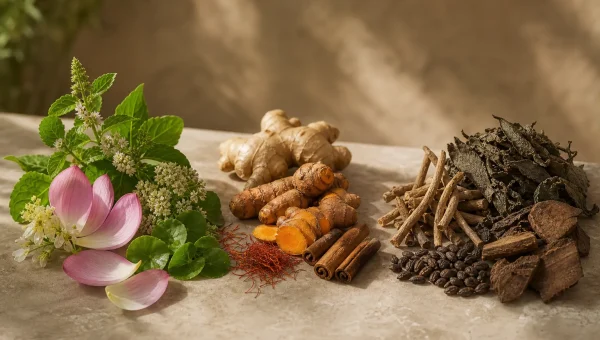
Five Key Herbs for Teenage Hormonal Support
Herbs can support a teenager when the formula, dose, timing, and duration are chosen correctly. They should not be used as a casual replacement for sleep, food, medical evaluation, or emotional support. The herbs below are best understood as practitioner-guided options, not a universal teen protocol.
1. Ashwagandha (Withania somnifera)
Ashwagandha is described in the Ayurvedic Pharmacopoeia of India as Rasayana, Balya, Vatakaphapaha, and Vajikarana. Its taste is bitter and astringent, its potency is heating, and its post-digestive effect is sweet. In teenagers, it is most appropriate when there are signs of Vata-Kapha weakness: poor strength, nervous exhaustion, low resilience, disturbed sleep from overwork, or depletion after long stress.
Because Ashwagandha is heating and strengthening, it is not ideal for every teen with acne, anger, high Pitta, feverishness, or active inflammatory symptoms. It should be used cautiously in adolescents, especially when there is thyroid medication, autoimmune disease, liver disease, sedative medication, pregnancy risk, or unexplained symptoms. When chosen well, it is usually given as a short, supervised course rather than an indefinite daily supplement.
2. Shatavari (Asparagus racemosus)
Shatavari is one of Ayurveda’s important nourishing herbs for female reproductive health, tissue support, and Pitta-Vata calming. The Ayurvedic Pharmacopoeia of India describes it as sweet and bitter in taste, heavy and unctuous in quality, cooling in potency, sweet in post-digestive effect, and associated with actions such as Balya, Rasayana, Pittahara, Medhya, Shukrala, and Stanyakara.
For teenage girls, Shatavari is best considered when the pattern shows dryness, heat, undernourishment, irregularity, or depletion rather than heaviness, sluggish digestion, or thick Kapha accumulation. It is traditionally paired with other herbs such as Ashoka, Lodhra, or Guduchi depending on the menstrual and skin pattern, but those combinations should be individualized.
3. Brahmi (Bacopa monnieri)
Brahmi is classified in the Ayurvedic Pharmacopoeia of India as Medhya, Rasayana, Matiprada, and supportive for mental disorders in the traditional therapeutic-use section. For teenagers, Brahmi is most relevant when the central issue is attention strain, emotional reactivity, exam pressure, restlessness, or poor mental recovery after long screen and study hours.
Brahmi is cooling and can be useful where Pitta irritability and Vata overactivity are present together. However, it may not suit every digestion; some people experience heaviness or digestive discomfort. It is usually better taken with food or in a practitioner-selected preparation such as Brahmi ghrita when appropriate. Our complete Brahmi guide covers this herb in more depth.
4. Guduchi (Tinospora cordifolia)
Guduchi, also called Amrita, is described in the Ayurvedic Pharmacopoeia of India as bitter and astringent in taste, light in quality, heating in potency, sweet in post-digestive effect, and associated with actions such as Balya, Dipana, Rasayana, Tridoshashamaka, Raktashodhaka, and Jvaraghna. In teenage skin and heat patterns, it is often considered when digestion, blood tissue, immunity, and inflammatory tendency are part of the picture.
Guduchi should be used with product-quality caution and professional supervision. It is not a casual “immune booster” for unsupervised long-term use, especially in teenagers with liver disease, autoimmune tendencies, ongoing unexplained fatigue, jaundice, abdominal pain, or medication use.
5. Triphala (Haritaki, Bibhitaki, Amalaki)
Triphala is a classical three-fruit formulation made from Haritaki, Bibhitaki, and Amalaki. Its place in teenage care is usually digestive rather than hormonal in a narrow sense. When elimination is irregular, the tongue is coated, appetite is dull, or skin symptoms worsen with constipation and heavy food, a practitioner may consider Triphala as part of a broader Agni and bowel-rhythm plan.
For teenagers, Triphala should be gentle. It should not be used to force weight loss, trigger frequent loose stools, or compensate for poor food habits. Excess use can aggravate Vata, dryness, cramps, or weakness. Our Triphala complete guide covers applications and cautions in more detail.
Dietary Guidance for Teenagers by Dosha
Diet is the safest starting point because teenage imbalances are often intensified by skipped breakfast, late-night snacking, excessive caffeine, fried foods, ultra-processed snacks, cold drinks, and irregular mealtimes. The goal is not a restrictive diet, but a steadier rhythm that protects Agni and reduces dosha aggravation.
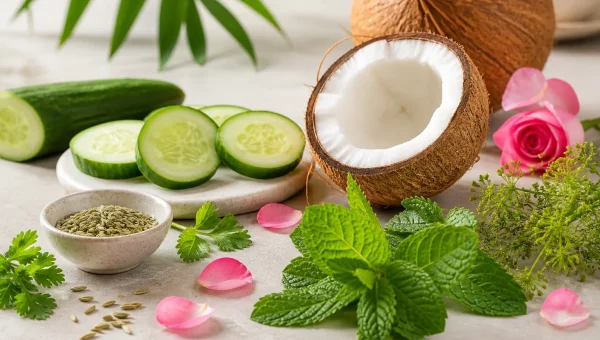
- Pitta-dominant teens: Reduce excess chili, fried food, sour-fermented foods, and caffeine. Favor cooling and Pitta-soothing foods such as cucumber, coriander, coconut, pomegranate, fennel, soaked raisins, bitter greens, and simple home-cooked meals.
- Vata-dominant teens: Favor warm, cooked, moist, nourishing meals. Regular mealtimes, soups, khichdi, ghee in appropriate amounts, cooked grains, root vegetables, and calming evening routines are more useful than fasting, cold smoothies, raw salads, or erratic snacking.
- Kapha-dominant teens: Favor warm, light, spiced meals. Reduce excessive dairy, sweets, refined flour, fried foods, and daytime sleeping. Regular movement, legumes, barley, millet, ginger, black pepper, leafy greens, and smaller dinners are often helpful.
Professional Dosage Considerations
Teenage dosing is not the same as adult dosing. Age, body weight, digestion, menstrual history, sleep, medication use, liver health, and constitution all matter. The classical adult ranges below are included only as practitioner reference points; they are not instructions for self-prescribing in teenagers.
| Herb | Classical / Pharmacopoeial Adult Reference | Teenage Use Principle |
|---|---|---|
| Ashwagandha | 3–6 g powder | Use only when Vata-Kapha depletion, weakness, or stress exhaustion is clear; avoid casual use in strong Pitta presentations. |
| Shatavari | 3–6 g root | Best for cooling, nourishing, Pitta-Vata patterns; avoid indiscriminate use in heavy Kapha or sluggish digestion. |
| Brahmi | 1–3 g powder | Consider for focus, mental strain, and emotional heat; monitor digestion and sleep response. |
| Guduchi | 3–6 g powder or 20–30 g for decoction | Use only with reliable identification and supervision; stop and seek care for jaundice, dark urine, severe fatigue, nausea, or abdominal pain. |
| Triphala | Traditional three-fruit formulation | Use gently for bowel rhythm only when appropriate; avoid using it as a weight-loss purge. |
Lifestyle Practices: Dinacharya for Teenagers
Dinacharya, the Ayurvedic daily routine, is valuable for teenagers because it gives the nervous system predictable anchors. A simple routine may include waking at a consistent time, cleaning the tongue, washing the face, eating breakfast, moving the body daily, taking meals at regular times, and creating a screen-light boundary before sleep. The routine should be realistic enough to continue during school days.
Sleep deserves special attention. Teenagers generally need 8–10 hours of sleep in 24 hours. Ayurveda values early sleep, but for teenagers the first rule is adequate sleep, then consistency. A teen who sleeps at 1 AM and wakes at 6 AM should not be forced into a pre-dawn wake-up routine; the better first step is moving screens, caffeine, heavy late dinners, and homework habits earlier so that sleep can naturally shift earlier.
Abhyanga can be useful when Vata is high: restlessness, dry skin, muscle tension, worry, or poor sleep. A light self-massage before bathing, or simply oiling the feet at night, is often enough. Sesame oil is traditionally grounding for Vata, while coconut oil is more suitable when heat, redness, and Pitta signs are prominent. Acne-prone areas should not be covered with heavy oil.
A Note on Acne (Yuvanpidika)
Yuvanpidika, also called Mukhadushika, is traditionally described as acne-like eruptions on the face during youth. Classical explanations emphasize Kapha, Vata, and Rakta involvement; in practical care, red, hot, inflamed acne also needs Pitta-Rakta calming. The Ayurvedic approach is usually internal and external: improve Agni, reduce heat and obstruction, regulate elimination, and use gentle topical care.
- Food: Reduce fried foods, excessive sweets, heavy dairy, very spicy foods, and late-night snacking.
- Routine: Keep sleep regular, wash sweat after exercise, and avoid picking or scrubbing lesions.
- Herbs: A practitioner may consider Guduchi, Manjistha, Neem, Triphala, Lodhra, or other herbs depending on whether the acne is oily, cystic, red, dry, painful, or linked with menstrual changes.
- External care: Use gentle cleansing and avoid harsh abrasive scrubs. Topical lepa should be selected according to skin type and lesion type.
When Medical Evaluation Is Important
Ayurveda works best when it does not ignore medical red flags. A teenager should be evaluated by a qualified healthcare provider if menstrual cycles are more than 90 days apart, bleeding is very heavy, pain is severe, acne is cystic or scarring, there is rapid weight change, excess facial hair, fainting, eating restriction, depression, self-harm thoughts, jaundice, persistent fatigue, or symptoms that interfere with school and daily life.
For adolescent girls, menstrual history is an important health sign. Some irregularity can occur after menarche, but prolonged gaps, heavy bleeding, or severe symptoms should not be dismissed as “normal hormones.” Ayurveda can support the terrain, but appropriate medical assessment helps rule out anemia, thyroid disorders, PCOS, bleeding disorders, pregnancy, eating disorders, and other causes.
Safety and Disclaimer
All herbal recommendations for teenagers should be individualized by a qualified Ayurvedic practitioner and coordinated with a healthcare provider when there are symptoms, medications, chronic conditions, pregnancy possibility, liver disease, autoimmune disease, or mental health concerns. Use only quality-tested products from reliable sources, because some Ayurvedic products have been found to contain harmful heavy metals or contaminants.
Actionable Tip: Begin with one safe change this week: create a consistent evening routine. Finish dinner earlier, stop caffeine after midday, dim screens before bed, and offer a warm drink such as milk or oat milk with cardamom or nutmeg. Add Ashwagandha, Shatavari, Brahmi, Guduchi, Triphala, or any other herb only when it has been recommended for that teenager’s constitution and current condition.
Nothing in this article diagnoses or treats a medical condition. Use it as educational information and consult a qualified Ayurvedic practitioner or physician before starting herbs, supplements, detoxes, or therapeutic protocols, especially for teenagers, pregnancy possibility, active symptoms, chronic illness, or medication use.
References
- World Health Organization
- Ayurveda and the science of aging (2018), PubMed Central
- Easyayurveda (easyayurveda.com)
- ACOG
- Consensus Statement of the American Academy of Sleep Medicine on the Recommended Amount of Sleep for Healthy Children: Methodology and Discussion (2016), PubMed Central
- Ayurvedic Pharmacopoeia of India
- NIH Office of Dietary Supplements
- Ayurvedic Pharmacopoeia of India
- Ayurvedic Pharmacopoeia of India
- Mdpi (mdpi.com)
- NCBI
- Therapeutic Uses of Triphala in Ayurvedic Medicine (2017), PubMed Central
- Webprod (webprod.hc-sc.gc.ca)
- Effect of Shalmalyadilepa and Guduchyadivati in the management of Yauvanapidika (Acne) (2013), PubMed Central
- Banyanbotanicals (banyanbotanicals.com)
- Banyanbotanicals (banyanbotanicals.com)
- Banyanbotanicals (banyanbotanicals.com)
- Ayurveda (ayurveda.com)
- NCCIH
- NCCIH

My daughter is 16 and we went through exactly this. The conventional offer was the pill, which she refused. The Ayurvedic approach took four months to show full results but by month three her cycles were more regular than they had been in two years. Her skin also cleared in a way that topical treatments never achieved.
My 17 year old son has been struggling with focus and mood swings for two years. The Brahmi section caught my attention since the article mentions it supports prefrontal cortex development that is still happening in teenagers. Did not know that connection existed.
The mood regulation angle is what interested me too. The article frames Brahmi as supporting emotional regulation specifically because the prefrontal cortex is still forming during the teenage years. That is a different reason than I usually see for recommending it and it fits what we are actually dealing with.
My sister is the mother in this kind of situation and I’ve watched her struggle with finding something that isn’t the pill for her 15-year-old. The article gives her a framework to take to a practitioner with some confidence. I’m sharing this with her.
The cystic acne and irregular cycles together in a teenager is almost always a Pitta-Kapha mixed presentation in my clinical experience as an Ayurvedic practitioner. The recalibration approach through diet and classical herbs without suppressing the cycle is far more appropriate at this age than hormonal contraception.
As a father the disclaimer section is what made me take this seriously. The article is explicit that these herbs are not a substitute for diagnosis and to inform your physician. That kind of honesty matters when you are dealing with a teenager’s health.
found this post helpful. will try the suggested approach. (ref 1919-11)
Same here. The part about informing your physician about any herbal supplementation is one I read twice. We started Shatavari for my daughter but only after her pediatrician was in the loop. The article being upfront about that boundary made it easier to bring up with her doctor without it feeling like we were going behind anyone’s back.
That part stood out to me too. A lot of wellness content skips that kind of honesty. Knowing it explicitly says to inform your doctor made me feel better about sharing this with my teenager rather than just quietly adding herbs to her diet.
The ‘cried at things that didn’t even matter’ line is what my daughter said to me almost word for word at 14. The emotional volatility is the symptom that’s most distressing to both parent and teenager. When it resolved as the hormones normalized, the personality everyone knew came back.
Yes, the article categorizing it under Mano Vaha Srotas disruption with excess Rajas actually helped remove a lot of the blame from the situation. Having a framework for it changes how you respond as a parent. Brahmi was the one addition that seemed to make the most difference for us, in line with what the article says about emotional regulation during the prefrontal cortex development years.
The dosage table is the most practical part. Having timing, form and quantity in one place saves a lot of searching. I had been taking Triphala in the morning for years. Apparently bedtime dissolved in warm water is the correct application.
The four-month timeline for normalized cycles matches what my Ayurvedic doctor told me when I was 19 with irregular periods. It took exactly four months. The expectation setting is important because teenagers and parents want to see progress faster and might give up too early.
Four months is actually reassuring to hear. We are at six weeks with my niece and she keeps saying nothing has changed. I remind her the article clearly says cycles normalized only by the fourth month. She is impatient but we are staying with the protocol.
That context helps a lot. Four months feels long when your teenager is visibly struggling but giving up at six weeks would mean missing the actual shift. The article says cycles normalized by the fourth month which lines up exactly with what you described. Good reminder to set realistic expectations at the start.
Six weeks was actually where we almost gave up too. The Triphala had improved digestion noticeably but the cycle irregularity was still there. Month three was when things started shifting. Glad we stayed consistent instead of calling it a failure too early.
Yes, month three seems to be the turning point in so many cases with Ayurvedic support. My daughter had a similar experience with Triphala, it helped her digestion first, which honestly made sense once I understood how hormones get reabsorbed when elimination is sluggish. The article explained that connection clearly for the first time.
What Ayurvedic herbs are safe for a 16-year-old? I know some Rasayanas are contraindicated for young people or require dose modification. Shatavari seems obvious but I’m concerned about things like Ashwagandha at high doses for someone not fully developed.
The article does say lower doses are recommended for teens under practitioner supervision, and the dosage table lists 250mg once daily for Ashwagandha which is already on the conservative end. My concern is more about people skipping the Prakriti assessment entirely and just grabbing whatever is on the shelf. Shatavari seems safer to start with given what the article says about its phytoestrogenic properties being gentler.
The school performance improvement that comes from hormonal regulation is the business case for parents who are primarily concerned about their teenager’s academic results. It’s not the most important benefit but it’s often the one that gets reluctant parents to take the Ayurvedic approach seriously.
The story of the 16-year-old girl really illustrates how Ayurveda looks at the whole picture rather than just prescribing a pill.
The opening case took three months of diet, sleep and a few classical herbs to normalize cycles and clear skin considerably. That is not an outrageous claim. That timeline is actually more believable than promises of fast results.
Agreed that the timeline is believable. What I kept wondering is how the diet and sleep were structured during those three months. The article gives dosha-based guidelines but the opening case felt like it had a more specific protocol. Would have liked to see that spelled out alongside the general framework.
That is a fair point from Sanjay. The case at the start mentions diet and sleep being part of the three-month protocol but the article then only gives general dosha-based guidelines. A bit more detail on what the actual daily routine looked like would help.
Combining Ashwagandha with a regular bedtime routine could make a noticeable difference for stressed teens.
the Pitta-Kapha mixed presentation for cystic acne plus irregular cycles is what I see clinically. hormonal suppression at this age is not the right first approach
four-month timeline for normalized cycles matches what my Ayurvedic doctor told me when I was 19. it took exactly four months
Four months comes up consistently every time someone shares a real account. Did your doctor have you on a specific diet alongside the herbs or was it primarily Shatavari? Trying to figure out whether the dietary piece or the herbs did more of the work in cases like yours.
niece needed the pill at month six when only partial improvement had occurred. not every case responds fully to Ayurvedic treatment alone
That is a fair point. The article itself says results can vary and to always keep the primary care physician informed. Partial improvement after several months might still be meaningful progress depending on the individual case.
My niece was the 16-year-old in an identical situation. Irregular periods, cystic skin, emotional instability. Her mother insisted on trying Ayurveda first. The pill was eventually needed at month six when only partial improvement had occurred. Not every case responds fully to Ayurvedic treatment alone.
That tracks with what the article says too. It does not position Ayurveda as a replacement in every case. At least the Apana Vata explanation for irregular cycles gives a framework for understanding what is happening internally rather than just masking symptoms.
That Apana Vata framing gave me language I did not have before. The physician we saw could only track numbers and shrug. Having a model that points to what is actually disrupting the system makes it easier to know what to address.
That is an honest account and important to share. The article is clear that these recommendations are not a substitute for diagnosis, and some bodies need additional support when partial improvement stalls. Combining approaches when the situation calls for it is not giving up on Ayurveda.
Getting a teenager to sleep before 10 PM is the real challenge. The article says even partial adherence to the sleep schedule can improve mood, skin and cycle regularity. I wonder what partial means in practice because 10 PM is not happening in our house on school nights.
the cried at things that didn’t even matter line is what my daughter said to me almost word for word. when the hormones normalized, her personality came back
The article attributes that emotional intensity to excess Rajas in the mind channels. When you see it happen to your own child and then watch it settle, it confirms something that purely physical explanations do not fully account for.
That framing ties together what seem like separate symptoms. Mood instability and hormonal disruption treated as part of one picture rather than two separate problems. That shift in how you look at it changes what you actually do about it.
Yes, that Mano Vaha Srotas explanation resonated with me too. My son went from being snappy about everything to noticeably calmer after we adjusted his diet and sleep. We never gave him any herb, just removed the late nights and the fried food. Something shifted and I cannot explain it any other way.
The school performance improvement from hormonal regulation is the argument that gets reluctant parents to take this seriously 🙌
The section distinguishing Vata dominant teens from Pitta dominant ones is something I needed to read. My daughter has anxiety, skips meals and feels cold most of the time. Every teen article defaults to cooling Pitta advice but that is clearly not her pattern.
Guduchi was new to me. Blood purifying for Pitta type acne makes sense once you read the explanation about skin channels reflecting internal heat and ama. The bitter taste description helping both Pitta and Kapha is the kind of thing I would not have worked out without this breakdown.
Daughter was 15 when her gynecologist suggested the pill before asking a single question about diet, stress or sleep
That gap between a quick prescription and an actual Prakriti assessment is exactly what the article is describing. Three months of real recalibration versus a pill handed over at the first appointment. The comparison is uncomfortable but the article does not overstate it.
My daughter’s doctor jumped straight to the pill without asking a single question about her sleep or what she was eating. It was only later that we realized her irregular schedule was aggravating things from within. Wish we had found this kind of framework earlier.
The warm milk with Ashwagandha churna and cardamom tip at the end is the most practical thing I have read in a while. Simple enough that my teenager might actually stick with it for 30 days.
The Rakta-Pitta explanation for acne finally made sense of what I see with my son. His skin flares badly whenever he has fried food for a few days and the connection to heat in the blood channels is something no dermatologist ever mentioned.
Same thing here with cooling foods making a difference. We added cucumber and coriander to meals regularly and the skin inflammation calmed down noticeably within a few weeks. Small dietary shift but the results were real.
Wondering if the Pitta dominance explanation applies equally to teenage boys. My 15-year-old fits the description perfectly with the sharp appetite and intense emotions but most articles focus only on girls.
The sleep schedule advice is the hardest part to actually implement. Getting a teenager off screens before 10 PM when their entire social life happens there is a separate challenge the article does not quite address.
My daughter has the fatigue and brain fog combination from the conditions table. The depleted Ojas and weakened Prana Vata description fits her exactly given how broken her sleep has been since school got more demanding.
Same pattern here. My daughter’s sleep collapsed once board exam season started and everything else followed. The depleted Ojas and broken sleep connection in that conditions table fits exactly. Have you tried adjusting her bedtime yet or still figuring out how to start?
Glad the article was clear about practitioner supervision before starting any of these herbs. That is the first thing I look for as a parent before trying anything new with my teenager. The dosage table with the timing guidance was also genuinely useful.
Shatavari’s role in supporting estrogen balance seems especially relevant for girls dealing with irregular cycles.
Brahmi for the teenage brain makes a lot of sense. My nephew struggles badly with focus during exam season and I never thought to connect that to Medhya Rasayana herbs. Going to look into this more before suggesting anything to his parents.
My son has been dealing with oily skin and mood swings for two years and I always assumed it was just normal teenage stuff. The Pitta explanation actually makes sense to me. The part about screen overexposure and late nights aggravating Vata is going straight to his attention this week.
The Brahmi section stood out because my son struggles with focus and anxiety during exams. Wondering whether starting with a low morning dose as described would be safe alongside his current routine or if that still needs a practitioner consult.
The dietary breakdown by dosha type is what I needed. My daughter is definitely Kapha dominant and I had no idea that the heavy dairy and wheat she eats every day could be making things worse. Cutting those down starting this week.
Started my 17 year old daughter on the warm milk with ashwagandha at night after reading this. Two weeks in and she says she is actually sleeping before midnight now without a fight. Small change but it feels real.
The opening story hit close to home. Conventional medicine went straight to the pill without asking a single question about diet or sleep patterns. That is exactly what happened with us two years ago. Found this article at the right time.
Curious whether Shatavari and Ashwagandha can be taken together or if one should start first. The dosage table shows different timings for each but I want to be sure before giving both to my teenage daughter at once.
Dinacharya for teenagers sounds impossible until you realize the sleep timing alone might account for most of the improvement. Getting a 16 year old off screens by 9:30 PM is the actual challenge here, everything else follows from that.
My nephew had severe Yuvanpidika for two years and the only suggestion was benzoyl peroxide. Nobody mentioned Rakta-Pitta or internal blood purification as an approach. Trying the Manjistha and Neem route now alongside the dietary changes from the Pitta section.
The point about poor elimination allowing hormones to be reabsorbed through the colon was something I had never read before. Triphala makes more sense now as a starting point than jumping straight to the more specific reproductive herbs.
The Pitta dominance explanation for the teenage years finally made sense of something I had observed for years. My nephew is 15 and he runs hot, gets angry fast, and craves spicy food constantly. Everything the article describes as Pitta aggravation, he has all of it. Going to share this with his parents.
The dosage table at the end is genuinely useful. Most Ayurveda articles leave you guessing about how much to give a teenager versus an adult. Having specific amounts and timing written out makes it something you can actually act on without needing to search three other sources.
The advice about sleep before 10 PM hit home. My daughter is 17 and routinely on her phone until midnight. Every issue listed here, the acne, the mood swings, the irregular cycles, she has all of them. I showed her this article and she actually read it without rolling her eyes, which is something.
The sleep point is the hardest sell honestly. My son went to bed before 10 for three weeks and the skin improvement was visible enough that he kept going without being told. Sometimes teenagers need to see a result before they trust the logic behind it.
As a father of a teenage boy I almost clicked away but came back for the brain fog and fatigue section. He wakes up exhausted even after eight hours of sleep. The Kapha imbalance with weakened Prana Vata explanation made more sense than anything the school counselor offered. Curious whether Brahmi would help with the focus issues alongside the fatigue.
The Ashwagandha warm milk suggestion at the end is the kind of change you can actually make without overhauling everything at once. My wife started something similar a few months ago and the difference in her sleep was noticeable within a few weeks. A small entry point for teenagers who resist bigger changes.
@Sanjay found this post helpful. will try the suggested approach. (ref 1919-69)
The Triphala section was new to me. I knew it for digestion but did not understand the connection to hormonal reabsorption through the colon. That actually explains something I had noticed in my daughter but could not connect to anything. Going to ask her Ayurvedic doctor about adding it.
The hormone reabsorption link was surprising to me too. I had used Triphala on and off for years without understanding why it mattered beyond gut health. Reading this made me want to be more consistent with it rather than treating it as optional.
The dosage table is practical but I am not sure what to do when the dosha picture is mixed. My daughter has irregular cycles pointing to Vata but also skin flares that sound more Pitta. Do you work with one herb at a time and observe, or is seeing a practitioner for a proper Prakriti assessment really the necessary first step before anything else?
The Pitta dominance explanation finally gave me a framework for what my son went through at 15. Oily skin, intense anger, sharp appetite at all hours. We just called it teenage attitude. Would have been useful to know it was a predictable biological shift that could actually be managed rather than just endured.
The point about poor elimination leading to hormone reabsorption through the colon was completely new to me. I had never thought of a sluggish digestive system as a factor in irregular periods. It makes Triphala a more logical starting point than I would have picked without reading this, since I would have gone straight for the hormone-specific herbs.
The Dinacharya section deserves more attention than it usually gets in these discussions. Consistent sleep timing alone shifted my teenager’s mood and skin more than anything else we tried. The 10 PM recommendation sounds unrealistic for most teens but even moving from midnight to 11 produced a visible difference within a few weeks. The article is right that even partial adherence matters.
The case study at the beginning was what kept me reading past the first paragraph. Three months to normalize cycles and clear skin through diet and classical herbs sounds almost too clean, but the article is honest that it was a systematic recalibration, not a shortcut. That framing felt credible rather than promotional.
Tried the warm milk and Ashwagandha tip from the end of the article with my 16-year-old about two weeks ago. Sleep has noticeably improved and she is less irritable in the mornings. The cardamom makes it taste good enough that she does not fight it, which is half the battle with teenagers and any kind of routine.
Shared this with my wife who teaches biology. She noted that the article accurately describes the prefrontal cortex still developing through the teenage years, which aligns with current neuroscience. It is good to see the traditional framework around Brahmi as a Medhya Rasayana mapping onto something modern research also recognizes rather than sitting in contradiction with it.
The condition table matching each issue to its primary dosha imbalance is the most useful part of this article for someone just starting to learn this system. Seeing Vata listed as the primary driver behind irregular periods and the explanation about Apana Vata affecting Artava function gives enough context to understand the reasoning rather than just follow instructions blindly.
The Pitta dominance explanation for why teenagers run hot and emotional actually makes more sense to me than anything explained in school health class. Naming the shift from Kapha childhood to Pitta adolescence gives the whole phase a framework instead of just a list of symptoms to endure.
The dietary tips for Pitta-dominant teens, like favoring cucumber and coconut, feel practical and easy to try.
Thank you.
Same. I ended up taking notes partway through. The table mapping teenage conditions to their doshic roots was the clearest summary of this kind of thing I have come across.
That table made the whole article easier to navigate. Once I identified which column applied to my daughter I could skip straight to the relevant herb and dietary sections instead of reading everything. Wish more health articles were structured that way.
Showed this to my 15-year-old son who has been dealing with persistent oily skin and mood swings. He was skeptical until I read him the part about Pitta dominance and heat being the driver behind both. He actually asked if we could try the Triphala bedtime routine.
This is the kind of post I wish I’d found six years ago when my daughter was going through something almost identical. Irregular cycles, mood swings, cystic breakouts — and the only option her doctor suggested was hormonal contraception. We didn’t take that route and spent years muddling through. The Prakriti-based approach described here sounds like it actually addresses the underlying pattern rather than suppressing the symptom. What age is generally considered appropriate to begin this kind of assessment?
The evening milk with Ashwagandha and cardamom is something my grandmother gave us growing up and we never questioned why it helped with sleep. Nice to finally see it connected to cortisol regulation in a way that explains the mechanism rather than just calling it a tradition.
I had not thought about Brahmi specifically in terms of the prefrontal cortex still developing during the teenage years. That section reframed it for me from a general focus herb to something with a more specific reason to use during adolescence rather than just at any age.
The table linking each condition to a primary dosha and an Ayurvedic interpretation is the clearest explanation I have seen for why the same herb does not help every teenager with the same complaint. Two students with acne could be coming from completely different doshic roots and need different approaches.
A warm milk drink at night can be a soothing ritual, especially when paired with a pinch of cardamom.
The warm milk with Ashwagandha tip at the end is something I am actually going to try tonight. My 17 year old has been struggling with sleep and exam stress for months and I had no idea cortisol was part of the picture.
As a father I appreciated seeing Brahmi mentioned here. My son deals with a lot of academic pressure and the connection between the prefrontal cortex still developing and Brahmi as a Medhya Rasayana was new information for me. Worth looking into further.
That prefrontal cortex point caught me off guard too. I knew Brahmi was used for memory but connecting it specifically to the development stage teenagers are in made it feel a lot more relevant. Going to look into the Brahmi guide linked in the article.
The section on Pitta dominant teens and diet was eye opening. We had been giving our daughter cold smoothies thinking it was healthy but the article says Vata gets aggravated by that. Switching to warm cooked meals has already made a small difference over the past few weeks.
Triphala’s gentle cleansing action makes sense for teens whose digestion might be sluggish from late-night snacking.
The sleep guidance here is something I had not connected to skin and mood before. My teenage daughter has been staying up past midnight regularly and her skin and emotions have both been rough. Going to try the earlier sleep schedule first before anything else.
The table linking conditions to doshas was genuinely useful. Seeing anxiety and mood swings listed under Vata and Pitta with Mano Vaha Srotas disruption gave me a framework I could actually explain to my teenager rather than just telling her to calm down.
The article does emphasize going through a proper Prakriti and Vikriti assessment before starting herbs. The case described here went through that process first, which probably made the protocol more targeted. Rushing straight to herbs without that step seems like it would miss the point.
The Dinacharya section resonated with me. Consistent wake time and even brief Abhyanga with sesame oil seem like small habits but the article explains why that rhythm specifically helps counteract Vata aggravation. Going to try the before 7 AM wake time with my teen this week.
The article’s explanation of Pitta surge causing oily skin and sharp appetites clicks with what I notice in my own teen years.
The contrast between being offered the pill immediately versus spending three months recalibrating diet, sleep and classical herbs is what struck me most. Not saying one approach is always wrong but the Ayurvedic path at least asks about the root cause before choosing the intervention.
That tip about warm milk with ashwagandha churna and cardamom before bed is the kind of thing I can actually get my daughter to try. Not another capsule she forgets at the back of a drawer.
Dinacharya suggestions like tongue scraping and oil massage might feel challenging to fit into a busy school schedule.
The case study at the start is what kept me reading. Three months of diet adjustments, sleep changes, and a few herbs and the cycles normalized. That is not a miracle claim, that is just how slow and careful real healing works.
The Yuvanpidika section clarified something for me. My son has been scrubbing his face twice a day with a harsh cleanser and it keeps getting worse. I did not realize stripping the skin was part of the problem. Going to look into the sandalwood and multani mitti approach instead.
As a parent I was relieved that the article emphasizes Prakriti assessment before recommending anything specific. My first instinct was to order Shatavari online, but which herb helps depends on which dosha is actually disturbed. That distinction matters.
Did not expect an article about hormonal balance to address academic pressure and cognitive decline so directly. The Brahmi section and the note about the prefrontal cortex still developing through the teen years stood out. Worth sharing with other parents.
The part about hormones being reabsorbed through the colon when elimination is sluggish was new to me. I had never connected my teen’s digestion habits to his skin and mood swings. The Triphala explanation made that link click.
The 10 PM sleep recommendation is going to be a fight in our house, but now I have actual reasons to give my son instead of just asserting it as a rule. Cortisol and melatonin are harder to argue with than parental authority.
@Rekha found this post helpful. will try the suggested approach. (ref 1919-96)
The tip at the end about warm milk with Ashwagandha churna and cardamom is the kind of thing I can actually get my daughter to try. She would never agree to a full diet overhaul but one evening habit feels manageable. Going to start there.
The sleep section is what I keep coming back to. My son stays up past midnight studying and genuinely believes it has no effect on his skin or mood. Having the Ayurvedic reasoning behind the 10 PM cutoff makes it easier to explain than just telling him to sleep earlier.
Good that the disclaimer is in there about working with a qualified practitioner. Irregular cycles in teenagers can come from different sources and knowing whether it is Apana Vata disturbance or something else really does matter before starting any herbal protocol. Assessment before herbs makes sense.
The Yuvanpidika section answered something I had wondered about for a while. I knew teenage acne was tied to hormones but did not know Ayurveda had a specific classification for it as a Rakta-Pitta condition. The internal and external approach described here is different from just treating the skin surface.
The opening story was familiar in a way I did not expect. We went through something close to that where the first suggestion from the doctor was oral contraceptives with no questions asked about what my daughter was eating or how much she was sleeping. It took months before we started looking at other options.
The breakdown by doshic root for each condition was what I found most useful. Fatigue and brain fog being connected to depleted Ojas is something I had never come across before. Most of what I had read framed those symptoms as purely stress-related without looking at the tissue level.
The Vata section on diet surprised me. I had been giving my teenager cold smoothies in the morning thinking it was healthy. The point that cold and raw foods can aggravate Vata and disrupt nervous system development made me reconsider the whole breakfast routine.
My daughter had cystic acne through most of her teenage years and we never connected it to Pitta imbalance until much later. Wish we had read something like this back then.
The part about Vata driving rapid growth and nervous system development during adolescence actually explains a lot. I always assumed teenage anxiety was purely psychological.
Trying the warm milk with Ashwagandha and cardamom at night for my 17-year-old. It is a small change but the idea of reducing cortisol before sleep makes sense to me.
I was skeptical reading the opening case but four months is a realistic timeline. That is what made it feel credible rather than like a sales pitch for herbs.
The dosage table is genuinely useful. Most Ayurvedic articles either skip dosages entirely or give adult amounts without flagging they are not meant for teenagers.
Never heard the term Yuvanpidika before. Makes sense that Ayurveda would have a specific category for adolescent acne given how distinct it is from adult breakouts.
The reminder about sleep before 10 PM hits home. My teenage nephew is routinely up past midnight and his mood and skin both suffer for it. Seems obvious in hindsight.
Curious whether Brahmi is safe to take daily through the school year for focus and stress. The article says morning dosing but does not say how long a cycle should run.
I appreciate that the article explicitly says research in teenagers is limited and most evidence is from adult studies. A lot of herbal content skips that disclaimer entirely.
My daughter has been dealing with irregular cycles since she turned 14. The part about Vata disturbing Apana Vata and affecting menstrual function actually clicked for me in a way that her pediatrician’s explanations never did. Going to look into Shatavari after reading this.
Does any of this apply to teenage boys as well? The sections on Ashwagandha for cortisol and Brahmi for focus seem relevant regardless of gender, but most of the article focuses on girls. Would be curious to know if the dosha framework shifts for adolescent males.
The Yuvanpidika section is exactly what I needed. My son gets cystic breakouts every few weeks and we have tried everything external. The idea that it is a Rakta-Pitta condition requiring internal blood purification is a completely different way of thinking about it.
I appreciate the dosage table but I am still uncertain about giving herbs to a 15-year-old without knowing her Prakriti. The article acknowledges this too, which is fair. Is there a simple starting point to figure out whether a teenager is more Vata or Pitta dominant before seeing a practitioner?