
Tinnitus is the perception of sound when no matching external sound is present. In Ayurveda, closely related presentations are described under Karna Nada, Karna Pranada, and Karna Kshveda, conditions in which disturbed Vata affects the channels connected with hearing. The Ayurvedic aim is not to promise a universal cure, but to reduce aggravating factors, protect the ear, calm Vata, support sleep and stress regulation, and use appropriate local and internal therapies under qualified guidance.
Modern tinnitus care also recognizes that tinnitus can range from mild background noise to a severe condition that affects sleep, concentration, mood, and quality of life. Current management commonly includes medical and audiological assessment, treatment of hearing loss when present, cognitive behavioral therapy for tinnitus distress, and carefully used sound enrichment. Ayurvedic care can be used as a complementary framework when serious causes have been ruled out and when treatment is individualized.
Karnanaada: The Ayurvedic Understanding of Tinnitus
Karnanaada or Karna Nada literally means sound in the ear. Sushruta Samhita lists Karna Pranada, Karna Nada, and Karna Kshveda among disorders of the ear. Ashtanga Hridaya describes Karna Nada as a condition in which Vata becomes localized in the channels that carry sound, leading a person to hear different sounds without an external cause. This makes Vata regulation the central Ayurvedic principle in many tinnitus presentations.
Classical descriptions of Karna Kshveda connect ear sounds with factors such as excessive exertion, tissue depletion, cold exposure after head-cleansing procedures, and dry or astringent food. These descriptions support a practical Vata-reducing approach: steady meals, adequate rest, protection from cold wind and loud sound, gentle oiling where appropriate, and treatment of associated nasal, throat, jaw, neck, or stress patterns.
Classical Treatment Principles for Karna Nada
Ashtanga Hridaya advises that Karna Nada and hearing difficulty should be treated along the lines of Vata-related ear pain, while Kapha involvement should be addressed first when congestion, heaviness, or obstruction is dominant. This means that the same tinnitus label may require different treatment: a dry, depleted, anxious Vata pattern is approached differently from a cold, congested Kapha-Vata pattern or a hot, inflamed Pitta-Rakta pattern.
In practice, a qualified Ayurvedic physician assesses the sound quality, duration, hearing status, sleep, digestion, stress load, nasal symptoms, neck and jaw tension, medication history, and whether the presentation is one-sided, pulsatile, or associated with hearing loss or vertigo. This assessment determines whether local ear therapy, nasal therapy, head oiling, internal herbs, digestive correction, or referral for urgent medical evaluation is the priority.
Karnapurana: Ayurvedic Ear-Filling Therapy
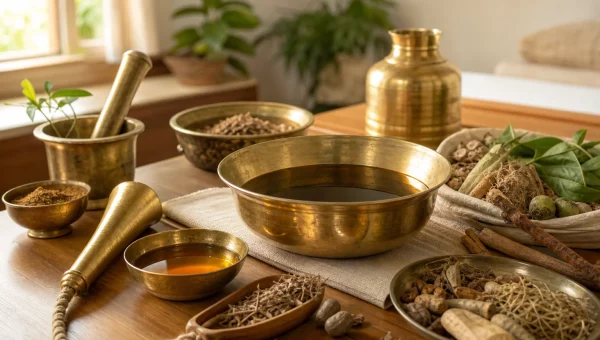
Karnapurana, from karna meaning ear and purana meaning filling, is the practice of filling the external ear canal with a warm medicated oil or liquid for a prescribed time. Classical ear-disease treatment includes warm filling of the ear in Vata-related conditions, and Ashtanga Hridaya describes specific medicated oils used through nasal drops, anointing, and ear filling for ringing, deafness, and ear pain. Because the ear is delicate, Karnapurana should be treated as a clinical procedure rather than a casual home remedy.
Careful Home Version After Medical Clearance
A conservative home routine should only be considered after an ENT clinician or qualified practitioner has confirmed that there is no perforated eardrum, active ear infection, drainage, recent ear surgery, severe pain, or sudden hearing change. The aim is gentle Vata-soothing lubrication, not forceful filling or deep cleaning.
- Warm a small amount of plain sesame oil indirectly by placing the oil container in warm water.
- Test the oil on the inner wrist; it should feel comfortably warm, never hot.
- Lie on the side with the treated ear facing upward.
- Use only the amount advised by a practitioner; for simple self-care, many people are safer beginning with oil massage around the outer ear rather than placing oil deep inside the canal.
- Gently massage the outer ear, the area in front of the ear, and the jaw joint region for a few minutes.
- If internal drops have been specifically approved for you, remain lying briefly, then let excess oil drain out naturally.
- Stop immediately if there is pain, burning, dizziness, blocked-ear sensation, discharge, or worsening tinnitus.
Oils and Preparations Used in Ayurvedic Ear Care
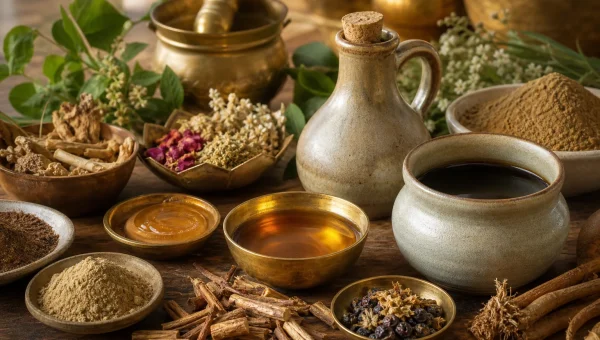
The choice of oil depends on the pattern. Plain sesame oil is generally Vata-pacifying and lubricating, while stronger classical medicated oils are best selected and prepared by a practitioner. Hot, pungent, or penetrating oils are not appropriate for every ear condition.
| Preparation | Sanskrit Name | Best-Fit Pattern | Important Caution |
|---|---|---|---|
| Warm plain sesame oil | Tila Taila | Dryness, Vata aggravation, mild outer-ear self-care after clearance | Do not use inside the ear if eardrum status is unknown or if infection, pain, or discharge is present |
| Classical castor-based medicated oil | Erandadi Taila | Practitioner-directed use for ringing, hearing difficulty, and ear pain | Should be prepared and used according to classical and clinical guidance |
| Warm Bilva-containing preparations | Bilva-based ear preparations | Vata-type ear pain or stiffness patterns in classical care | Not a generic home oil; use only when prescribed |
| Garlic-containing oil preparations | Lasuna or Vacha-Lasunadi-type Taila | Cold, heavy Kapha-Vata patterns when selected by a physician | Avoid in hot, inflamed, painful, draining, or sensitive ears unless specifically prescribed |
Nasya: Nasal Therapy in Ear and Head Disorders
Classical Ayurvedic ear treatment does not view the ear in isolation. Ashtanga Hridaya includes nasal administration among therapies used for ringing, deafness, and ear pain. This supports the clinical use of physician-selected Nasya when tinnitus is associated with head, neck, sinus, nasal, or Vata-related patterns.
Nasya is not suitable during acute fever, acute rhinitis, active sinus infection, immediately after heavy meals, or when the patient is very weak unless a physician specifically chooses the procedure. For chronic tinnitus, mild nasal oiling may be considered only as part of a broader plan that includes ear assessment, sleep regulation, diet, and stress reduction.
Internal Herbs for Karnanaada Support
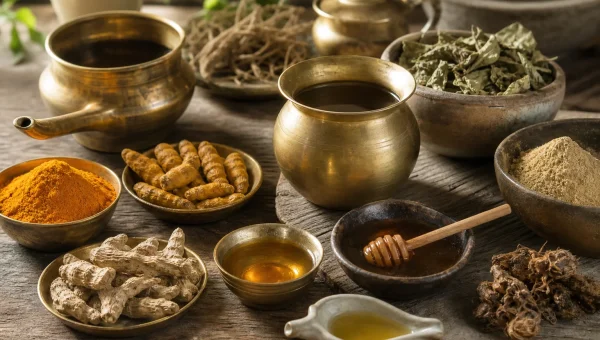
Internal herbs are selected by constitution, dosha pattern, digestion, age, strength, medication use, and the presence of anxiety, insomnia, depletion, congestion, heat, or inflammation. They should be understood as supportive Ayurvedic interventions rather than stand-alone tinnitus cures.
Brahmi (Bacopa monnieri)
Brahmi is described in the Ayurvedic Pharmacopoeia of India as Medhya, Rasayana, Vatahara, and useful in disorders of the mind. In tinnitus care, Brahmi is most relevant when the ringing is intensified by worry, mental overactivity, poor sleep, or difficulty disengaging attention from the sound. The pharmacopoeial powder range is 1 to 3 g, but dose and form should be individualized by a practitioner.
Ashwagandha (Withania somnifera)
Ashwagandha root is described as Balya, Rasayana, and Vata-Kaphahara, with classical use in weakness, depletion, swelling, and Vata disorders. It is most appropriate when tinnitus appears with fatigue, stress depletion, poor resilience, low body strength, or chronic Vata aggravation. It should be used carefully in people who are pregnant, have significant heat or Pitta aggravation, thyroid disease, autoimmune disease, liver disease, or are taking sedatives or other regular medicines.
Shankhapushpi (Convolvulus pluricaulis)
Shankhapushpi is listed as Medhya, Rasayana, Balya, and Ayushya. Its role in tinnitus care is supportive when the main burden is restlessness, mental fatigue, emotional reactivity, or poor sleep around the tinnitus experience. The pharmacopoeial powder range is 3 to 8 g, but the form and dose should be chosen according to digestion and constitution.
Sariva (Hemidesmus indicus)
Sariva, also called Ananta or Indian sarsaparilla, is described as cooling, sweet, Raktashodhaka, and Tridoshanashana. It is not a primary tinnitus herb for every case, but it may be considered when the presentation includes heat, burning, inflammatory tendency, or a Pitta-Rakta pattern alongside ear symptoms. It is usually used as a decoction drug under professional guidance.
Vacha (Acorus calamus)
Vacha is a strong, sharp, warming herb described as Medhya, Vatahara, and Kaphahara. Because the Ayurvedic Pharmacopoeia notes purification requirements and a low powder dose range, Vacha should not be used casually or in large amounts. It belongs in practitioner-designed formulations, especially where Kapha obstruction, heaviness, or dullness is part of the pattern.
Shirodhara and Head Oiling for Auditory Vata
Shirodhara is the continuous pouring of warm liquid, often oil, over the forehead in a supervised Ayurvedic setting. For tinnitus, its role is supportive: it is chosen when ringing is strongly linked with stress arousal, insomnia, mental fatigue, neck-scalp tension, or Vata aggravation. It should not be presented as a direct cure for tinnitus, but it may help create the calm internal conditions in which tinnitus becomes less intrusive.
For home care, simpler Shiro Abhyanga, or gentle head and scalp oil massage, may be more practical. Warm sesame-based oil applied to the scalp, temples, neck, and jaw region before bathing can be useful in dry Vata patterns, provided there is no acute fever, active skin infection, or intolerance to oil.
Sound Therapy Integration
Ayurvedic sound-based care can be integrated with modern sound enrichment. The practical aim is to reduce the contrast between tinnitus and silence without overwhelming the ear. Low-volume natural sound, a soft fan, gentle instrumental music, mantra recitation, or quiet classical music can be used in the evening or during sleep preparation.
Choose sound that feels steady, calming, and non-irritating. Ragas such as Yaman or Bhairavi may be used if they personally feel soothing, but they should be played at a low volume and should never be used through loud headphones. The goal is relaxed auditory companionship, not forced masking.
Diet and Lifestyle for Vata-Type Tinnitus
Classical descriptions of ear sounds point toward Vata-provoking factors such as depletion, excessive exertion, cold exposure, dryness, and overly astringent intake. A Vata-reducing routine emphasizes regular meals, warm cooked foods, adequate healthy fats when suitable, consistent sleep timing, reduced late-night screen exposure, protection from cold wind, and moderation of fasting, stimulants, and overwork.
Neck, jaw, and shoulder tension can increase the perceived burden of tinnitus for some people. Gentle jaw relaxation, slow nasal breathing, supported rest, and calm evening routines fit well with the Ayurvedic goal of reducing Vata in the head and sensory organs.
Safety and Disclaimer
Tinnitus should be medically assessed, especially when it is one-sided, pulsatile, sudden in onset, associated with sudden hearing loss, vertigo, neurological symptoms, ear pain, drainage, fever, or significant psychological distress. Do not put oil, herbal drops, cotton buds, or any object into the ear if there is a suspected perforated eardrum, active infection, discharge, recent surgery, or unexplained pain. Ayurvedic treatments are adjuncts to, not replacements for, ENT and audiological evaluation. Consult a qualified Ayurvedic physician and a healthcare provider before beginning internal herbs, Nasya, Karnapurana, or Shirodhara.
Actionable Tip
Begin with a safe two-week tracking routine rather than aggressive ear treatment. Each morning, record tinnitus loudness, intrusiveness, sleep quality, stress level, caffeine intake, and noise exposure on a 0 to 10 scale. In the evening, use 20 minutes of low-volume calming background sound and 5 minutes of gentle oil massage around the outer ear, jaw, neck, and temples. If a clinician has confirmed that the eardrum is intact and there is no infection, a practitioner may add a conservative warm sesame-oil ear routine or a medicated Karnapurana plan suited to your dosha pattern.
References
- NCBI
- Global Prevalence and Incidence of Tinnitus: A Systematic Review and Meta-analysis (2022), PubMed
- Audiology (audiology.org)
- Wisdomlib — classical text
- Easyayurveda (easyayurveda.com)
- Easyayurveda (easyayurveda.com)
- Ia800501 (ia800501.us.archive.org)
- Shirodhara: A psycho-physiological profile in healthy volunteers (2013), PubMed Central
- Ears (ears.ucsf.edu)
- Cks (cks.nice.org.uk)
- NHS

Been using sleep for about 3 months now and the difference in how I feel is real. My practitioner said the same things this article covers so good to have it spelled out.
found this post helpful. will try the suggested approach. (ref 1864-30)
How long before seeing results with this protocol? My practitioner said 4 weeks but I’m seeing other timelines mentioned online.
The music teacher patient is particularly poignant. Tinnitus being unbearable for someone whose entire professional and personal life is built around hearing is a specific kind of cruelty. Has anyone with music-related tinnitus found particular Ayurvedic interventions more helpful for high-pitched tonal tinnitus versus the more diffuse sounds some people experience?
pulsatile tinnitus here, not constant tonal tinnitus. the Ayurvedic classification seems to assume constant sound. vascular pattern seems different 🙏 धन्यवाद
found this post helpful. will try the suggested approach. (ref 1864-24)
found this post helpful. will try the suggested approach. (ref 1864-61)
💯 shirodhara twice at a wellness clinic. ringing reduced for about 3 days after each session. the effect faded but it confirmed something is happening
I tried the Ashwagandha and Brahmi combination described for Vata-type tinnitus and noticed a reduction in the intensity over about 8 weeks. My tinnitus is stress-linked and definitely worsens with overwork and travel. The Vata connection makes sense for my pattern.
My doctor in Bangalore suggested something similar but used different herbs. Is there regional variation in how Ayurvedic practitioners approach this condition?
Reading this later and the Tinnitus (Karnanaada) advice still feels relevant. The safety notes could be expanded a little.
tried Shirodhara twice at a wellness clinic for tinnitus. genuinely reduced the ringing for about 3 days after each session. the effect faded but the brief relief was enough to confirm it is doing something. looking for a practitioner who can do a longer course treatment rather than one-off sessions.
My gastroenterologist specifically said not to start any herbal protocols without telling him first because of potential liver enzyme effects. This kind of article should mention that.
found this post helpful. will try the suggested approach. (ref 1864-32)
found this post helpful. will try the suggested approach. (ref 1864-68)
I have been dealing with pulsatile tinnitus, the one that pulses with the heartbeat rather than constant ringing. Everything I read about Ayurvedic tinnitus treatment assumes constant tonal tinnitus. Is the doshic classification different for pulsatile tinnitus, which seems to involve vascular factors more than nerve factors?
The article explains how Karnapurana uses warm sesame oil to ease ringing.
How do you distinguish between a genuine healing response and placebo when monitoring progress with sleep? What objective markers should I track?
I tried the sleep approach described and it genuinely worked. Simple, not expensive, and it addressed what was actually causing the problem.
After reading about Brahmi and Ashwagandha, I wonder if combining them with daily Nasya could help.
had tinnitus for 18 months. tried the sleep improvement protocol and the Ashwagandha-Brahmi combination. tinnitus intensity reduced about 40 percent over 3 months
ashwagandha and Brahmi combination for stress-linked Vata tinnitus: 8 weeks and reduction in intensity was noticeable
Pulsatile tinnitus here, not constant tonal tinnitus. the Ayurvedic classification seems to assume constant sound. vascular pattern seems different
Karnanaada ke baare mein itna detail mein pehli baar padha. Mujhe kuch mahine se right ear mein halki si awaaz aati hai, especially raat ko. Doctor ne kuch abnormal nahi nikala. Apaan Vayu imbalance wala angle naya laga — kya specifically vaat-shamak tail se karna sahi rahega ya kisi practitioner se pehle consult karna zaroori hai?
liver enzyme concern mentioned by my gastroenterologist. this article should mention the monitoring recommendation before starting herbal protocols
shirodhara twice at a wellness clinic. ringing reduced for about 3 days after each session. the effect faded but it confirmed something is happening ठीक है
✨ Shirodhara twice at a wellness clinic. ringing reduced for about 3 days after each session. the effect faded but it confirmed something is happening
found this post helpful. will try the suggested approach. (ref 1864-12)
Pulsatile tinnitus here, not constant tonal tinnitus. the Ayurvedic classification seems to assume constant sound. vascular pattern seems different 🙏
@Ryan found this post helpful. will try the suggested approach. (ref 1864-47)
Shirodhara twice at a wellness clinic. ringing reduced for about 3 days after each session. the effect faded but it confirmed something is happening ✨
found this post helpful. will try the suggested approach. (ref 1864-53)
found this post helpful. will try the suggested approach. (ref 1864-60)
found this post helpful. will try the suggested approach. (ref 1864-41)
The Tinnitus (Karnanaada) explanation is clearer than most short posts. A few more examples would still help.
Same here! 💯
💯 music teacher with tinnitus is the situation I find most heartbreaking. the Nada Yoga angle for music professionals is something more practitioners should explore
Good reminder on Tinnitus (Karnanaada). Small daily changes are easier to follow than a perfect plan.
shirodhara twice at a wellness clinic. ringing reduced for about 3 days after each session. the effect faded but it confirmed something is happening नमस्ते
music teacher with tinnitus is the situation I find most heartbreaking. the Nada Yoga angle for music professionals is something more practitioners should explore
pulsatile tinnitus here, not constant tonal tinnitus. the Ayurvedic classification seems to assume constant sound. vascular pattern seems different 🙌
pulsatile tinnitus here, not constant tonal tinnitus. the Ayurvedic classification seems to assume constant sound. vascular pattern seems different धन्यवाद
found this post helpful. will try the suggested approach. (ref 1864-17)
the stress-tinnitus link my GP acknowledged but offered no intervention for. the Vata aggravation explanation makes the stress-management-as-treatment approach more actionable
Shirodhara twice at a wellness clinic. ringing reduced for about 3 days after each session. the effect faded but it confirmed something is happening
Ashwagandha and Brahmi combination for stress-linked Vata tinnitus: 8 weeks and reduction in intensity was noticeable 🙌
found this post helpful. will try the suggested approach. (ref 1864-14)
not related to this post but does anyone know a good practitioner in Hyderabad?
Ashwagandha and Brahmi combination for stress-linked Vata tinnitus: 8 weeks and reduction in intensity was noticeable ठीक है
🙏 shirodhara twice at a wellness clinic. ringing reduced for about 3 days after each session. the effect faded but it confirmed something is happening
The connection between stress-triggered Vata and tinnitus onset is something my ENT never mentioned, but it tracks with my own experience — mine started during a period of severe sleep disruption and travel. The music teacher case is particularly striking because her profession depends entirely on accurate auditory perception. Did the sound therapy aspect involve specific ragas, or was it more about restoring quiet intervals in her day?
shirodhara twice at a wellness clinic. ringing reduced for about 3 days after each session. the effect faded but it confirmed something is happening 🌿
ashwagandha and Brahmi combination for stress-linked Vata tinnitus: 8 weeks and reduction in intensity was noticeable धन्यवाद
🙏 Ashwagandha and Brahmi combination for stress-linked Vata tinnitus: 8 weeks and reduction in intensity was noticeable
shirodhara twice at a wellness clinic. ringing reduced for about 3 days after each session. the effect faded but it confirmed something is happening 🙌
found this post helpful. will try the suggested approach. (ref 1864-28)
✨ Ashwagandha and Brahmi combination for stress-linked Vata tinnitus: 8 weeks and reduction in intensity was noticeable
🌿 Shirodhara twice at a wellness clinic. ringing reduced for about 3 days after each session. the effect faded but it confirmed something is happening
One patient’s description of the sound shifting from a car alarm to a low TV volume stuck with me.
🌿 pulsatile tinnitus here, not constant tonal tinnitus. the Ayurvedic classification seems to assume constant sound. vascular pattern seems different
found this post helpful. will try the suggested approach. (ref 1864-36)
found this post helpful. will try the suggested approach. (ref 1864-35)
❤️ Pulsatile tinnitus here, not constant tonal tinnitus. the Ayurvedic classification seems to assume constant sound. vascular pattern seems different
🌿 Ashwagandha and Brahmi combination for stress-linked Vata tinnitus: 8 weeks and reduction in intensity was noticeable
✨ Shirodhara twice at a wellness clinic. ringing reduced for about 3 days after each session. the effect faded but it confirmed something is happening नमस्ते
found this post helpful. will try the suggested approach. (ref 1864-43)
🙌 shirodhara twice at a wellness clinic. ringing reduced for about 3 days after each session. the effect faded but it confirmed something is happening
found this post helpful. will try the suggested approach. (ref 1864-44)
shirodhara twice at a wellness clinic. ringing reduced for about 3 days after each session. the effect faded but it confirmed something is happening 🙏
found this post helpful. will try the suggested approach. (ref 1864-48)
pulsatile tinnitus here, not constant tonal tinnitus. the Ayurvedic classification seems to assume constant sound. vascular pattern seems different ठीक है
For Tinnitus (Karnanaada), consistency seems like the hard part. This is the kind of detail readers can test slowly.
found this post helpful. will try the suggested approach. (ref 1864-50)
💯 pulsatile tinnitus here, not constant tonal tinnitus. the Ayurvedic classification seems to assume constant sound. vascular pattern seems different
found this post helpful. will try the suggested approach. (ref 1864-63)
It’s interesting that Karnanaada is linked to Vata imbalance and elements like space and air.
ashwagandha and Brahmi combination for stress-linked Vata tinnitus: 8 weeks and reduction in intensity was noticeable ❤️
found this post helpful. will try the suggested approach. (ref 1864-54)
found this post helpful. will try the suggested approach. (ref 1864-55)
💯 Ashwagandha and Brahmi combination for stress-linked Vata tinnitus: 8 weeks and reduction in intensity was noticeable
Some practitioners suggest trying Shirodhara sessions for a week to see if the ringing lessens.
found this post helpful. will try the suggested approach. (ref 1864-57)
found this post helpful. will try the suggested approach. (ref 1864-77)
found this post helpful. will try the suggested approach. (ref 1864-58)
Perhaps the garlic infused oil could address the Kapha related dull roar mentioned in the text.
found this post helpful. will try the suggested approach. (ref 1864-59)
A simple tip from the post is to warm sesame oil, test on the wrist, and place five drops in each ear before bed.
found this post helpful. will try the suggested approach. (ref 1864-62)
✨ pulsatile tinnitus here, not constant tonal tinnitus. the Ayurvedic classification seems to assume constant sound. vascular pattern seems different धन्यवाद
Shirodhara twice at a wellness clinic. ringing reduced for about 3 days after each session. the effect faded but it confirmed something is happening धन्यवाद
found this post helpful. will try the suggested approach. (ref 1864-66)
found this post helpful. will try the suggested approach. (ref 1864-67)
found this post helpful. will try the suggested approach. (ref 1864-69)
found this post helpful. will try the suggested approach. (ref 1864-71)
found this post helpful. will try the suggested approach. (ref 1864-72)
found this post helpful. will try the suggested approach. (ref 1864-73)
found this post helpful. will try the suggested approach. (ref 1864-74)
found this post helpful. will try the suggested approach. (ref 1864-75)
found this post helpful. will try the suggested approach. (ref 1864-76)
found this post helpful. will try the suggested approach. (ref 1864-78)
pulsatile tinnitus here, not constant tonal tinnitus. the Ayurvedic classification seems to assume constant sound. vascular pattern seems different ✨
found this post helpful. will try the suggested approach. (ref 1864-80)
found this post helpful. will try the suggested approach. (ref 1864-82)
found this post helpful. will try the suggested approach. (ref 1864-83)
found this post helpful. will try the suggested approach. (ref 1864-85)
🙌 ashwagandha and Brahmi combination for stress-linked Vata tinnitus: 8 weeks and reduction in intensity was noticeable
Ashwagandha and Brahmi combination for stress-linked Vata tinnitus: 8 weeks and reduction in intensity was noticeable नमस्ते
found this post helpful. will try the suggested approach. (ref 1864-88)
found this post helpful. will try the suggested approach. (ref 1864-89)
Ashwagandha and Brahmi combination for stress-linked Vata tinnitus: 8 weeks and reduction in intensity was noticeable 🙏