
A Stubborn Foot Condition That Often Needs Long-Term Care
Plantar fibromatosis, also called Ledderhose disease, is a benign fibroproliferative condition in which firm nodules develop in the plantar fascia, usually in the arch of the foot. These nodules may remain small and painless at first, but they can become painful with standing, walking, shoe pressure, or direct weight bearing. Conventional care usually begins conservatively with off-loading, orthotics, stretching, physical therapy, pain-relieving measures, and selected procedures when symptoms persist; surgery is reserved for more severe or refractory cases because recurrence is a recognized problem, especially after limited local excision.
From an Ayurvedic perspective, plantar fibromatosis can be approached as a Granthi-type presentation, especially when a localized, firm, slowly enlarging swelling forms in deeper tissue. Sushruta describes Granthi as a knot-like swelling arising when vitiated doshas affect mamsa, rakta, and medas in association with kapha. In the sole, the working Ayurvedic pattern is usually Vata-Kapha: Vata contributes dryness, pain, tightness, and mechanical irritation, while Kapha and Meda contribute heaviness, density, and nodular accumulation.
Understanding the Vata-Kapha Pattern
The plantar fascia is constantly exposed to pressure, traction, and micro-injury from standing, walking, running, hard flooring, unsuitable footwear, and excessive load through the arch. In Ayurvedic reasoning, repeated strain can aggravate Vata locally, producing rukshata, stiffness, and pain. When the tissue response becomes dense, slow, and nodular, Kapha and Meda involvement becomes more prominent, making the swelling feel firm, fixed, and resistant to quick change.
Modern descriptions of plantar fibromatosis identify nodular proliferation of fibroblasts and myofibroblasts with collagen deposition in the plantar aponeurosis. Ayurveda does not name Ledderhose disease as a separate classical entity, but the Granthi framework gives a practical way to evaluate the lesion by site, hardness, mobility, pain, growth speed, digestive status, constitutional tendency, and systemic fibrotic tendencies such as Dupuytren-like changes in the hands.
Diagnostic Assessment
Before beginning Ayurvedic management, the diagnosis should be confirmed by a qualified healthcare provider. A foot nodule may be benign plantar fibromatosis, but other causes of plantar pain or swelling need to be excluded when the presentation is unusual, rapidly changing, very painful, ulcerated, neurologic, or unclear.
- Sparsha Pariksha: Palpate the nodule for size, firmness, tenderness, mobility, attachment to deeper tissue, and sensitivity under pressure.
- Functional assessment: Note pain while standing, walking, climbing stairs, wearing shoes, and rising after rest.
- Ayurvedic pattern assessment: Evaluate Vata signs such as pain, dryness, tightness, and irregularity, and Kapha-Meda signs such as heaviness, density, slow growth, and thickening.
- Agni and mala assessment: Look for mandagni, vishamagni, constipation, heaviness after meals, coated tongue, and other signs that may guide deepana, pachana, and anulomana.
- Associated tendencies: Ask about palmar nodules, Dupuytren’s contracture, frozen shoulder, diabetes, smoking history, previous foot trauma, and family tendency toward fibrotic disorders.
- Conventional evaluation: Ultrasound, MRI, or biopsy may be needed when the diagnosis is uncertain or when the lesion behaves atypically.
The Four-Phase Ayurvedic Management Plan
The aim of Ayurvedic care is not to promise instant disappearance of the nodule. The practical goals are to reduce pain, improve walking comfort, soften local stiffness, reduce aggravating pressure, correct Vata-Kapha imbalance, support digestion and elimination, and prevent further irritation of the plantar fascia.
Phase 1: Deepana, Pachana, and Anulomana
The first phase addresses the internal terrain. When Kapha, Meda, and ama features are present, the treatment begins with gentle agni support and bowel regularity rather than aggressive local manipulation of a painful nodule.
| Ayurvedic measure | When considered | Purpose |
|---|---|---|
| Chitrakadi Vati or similar deepana-pachana support | Sluggish appetite, heaviness, bloating, kapha-type ama signs | Kindles agni and supports digestion before heavier therapies are used |
| Triphala at bedtime, when suitable | Constipation, irregular bowel movement, mild need for anulomana | Supports bowel regularity and digestive cleansing |
| Kanchanara Guggulu, physician-supervised | Granthi-type nodular presentations with Kapha-Meda dominance | Classically used in glandular and nodular conditions such as Granthi |
| Varanadi Kashayam, physician-supervised | Kapha-Meda features, heaviness, swelling tendency, sluggish metabolism | Supports Kapha-Meda regulation and inflammatory swelling patterns |
These medicines should not be self-prescribed, especially in pregnancy, gastritis, bleeding disorders, kidney disease, liver disease, diabetes medication use, anticoagulant use, or when multiple prescriptions are being taken. Dose, duration, anupana, and combination depend on prakriti, vikriti, age, strength, digestion, bowel habit, and the exact clinical picture.
Phase 2: Local Vata-Kapha External Therapy
The second phase works directly on the sole while protecting the plantar fascia from further irritation. Local therapy should be warm, steady, and non-violent; painful crushing pressure over the nodule is avoided because excessive irritation can worsen local pain.
Svedana and warm foot preparation: A warm foot soak or mild local fomentation may be used before massage when there is stiffness and Vata-Kapha rigidity. The aim is to soften local tightness, improve comfort, and prepare the tissue for gentle manual work.
Pada Abhyanga: Daily foot massage with a suitable warm oil may be used around the plantar fascia, heel, arch, and calf. The pressure should be firm enough to reduce stiffness but never sharp, bruising, or directly traumatic over the nodule. In Vata-dominant pain, a sesame-based or Vatahara oil may be selected; in Kapha-dominant heaviness, the practitioner may use lighter, warming, mobilizing oils.
Lepa: Classical Granthi management includes external pastes selected according to dosha and tissue involvement. In a Vata-Kapha plantar nodule, the lepa principle is to use warming, penetrating, Kapha-reducing, and Vata-regulating herbs under professional guidance. Sushruta’s Granthi treatment sections include paste, fomentation, kneading, and other local measures; the exact formulation and liquid medium must be chosen by the physician according to skin sensitivity, pitta involvement, diabetes status, and wound risk.
Off-loading and footwear: Cushioning, arch support, and orthotic cut-outs can reduce direct pressure on the fibroma. Walking barefoot on hard surfaces, thin flat footwear, and repeated high-impact loading should be reduced while symptoms are active.
Phase 3: Supervised Granthi-Focused Procedures
When the nodule is well defined and conservative Ayurvedic care is insufficient, selected procedures may be considered only by a trained Ayurvedic physician after conventional diagnosis is clear. These are not home remedies.
- Vimlapana after svedana: Sushruta includes fomentation and kneading-type measures in Granthi management. In plantar fibromatosis, this must be gentle, localized, and symptom-guided, with no forceful crushing of the nodule.
- Agnikarma: Thermal cautery is a classical para-surgical measure in Ayurveda, and cautery is mentioned in selected Granthi contexts. For a plantar nodule, it should be considered only when the lesion is suitable, the site is safe, circulation and sensation are normal, and the physician is trained in sterile technique and wound care.
- Rakta Mokshana or Jalaukavacharana: Leech therapy belongs to the broader Ayurvedic tradition of bloodletting and may be considered only in selected presentations with clear inflammatory, pitta-rakta, congestive, or pain-dominant features. It is not a routine treatment for every plantar fibroma and must be avoided when contraindications are present.
Phase 4: Maintenance and Recurrence Prevention
Maintenance focuses on reducing repeated strain and keeping Vata-Kapha from re-accumulating locally. This phase matters because plantar fibromatosis is often chronic, slow-moving, and prone to persistence.
- Use comfortable footwear with cushioning and arch support.
- Use orthotic cut-outs or padding if direct pressure on the nodule triggers pain.
- Continue gentle foot and calf mobility work without overstretching into pain.
- Maintain daily or near-daily warm foot massage if it improves comfort.
- Address constipation, sluggish digestion, and heaviness through diet and practitioner-selected medicines.
- Reduce unnecessary plantar pressure by modifying standing time, walking surface, footwear, and training load.
- Track nodule size, pain, walking tolerance, and shoe comfort every month.
Dietary Recommendations
Diet supports the Vata-Kapha treatment plan by reducing heaviness and stagnation while avoiding excessive dryness. The best diet is warm, digestible, moderately spiced, and suited to the person’s agni, season, occupation, and constitution.
| Favor | Reduce | Avoid during active pain or heaviness |
|---|---|---|
| Warm, freshly cooked meals | Cold drinks and refrigerated foods | Heavy late-night meals |
| Light grains such as barley, millet, and old rice when suitable | Excess wheat, sweets, and refined flour | Frequent bakery foods and processed snacks |
| Green gram soup, vegetable soups, and lightly cooked vegetables | Excess dairy and heavy curd | Fried, oily, and very heavy foods |
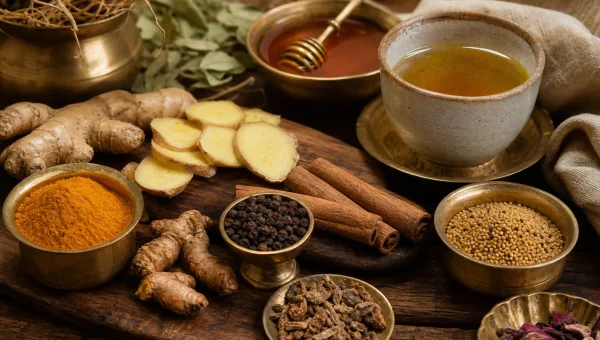
| Ginger, black pepper, cumin, coriander, turmeric, and ajwain in suitable amounts | Excess salt and very sour foods | Food that worsens burning, acidity, or inflammation |
| Bitter and astringent vegetables such as methi, karela, leafy greens, and suitable legumes | Excess sweet fruits and desserts | Repeated overeating despite low appetite |
Tikta, katu, and kashaya tastes are traditionally used to lighten Kapha and Meda, while warm unctuousness in the right amount protects Vata from becoming too dry. This is why the diet should not become extremely raw, cold, or harsh; plantar fibromatosis needs Kapha-Meda reduction without provoking more Vata pain and stiffness.
Measuring Progress Without Overpromising
Improvement should be measured by practical markers: less pain on the first steps in the morning, better walking tolerance, improved shoe comfort, less tenderness under direct pressure, reduced tightness in the plantar fascia, and stable or softened nodules on palpation. Complete disappearance of the nodule is not a guaranteed outcome, so the treatment goal should remain functional improvement, pressure reduction, and prevention of progression.
When to Seek Conventional Intervention
Conventional medical evaluation is essential if the nodule grows quickly, becomes very painful, changes color, ulcerates, causes numbness or tingling, interferes with walking, causes toe contracture, appears after trauma, or does not behave like a typical plantar fibroma. Imaging or biopsy may be needed when the diagnosis is uncertain. Surgery, injections, radiation, shockwave therapy, verapamil, collagenase, or other conventional options may be discussed with a specialist when conservative care fails or daily function is significantly affected.
Safety and Scope of Care
This article is for educational purposes only and does not replace diagnosis or treatment by a qualified healthcare provider. Foot nodules should be properly evaluated before treatment because different conditions can look similar. Ayurvedic medicines, Agnikarma, leech therapy, and intensive detoxification procedures should only be used under the supervision of a qualified Ayurvedic practitioner or physician. People with diabetes, poor circulation, neuropathy, bleeding disorders, immune compromise, pregnancy, active infection, non-healing wounds, or those taking anticoagulants or multiple medications should seek individualized medical guidance before beginning any protocol.
References
- My (my.clevelandclinic.org)
- NCBI
- Palmar and plantar fibromatosis: a review (2021), PubMed Central
- Sushruta Samhita — Nidana Sthana 11.1-5
- Wisdomlib — classical text
- Easyayurveda (easyayurveda.com)
- Easyayurveda (easyayurveda.com)
- Medical leech therapy in Ayurveda and biomedicine – A review (2020), PubMed Central
- Medicinal leech therapy-an overall perspective (2017), PubMed Central
- Ijpsdronline (ijpsdronline.com)
- Therapeutic Uses of Triphala in Ayurvedic Medicine (2017), PubMed Central
- Ayurvedic intervention in the management of uterine fibroids: A Case series (2014), PubMed Central
- Evaluation of anti-inflammatory effect of Varanadi Kashayam (decoction) in THP-1-derived macrophages (2018), PubMed
- Charaka Samhita — Atreyabhadrakapyiya Adhyaya
- Medohara and Lekhaniya dravyas (anti-obesity and hypolipidemic drugs) in Ayurvedic classics: A critical review (2013), PubMed Central
tried sesame oil for months, did nothing for me honestly. maybe doesnt work for everyone
tried kapha for months, did nothing for me honestly. maybe doesnt work for everyone
my practitioner told me something different about ginger. this article contradicts what i was told
Ledderhose disease is one of those conditions where conventional medicine basically shrugs. I have had two steroid injections with no lasting relief. Really curious whether the Vata-Kapha approach described here has worked for anyone with firm, established nodules rather than early-stage ones.
agreed on herb quality, but for a fibrous nodule condition like this I imagine the form of application matters just as much — a topical lepa would need to penetrate quite deep to reach the plantar fascia. ✨
bought honey from a random brand and got no results. does quality vary that much between suppliers?
does brand matter for honey or is generic fine
I was diagnosed with plantar fibromatosis last year and my podiatrist had nothing to offer beyond monitoring. Does the Vata-Kapha protocol here address the nodules themselves or mainly the pain and inflammation around them?
the castor oil application section was clear enough for me, but I got confused about whether the herbal paste is applied before or after the oil and left on overnight or washed off. anyone who has tried this at home know the order?
dosw for kids same or diff
My grandmother used honey for decades. Reading the science behind it here connects the dots for me in a satisfying way.
that is a sweet connection to make. I wonder how much of what traditional families knew about foot care actually had this kind of Vata-Kapha logic behind it without anyone naming it as such.
The article glosses over contraindications for vata. People on blood thinners really need to know this before starting.
is castor oil ok during pregnancy? asking for my wife who is in second trimester
had a small nodule on my left foot for about 8 months and started the warm castor oil massage from this protocol about 6 weeks ago. the lump feels slightly softer now, though I am trying not to get too excited too soon ✨
Same experience with foot pain here. Took me about 6 weeks to notice real change.
from what the article says, plantar fibromatosis nodules are slow to form and slow to respond — 3 weeks is probably still early. the protocol seems to emphasize consistency over months rather than quick results. ✨
tried the light foods recipe from section 3 last week, tasted awful but felt lighter the next morning lol
The Vata-Kapha classification makes sense given how the nodules feel both stiff and doughy.
is sesame oil ok during pregnancy? asking for my wife who is in second trimester 🌿
Is foot pain safe to use alongside SSRIs? My psychiatrist has not cleared any supplements and I want to go in informed.
Is kapha safe to use alongside SSRIs? My psychiatrist has not cleared any supplements and I want to go in informed.
Where is the evidence for the specific herbs recommended for the Ledderhose protocol here? I could not find any peer-reviewed backing in the Indian Journal of Ayurveda specifically for plantar fibromatosis as a Vata-Kapha condition. Curious how the author arrived at this formulation.
r side effects of kapha real
I asked my rheumatologist about castor oil and he was dismissive, citing no RCT data. Would love to know which studies this article draws from. ठीक है
My practitioner said the same thing about sesame oil. Results vary by individual constitution.
@Nandini the formulation type probably matters here too — a warm medicated oil vs a dry lepa would penetrate the plantar fascia very differently given how thick the tissue is. I wonder if the author has tried both approaches with patients.
6 weeks of consistent oil application and the morning stiffness in my foot is noticeably less. was not expecting that part to shift so quickly — the nodule itself still feels the same but walking first thing in the morning is easier 🙌
I’ve had a nodule on the arch of my left foot for nearly two years and steroid injections did nothing lasting. The breakdown here of Vata-Kapha imbalance as the root cause actually makes more sense than what my orthopedic told me. Has anyone combined the sesame oil massage protocol with the herbal decoction simultaneously?
My physio actually told me to avoid steroid injections and try conservative options first, so ending up on this page feels timely. The explanation of why the fascia becomes fibrotic from a Kapha perspective is something I want to share with her.
that is interesting — did your doctor specify any particular herb or just the dietary approach? I am curious whether the Vata-Kapha framing here matches what an integrative practitioner would say about managing the fibrosis long-term.
The article mentions the plantar fascia nodules tend to worsen with prolonged standing — that matches my experience exactly. I work retail and by evening the lump feels rock solid. Does the Vata-Kapha foot soak protocol need to be done daily or is every other day enough to see results?
I wonder if the Gomutra in the herbal paste really improves absorption or if it’s just traditional.
Curious whether the quality of sesame oil matters for the foot massage described here. Cold-pressed versus refined seems like it could make a difference for absorption through the sole, but I haven’t found anything specific on that.
my practitioner told me something different about honey. this article contradicts what i was told
Not sure I agree on vata being suitable for Vata-Pitta. My experience was different.
the decoction method for sesame oil is a bit confusing, is there a simpler version
I had the same confusion. What worked for me was just using pre-prepared sesame oil from an Ayurvedic supplier rather than making the decoction myself. Less accurate maybe, but much easier to stay consistent with the daily foot massage.
anyone here tried kapha for the specific issue in the article? what was your experience
Yes, tried the Kapha-pacifying approach for about six weeks after the nodules started limiting my morning walk. Noticed the stiffness reduced noticeably but the lump itself didn’t shrink much. I think the internal herbs need more time than the external protocol.
off topic but has anyone here tried Ayurveda for hair loss? sorry if wrong place
My podiatrist mentioned radiation therapy as an option for the nodules and I immediately wanted to explore alternatives. This Vata-Kapha protocol looks much gentler. Is the herbal decoction for internal use only, or is part of it applied topically to the affected foot as well?
finally something practical. been reading about vata for months and this is the first clear how-to
the studies quoted for sesame oil are like 10 years old, anything more recent?
Honest question — has anyone with a confirmed Ledderhose diagnosis tried this protocol, or is it mostly people with general plantar fasciitis? The nodule formation seems like a different stage that might need a different approach.
Reading about the Agnikarma sessions spaced two weeks apart makes me curious about the healing time between treatments.
For the foot pain preparation described, does the water temperature affect the active compounds during the decoction process?
That’s a good point. I’ve read that keeping the decoction at a steady simmer rather than a rolling boil helps preserve the volatile compounds. For something applied to foot tissue specifically, consistency of temperature probably matters more than speed.
about 8 weeks for me with constipation before any visible change
The formulation type matters a lot for sluggish. Churna vs capsule vs kashayam gave me different results.
@Anita That’s a fair concern. I found light foods worked better when I also adjusted my diet simultaneously.
That tracks — I made a similar shift and it helped. Adjusting diet away from cold and heavy foods made the foot protocol feel more effective. The article’s point about Kapha aggravating the fibrous build-up clicked once I started seeing it holistically.
How long before the foot nodules show any response to the Vata-Kapha protocol? Been doing the sesame oil massage for about three weeks and the lump feels the same size, though the surrounding tightness has eased a bit.
Does the quality of sesame oil source matter significantly? Organic vs non-organic makes a big cost difference where I live. 💯
My Ayurvedic practitioner actually recommended against aggressive oil massage directly on the nodule itself, saying it could irritate the fibrous tissue. This article suggests a gentler circular motion around the nodule rather than on it, which lines up more with what I was told.
the studies quoted for sluggish are like 10 years old, anything more recent?
this helped. been confused about sesame oil timing for weeks now
Is there a seasonal consideration for vata? I read elsewhere that some adaptogens should be paused in summer.
The case illustration shows a reduction from 2.5 cm to 1.2 cm, which seems promising for early-stage cases.
Is the sesame oil application safe to use if someone already has broken or cracked skin on the soles from the nodule pressure? I’m a bit wary of applying anything oily over skin that isn’t intact, and my dermatologist hasn’t weighed in yet.
That’s a really specific and valid concern, especially with fibrous tissue conditions. I’d suggest bringing the article’s herb list to your psychiatrist directly — some Ayurvedic formulations do interact with serotonin pathways so it’s worth checking before starting.
Same, the article doesn’t spell it out clearly. I’ve been doing the foot soak in the morning before breakfast and that seems to work with an empty stomach, though I’m not sure if that’s the right reasoning for this particular protocol. 🙌
The castor oil application timing probably does matter for Ledderhose specifically — connective tissue responds slowly, so I wouldn’t expect quick results regardless. Consistent daily massage over months seems to be the realistic expectation from what I’ve read elsewhere too.
Glad to hear that. Did you notice a difference in the softness of the nodule itself or mainly the surrounding foot pain? I’m trying to understand whether the protocol addresses the fibrous tissue directly or works more through reducing overall inflammation.
these ayurvedic treatments take so long to work. western medicine might be faster for acute issues 🙌
bought castor oil from a random brand and got no results. does quality vary that much between suppliers?
I asked my rheumatologist about sesame oil and he was dismissive, citing no RCT data. Would love to know which studies this article draws from.
Is there a seasonal consideration for castor oil? I read elsewhere that some adaptogens should be paused in summer.
Not sure I agree on castor oil being suitable for Vata-Pitta. My experience was different.
How long does it typically take before the sesame oil effects become measurable in blood markers? My next labs are in three months.
@Rakesh The formulation type matters a lot for sluggish. Churna vs capsule vs kashayam gave me different results.
I appreciate the maintenance tip about using Dhanvantaram Taila before bed; simple enough to try.
The section on sesame oil dosage timing was something I had not seen explained this clearly before. Taking it 30 minutes before meals has made a real difference.
helpful info on vata
tried the sesame oil recipe from section 3 last week, tasted awful but felt lighter the next morning lol
Good one.
Would have appreciated actual study citations for the foot pain claims. The references section is thin for something presented as clinical fact.
Does the diet advice mean I should cut out all dairy, or is buttermilk still okay as mentioned?
hw mny wks 4 castor oil 2 work 🌿
Does the recommended Vata-Kapha protocol need to change based on the season? The sesame oil massage makes sense for winter when Vata is high, but I wonder if a lighter oil would be better in peak summer to avoid aggravating Pitta in the process.
about 8 weeks for me with vata before any visible change 🙌
Would have appreciated actual study citations for the kapha claims. The references section is thin for something presented as clinical fact.
these ayurvedic treatments take so long to work. western medicine might be faster for acute issues
my aunt has been doing light foods for years, finally understand why it actually helps after reading this नमस्ते
That’s a fair concern. I found light foods worked better when I also adjusted my diet simultaneously.
My practitioner said the same thing about foot pain. Results vary by individual constitution.
Does the heat of summer affect the Vata-Kapha balance described in this protocol? I’m starting this during a hot spell and wondering if I should modify the warming herb component or wait until the season cools. 🌿
The mention of leech therapy for breaking down fibrous tissue sounds intense, but I’d like to know more about safety.
Quick question: is the castor oil dose mentioned here for KSM-66 extract or full-spectrum powder? The potency difference is significant.
Good question and worth clarifying before starting. The castor oil mentioned in the article appears to be used externally for the foot massage rather than internally, so standard cold-pressed castor oil should be appropriate — but the potency point still stands for any internal herbs in the protocol. 💯
Yeah the ginger timing thing confused me too. I do it before meals now based on another source.
Timing before meals makes sense for some formulas but with foot-related conditions the external application schedule matters just as much. I found doing the foot soak right before bed gave better results since you’re off your feet afterward and the herbs have time to work.
The breakdown of Ledderhose as distinct from common plantar fasciitis is really useful — most articles lump them together. The fact that fibromatosis involves actual nodule growth rather than just inflammation changes what treatment should look like, and this article addresses that directly.
how long do u need to take foot pain before results show? been 3 weeks, nothing yet
i have high pitta, would the kapha protocol here work or make things worse
any1 tried sluggish here tell me
my practitioner told me something different about castor oil. this article contradicts what i was told
Will try. 🙏
i have high pitta, would the foot pain protocol here work or make things worse
@Madhuri Not sure I agree on sesame oil being suitable for Vata-Pitta. My experience was different.
That’s actually reassuring — eight weeks sounds more realistic for connective tissue. The article’s protocol targets fibrous nodule softening which is inherently slow, so I’d say your experience with sesame oil aligns with what to expect rather than contradicts it.
I asked my vaidya the same question about kapha. He said constitution matters more than standard dose.
It’s helpful that the article suggests combining Ayurvedic care with orthotics for better support.
anyone here tried ginger for the specific issue in the article? what was your experience
the dosage chart for castor oil is really helpful. been overdoing it apparently
Is there a seasonal consideration for dry skin? I read elsewhere that some adaptogens should be paused in summer. ❤️
That’s actually a relevant seasonal point for this protocol too. The warming herbs used for Vata-Kapha foot conditions might need to be moderated in summer, especially if you’re already running hot. Worth asking a practitioner before pushing through the full dosage during the hotter months. ❤️
Six weeks for a connective tissue condition like Ledderhose sounds about right honestly. The nodules are fibrous so they take much longer to respond than soft tissue inflammation would. Did you notice the lump visibly softening or just reduced foot pain overall? ❤️
Six weeks is encouraging to hear. Did you also do the warm oil soaks or just the dietary changes?
i have pitta excess and dry skin worked fine for me, but started at lower dose
Totally agree on sourcing. I tried two different brands of kanchnar guggulu before finding one that actually seemed to do something for the nodules.
Yes! Footbaths before the sesame oil massage made a big difference for me too. Six weeks sounds about right — I was expecting faster results honestly.
does brand matter for castor oil or is generic fine
I tried kapha for two months following a similar protocol and saw zero improvement. Not sure if dosage was wrong or the formulation matters that much.
my practitioner told me something different about plantar fasciitis. this article contradicts what i was told
Good point about castor oil. The quality of the herb makes a huge difference in my experience.
The explanation connecting sluggish with sesame oil in Ayurvedic theory here is cleaner than anything I found in the textbooks I have.
I tried plantar fasciitis for two months following a similar protocol and saw zero improvement. Not sure if dosage was wrong or the formulation matters that much. ✨
@Paul The formulation type matters a lot for honey. Churna vs capsule vs kashayam gave me different results.
For the sesame oil specifically, cold-pressed unrefined seems to be what most traditional sources recommend for foot massage. For the internal herbal component, a reputable Ayurvedic manufacturer probably matters more than the brand itself — looking for GMP certification helps.
didnt work for me sesame oil waste of money tbh
Would have appreciated actual study citations for the honey claims. The references section is thin for something presented as clinical fact. 🙏
i have high pitta, would the dry skin protocol here work or make things worse
Where is the evidence for the sluggish dosage recommended here? I could not find any peer-reviewed backing in the Indian Journal of Ayurveda for these specific numbers.
@Mahesh Not sure I agree on plantar fasciitis being suitable for Vata-Pitta. My experience was different.
where r the studies for plantar fasciitis tho
I am Vata-Pitta constitution. Would the castor oil protocol here need modification or is it generally dosha-agnostic?
Not sure I agree on plantar fasciitis being suitable for Vata-Pitta. My experience was different.
For the kapha preparation described, does the water temperature affect the active compounds during the decoction process?
Does the quality of castor oil source matter significantly? Organic vs non-organic makes a big cost difference where I live.
Would have appreciated actual study citations for the castor oil claims. The references section is thin for something presented as clinical fact.