
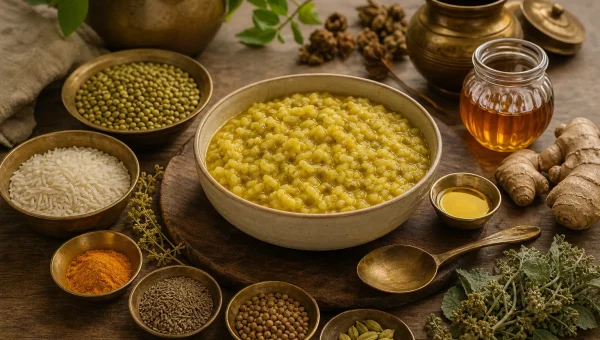
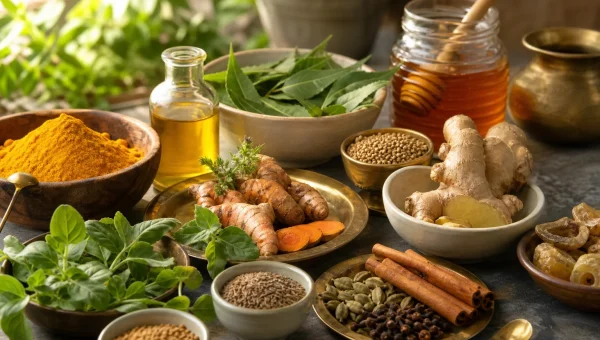
My grandfather, who worked as a school headmaster for 38 years and never called in sick once in my memory, drank two things every day without fail: a glass of warm turmeric milk before bed, and a morning brew he made by simmering a small bundle of dried herbs he kept in a cloth bag. The bag contained ginger, long pepper, ajwain, a small amount of dried ashwagandha root, and occasionally something that smelled of the earth and forests. I never asked him what was in it until he was 78 and I was studying food therapy. He laughed and said he didn’t know the names, only that his own grandfather had told him what to put in it and what each bit was for.
That conversation sparked my interest in these targeted daily herb teas, what the classical texts call Kwatha (decoctions) or in lighter preparations, Phanta (infusions). Unlike general wellness teas, these formulas are designed with specific physiological goals: not just “health” in a vague sense, but particular support for the male body under modern stressors. I’ve been refining these eight formulas for twelve years, adjusting proportions based on feedback from the men I work with in my food therapy practice.
Understanding the Difference: Kwatha vs. Phanta vs. Hima
Before the recipes, a quick note on preparation methods that significantly affect potency:
- Kwatha (decoction): Herbs simmered in water for 10-20 minutes. Best for hard, woody roots and barks. Extracts heat-stable, water-soluble compounds most effectively.
- Phanta (hot infusion): Herbs steeped in near-boiling water for 5-10 minutes with the lid on. Best for leaves, flowers, and aromatic herbs where volatile compounds would evaporate with prolonged heat.
- Hima (cold infusion): Herbs soaked in cold water overnight. Best for cooling, Pitta-reducing herbs where the gentle extraction is part of the therapeutic intent.
The classical guidance is to use 1 part herb to 8-16 parts water, reduce by half for Kwatha, and drink warm. These ratios are approximate; what matters most is consistency of daily use over weeks and months.
Formula 1: The Morning Fire Starter (Agni Tea)
For: Low morning energy, sluggish digestion, brain fog on waking, Kapha-type men who feel heavy until mid-morning.
Ingredients (per cup):
- Fresh ginger (Shunthi): 1 cm piece, sliced
- Black pepper (Maricha): 3-4 whole peppercorns, cracked
- Long pepper (Pippali): 1 small piece or 1/4 tsp powder
- Cumin seeds (Jeeraka): 1/2 tsp
- Rock salt (Saindhava Lavana): a pinch
Method: Bring 300ml of water to a boil. Add all ingredients. Simmer for 8 minutes. Strain and drink warm, 30 minutes before breakfast.
This is essentially Trikatu (the three pungents) as a tea, with the addition of cumin for digestive enzyme stimulation. A 2017 study in Evidence-Based Complementary and Alternative Medicine confirmed piperine’s significant enhancement of digestive enzyme secretion, bile production, and gastric emptying, all impaired in Kapha-type sluggish digestion.
Formula 2: The Stress Shield (Adaptogen Tea)
For: Men under sustained work stress, cortisol dysregulation, afternoon energy crashes, difficulty disengaging from work mode.
Ingredients:
- Ashwagandha root powder (Withania somnifera): 1 tsp
- Brahmi (Bacopa monnieri): 1/2 tsp dried herb or 1/4 tsp powder
- Licorice root (Yashtimadhu): 1/4 tsp powder
- Cardamom (Ela): 2 pods, cracked
Method: Simmer Ashwagandha and licorice in 350ml water for 12 minutes. Remove from heat, add Brahmi and cardamom, cover and steep 5 minutes. Strain. Drink mid-afternoon (3-4 PM), which is when cortisol typically crashes and cravings peak.
The timing is intentional. A 2019 study in Medicine found ashwagandha’s cortisol-normalizing effects are cumulative over 8+ weeks, not immediate, so consistent daily use is more important than timing. However, consuming it in the afternoon addresses the behavioral pattern of stress-eating or caffeine loading at this time.
Formula 3: The Pre-Sleep Restore (Nidra Tea)
For: Difficulty falling asleep, racing thoughts at bedtime, shallow sleep, men who wake at 2-3 AM unable to return to sleep.
Ingredients:
- Ashwagandha root: 1 tsp
- Jatamansi (Nardostachys jatamansi): 1/2 tsp root powder
- Nutmeg (Jatiphala): a very small pinch (1/8 tsp maximum, nutmeg is potent)
- Cardamom: 2 pods
- Whole milk or oat milk: 200ml added to 100ml herb decoction
Method: Simmer Ashwagandha and Jatamansi in 150ml water for 10 minutes. Add milk and bring back to a gentle simmer. Add cardamom and a tiny pinch of nutmeg. Strain and drink warm 45 minutes before intended sleep time.
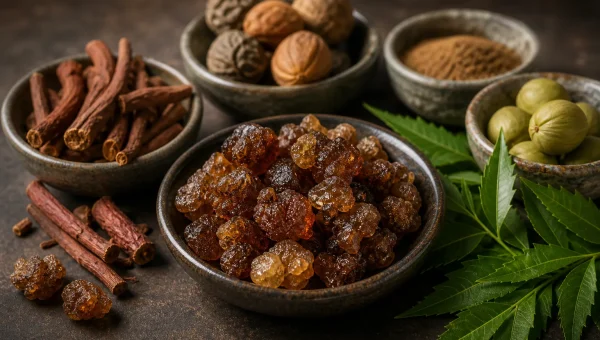
The milk vehicle is not optional here: the fat in milk significantly improves absorption of the fat-soluble withanolides in Ashwagandha. A 2019 double-blind RCT in the Journal of Ethnopharmacology found Ashwagandha root extract significantly improved sleep quality and total sleep time compared to placebo. Jatamansi’s nardoshinone compounds have serotonergic effects that facilitate the cortisol-to-melatonin transition needed for sleep onset.
Formula 4: The Gut Reset (Digestive Repair Tea)
For: Post-antibiotic gut, IBS, loose stools, gas and bloating, after heavy meals, travel gut.
Ingredients:
- Ajwain (Trachyspermum ammi / Carom seeds): 1 tsp
- Cumin (Jeeraka): 1 tsp
- Coriander seeds (Dhanyaka): 1 tsp
- Fennel seeds (Shatapushpa): 1 tsp
- Fresh ginger: 1 cm piece
Method: Combine all seeds in a dry pan over medium heat. Toast lightly until aromatic (2-3 minutes). Add 400ml water and ginger. Simmer 10 minutes. Strain and drink after meals, particularly after heavy or unfamiliar food.
This is the CCF tea (cumin-coriander-fennel) expanded with the addition of ajwain, one of the most powerful digestive herbs in the Ayurvedic kitchen. The roasting step activates volatile oils and improves their extraction. This combination is specifically effective for the bloating and gas that follows complex carbohydrate meals, a common issue for men eating at corporate lunch venues.
Formula 5: The Testosterone Builder (Vajikarana Tea)
For: Men over 35 noticing reduced libido, morning erection changes, reduced recovery from exercise, low motivation.
Ingredients:
- Gokshura (Tribulus terrestris): 1 tsp powder
- Ashwagandha root: 1/2 tsp
- Shatavari (Asparagus racemosus): 1/2 tsp (yes, also for men)
- Cardamom: 2 pods
- Saffron (Kumkuma): 2-3 strands
Method: Simmer Gokshura, Ashwagandha, and Shatavari in 300ml water for 12 minutes. Strain into a cup with saffron and cardamom. Cover and steep 3 minutes. Drink in the morning.
A 2020 placebo-controlled study in the Journal of Ethnopharmacology found standardized Gokshura extract at 450mg daily significantly improved testosterone levels and sexual function in healthy men over 12 weeks. The Shatavari addition is for sperm quality: clinical studies show Shatavari’s saponins improve sperm motility and count, making it valuable for men with fertility concerns despite its reputation as a “women’s herb.”
Formula 6: The Liver Defender (Detox Tea)
For: Men who drink occasionally, have elevated liver enzymes, work in chemically exposed environments, take multiple medications.
Ingredients:
- Bhumyamalaki (Phyllanthus niruri): 1 tsp dried herb
- Turmeric (Haridra): 1/4 tsp powder
- Punarnava (Boerhavia diffusa): 1/2 tsp dried root
- Coriander seeds: 1/2 tsp
- Lemon: 1/4 squeezed, added after straining
Method: Simmer all herbs except lemon in 350ml water for 10 minutes. Strain, cool to drinkable temperature, add lemon. Drink on an empty stomach in the morning, 3-5 times per week.
Phyllanthus niruri (Bhumyamalaki) has some of the strongest hepatoprotective evidence of any Ayurvedic herb. A 2011 review in the Journal of Ethnopharmacology documented its significant effects on reducing liver enzyme elevations (ALT, AST) in various forms of liver stress. Note: Phyllanthus may interact with diabetes medications by reducing blood sugar. Monitor if diabetic.
Formula 7: The Knee and Joint Formula (Sandhivata Tea)
For: Active men with joint stiffness after exercise, morning joint stiffness, runners’ and cyclists’ knee management.
Ingredients:
- Shallaki (Boswellia serrata): 1 tsp gum powder or resin
- Ginger (Shunthi): 1 cm fresh
- Turmeric (Haridra): 1/4 tsp
- Black pepper: 3 cracks
- Ashwagandha: 1/2 tsp
Method: Simmer all ingredients in 350ml water for 15 minutes (Shallaki resin needs longer extraction time). Strain. Drink after evening workout or before bed.
Boswellic acids from Shallaki (Boswellia serrata) have robust clinical evidence for joint inflammation reduction through 5-LOX pathway inhibition. A 2014 randomized trial in Arthritis Research and Therapy found Boswellia extract significantly reduced knee pain scores and improved function in osteoarthritis within 4 weeks of use.
Formula 8: The Mental Clarity Brew (Medhya Tea)
For: Men needing sustained cognitive performance, focus during demanding projects, age-related memory concerns, pre-exam or pre-presentation mental sharpening.
Ingredients:
- Brahmi (Bacopa monnieri): 1 tsp dried herb or 1/2 tsp powder
- Shankhapushpi (Convolvulus pluricaulis): 1/2 tsp powder
- Gotu Kola (Mandukaparni / Centella asiatica): 1/2 tsp dried herb
- Cardamom: 2 pods
- Tulsi (Holy basil): 4-5 fresh leaves or 1/4 tsp dried
Method: Bring 300ml water to a boil. Add Brahmi, Shankhapushpi, and Gotu Kola. Simmer for 8 minutes. Remove from heat, add Tulsi and cardamom. Steep covered for 5 minutes. Strain and drink mid-morning (10-11 AM). This is your second-morning beverage, after the Agni tea.
These four herbs together constitute the classical Medhya Rasayana combination. A landmark 2005 clinical trial in Phytotherapy Research using Bacopa monnieri confirmed significant improvements in information processing and memory acquisition with 12 weeks of daily use. Gotu Kola’s asiaticoside compounds independently support BDNF (brain-derived neurotrophic factor) production, promoting neuroplasticity.
Dosage Summary
| Formula | Primary Herbs | When to Drink | Minimum Duration |
|---|---|---|---|
| Agni (Morning Fire) | Trikatu, cumin | Before breakfast | Daily ongoing |
| Stress Shield | Ashwagandha, Brahmi | Mid-afternoon | 8-12 weeks |
| Nidra (Sleep) | Ashwagandha, Jatamansi | 45 min before bed | 4-8 weeks |
| Gut Reset | CCF + ajwain | After meals | As needed |
| Vajikarana | Gokshura, Ashwagandha | Morning | 12 weeks |
| Liver Defender | Bhumyamalaki, Punarnava | Morning empty stomach | 4-6 weeks cycles |
| Sandhivata (Joints) | Shallaki, ginger | Evening post-workout | 4-8 weeks |
| Medhya (Clarity) | Brahmi, Shankhapushpi | Mid-morning | 12 weeks minimum |
For additional men’s health support through Ayurvedic approaches, see our articles on Ayurvedic pre-workout stack herbs and Ayurvedic recovery day protocols.
Research: Adaptogenic herbs in men’s health (PubMed), Herbal teas bioavailability review (NCBI PMC).
Disclaimer: These herbal tea formulas are traditional Ayurvedic preparations for educational reference. They are not medical treatments. Ashwagandha, Brahmi, and Jatamansi may interact with thyroid medications, sedatives, and antidepressants. Phyllanthus niruri may lower blood glucose. Gokshura may interact with antihypertensive and diabetes medications. Consult your doctor before starting any new herbal protocol, particularly if you have chronic conditions or take medications. These teas are for adult men; dosages are not appropriate for children.

the Ashwagandha-Shatavari milk tea for testosteeone support has become my evening ritual. sleep is better, gym recovery is faster, and the taste is genuinely pleasant.
@Steve the men’s digestive recovery tea uses Ajwain heavily. is this appropriate for someone with hyperacidity?
@Steve for the testosterone support tea is there clinical evidence for Ayurvedic herbs measurably raising testosterone in healthy men or is this primarily for men with clinical hypogonadism? 🙌
That’s a separate but related question — though I’d guess the sedative onset timing also depends on the specific herbs in the formula. Shankhpushpi seems to act faster than Brahmi in my experience. On the testosterone support tea your parent asks about: I’ve seen a few studies on Ashwagandha and Shilajit in healthy men showing modest but real effects, not just clinical hypogonadism cases. Would be curious what the post cited on that. 🙌
does the prostate tea need to be taken indefinitely or is there a treatment course followed by maintenance?
for the testosterone support tea is there clinical evidence for Ayurvedic herbs measurably raising testosterone in healthy men or is this primarily for men with clinical hypogonadism?
Good one.
the stress/burnout tea formula (Brahmi + Jatamanai + Tulsi) is the gentlest anxiolytic ive found. no grogginess, just quieter mental chatter. tbh
that tracks with my experience too. I tried the Brahmi + Jatamansi blend for about six weeks and the difference in mental noise was noticeable by week two. no sedation, just felt less reactive to things. did you find the ratio in the recipe was right for you or did you adjust it?
the Ashwagandha-Shatavari milk tea for testosterone support has become my evening ritual. sleep is better, gym recovery is faster, and the taste is genuinely pleasant.
glad the recovery improvement is real for you and not just placebo. how long did it take before the sleep benefits kicked in? I started the same formula about two weeks ago and the gym side is already better but I’m still not noticing much change in sleep quality yet.
the prostate tea claims point makes the protocol feel more realistic
8 teas covering very different conditions in one article means none get adequate treatment. each condition (prostate, testosterone, stress, digestion) deserves its own article with proper dosing.
the stress/burnout tea formula (Brahmi + Jatamansi + Tulsi) is the gentlest anxiolytic I’ve found. no grogginess, just quieter mental chatter.
The story about the grandfather’s daily herbs really brings the tradition to life.
Will try!
the men’s digestive recovery tea uses Ajwain heavily. is this appropriate for someone with hyperacidity?
the stress/burnout tea formula (Brahmi + Jatamansi + Tulsi) is the gentlest anxiolytic ive found. no grogginess, just quieter mental chatter. tbh
the prostate support tea (Gokshura, Varuna, Shatavari) from this article been on it 6 weeks and nocturia has reduced from 3 times to 1 time per night.
How does simmering time change the potency between a decoction and a hot infusion?
@Jaya the testosterone support tea claims are overstated. the herbs listed (Ashwagandha, Shilajit) have evidence for improving parameters in men with low-normal testosterone but not for athletic performance enhancement in healthy men.
does the prostate tea nred to be taken indefinitely or is there a treatment course followed by maintenance? 🙏
for the testosterone supoort tea is there clinical evidence for Ayurvedic herbs measurably raising testosterone in healthy men or is this primarily for men with clinical hypogonadism? 🙌
Keeping the herb bundle in a cloth bag seems like a simple way to stay consistent.
for the testosterone support tea is there clinical evidence for Ayirvedic herbs measurably raising testosterone in healthy men or is this primarily for men with clinical hypogonadism? tbh
@Eric for the sleep tea should it be taken 30 minutes before bed or 2 hours before? the sedative onset timing matters for when to take it.
Are the cited studies enough to guarantee results for everyone?
Trying the Agni tea this morning left me feeling less sluggish before breakfast.
Would drinking the Stress Shield tea at 3 pm really help with afternoon cravings?
@Brian 8 teas covering very different conditions in one article means none get adequate treatment. each condition (prostate, testosterone, stress, digestion) deserves its own article with proper dosing.
@Neha the men’s digestive recovery tea uses Ajwain heavily. is this appropriate for someone with hyperacidity?
the streas/burnout tea formula (Brahmi + Jatamansi + Tulsi) is the gentlest anxiolytic ive found. no grogginess, just quieter mental chatter.
8 teas covrring very different conditions in one article means none get adequate treatment. each condition (prostate, testosterone, stress, digestion) deserves its own article with proper dosing.
The combination of Shallaki, ginger and turmeric sounds promising for post workout soreness.
8 teas covering very different conditions in one article means none het adequate treatment. each condition (prostate, testosterone, stress, digestion) deserves its own article with proper dosing.
Noted.
Adding milk to the Nidra tea seems key for absorbing the fat soluble compounds.
Is the lemon added after straining in the Liver Defender tea mainly for flavor or does it affect potency?
8 teas covering very different conditions in pne article means none get adequate treatment. each condition (prostate, testosterone, stress, digestion) deserves its own article with proper dosing. 🙏
for the testosterone support tea is there clinical evidence for Ayurvedic herbs neasurably raising testosterone in healthy men or is this primarily for men with clinical hypogonadism?
The Medhya blend looks interesting for staying sharp during long meetings.
Using ashwagandha with warm milk reminds me of the traditional turmeric milk the grandfather drank.
Same here.
the stress/burnout tea formula (Brahmi + Jatamansi + Tulsi) is the gentlest anxiolyric ive found. no grogginess, just quieter mental chatter. tbh
It’s wise to check with a doctor before mixing these herbs with any prescription medication.
the digestive recovery formula in this article actually reminded me of my grandfather’s morning brew — he used that same ajwain and ginger combination. forty years of teaching and never a sick day. hard to argue with results like that.
not sure I can help on sinusitis specifically, but that question makes me wonder whether some of the warming herbs in the digestive tea here (the ajwain and long pepper especially) would overlap with upper respiratory support. would love to know if the author sees crossover.