Sports Recovery Weekend Athletes Ayurveda: The Ojas Restoration Protocol
Sports recovery for weekend athletes in Ayurveda is not about avoiding effort. It is about matching effort with recovery so that the same body that works at a desk Monday to Friday can train hard on Saturday and Sunday without carrying soreness, fatigue, poor sleep, and declining performance into the next week. Ayurveda frames this through vyayama (exercise), bala (strength or capacity), agni (digestive-metabolic fire), and ojas (vital reserve).
Ojas is described in Ayurvedic literature as vitality, vigor, bodily strength, and the essence of the seven dhatu. For the weekend athlete, this gives a useful recovery lens: intense training draws from the body’s reserves, while warm food, adequate sleep, oil massage, sensible herb use, and moderation rebuild them. The practical goal is not to “train less” by default, but to avoid ativyayama—exercise beyond capacity—while building a repeatable Friday-to-Monday recovery rhythm.
The Ayurvedic Recovery Principle: Train Hard, Recover on Purpose
Classical Ayurvedic guidance praises regular exercise for lightness, strength, appetite, endurance, and firmness of the body, but it also warns against excess. The optimum limit is traditionally described as exercising up to about half of one’s strength, with adjustment for season, age, constitution, digestion, sleep, heat exposure, and current fatigue. A weekend athlete who ignores weekday sleep debt, then compresses two demanding sessions into two days, is often not lacking willpower; they are exceeding recoverable capacity.
The ojas restoration protocol therefore has four priorities: replenish carbohydrate and protein soon after training, protect digestion with warm and easy meals, calm the nervous system through oiling and sleep, and use rasayana herbs only when suitable. These steps work best as a weekend routine rather than as a rescue measure after soreness has already become severe.
The Recovery Timeline: What Happens When You Stop
The first recovery window begins as soon as training ends. In the first hour, the priority is fluids, electrolytes if sweat loss was high, and a carbohydrate-protein intake that helps restore glycogen and supports tissue repair. Ayurveda adds a simple rule here: do not overload a tired digestive system with a cold, heavy, greasy, or chaotic meal immediately after intense exertion.
The second window is the first main meal after training, usually within one to two hours. This is where warm, moist, digestible food such as kitchari, soup, rice with dal, or a simple cooked meal is more useful than random snacking. The third window is the evening and overnight period, when sleep, oil massage, reduced stimulation, and a calmer mind determine whether the athlete wakes restored or still depleted.
Immediate Post-Training Protocol (0-60 Minutes)
Begin with a simple recovery drink or meal rather than waiting until appetite fully returns. A practical Ayurvedic option is warm milk, lactose-free milk, or a protein-supported plant base with one or two dates or a banana, a small pinch of cardamom, and a teaspoon of ghee if digestion accepts it. This is the food foundation: carbohydrate, fluid, warmth, and digestibility.
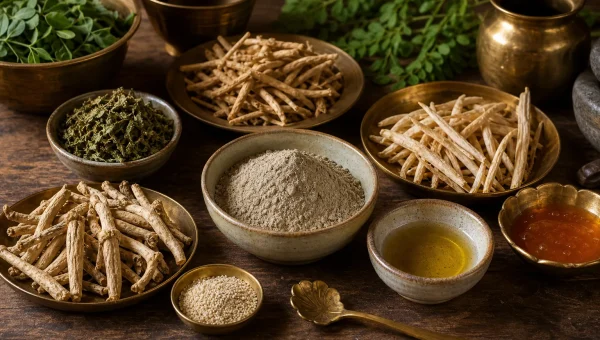
Ashwagandha can be added only when it is already suitable for the athlete. The Ayurvedic Pharmacopoeia of India identifies ashwagandha root as rasayana, balya, vata-kapha-hara, and vajikarana, with tikta and kashaya rasa, laghu guna, ushna virya, and madhura vipaka. For classical powder, the pharmacopoeial dose is 3-6 g; for standardized extracts, 300 mg once or twice daily is a common clinical range. Timing one dose after training is convenient, but ashwagandha should be treated as a daily restorative herb, not as a substitute for food, sleep, or progressive training.
Early Recovery Meal: Golden Kitchari for Agni and Ojas
Within one to two hours after hard training, take a warm, cooked meal. A recovery kitchari can be made with rice and split mung dal, cooked soft with enough water, one teaspoon of ghee, turmeric, a little dry or fresh ginger, and a small pinch of black pepper. This meal is chosen because it is warm, moist, simple, and easier on digestion than a heavy fried meal or a large cold salad immediately after exertion.
Turmeric (haridra) is described in the Ayurvedic Pharmacopoeia with katu and tikta rasa, ruksha guna, ushna virya, and katu vipaka. Ginger (shunthi) is described as katu in rasa, laghu and snigdha in guna, ushna in virya, madhura in vipaka, and useful for dipana and pachana. A small amount of black pepper is enough; more is not better, especially in athletes with acidity, heat, burning, loose stools, or pitta aggravation.
Amalaki as the Rasayana Support
Amalaki is a better Ayurvedic fit than importing a non-Ayurvedic antioxidant comparison into the protocol. The Ayurvedic Pharmacopoeia describes fresh amalaki fruit as rasayana, tridoshajit, vrishya, and chakshushya, with madhura, amla, katu, tikta, and kashaya rasa; laghu and ruksha guna; shita virya; and madhura vipaka. The fresh fruit dose is listed as 10-20 g, or 5-10 ml fresh juice.
For weekend athletes, amalaki can be used as fresh amla, diluted amla juice, or a practitioner-selected preparation. It is especially appropriate when recovery food has become too heating, salty, fried, or stimulant-heavy. Use it according to constitution and tolerance; people with sensitive digestion should avoid forcing sour preparations when they aggravate symptoms.
| Recovery Phase | Timing | Primary Intervention | Practical Amount |
|---|---|---|---|
| Immediate | 0-60 min post-training | Warm recovery drink or light meal | 300 ml warm base + dates or banana + protein as needed |
| Rasayana support | Daily, if suitable | Ashwagandha | Practitioner-guided; classical powder 3-6 g or standardized extract per label |
| Main recovery meal | 1-2 hours post-training | Soft kitchari with ghee and digestive spices | 1 bowl + 1 tsp ghee + turmeric, ginger, cardamom, or cumin as tolerated |
| Cooling rasayana | With food or earlier in the day | Amalaki | Fresh fruit 10-20 g or juice 5-10 ml if tolerated |
| Body recovery | Evening or next morning | Warm oil abhyanga | 10-20 min gentle self-massage before warm bath |
| Deep recovery | Night after training | Early sleep and low stimulation | 8-9 hours in bed when possible |
The Abhyanga Advantage: Self-Massage for Muscle Recovery
Classical guidance recommends gentle massage of the whole body after exercise. For a weekend athlete, this can be translated into 10-20 minutes of warm oil self-massage before a warm shower, especially on the legs, hips, back, shoulders, and feet. Sesame oil is a common home choice when tolerated, while medicated oils should be selected according to constitution, season, soreness pattern, and practitioner advice.
The technique should be calming rather than aggressive. Warm the oil, apply it with long strokes on the limbs and circular movements around the joints, keep pressure comfortable, and avoid deep force over acute pain, swelling, bruising, or suspected injury. The complete abhyanga technique guide can be used for step-by-step application, but athletes with injuries should seek hands-on evaluation rather than massaging through sharp pain.
Sleep Optimization: The Recovery Multiplier
Sleep is the non-negotiable part of ojas restoration. A weekend athlete who trains hard and then sacrifices sleep for late nights, alcohol, overstimulation, or screen-heavy recovery will carry that cost into the next training session. From a practical recovery standpoint, the night after hard training should be treated as part of the workout.
A useful target is 8-9 hours in bed on the night after intense training, with the last heavy meal finished early enough for comfortable digestion. A simple bedtime option is warm milk with cardamom or nutmeg when tolerated. If ashwagandha is suitable and already part of the plan, a bedtime dose may be placed here rather than stacking extra doses. The goal is deeper recovery, not sedation or forcing herbs on a body that is already overheated, medicated, or unwell.
A Weekend Recovery Template
On Friday evening, keep dinner warm, cooked, and steady so Saturday training begins with decent digestion. On Saturday after training, complete the first-hour recovery drink or meal, then take a warm kitchari-style meal within one to two hours. Use amalaki earlier in the day if it suits your digestion, and do warm oil abhyanga in the evening or the next morning. Keep Saturday night quiet enough that sleep can complete the recovery process.
On Sunday, train according to the body you actually have that morning, not the plan you wrote when you were fresh. If soreness is mild and movement improves it, train lighter or skill-based. If soreness is sharp, asymmetric, swollen, or worsening, shift to walking, mobility, breathing, and recovery food. Sunday evening should be the ojas-protection window: simple dinner, low stimulation, warm bath, and early sleep so Monday does not begin in deficit.
Medical Disclaimer: This content is for educational purposes only and does not constitute medical advice. Athletes with cardiovascular conditions, musculoskeletal injuries, chronic illness, thyroid disease, liver disease, autoimmune conditions, pregnancy, breastfeeding, or those taking sedatives, thyroid medicines, diabetes medicines, blood pressure medicines, immunosuppressants, or other regular medications should consult a qualified healthcare provider and a licensed Ayurvedic practitioner before using herbs or changing training and supplementation protocols. Severe soreness, swelling, chest pain, fainting, dark urine, persistent weakness, or suspected overtraining requires medical evaluation.
Nothing in this article diagnoses or treats a medical condition. Use it as educational information and consult a qualified Ayurvedic practitioner or physician before starting herbs, supplements, detoxes, or therapeutic protocols.
References
- Charaka Samhita — Ojas
- Charaka Samhita — Vyayama
- Charaka Samhita — Dinacharya
- International society of sports nutrition position stand: nutrient timing (2017), PubMed
- Link (link.springer.com)
- Ayurvedic Pharmacopoeia of India
- Examining the effect of Withania somnifera supplementation on muscle strength and recovery: a randomized controlled trial (2015), PubMed
- Influence of piperine on the pharmacokinetics of curcumin in animals and human volunteers (1998), PubMed
- Bmjopensem (bmjopensem.bmj.com)
- An Evidence-Based Approach for Choosing Post-exercise Recovery Techniques to Reduce Markers of Muscle Damage, Soreness, Fatigue, and Inflammation: A Systematic Review With Meta-Analysis (2018), PubMed Central
- The effect of acute sleep deprivation on skeletal muscle protein synthesis and the hormonal environment (2021), PubMed
- Efficacy and Safety of Ashwagandha (Withania somnifera) Root Extract in Insomnia and Anxiety: A Double-blind, Randomized, Placebo-controlled Study (2019), PubMed
- NIH Office of Dietary Supplements
- NCCIH