
When sunburn makes the skin feel hot, tight, red, tender, or dry, the first priority is simple: get out of the sun, cool the area gently, replace fluids, and protect the skin barrier while it settles. In Ayurvedic language, this is a heat-dominant skin disturbance marked by daha (burning), redness, dryness, and thirst; the most practical response is to remove the cause and use cooling, soothing, non-irritating measures.
These Ayurvedic sunburn remedies are best suited for mild, uncomplicated sunburn on intact skin. They are not for deep burns, large blisters, infected skin, faintness, confusion, fever, chills, severe swelling, or symptoms of heat illness. For those situations, seek prompt medical care.
Why Ayurveda Frames Sunburn as a Pitta-Heat Pattern
Ayurveda reads a skin problem by its qualities. Sunburn presents with heat, burning, redness, sensitivity, thirst, and sometimes later dryness and peeling. Those signs fit a practical Pitta-heat pattern, so the care emphasis is on shita (cooling), pittahara (Pitta-pacifying), dahaprashamana (burning-soothing), and gentle barrier support.
From a dermatology standpoint, sunburn is a UV-related inflammatory injury. Ultraviolet exposure can injure keratinocytes, increase inflammatory signaling in the skin, draw fluid toward the damaged area, and leave the surface tender and dehydrated. This is why the Ayurvedic and conventional first-aid priorities overlap: cooling compresses, water intake, aloe or gentle moisturization, avoiding further sun exposure, and medical care when symptoms are severe.
The 5 Ayurvedic Sunburn Treatments
Use these remedies in sequence rather than all at once. In the first hot phase, keep everything light, cool, and water-based. Once the skin is no longer radiating heat, add richer moisturization for peeling and dryness.
Treatment 1: Chandan-Narikela Lepa (Sandalwood and Coconut Paste)
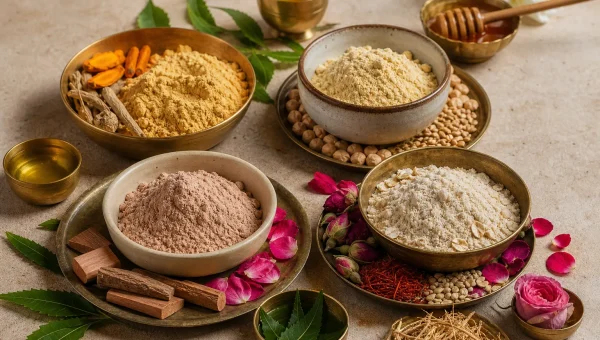
White sandalwood (Santalum album, Shveta Chandana) is listed in the Ayurvedic Pharmacopoeia of India as shita virya, pittahara, dahaprashamana, and trishnahara. Coconut (Cocos nucifera, Narikela) is described as sweet, unctuous, cooling, Pitta-pacifying, and traditionally used in conditions involving burning, tissue injury, and thirst. Together they make a simple cooling paste for intact, non-blistered sunburned skin.
Recipe:
- 2 tablespoons pure white sandalwood powder
- 3 to 4 tablespoons chilled coconut milk, thin coconut cream, or cool clean water
- Optional: a few drops of plain rose water if your skin already tolerates it well
Mix into a smooth paste. Apply a thin, even layer over the sunburned area without rubbing. Leave it on for 15 to 20 minutes, then rinse with cool water and pat dry. Use once or twice daily for one to two days if it feels comfortable. Do not apply over open blisters, raw peeling skin, or broken skin.
Use actual sandalwood powder, not sandalwood perfume oil or synthetic fragrance. Fragrance-heavy products can irritate already sensitized skin, so a plain, single-ingredient powder from a reputable Ayurvedic supplier is the safer choice.
Treatment 2: Fresh Aloe Gel Application
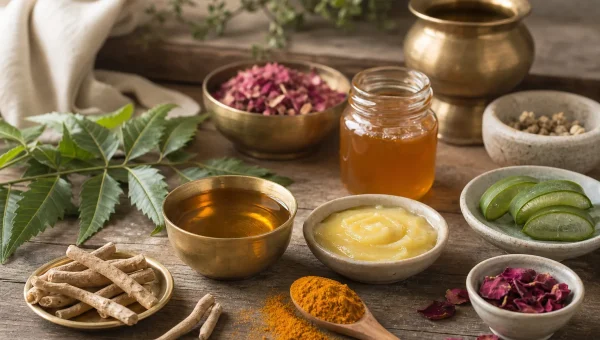
Fresh aloe gel is a simple moist application for hot, tender, intact skin. The American Academy of Dermatology lists moisturizers containing aloe vera among sunburn-soothing measures, and the Ayurvedic Pharmacopoeia of India lists Aloe barbadensis under Kanyasara. For sunburn care, aloe is best used as a gentle topical gel rather than as an internal herb.
Application protocol:
- Use fresh inner aloe gel or an alcohol-free, fragrance-free aloe product.
- Chill the gel briefly in the refrigerator before use.
- Apply a thin layer over clean, slightly damp skin.
- Let it absorb without rubbing. Reapply when the skin feels hot or tight again.
If using a fresh aloe leaf, slice away the green rind and yellow latex layer, then use only the clear inner gel. Prepare small amounts, keep them refrigerated, and discard the gel if the smell, color, or texture changes. Patch test first, especially if your skin is sensitive.
Treatment 3: Nimba Cool Compress for Red, Hot Skin
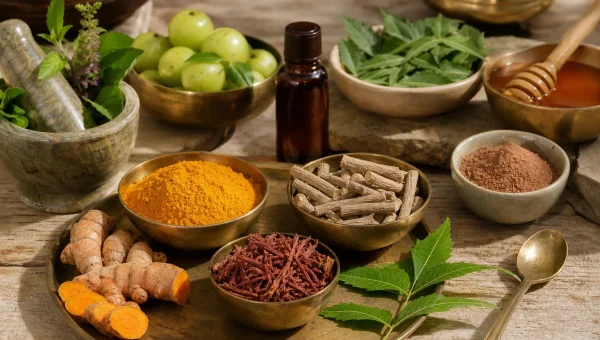
Neem (Azadirachta indica, Nimba) is bitter, cooling, and Pitta-pacifying in the Ayurvedic Pharmacopoeia of India. The stem-bark monograph specifically notes external use of a decoction, making a very mild, well-strained neem compress suitable for intact sunburned skin when there is heat and redness but no open blistering.
Recipe for the compress wash:
- 1/2 teaspoon neem stem-bark powder, or a very small pinch of neem leaf powder
- 2 cups water
- A clean, soft cotton cloth
Simmer the neem in water for 5 to 10 minutes, then allow it to cool completely. Strain through a fine cloth so no particles remain. Soak a clean cloth in the cooled liquid and place it on the sunburned area for 5 to 10 minutes. Use once daily only if it feels soothing. Stop immediately if it stings, dries the skin excessively, or increases redness.
Keep this preparation mild. Strong neem pastes, essential oils, and concentrated extracts are too harsh for freshly burned skin. Avoid neem compresses on children, during pregnancy, on open blisters, or on large areas unless guided by a qualified practitioner.
Treatment 4: Post-Heat Coconut-Sandalwood Oil for Peeling Skin
Oils are not the first choice while the skin is still very hot. After the acute heat settles and the skin begins to feel dry or peel, a thin layer of coconut oil can help reduce tightness and support the surface barrier. This home blend is inspired by the cooling sandalwood tradition, but it is not the same as a classical Chandanadi Taila formula.
| Ingredient | Amount | Purpose |
|---|---|---|
| Cold-pressed coconut oil | 4 tablespoons | Softens dry, peeling skin and supports the surface barrier |
| White sandalwood powder | 1/2 teaspoon | Adds a cooling, Pitta-pacifying Ayurvedic element |
Warm the coconut oil just enough to liquefy it, stir in the sandalwood powder, and let it settle. Strain if the texture feels gritty. Apply a very thin layer to dry, peeling areas at night. Do not use on skin that is blistered, weeping, infected, or still strongly radiating heat.
Treatment 5: Dhanyaka Water for Thirst and Heat Support
Sunburn can leave the body thirsty and overheated, so internal support should begin with water and electrolytes as needed. Dhanyaka (coriander seed, Coriandrum sativum) is listed in the Ayurvedic Pharmacopoeia of India with traditional uses that include daha (burning), trishna (thirst), and feverish heat patterns. Although its listed virya is ushna, a light coriander-water infusion is traditionally used as a gentle summer drink for thirst support.
Cooling-support infusion:
- 1 teaspoon coriander seeds, lightly crushed
- 2 cups clean drinking water
Soak the coriander seeds in water for 4 hours or overnight. Strain and sip the water through the day. Use this as a supportive drink, not as treatment for dehydration, heat exhaustion, heat stroke, vomiting, faintness, or confusion. If you have significant fluid loss or systemic symptoms, use appropriate medical care.
How to Layer These Treatments
The skin needs different care at different phases. Keep the first phase cool and simple; add heavier oils only after the heat has settled.
| Phase | Timing | Recommended Care |
|---|---|---|
| Acute heat and redness | First 24 to 48 hours | Cool water compresses, fresh aloe gel, water intake, shade, loose clothing |
| Settled heat with tenderness | After the skin is less hot | Sandalwood-coconut paste once daily, aloe gel as needed, very mild neem compress if the skin is intact |
| Dryness and peeling | After the burning phase has passed | Thin coconut-sandalwood oil at night, no picking, continued sun protection |
What to Avoid While Your Skin Heals
Sunburned skin is already inflamed and sensitive. Anything hot, abrasive, perfumed, or occlusive during the acute phase can make discomfort worse.
- Hot showers or baths: Use cool or lukewarm water instead.
- Scrubs, exfoliating acids, and retinoids: Wait until the skin has fully recovered.
- Fragrance-heavy creams and essential oils: Avoid camphor, peppermint, eucalyptus, perfume oils, and synthetic sandalwood fragrance on burned skin.
- Picking peeling skin or opening blisters: Let peeling lift naturally and keep blisters intact.
- Further sun exposure: Stay in shade, cover the area with loose clothing, and resume sunscreen only when the skin can tolerate application comfortably.
- Thick oils on very hot skin: Save oiling for the later dry or peeling phase.
When These Remedies Are Not Enough
Home care is appropriate only for mild, uncomplicated sunburn. Seek medical care promptly if symptoms suggest a deeper burn, infection, eye involvement, or heat illness.
- Large blisters or blisters on the face, hands, genitals, or a large body area
- Fever, chills, nausea, dizziness, faintness, confusion, or severe headache
- Severe swelling or worsening pain
- Pus, red streaks, increasing warmth, or other signs of infection
- Eye pain or vision changes after sun exposure
- No improvement or worsening symptoms after a few days of careful home care
Severe sunburn and heat illness require qualified medical assessment. Ayurvedic topical remedies can be soothing for mild overexposure, but they are not substitutes for emergency care, fluid replacement, or treatment of infection.
One Last Thing
The best sunburn remedy is prevention: shade, protective clothing, and sensible sunscreen use before exposure. When overexposure has already happened, treat the skin gently. Cool it, hydrate it, avoid irritants, and give the barrier time to recover.
Begin with aloe and cool compresses, add sandalwood paste only if the skin is intact, and wait until the heat settles before using oil. Simple, careful layering is more effective than overwhelming damaged skin with too many products at once.
“`
Nothing in this article diagnoses or treats a medical condition. Use it as educational information and consult a qualified Ayurvedic practitioner or physician before starting herbs, supplements, detoxes, or therapeutic protocols, especially if pregnant, managing a condition, or taking medication.
References
- Sunburn (2024), PubMed Central
- Inflammatory Molecules Associated with Ultraviolet Radiation-Mediated Skin Aging (2021), PubMed Central
- Aad (aad.org)
- Mayoclinic (mayoclinic.org)
- Ayurvedic Pharmacopoeia of India
- Ayurvedic Pharmacopoeia of India
- East Indian Sandalwood Oil (EISO) Alleviates Inflammatory and Proliferative Pathologies of Psoriasis (2017), PubMed Central
- In vitro anti-inflammatory and skin protective properties of Virgin coconut oil (2019), PubMed Central
- Natural Ingredient Resource Center
- Ayurvedic Pharmacopoeia of India
The sandalwood paste and coconut milk application is what my aunt gave me when I burned badly in Pondicherry one summer. Within 20 minutes of application, exactly as described. I thought it was family remedy mythology. Turns out it’s precise Pitta emergency management.
The cosmetic chemist origin story is perfect credibility for this topic. You know what conventional sunburn treatments contain, what they do, and why you chose a different approach. That professional context makes the article more persuasive than a general wellness blog entry.
The aloe vera versus aloe vera gel distinction is important. Fresh aloe from the plant is meaningfully different from the processed commercial gel. Most sunburn advice says aloe generically but the processing degrades the active polysaccharides significantly.
Quick question about the aloe vera remedy mentioned here — does it matter whether you use the inner gel only, or is the outer leaf layer also useful for sunburn? I’ve read conflicting things about the latex just under the skin being irritating, and I want to make sure I’m using it correctly before my next beach trip.
The internal cooling alongside external treatment is the piece most sunburn advice misses. You can cool the skin topically but if the Pitta is still elevated systemically the recovery is slower. The coriander water and coconut milk internally while applying pastes externally is the integrated approach.
The post-sun skin barrier repair timing (48-72 hours) is clinically accurate and consistent with what I know from dermatology. The inflammation peaks and then the barrier damage needs to be addressed separately. The article handles this timing correctly.
The chilled sandalwood paste is difficult to source in the quality needed for this preparation unless you’re near a good Ayurvedic supplier. A substitution for those who can only access sandalwood oil or commercial sandalwood water would be helpful.
Bookmarked for future reference.
The sandalwood and coconut milk paste sounds like a soothing option I might try after a day outdoors.
I’m fair-skinned and burn easily and I’ve been working through this protocol systematically for two years. The red-to-tanned ratio has improved significantly and my skin tone after sun exposure is more even than before. The barrier repair approach is doing something.
The research cited here is from the 2015-2020 period. Is there more recent work that confirms or updates these findings?
I appreciate the reminder to use fresh aloe leaf instead of store bought gel that often contains drying alcohol.
This helped me understand Sunburn Remedies without too much jargon. The practical details matter more than people think.
Same here
None of the five treatments requires anything from a pharmacy. That’s the practical value of Ayurvedic home management. Sunburn happens away from home, in locations where aloe, coconut oil, and raw cucumber are available in any market.
Tried this, results were good.
A cool triphala and neem compress could help calm inflamed skin without needing extra products.
The recommendation to avoid further sun exposure for 72 hours is sensible but not mentioned as prominently as it should be. For people who are still on vacation when they burn, this guidance needs to be more prominent than a footnote.
How long typically before seeing results with this approach?
started this 3 weeks ago, too early to say but the process itself feels right
The Ayurvedic framing made this topic much easier to understand than the Western medical version
The seasonal variation angle is underused in most health content. Good to see it here
Does this protocol change if someone is pregnant or breastfeeding?
I tried a similar approach last year but without the specific sequencing. Wonder if that’s why it didn’t work
What’s the typical duration of the treatment before reassessing?
This explains something I’ve experienced but couldn’t name. Good validation
The Pitta-pacifying approach for sunburn makes sense since sun literally increases Pitta
The internal coriander and vetiver drink seems like a gentle way to support the body from inside while the skin heals.
Useful post
Thanks!
Will try
tried curd application on sunburned shoulders cooling relief immediately, not just placebo ठीक है
Anyone else tried this for longer than 6 months? Wondering about long-term effects
The rose water cooling spray is something I make at home anyway, glad to know it helps sunburn too
Can this be combined with modern medication or is it better standalone?
My doctor dismissed this as pseudoscience. Going to try it anyway and report back
Good article on this subject. #69 💯
The aloe + sandalwood combination paste you described, how long to leave on before washing? ❤️
The traditional context helps understand why it’s done this way. Not just ‘eat this herb’
I burn easily being fair-skinned. Adding these to my summer routine definitely
tbh wasnt expecting much from this but the specifics are actually helpful
The contraindications section was important and often missing from similar articles
Shared this with my Ayurveda practitioner. She agreed with most points
good info, sharing with my father who has been looking for something like this
The safest part of the Sunburn Remedies advice is keeping it simple. The practical details matter more than people think.
Is this suitable for elderly patients or does the dosage need adjustment? ✨
I wonder how long the chandanadi oil blend stays stable once mixed; should it be kept refrigerated?
The section on dosage was the most practically useful for me ✨
I had a very similar experience on a trip to Rajasthan last summer. Someone suggested applying chilled raw aloe vera gel directly from a plant — the relief was almost immediate compared to anything from a pharmacy. I had no idea there was an actual Pitta-cooling framework behind why it works. This explains a lot.
Does this apply to children or only adults?
how long before the redness fully goes with the chandan paste method you mentioned?
The connection between gut health and this condition is the angle most allopathic doctors miss 🙌
Layering the treatments according to the healing phases makes the routine feel practical rather than overwhelming.
Been following Ayurveda for 5 years and this article still taught me something new 🙌
Are there clinical studies backing the specific herb combination you mentioned?
Avoiding hot showers and spicy foods while the skin recovers is a tip I hadn’t considered before.
Not skeptical about Ayurveda generally but some claims here need stronger evidence
The dosage range given is wide. Is there a way to determine where in the range I should start?
I appreciate how specific the instructions are compared to most Ayurveda articles
Where do you recommend sourcing the herbs mentioned here in India?
The article’s note about seeking medical care for blistering or fever reminds readers not to rely solely on home remedies.
Is the morning or evening timing more important for this protocol overall?
Did this for 6 weeks exactly as described, going to update here with results
Doing this
Using actual sandalwood powder rather than synthetic fragrance is an important detail for anyone with sensitive skin.
The internal cooling alongside external treatment is an insight I didn’t consider before
What about sun damage that happened years ago hyperpigmentation from old burns? 🙏
I found the sequencing table helpful for deciding which remedy to apply first after a sunburn.
Does the after-sun treatment differ for peeling skin vs just redness?
Would love a follow-up article going deeper on the herb preparation methods
Good information on this topic.
The explanation of pitta aggravation connects traditional concepts with modern inflammation markers nicely.
Helpful article, thank you.
Interesting perspective here.
Will try this approach soon. ठीक है
Trying the chilled sandalwood paste tonight might be the first step I take toward calmer skin.
Thanks for the clear explanation.
This helped clarify my doubts.
Good article on this subject. #61 💯
Useful and actionable.
Following this protocol now.
Good article on this subject. #55
Good article on this subject. #56
Good article on this subject. #57
Good article on this subject. #58
Good article on this subject. #59
Good article on this subject. #60
Good article on this subject. #62 🌿
Good article on this subject. #63
Good article on this subject. #64
Good article on this subject. #65
Good article on this subject. #66
Good article on this subject. #67
Good article on this subject. #68
Good article on this subject. #70
Good article on this subject. #71
Good article on this subject. #72
Good article on this subject. #73