
Vajikarana Smoothies: Ayurvedic Vitality Shakes for Male Reproductive Health
Vajikarana, also called Vrishya Chikitsa, is one of the eight major specialties of Ashtanga Ayurveda. Its focus is reproductive vitality, virility, healthy semen, sexual strength, and the support of healthy progeny. The word vaji refers to a horse, a classical symbol of vigor, stamina, and reproductive power.
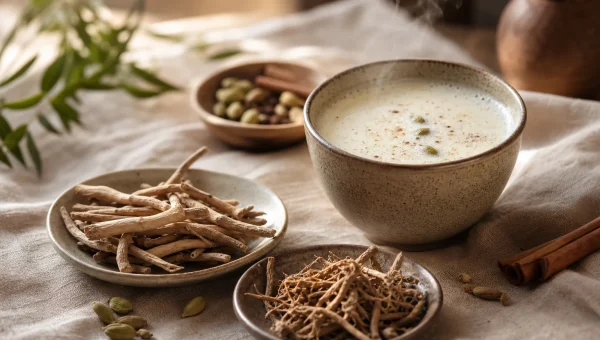
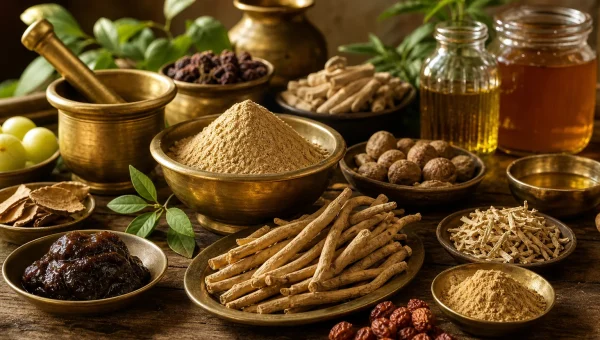
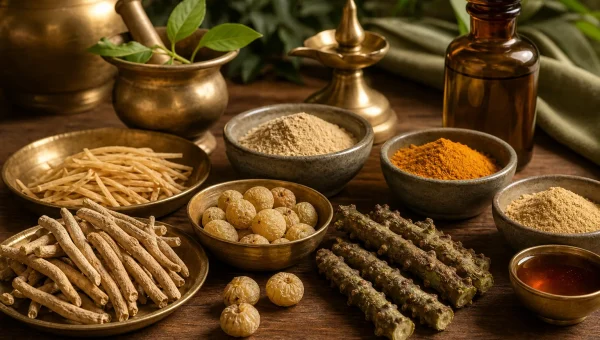
These vajikarana smoothies are modern kitchen formats for classical Ayurvedic principles. They are not miracle potions or substitutes for medical care. They are nourishing, herb-enriched beverages built around milk, ghee, dates, almonds, sesame, coconut, and carefully chosen vajikarana herbs. Used correctly, they support the deeper Ayurvedic goal: strengthening the body so that shukra dhatu, the reproductive tissue, is well nourished.
The Ayurvedic Framework: Shukra Dhatu and Vrishya Foods
In the Ayurvedic dhatu model, shukra is the seventh tissue, nourished after rasa, rakta, mamsa, medas, asthi, and majja. This is why vajikarana is not treated as an isolated “sexual stimulant” in Ayurveda. Reproductive vitality depends on digestion, tissue nutrition, mental steadiness, strength, sleep, and ojas.
Classical vajikarana chapters give importance to foods and preparations that are sweet, unctuous, strengthening, nourishing, and pleasing to the mind. Milk, ghee, rice preparations, medicated milk, and herb-based formulations appear repeatedly in the vajikarana sections of Charaka Samhita and Ashtanga Hridaya. The smoothie recipes below translate that same principle into a practical form while keeping the ingredients recognizable and food-based.
The 8 Vajikarana Smoothie Recipes
Choose one recipe at a time rather than combining all herbs in one drink. Start with the gentlest recipe, observe digestion, sleep, bowel habits, and energy, and use stronger herbs such as kapikacchu or shilajit only when they suit your constitution and health status.
Smoothie 1: The Foundation Shake
This is the simplest daily vajikarana smoothie. It is built around warm milk, sweet fruits, soaked nuts, ghee, and a modest amount of ashwagandha.
- Whole cow’s milk: 1.5 cups, warm but not boiling
- Dates: 3, pitted
- Almonds: 6, soaked overnight and peeled
- Ashwagandha powder: 1/4 to 1/2 teaspoon
- Ghee: 1 teaspoon
- Cardamom: seeds from 2 pods
- Honey: 1 teaspoon, stirred in only after the smoothie is no longer hot
Blend the warm milk, dates, almonds, ashwagandha, ghee, and cardamom until smooth. Pour into a cup and stir in honey after blending. Drink fresh, preferably within 30 minutes.
Why it fits the vajikarana framework: Milk, ghee, dates, and almonds provide sweetness, unctuousness, and dense nourishment. Ashwagandha is a classical strengthening herb used for vitality, stamina, and reproductive support. This recipe is best for men who want a steady daily foundation rather than an aggressively stimulating formula.
Smoothie 2: The Kapikacchu Power Blend
This recipe is stronger and should be used with more caution because kapikacchu, also known as Mucuna pruriens or atmagupta, naturally contains L-DOPA.
- Whole milk: 1.5 cups, warm or room temperature
- Kapikacchu seed powder: 1/4 teaspoon to start; increase only with guidance
- Banana: 1 ripe medium banana
- Natural peanut butter or almond butter: 1 tablespoon
- Cacao powder: 1 teaspoon, optional
- Saffron: 3 to 5 strands soaked in 1 tablespoon warm milk
- Jaggery: 1 teaspoon, optional
Blend all ingredients except the soaked saffron until smooth, then add the saffron milk and blend briefly again.
Why it fits the vajikarana framework: Kapikacchu appears in classical vajikarana formulations and is traditionally used for reproductive strength. Because it contains L-DOPA, this smoothie is not appropriate for casual overuse. Avoid kapikacchu if you take levodopa, dopamine-related medicines, antipsychotics, antidepressants, blood pressure medicines, or medicines for neurological conditions unless a qualified clinician approves it.
Smoothie 3: The Saffron-Almond Recovery Shake
This post-workout option keeps the formula gentle, sweet, mineral-rich, and easy to digest when the body is ready for rebuilding.
- Homemade almond milk or whole cow’s milk: 1.5 cups
- Saffron: 5 to 6 strands soaked in warm water or warm milk
- Dates: 4, pitted
- White sesame seeds: 1 tablespoon, soaked or lightly roasted
- Shatavari powder: 1/4 to 1/2 teaspoon
- Cardamom or natural vanilla: a small pinch
- Ghee: 1/2 teaspoon
Blend all ingredients until smooth. If using sesame seeds, blend thoroughly so the texture becomes creamy.
Why it fits the vajikarana framework: Almonds, sesame, dates, milk, and ghee support the sweet, unctuous, building quality valued in vajikarana. Saffron adds aroma, color, and a pleasant effect on the senses. Shatavari is included here as a nourishing, cooling, brmhana-style herb, especially when heat, dryness, or overtraining are present.
Smoothie 4: The Gokshura-Coconut Energizer
This lighter recipe is useful when you want a less heavy smoothie but still want a vajikarana-oriented herb in the blend.
- Coconut milk: 1 cup
- Coconut water: 1/2 cup
- Gokshura powder: 1/4 to 1/2 teaspoon
- Banana: 1 medium
- Chia seeds: 1 tablespoon, soaked for 15 minutes
- Raw honey: 1 teaspoon, optional
- Cardamom powder: a pinch
Blend the coconut milk, coconut water, banana, gokshura, and cardamom. Stir in soaked chia seeds at the end, or blend them if you prefer a thicker texture.
Why it fits the vajikarana framework: Gokshura, also known as Tribulus terrestris, appears in classical reproductive and urinary formulations. It is better understood as a supportive herb for the genitourinary channel and sexual function, not as a guaranteed testosterone booster. Coconut keeps the recipe cooling and lighter than a full milk-and-ghee smoothie.
Smoothie 5: The Winter Warrior
This is the most warming recipe in the set. It suits colder weather, vata aggravation, physical fatigue, and men who digest milk and spices well.
- Whole milk: 1.5 cups, warm
- Purified, lab-tested shilajit: 100 to 250 mg, or as directed by a practitioner
- Ashwagandha powder: 1/4 to 1/2 teaspoon
- Fresh ginger: a very small piece
- Dates: 3, pitted
- Walnuts: 4 halves
- Cinnamon: 1/4 teaspoon
- Black pepper: 1 to 2 peppercorns
Dissolve purified shilajit in a small amount of warm milk first. Add the remaining ingredients and blend until smooth.
Why it fits the vajikarana framework: Shilajit is a concentrated rasayana-type substance used traditionally for strength and vitality. It should be purified and quality-tested because raw or poorly processed shilajit may contain unsafe contaminants. Ginger, cinnamon, and black pepper make this formula more warming and agni-supportive than the other recipes.
Smoothie 6: The Green Vitality Blend
This recipe adds greens without making the drink too cold, dry, or rough for digestion.
- Spinach: 1 cup, lightly blanched
- Whole milk or homemade almond milk: 1 cup
- Banana: 1 medium
- Safed musli powder: 1/4 to 1/2 teaspoon
- Moringa leaf powder: 1/4 teaspoon
- Dates: 2, pitted
- Almond butter: 1 tablespoon
Blend the blanched spinach, milk, banana, safed musli, moringa, dates, and almond butter until smooth. Use a little extra warm water if needed.
Why it fits the vajikarana framework: Safed musli, also called Shweta Musali, is traditionally used as a Vajikaran Rasayana. Moringa leaf adds a mineral-rich green food element, while banana, dates, and almond butter keep the blend sweet and nourishing rather than excessively light or drying.
Smoothie 7: The Ojas Builder
This is a rasayana-style smoothie rather than a strong single-herb vajikarana formula. It is best when general depletion, low resilience, or post-illness weakness is the main concern.
- Whole milk: 1.5 cups, warm
- Chyawanprash: 1 tablespoon
- Soaked almonds: 8, peeled
- Ghee: 1 teaspoon
- Saffron: 3 to 4 strands
- Dried rose petals: 1/2 teaspoon, optional
- Cardamom: a pinch
Blend the warm milk, almonds, ghee, saffron, rose petals, and cardamom. Stir in Chyawanprash after blending so its texture and aroma remain intact.
Why it fits the vajikarana framework: Chyawanprash is a classical rasayana centered on amalaki and prepared with a large group of herbs, ghee, oil, sweeteners, and aromatic spices. It is not exclusively a male fertility formula, but rasayana therapy supports vitality and tissue nourishment, which are foundational for healthy shukra.
Smoothie 8: The Pre-Conception Nutrient Builder
This recipe is designed for a three-month pre-conception window, when the goal is steady nourishment rather than short-term stimulation.
- Whole milk: 1.5 cups, warm
- Ashwagandha powder: 1/4 teaspoon
- Shatavari powder: 1/4 teaspoon
- Vidarikanda powder: 1/4 teaspoon
- Dates: 3, pitted
- Almonds: 6, soaked and peeled
- Ghee: 1 teaspoon
- Saffron: 5 strands
- Cardamom: seeds from 2 pods
Blend all ingredients except honey; this recipe does not need additional sweetener if the dates are soft and ripe.
Why it fits the vajikarana framework: Ashwagandha, Shatavari, Vidari, milk, and ghee are compatible with the classical pattern of sweet, strengthening, unctuous, and tissue-building vajikarana preparations. A three-month window is practical because human spermatogenesis takes roughly 74 days, and semen quality is better assessed over cycles rather than day-to-day fluctuations.
Dosing and Timing Guidelines
Vajikarana smoothies should be treated as nourishing preparations, not as unlimited beverages. The best dose is the one you digest cleanly without heaviness, coating on the tongue, congestion, acidity, or disturbed sleep.
| Factor | Recommendation | Rationale |
|---|---|---|
| Best time | Morning or mid-morning | This is usually easier on digestion than taking a heavy milk-herb drink late at night. |
| Frequency | 3 to 6 times per week | Consistency matters, but daily heavy intake is not suitable for everyone. |
| Duration | At least 3 months for pre-conception goals | This aligns with the approximate human spermatogenesis cycle. |
| Temperature | Warm or room temperature, not iced | Classical Ayurveda favors protecting agni, especially when using milk, ghee, nuts, and powders. |
| Milk choice | Whole cow’s milk if tolerated; homemade almond milk if not | Whole milk gives the unctuous, building base traditionally valued in vajikarana. |
| Honey | Add only after blending and cooling | Ayurveda traditionally advises against heating honey. |
| Herb quality | Use reputable, authenticated powders and purified shilajit only | Quality, identity, and contamination control matter with concentrated herbal and mineral products. |
What to Track Over 3 Months
Instead of judging these smoothies by a single day of energy or libido, track practical markers over a full cycle. Useful markers include digestion, bowel regularity, sleep quality, training recovery, morning energy, mood steadiness, libido, and body weight. If fertility is the goal, use proper semen analysis before and after the three-month period rather than relying only on subjective impressions.
These smoothies are most useful when they improve nourishment without creating heaviness. If a recipe causes bloating, mucus, dullness, acne, acidity, loose stools, or excessive sleepiness, reduce the dose, simplify the recipe, or pause until digestion is stronger.
Who Should Avoid or Modify These Smoothies
These recipes are food-based, but they still contain potent herbs and calorie-dense ingredients. Men with diagnosed infertility, erectile dysfunction, prostate disease, endocrine disorders, liver or kidney disease, psychiatric conditions, neurological conditions, or ongoing prescription medication use should consult a qualified practitioner and healthcare provider before using them regularly.
- Lactose intolerance: Use homemade almond milk or another well-tolerated base. The classical milk-based quality will change, but the recipe can still be nourishing.
- Kapha-type heaviness or active weight loss: Reduce dates, ghee, nuts, and total serving size. Choose lighter recipes such as the Gokshura-Coconut Energizer.
- Ama or weak digestion: If the tongue is heavily coated, appetite is dull, or meals feel heavy for hours, pause these recipes and rebuild digestion first.
- Medication use: Use extra caution with kapikacchu, shilajit, ashwagandha, and gokshura if you take neurological, psychiatric, hormonal, thyroid, diabetes, blood pressure, anticoagulant, or fertility medicines.
- Prostate or hormone-sensitive conditions: Do not self-prescribe vajikarana herbs without medical guidance.
- Supplement quality concerns: Avoid raw shilajit and unknown powders. Use purified, tested, clearly labeled products from reliable sources.
Lifestyle Factors That Amplify Results
Vajikarana is strongest when diet, sleep, exercise, stress, and reproductive habits support the same goal. A smoothie cannot compensate for chronic sleep loss, excess alcohol, smoking, overheating of the testes, or long-term stress.
- Exercise moderately and consistently: Strength training, walking, mobility work, and moderate cardio support overall metabolic and reproductive health. Avoid pushing into chronic exhaustion.
- Sleep well: Keep a regular sleep schedule and aim for sufficient deep rest, since reproductive hormones follow daily rhythms.
- Keep the testes cool: Avoid frequent prolonged hot baths, heat exposure to the groin, and laptop-on-lap habits when fertility is a priority.
- Limit alcohol and avoid smoking: Pre-conception guidance consistently favors reducing alcohol exposure and avoiding tobacco or recreational drugs.
- Manage stress: Breathwork, meditation, prayer, walking, and stable routines support the mental steadiness that classical vajikarana considers part of reproductive vitality.
Medical Disclaimer: This article is for educational purposes only. Male infertility, erectile dysfunction, low libido, abnormal semen parameters, hormonal symptoms, and prostate concerns require proper evaluation by a qualified healthcare provider. These smoothie recipes are supportive nutritional preparations, not medical treatments. Consult a qualified Ayurvedic practitioner and physician before starting herbal supplementation, especially if you take medication, have a diagnosed condition, or are actively trying to conceive.
References
- Vajikarana: Treatment of sexual dysfunctions based on Indian concepts (2013), PubMed Central
- Charaka Samhita — Vajikarana
- Charaka Samhita — Vajikarana Adhyaya
- Easyayurveda (easyayurveda.com)
- Withania somnifera improves semen quality by regulating reproductive hormone levels and oxidative stress in seminal plasma of infertile males (2010), PubMed
- Mucuna pruriens improves male fertility by its action on the hypothalamus-pituitary-gonadal axis (2009), PubMed
- RIVM (Netherlands)
- A systematic review and meta-analysis of clinical trials on saffron (Crocus sativus) effectiveness and safety on erectile dysfunction and semen parameters (2018), PubMed Central
- Identification of fruits of Tribulus terrestris Linn. and Pedalium murex Linn.: A pharmacognostical approach (2011), PubMed Central
- Evaluation of the efficacy and safety of Tribulus terrestris in male sexual dysfunction-A prospective, randomized, double-blind, placebo-controlled clinical trial (2017), PubMed
- Mdpi (mdpi.com)
- Clinical evaluation of purified Shilajit on testosterone levels in healthy volunteers (2016), PubMed
- Clinical evaluation of spermatogenic activity of processed Shilajit in oligospermia (2010), PubMed
- Hazardous or Advantageous: Uncovering the Roles of Heavy Metals and Humic Substances in Shilajit (Phyto-mineral) with Emphasis on Heavy Metals Toxicity and Their Detoxification Mechanisms (2024), PubMed
- Safed musli (Chlorophytum borivilianum): a review of its botany, ethnopharmacology and phytochemistry (2013), PubMed
- Effects of Chlorophytum borivilianum on sexual behaviour and sperm count in male rats (2008), PubMed
- Chyawanprash: A Traditional Indian Bioactive Health Supplement (2019), PubMed Central
- Sesame (Sesamum indicum L.): A Comprehensive Review of Nutritional Value, Phytochemical Composition, Health Benefits, Development of Food, and Industrial Applications (2022), PubMed Central
- Moringa oleifera: An Updated Comprehensive Review of Its Pharmacological Activities, Ethnomedicinal, Phytopharmaceutical Formulation, Clinical, Phytochemical, and Toxicological Aspects (2023), PubMed Central
- Studies on the physicochemical characteristics of heated honey, honey mixed with ghee and their food consumption pattern by rats (2010), PubMed Central
- Spermatogenesis: The Commitment to Meiosis (2016), PubMed Central
- My (my.clevelandclinic.org)
- Effect of 1 week of sleep restriction on testosterone levels in young healthy men (2011), PubMed Central
- Sleep restriction and testosterone concentrations in young healthy males: randomized controlled studies of acute and chronic short sleep (2019), PubMed Central
- ASRM
- Auanet (auanet.org)
Same here!
Same! Out of curiosity, which smoothie recipe are you starting with — the Ashwagandha base or the saffron and dates one? I’m trying to figure out which is better for a beginner.
Ha, good to know it’s not just me. Did you notice any difference in energy levels within the first couple of weeks or did it take longer to feel the effects of the Vajikarana ingredients?
Same here — I wasn’t sure whether to take it daily or cycle it. Did anyone get a clearer answer from the article or from their vaidya?
@Rohit yes but results vary a lot from person to person
can this protocol be combined with gym training or will it conflict with pre-workout supplements
finally an article that explains the classical text basis rather than just listing herbs.
Totally agree. Most content just says ‘take ashwagandha’ without explaining why it fits under Vajikarana specifically. This actually tied it back to the classical texts, which makes a big difference in how you approach it.
That’s a fair point — constitution probably plays the biggest role. A Pitta-dominant person might respond very differently to the shatavari-based blends compared to someone who is predominantly Kapha.
kapikacchu KSM-66 form, 300mg twice daily as you mentioned made a real difference for me. took 8 weeks. ✨
My practitioner said something similar
That’s reassuring to hear. What did your practitioner say about the timing — morning on an empty stomach, or after food?
I didn’t realize how broad the Vajikarana branch actually is until reading this. Always assumed these herbs were just for one specific concern, but the article makes it clear the classical texts treat overall vitality and shukra dhatu together. Really changes how I think about these smoothies.
is this appropriate for elderly patients above 70 or should the dosages be reduced
does this protocol change during monsoon season? I’ve heard Ayurvedic timing is seasonal
i think it depends on your constitution tbh
thanks for sharing that, useful to know
respectfully, most of these claims need larger RCTs before we can say they’re validated.
u mention this is safe but what about drug interactions with common meds like bp tablets
great to see peer-reviewed studies referenced alongside classical texts. makes it easier to trust.
tried shilajit for 3 months for energy. zero difference. might be a fake product issue but still.
The breakdown of shukra dhatu hierarchy helped me understand why nutrition matters for reproductive health.
is the vajikarana smoothie recipe safe to take daily or just 3 times a week
Good question. I’d guess daily is fine for most people at the base doses, but the intensity of ingredients like kapikacchu might warrant cycling — like 5 days on, 2 off. Worth confirming with a practitioner before going daily long-term.
calling these ‘vitality shakes’ is a bit marketing-y. would prefer more precise clinical language about what the evidence actually supports.
Fair criticism, though I’d push back slightly — the article does cite the Ashtanga Hridayam references, which is more rigorous than most of what’s out there. That said, being clearer about what the evidence actually supports versus what’s traditional wisdom would strengthen it.
does this protocol change during monsoon season? ive heard Ayurvedic timing is seasonal
what’s the source text for this recommendation Charaka Samhita or Ashtanga Hridayam
respectfully, most of these claims need larger RCTs before we can say they’re validated. 🌿
does shatavari lower testosterone or is that a myth? article doesnt address this directly
tried a similar protocol 6 months back. results were modest at best and I was consistent.
very practical protocol. tried a modified version for a week and already feeling a difference.
i find the dosage guidance vague. ‘appropriate amount’ is not helpful for someone measuring at home. नमस्ते
implemented the morning routine from this article for 3 weeks. energy is much steadier throughout the day. 🙏 🌿
I tried the Foundation Shake and noticed steadier energy in the mornings.
does shatavari lower testosterone or is that a myth? article doesn’t address this directly
Good point, the article doesn’t address that
is this appropriate for elderly patients above 70 or should the dosages be reduced ठीक है
the ashwagandha + shatavari combination for vitality from section 4 worked for me. energy levels notably better after 6 weeks.
Noted.
not disputing Ayurveda has value but articles like this sometimes overstate efficacy.
the asgwagandha + shatavari combination for vitality from section 4 worked for me. energy levels notably better after 6 weeks.
Makes sense.
Does anyone know if goat milk works as well as cow milk for these recipes?
exactly!
is there a simplified version for beginners who don’t have access to all these herbs
how do I source quality herbs for this? most local shops sell low-grade material.
The Kapikacchu Power Blend sounds interesting, but I wonder about the taste of mucuna powder.
the preparation method described here is exactly what my grandmother used to make. brings back memories.
shared this with my Ayurveda practitioner and she confirmed the approach is sound.
how long before results become noticeable with this protocol? my patience has limits tbh
is there a simplified version for beginners who don’t have access to all these herbs ठीक है
After reading about saffron’s testosterone-modulating effects, I added a few strands to my regular smoothie.
what’s the source text for this recommendation Charaka Samhita or Ashtanga Hridayam 💯
the article would be stronger with a clear ‘when to see a doctor’ section. some of these conditions need medical clearance.
@reply good point, the article doesn’t address that
the shilajit dose you mention 300mg or 500mg? saw conflicting numbers in the article
I appreciate the caution about avoiding these smoothies during active infections and it makes sense from an Ayurvedic view.
what’s the source text for this recommendation Charaka Samhita or Ashtanga Hridayam 🙌