
A familiar spring pattern in Ayurveda can look like several separate complaints at once: morning sinus congestion, heaviness after meals, low-grade fatigue, a thick coating on the tongue, puffiness, sluggish elimination, and skin that feels congested or dull. In the classical seasonal model, these are often read through one seasonal lens: Kapha aggravation in Vasanta Ritu, the spring season.
The point is not to force every symptom into one diagnosis. It is to notice the timing. Ayurveda treats spring as a season when heavy, cold, moist qualities can become more apparent, and the daily routine is adjusted to restore lightness, warmth, movement, and clarity.
The Kapha Accumulation Cycle: Why Spring Can Feel Heavy
The Charaka Samhita, Sutrasthana Chapter 6, describes Ritucharya, the seasonal regimen of diet and lifestyle for preserving health. This chapter presents the year in six seasons and explains that strength, digestive power, and the doshas vary with seasonal change. In this framework, the doshas pass through three seasonal states: sanchaya (accumulation), prakopa (aggravation), and prashamana (pacification).
For Kapha, the seasonal rhythm is traditionally described like this:
- Sanchaya (Accumulation) — during Shishira Ritu, late winter, roughly mid-January to mid-March. Coldness, heaviness, and reduced movement can allow Kapha qualities to accumulate. You may notice more sleep, sluggishness, heaviness, or a preference for warm and substantial food.
- Prakopa (Aggravation) — during Vasanta Ritu, spring, roughly mid-March to mid-May. Charaka explains that accumulated shleshma or Kapha is stirred by the increasing heat of the sun, weakens digestive power, and can give rise to disorders.
- Prashamana (Pacification) — during Grishma Ritu, summer, roughly mid-May to mid-July. As the hot and drying qualities of summer increase, Kapha naturally tends to settle back.
This is why spring care in Ayurveda is not random detox language. It is a seasonal correction. The body is encouraged toward qualities opposite to Kapha: light, warm, dry, mobile, and sharp enough to protect agni, the digestive and metabolic fire.
In spring, accumulated Kapha is moved by the heat of the sun, disturbs digestive fire, and can produce many diseases; therefore, Kapha-pacifying measures are advised.
The Spring Diet: What to Eat and What to Reduce
Spring food should be lighter than winter food. Charaka specifically advises avoiding foods that are heavy, sour, unctuous, and sweet in Vasanta. This does not mean starving or eating cold salads all day. It means choosing warm, cooked, easy-to-digest meals that do not add more heaviness, oiliness, dampness, or sweetness to an already Kapha-prone season.
Favor These Foods
Build spring meals around grains, legumes, vegetables, spices, and small supportive additions that bring warmth, dryness, and lightness without exhausting the body.
- Grains: Barley (Yava) is a classical spring grain and is specifically mentioned in the Vasanta regimen. Wheat is also mentioned in Charaka’s spring recommendations, though those with strong Kapha signs often do better with lighter preparations and smaller portions. Millet and buckwheat may be used as practical light grain options when they suit the person’s digestion.
- Legumes: Green gram or mung dal is a gentle, commonly used legume in Ayurvedic cooking and is suitable when prepared as a warm, thin soup with digestive spices. Keep the texture light rather than creamy or oily.
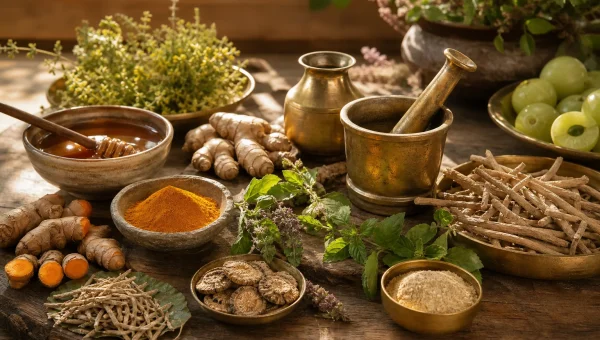
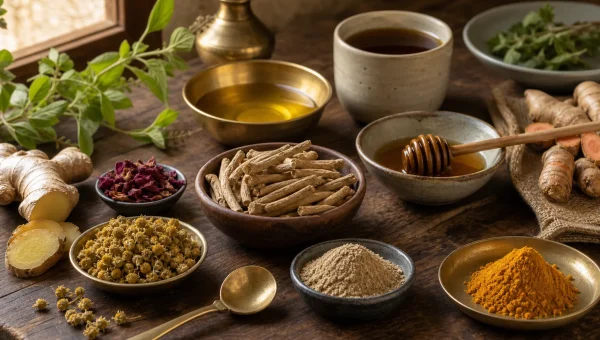
- Honey: Honey is described in Charaka as dry, astringent-sweet, and useful in Kapha disorders when used in small quantity. Use it unheated. Do not cook honey or add it to boiling liquids; add it only after water or tea has cooled to a comfortably warm temperature.
- Spices: Ginger, black pepper, long pepper, turmeric, cumin, coriander, and cinnamon can be used to support warmth and digestion. For a simple approach, season meals with ginger and black pepper rather than relying on bland, oily, or sweet foods.
- Vegetables: Favor cooked bitter, pungent, and astringent vegetables: leafy greens, radish, cabbage, cauliflower, broccoli, asparagus, fenugreek greens, and lightly spiced soups. Keep oil modest.
Reduce or Avoid These
The most important spring correction is to reduce foods that repeat Kapha’s own qualities: heavy, cold, oily, sweet, and damp.
- Dairy: Reduce cold milk, yogurt, curd, ice cream, cream, and soft cheeses, especially if there is congestion, coating on the tongue, heaviness, or sluggish digestion. Curd is specifically discouraged in spring in Charaka’s discussion of food properties.
- Sweets: Reduce sugar, excess jaggery, desserts, sweet drinks, and heavy sweet fruits such as bananas and dates when Kapha signs are strong.
- Cold beverages: Avoid iced drinks and refrigerator-cold foods. Prefer warm water or room-temperature water according to thirst and digestion.
- Fried and oily food: Fried snacks, heavy oils, creamy sauces, and rich restaurant food add snigdha and guru qualities that are not ideal for Kapha season.
- Daytime sleeping: Charaka specifically advises avoiding daytime sleep in Vasanta because it can increase Kapha heaviness.
Vyayama: Move Strongly, But Do Not Deplete Yourself
Spring is the season to move. Charaka’s spring regimen includes vyayama, physical exercise, and the broader Ayurvedic teaching is that exercise brings lightness, work capacity, stability, endurance, reduction of dosha, and kindling of agni when done in proper measure.
The correct measure matters. Ayurveda does not praise exercising to collapse. Traditional guidance is to stop before exhaustion, using the body’s signs as a boundary: perspiration, stronger breathing, lightness in the body, and the sense that the work has reached an appropriate threshold. Strong people accustomed to rich food may exercise more in winter and spring; others should adjust according to age, strength, constitution, illness, and recovery capacity.
For many people, a practical spring target is 30 minutes of brisk daily movement: fast walking, cycling, active yoga, light jogging, stair climbing, or strength training that produces warmth and sweat without leaving the person drained. Morning is often preferred because it directly counters heaviness at the start of the day.
Udvartana: The Dry Massage for Kapha Season
If oil massage is the classic comfort practice for dryness and Vata, Udvartana is the more Kapha-appropriate body practice for spring. Charaka specifically recommends udvartana, dry massage, in Vasanta along with exercise, gargling, cleansing, and lukewarm bathing.
Udvartana is usually performed by rubbing dry herbal powders over the body with firm strokes. Its value comes from friction, warmth, dryness, and stimulation. In Ayurvedic language, it brings ruksha and lekhana-like effects: it counters oiliness and heaviness, refreshes the skin, and supports the seasonal goal of reducing Kapha and Meda tendencies.
Home Udvartana Protocol
This home version is a mild seasonal practice, not a substitute for clinical Panchakarma. Avoid it over rashes, eczema flares, wounds, varicose areas, very sensitive skin, fever, acute illness, pregnancy unless cleared by a practitioner, or immediately after shaving.
You’ll need:
- Chickpea flour or barley flour — 4 tablespoons
- Triphala powder — 1 tablespoon
- Dry ginger powder — 1/4 teaspoon
- Turmeric powder — a pinch, optional, because it can stain skin and fabric
Method: Mix the powders. Apply to dry skin before bathing. Massage with firm but comfortable strokes, generally moving from the feet upward and from the hands toward the trunk. Spend more time on areas of heaviness such as thighs, hips, abdomen, and upper arms, but do not abrade the skin. Continue for 5-15 minutes, then rinse with a warm shower. Skip oil afterward if the purpose is Kapha reduction.
Frequency: Two to four times per week is enough for most people during late winter and spring. Daily use may be too drying for Vata-prone, thin, elderly, or sensitive individuals.
Vamana Karma: The Classical Spring Panchakarma
Vamana Karma, therapeutic emesis, is the classical purification procedure most closely associated with Kapha. Charaka’s Vasanta regimen says that purification procedures such as Vamana may be performed in spring. In Panchakarma practice, Vamana is used to expel aggravated Kapha through the upper route after proper preparation.
This must be stated clearly: Vamana is not a home remedy and should only be performed under the supervision of a qualified Panchakarma practitioner or Ayurvedic physician. It requires assessment of strength, constitution, disease state, season, digestion, preparation, monitoring, and aftercare.
Classical and contemporary Panchakarma discussions commonly include preparatory snehana (oleation) and swedana (sudation) before the main procedure. Madanaphala (Randia dumetorum) is widely described as an important emetic drug in Vamana practice, and formulations may also use other substances according to the practitioner’s judgment and the patient’s condition.
Vamana is generally avoided in children, frail elderly people, pregnancy, severe debility, active bleeding disorders, significant cardiac disease, and other conditions where induced emesis may be unsafe. Anyone with hypertension, eating disorder history, serious gastrointestinal disease, pregnancy, chronic illness, or prescription medication use should not attempt Kapha-clearing therapies without professional guidance.
A Practical 4-Week Spring Transition Plan
This four-week plan keeps the classical seasonal logic but applies it gently. It is designed for a generally healthy adult with Kapha-type spring heaviness. It should be adjusted for children, older adults, pregnancy, underweight individuals, active illness, eating disorders, diabetes, hypertension, autoimmune disease, or any medical condition.
| Week | Focus | Daily Actions |
|---|---|---|
| 1 | Diet shift | Reduce cold dairy, sweets, fried foods, and daytime sleeping. Add warm barley or millet preparations, mung dal soup, cooked greens, and ginger-spiced meals. Use a small amount of unheated honey only if suitable. |
| 2 | Add movement | Do brisk movement most mornings, stopping before exhaustion. Keep meals warm, cooked, and light. Use ginger, black pepper, cumin, and coriander in cooking. |
| 3 | Add Udvartana | Practice dry powder massage 2-4 mornings per week before a warm shower. Continue diet and exercise changes. Avoid oil-heavy body care unless dryness or Vata symptoms appear. |
| 4 | Consolidate | Observe congestion, appetite, tongue coating, energy, sleep, and elimination. Continue what improves lightness and digestion. If sinus symptoms persist, consult a qualified practitioner before using medicated nasya such as Anu Taila. |
The Seasonal Correction
Kapha season does not require panic, punishment, or extreme cleansing. It requires intelligent opposites. When the season is heavy, choose lightness. When the body feels cold and damp, choose warmth. When the mind feels dull, choose movement. When digestion feels slow, simplify food.
That is the practical power of Ritucharya. It does not wait for every symptom to become a separate problem. It changes the conditions that allow those symptoms to gather momentum.
Disclaimer: This article is for educational purposes only and does not replace personalized medical advice. Panchakarma therapies such as Vamana should only be undertaken with a qualified practitioner. If you are pregnant, nursing, taking prescription medications, managing a chronic illness, underweight, elderly, or recovering from illness, consult a qualified healthcare provider or Ayurvedic practitioner before making significant dietary, herbal, cleansing, or lifestyle changes.
Tonight, begin with the simplest check: open your refrigerator. Count the cold dairy, sweets, leftovers, iced drinks, and heavy snacks. Then ask whether your kitchen is helping you move through Kapha season or keeping you stuck in it. Start there.
References
- Charaka Samhita — Tasyashiteeya Adhyaya
- Charaka Samhita — Matrashiteeya Adhyaya
- Charaka Samhita — Annapanavidhi Adhyaya
- Charaka Samhita — Naveganadharaniya Adhyaya
- Charaka Samhita — Vyayama
- Ijisrt (ijisrt.com)
- A comparative study on Vamana Karma with Madanaphala and Krutavedhana in Ekakushtha (Psoriasis) (2011), PubMed Central
- A study on Vasantika Vamana (therapeutic emesis in spring season) – A preventive measure for diseases of Kapha origin (2011), PubMed Central
- Charaka Samhita — Snehadhyaya

This makes sense for Kapha Season Is Coming. This is the kind of detail readers can test slowly.
I work in healthcare too and I appreciate you engaging with this from a clinical standpoint.
I work 60-hour weeks and keeping any consistent routine felt impossible. The minimal viable version of Dinacharya described here is exactly what I needed to start.
This makes sense for Kapha Season Is Coming. The safety notes could be expanded a little.
Your grandmother sounds like an amazing woman! Traditional knowledge passed through families is so precious
The breath practices described here have become my anchor for stressful workdays. Five minutes at my desk and my whole mental state shifts. Simple and powerful.
This gives me a compassionate framework for understanding why my anxiety spikes at certain times of year and what to do about it. So much more useful than generic advice.
That’s a really important distinction you’ve made. I think a lot of people skip the preparation phase and then wonder why results are inconsistent.
This makes sense for Kapha Season Is Coming. The practical details matter more than people think.
I had a very similar experience! The first few weeks are the adjustment period, it really does get better
I printed this out and put it on my bathroom mirror. The morning routine checklist is now just part of my day without having to think about it.
The section on digital overwhelm and Vata aggravation perfectly described my current state. Implementing the sensory rest practices this week
The connection between daily rhythm and long-term health makes so much intuitive sense. We evolved within consistent cycles and modern life pulls us away from them constantly.
Your comment about the dosage issue is so important. Getting it right makes all the difference
I’d rate this a 6/10. Good foundational info but lacks the specificity needed to actually implement. More like an introduction than a protocol.
after years of intensive exercise I switched to the constitution-appropriate movement described here. My recovery is better, my mood is more stable, and I feel less depleted.
your persistence through the adjustment period is inspiring. Im currently in it and your comment helps
as a sleep researcher I find the Ayurvedic approach to sleep hygiene fascinating. The emphasis on regularity and wind-down time is well supported by chronobiology.
This makes sense for Kapha Season Is Coming. The timing advice is the part I would start with.
Thank you for sharing the practical tip about sourcing. That’s something I’ve been confused about.
I wanted this to work so badly, but after 8 weeks of strict adherence I gave up. Sometimes modern medicine is just more effective.
The logic of matching lifestyle to constitution rather than following generic wellness advice is something I wish I’d understood years ago. Tailored approaches just work better
I had the exact same confusion about this. Glad the article cleared it up for both of us.
This is constructive feedback we take seriously. We’ve added a note about consulting with your healthcare provider, especially if you’re on existing medications.
I’ve implemented the evening routine for the past month. My sleep has improved dramatically. The hour before bed without screens has been the single biggest change.
This makes sense for Kapha Season Is Coming. This would be easier to follow with a one-week sample plan.
My partner and I both changed our evening routines based on this. Our sleep quality has improved and honestly our relationship has too, we’re less depleted and irritable
Finally something wellness-related that acknowledges different people need different approaches rather than one universal protocol. That respect for individual difference is rare
Thank you for asking this! Ive been too shy to ask the same question and I really needed this answered.
I’ve been trying to establish a morning routine for years and this is the first framework that’s actually stuck. Three months in and I can’t imagine starting the day differently.
The information is presented confidently but where are the sample sizes? A study with 20 participants doesn’t prove much.
Even doing just three of the practices recommended here made a noticeable difference. Sometimes it’s the basics done consistently that create the biggest shifts.
I appreciate that this includes a reminder that perfection isn’t the goal. A consistent imperfect practice beats a perfect one that never actually happens
Please consider adding a note about consulting with a healthcare provider before starting any new supplement regimen. Some readers might not know this
I have been waiting for a clear explanation of the spring Kapha aggravation cycle. Every March my sinuses congest, my weight goes up 3-4 pounds, and my motivation drops. I thought it was seasonal depression. The Kapha accumulation pattern explains it more precisely.
The recommendation to introduce bitter and pungent tastes in spring to counteract Kapha makes intuitive seasonal sense. Spring greens, sprouts, lighter grains, spiced warming beverages. The Ayurvedic spring protocol and what traditional cuisines have always done in spring are remarkably aligned.
The article says to reduce oil and dairy in spring for Kapha. I am Vata constitution and these are the exact foods I need year-round. Should Vata people follow the seasonal Kapha protocol or maintain their constitution-specific diet despite the season?
I tried the Trikatu in warm water protocol for the 6 weeks of late winter into spring transition. The sinus mucus that typically runs from February through April was significantly reduced this year. I had written it off as a bad year for allergies in previous years but this year confirms the Kapha management is doing something real.
The patient story really shows how multiple symptoms can trace back to one Kapha imbalance.
The case described in the opening, five separate spring complaints resolving from one underlying Kapha diagnosis, is exactly the kind of systems thinking I want from medicine. Five specialists treating five separate problems is both expensive and fragmented. One seasonal protocol addressing the root is more coherent.
I live in a tropical climate where there is no real spring in the classical sense. The Kapha season concept is based on temperate zone seasonal patterns. How does someone in Singapore or southern India apply seasonal Ayurvedic guidelines when the seasons do not map onto the classical pattern?
I found the explanation of Sanchaya, Prakopa, and Prasara especially clear for understanding spring sluggishness.
The advice to increase physical exertion in spring to help mobilize accumulated Kapha is the most actionable recommendation. The Kapha heaviness and low motivation of late winter are the exact opposite of wanting to exercise, but the exercise is precisely the medicine. The article could say more about how to motivate through the Kapha inertia.
Switching to barley and mung dal this week already feels lighter on my digestion.
Has anyone tried raw honey in warm water without heating it above 104F? Curious about taste.
The Udvartana dry massage technique sounds interesting; I wonder where to buy chickpea flour and Triphala locally.
I appreciate the warning about Vamana needing a qualified practitioner; safety first.
Morning walks that make me breathe through my mouth seem to match the half capacity exercise advice.
Avoiding cold dairy and ice cream has been tough but I notice less mucus after a few days.
The article’s reference to Charaka Samhita chapter six made me look up the original verse online.
Does the four week plan work if I only have time for exercise three days a week?
I liked the tip about checking the refrigerator for Kapha traps; it made me reconsider my snack choices.
Skin breakouts along the jawline improving after reducing sugar and fried food matches what the author described.
The idea that Kapha accumulates during early winter and melts in spring explains why my allergies peak in April.
Adding bitter greens like dandelion and kale to my meals has been a simple way to follow the diet advice.