A 38-year-old woman arrived at the clinic carrying a thick folder of test results. She had seen several specialists over three years. She could describe the number of times she woke each night to urinate, the burning sensation that rose during flares, and the foods that reliably made her worse: tomatoes, coffee, wine, vinegar, and anything sharply spiced. Her diagnosis was interstitial cystitis/bladder pain syndrome, a chronic bladder pain condition that can organize a person’s whole life around urgency, frequency, diet, sleep, and pelvic discomfort.
Interstitial cystitis/bladder pain syndrome is described in modern urology as a chronic condition marked by bladder or pelvic pain, urinary urgency, and urinary frequency, after other causes such as infection are considered. The National Institute of Diabetes and Digestive and Kidney Diseases estimates that about 4 to 12 million people in the United States may have interstitial cystitis. Conventional care may include lifestyle measures, bladder training, physical therapy, medicines, bladder instillation, and other physician-directed treatments. Ayurveda offers a complementary lens: it reads the same burning, urgency, frequency, pelvic guarding, and disturbed sleep through the combined disturbance of Pitta and Vata in the urinary channels, especially when Apana Vata loses its steady downward rhythm.
For a broader overview of how Pitta imbalance is approached through food and daily rhythm, see our guide to Pitta dosha diet and lifestyle.
Mutrakrichra: Understanding the Ayurvedic Framework
Mutrakrichra, also written as Mutrakrcchra or Mutrakrucchra, refers to difficult or painful urination in the Ayurvedic description of urinary disorders. Classical Ayurvedic teaching describes several varieties of Mutrakrichra according to doshic involvement. Interstitial cystitis is not a word-for-word classical diagnosis, but an IC-like symptom pattern can be interpreted through the Mutrakrichra framework when burning, urgency, pain, and difficult urination are prominent.
In this framework, the bladder region is connected with Vasti and the Mutravaha Srotas, the urinary channels. Apana Vata governs downward elimination, including urination and defecation. When Pitta brings burning, heat, and irritation into the urinary tract while Vata brings pain, spasm, dryness, sensitivity, and irregular urges, the result can resemble the alternating burning and urgency that many chronic bladder-pain patients describe.
Root Causes Through the Ayurvedic Lens
Ayurveda does not treat the bladder as an isolated pouch. It examines the bladder together with digestion, bowel rhythm, hydration, diet, menstrual or reproductive factors, nervous-system strain, sleep, and the condition of the pelvic tissues. For an IC-like presentation, the usual Ayurvedic emphasis is to cool aggravated Pitta, steady Apana Vata, protect depleted tissues, and keep the channels open without using harsh, heating, or drying measures during a flare.
- Pitta-aggravating diet: Very spicy, sour, acidic, fermented, alcoholic, and vinegar-based foods can aggravate burning and irritation in a Pitta-dominant urinary pattern.
- Apana Vata disturbance: Suppressed urges, constipation, irregular meals, travel, poor sleep, fear, and pelvic tension can disturb the downward movement of Vata and intensify urgency or incomplete relief after urination.
- Dhatu depletion: Long illness, restricted eating, poor nourishment, and chronic stress can leave the tissues dry, sensitive, and poorly resilient, especially when Vata and Pitta are both high.
- Ama and channel obstruction: Weak digestion, heaviness, coating, sluggish bowels, and improper food combinations may cloud the channels and make symptoms harder to settle.
- Manasika strain: Anxiety, hypervigilance around food and bathrooms, overwork, and disrupted sleep can aggravate Vata and keep the pelvic floor guarded.
The Five Core Supports of the Mutrakrichra Protocol
The following herbs and formulations are traditional Ayurvedic supports for urinary-channel care. They are not a substitute for diagnosis, urine testing, pelvic-floor assessment, or urologic care. The correct choice depends on whether the person is in a hot burning flare, a dry depleted state, an obstructive stone-like pattern, a swollen Kapha pattern, or a mixed presentation.
1. Gokshura (Tribulus terrestris)
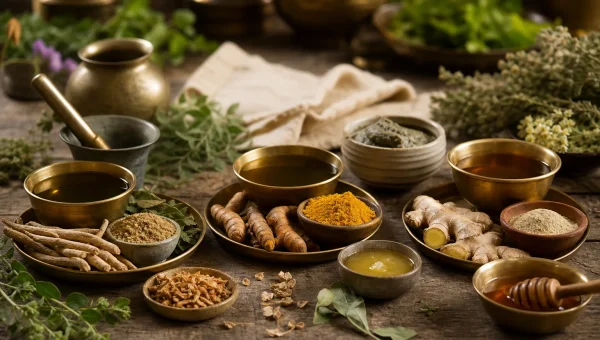
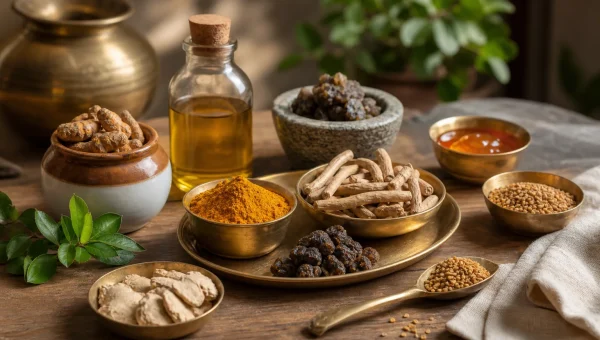
Gokshura is one of Ayurveda’s central urinary herbs. The Ayurvedic Pharmacopoeia of India identifies Gokshura as Tribulus terrestris and lists its rasa as sweet, its qualities as heavy and unctuous, its potency as cooling, and its post-digestive effect as sweet. Its actions include mutrala support for urine flow and brimhana nourishment, and its listed therapeutic uses include Mutrakrichra and Ashmari. In a bladder-calming protocol, Gokshura is most appropriate when urinary burning and frequency need to be addressed without adding strong heat or harsh scraping.
2. Punarnava (Boerhavia diffusa)
Punarnava is the mature whole plant of Boerhavia diffusa. The Ayurvedic Pharmacopoeia of India lists it as mutrala, shothahara, anulomana, and vata-shleshmahara. This makes it useful in urinary care when heaviness, swelling, sluggish channels, water retention, or Kapha-Vata obstruction accompanies the burning and urgency. Because its potency is listed as heating, it should be used thoughtfully in a strongly hot, dry, burning flare rather than treated as a universal cooling herb.
3. Varuna (Crataeva nurvala)
Varuna is the stem bark of Crataeva nurvala. The Ayurvedic Pharmacopoeia of India lists Varuna for Ashmari, Mutrakrichra, Gulma, and Vidradhi, and names Varunadi Kwatha Churna as an important formulation. Its taste is bitter and astringent, its qualities are light and dry, its potency is heating, and its post-digestive effect is pungent. In an IC-like protocol, Varuna is best reserved for a practitioner-selected pattern where obstruction, heaviness, stone tendency, or Kapha-Vata involvement is evident; it is not the first choice for a purely dry, burning, Pitta-dominant flare.
4. Shatavari (Asparagus racemosus)
Shatavari is the tuberous root of Asparagus racemosus. The Ayurvedic Pharmacopoeia of India lists its rasa as sweet and bitter, its qualities as heavy and unctuous, its potency as cooling, and its post-digestive effect as sweet. Its actions include balya, rasayana, pittahara, vatahara, and nourishing reproductive-tissue support. In a bladder-calming protocol, Shatavari is used for the dry, depleted, heat-sensitive patient who needs soothing nourishment rather than stronger drying or scraping herbs. Our detailed guide on Shatavari for women’s health covers its broader applications.
5. Chandraprabha Vati (Classical Compound)
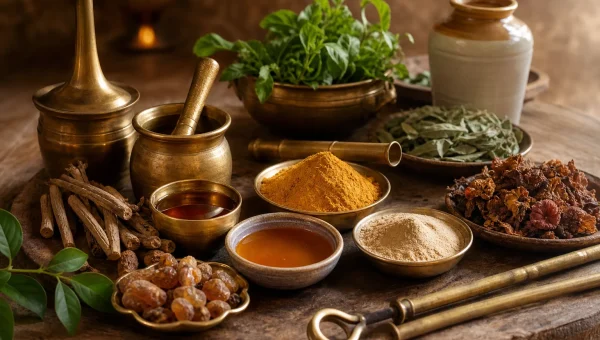
Chandraprabha Vati is a classical multi-ingredient formulation traditionally used in urinary and metabolic disorders. Classical and contemporary Ayurvedic references describe it as a compound of 37 ingredients, including Shilajit and Guggulu in many standard preparations. Because it is complex, may be heating in overall action, and may contain mineral or resinous ingredients depending on the manufacturer, it should be selected by a qualified practitioner rather than self-started during a burning bladder flare.
Additional Supporting Dravyas
For mild home support between visits, the safest Ayurvedic emphasis is usually simple hydration, cooling food, bowel regularity, and gentle preparations rather than a long list of strong herbs. Dhanyaka (coriander seed) may be prepared as a cold infusion for burning urination traditions. Yashtimadhu (licorice root) is sometimes used for soothing support, but it is not appropriate for everyone and should be avoided or medically supervised in people with hypertension, kidney disease, heart disease, low potassium risk, pregnancy, or diuretic use.
The Bladder Calming Protocol: Step by Step
This protocol is a practitioner-guided model, not a prescription. The first step is always to rule out infection, stones, hematuria causes, gynecologic causes, and medication-related irritation. Once urgent causes are addressed, the Ayurvedic sequence is to calm the flare, rebuild the irritated and depleted tissues, then prevent recurrence through diet, pelvic relaxation, bowel regularity, sleep, and careful herb selection.
Phase 1: Acute Flare Management (Days 1 to 14)
During a flare, the goal is to reduce heat and irritation, avoid known bladder irritants, soften pelvic guarding, and restore the downward movement of Apana Vata. This is the wrong time for aggressive detox, fasting, excessive pungent spices, harsh diuretics, strong heating formulas, or multiple new supplements started at once.
| Support | Ayurvedic Role | Typical Adult Reference Range | Timing / Vehicle | Important Caution |
|---|---|---|---|---|
| Dhanyaka Hima | Coriander cold infusion for burning and Pitta irritation | 1 tsp lightly crushed coriander seed soaked overnight in water, strained in the morning | Sip through the day at room temperature | Keep it simple; avoid adding lemon, vinegar, or heating spices during a flare |
| Gokshura | Cooling, nourishing urinary support; listed for Mutrakrichra | Classical decoction references use 20-30 g crude drug for adult decoction preparation | Practitioner-adjusted decoction, powder, or tablet with lukewarm water | Use medical guidance if taking diuretics, blood-pressure medicines, diabetes medicines, lithium, or kidney medicines |
| Shatavari | Cooling, unctuous, tissue-nourishing support for dry Pitta-Vata presentations | Ayurvedic Pharmacopoeia adult powder reference: 3-6 g | Often taken with milk or ghee when tolerated | Avoid self-prescribing in pregnancy, hormone-sensitive conditions, or complex medication use |
| Punarnava | Urinary-channel support when swelling, heaviness, or Kapha-Vata obstruction is present | Ayurvedic Pharmacopoeia adult decoction reference: 20-30 g crude drug | Practitioner-adjusted decoction after assessing heat, dryness, and constitution | Not automatically suitable for every burning flare because its potency is listed as heating |
| Yashtimadhu | Soothing support in selected patients | Short-term practitioner-guided tea or powder only | Usually away from strong irritant foods and stimulants | Avoid or medically supervise with hypertension, kidney disease, heart disease, low potassium risk, pregnancy, or diuretic use |
Phase 2: Rebuilding and Prevention (Weeks 3 to 12)
Once the sharp flare settles, the focus shifts from short-term cooling to long-term stability. The patient should identify food triggers, rebuild regular meals, improve sleep, keep the bowel moving comfortably, reduce pelvic guarding, and use only the herbs that match the current pattern.
| Intervention | Approach | Frequency | Goal |
|---|---|---|---|
| Bladder and food diary | Track urination, pain, sleep, bowel habits, cycle changes, stress, and foods | Daily for 2-4 weeks | Identify personal triggers without unnecessary food fear |
| Gentle lower-abdominal oiling | Warm, gentle clockwise massage over the lower abdomen and sacral region | 5-10 minutes daily if comfortable | Calm Apana Vata and reduce protective pelvic tension |
| Basti therapy | Practitioner-administered medicated enema selected for the person’s Vata pattern | Only as part of a supervised course | Regulate Apana Vata through the classical rectal route |
| Shatavari-based nourishment | Shatavari with milk, ghee, or another suitable vehicle when tolerated | Practitioner-adjusted | Support dry, depleted, heat-sensitive tissues |
| Varuna or Chandraprabha Vati | Used only when the pattern clearly calls for them | Practitioner-adjusted | Address obstruction, stone tendency, Kapha-Vata urinary patterns, or broader urinary-channel imbalance |
For a broader explanation of why Basti is used for Vata and Apana Vata disorders, see our guide on Basti therapy.
Dietary Guidelines for IC Management
The IC diet and the Ayurvedic Pitta-calming diet overlap in a practical way: both begin by reducing foods and drinks that commonly irritate the bladder or increase burning. The goal is not to become fearful of food, but to identify personal triggers and build a nourishing, repeatable menu that keeps the bladder calm.
Favor: Room-temperature water, coconut water if tolerated, cucumber, cooked bottle gourd or zucchini, well-cooked white rice or oats, mung dal soup, ghee in small amounts, ripe sweet pears, melons if tolerated, and simple coriander or fennel infusions. Meals should be warm, soft, regular, and easy to digest rather than raw, dry, skipped, or excessively spicy.
Avoid during flares: Coffee, strong tea, alcohol, citrus, tomatoes, vinegar, pickles, hot chili, very sour fermented foods, carbonated drinks, artificial sweeteners, chocolate, and MSG-containing foods. These foods and drinks are also commonly listed in modern interstitial cystitis diet guidance as potential bladder triggers, so they make sense to remove temporarily and reintroduce cautiously only when symptoms are stable.
Specific Self-Care Between Clinical Visits
Self-care should be simple, observable, and reversible. A person with IC-like symptoms should not start five herbs at once, because that makes it impossible to know what helped or harmed. Between visits, the safest approach is to use a diary, choose bland cooling meals, keep the bowel regular, maintain hydration, and introduce only one gentle support at a time.
- Coriander seed water: Lightly crush 1 teaspoon of coriander seeds, soak overnight in water, strain in the morning, and sip through the day at room temperature.
- Trigger testing: Remove the strongest irritants first, especially coffee, alcohol, citrus, tomato, vinegar, hot chili, carbonation, and artificial sweeteners. Reintroduce one item at a time only after symptoms are calmer.
- Constipation prevention: Keep meals warm, regular, and moist. Constipation can disturb Apana Vata and worsen pelvic pressure.
- Supplement caution: Avoid self-directed Chandraprabha Vati, strong diuretic combinations, high-dose Gokshura, or long-term licorice without professional supervision.
Lifestyle Modifications: Calming Apana Vata
Chronic bladder pain often comes with pelvic-floor guarding, poor sleep, anxiety about bathrooms, and nervous-system over-alertness. Vata-calming lifestyle measures are therefore part of the protocol, especially when frequency and urgency worsen with stress, travel, skipped meals, or poor sleep.
- Regular daily rhythm: Wake, eat, work, and sleep at predictable times to reduce Vata variability.
- Gentle warmth: Use a warm, not hot, bath or compress over the lower abdomen if it feels soothing. Avoid excessive heat when burning is intense.
- Pelvic-floor relaxation: Choose relaxation and release over strengthening during pain flares. Kegel exercises should not be used unless a pelvic-floor professional has confirmed they are appropriate.
- Yoga postures: Supta Baddha Konasana, supported child’s pose, Viparita Karani, and gentle pelvic breathing can be used when they reduce tension rather than increase pressure.
- Pranayama: Sheetali or simple lengthened exhalation can be used gently for Pitta-Vata calming, provided it does not create chill, dizziness, or strain.
When to Seek Medical Care
Bladder pain should not be assumed to be interstitial cystitis without proper evaluation. Seek prompt medical care for fever, chills, flank or back pain, nausea or vomiting, visible blood in urine, inability to urinate, pregnancy with urinary symptoms, severe new pain, or symptoms that resemble a urinary tract infection. IC and UTI can overlap in sensation, but infection, stones, kidney involvement, and hematuria need medical assessment.
Safety and Disclaimer
Important: Interstitial cystitis/bladder pain syndrome requires medical diagnosis and ongoing monitoring. The Ayurvedic protocol described here is a complementary educational framework, not a replacement for a urologist, physician, pelvic-floor therapist, or qualified Ayurvedic practitioner. Licorice can raise blood pressure and disturb potassium balance in susceptible people. Gokshura may interact with diuretics and medicines affecting blood pressure or blood sugar. Chandraprabha Vati, Basti therapy, Varuna, and multi-herb formulas should be used only under professional supervision, especially during pregnancy, kidney disease, heart disease, hypertension, diabetes, anticoagulant use, or complex medication use.
One Actionable Tip: Tonight, begin with a bladder-and-food diary and a simple coriander seed cold infusion. Lightly crush 1 teaspoon of whole coriander seeds, soak them overnight in water, strain in the morning, and sip at room temperature through the next day while avoiding your strongest known bladder irritants. This gives you one gentle variable to observe instead of adding many herbs at once.
Nothing in this article diagnoses or treats a medical condition. Use it as educational information and consult a qualified Ayurvedic practitioner or healthcare provider before starting herbs, supplements, detoxes, Basti therapy, or therapeutic protocols, especially if pregnant, managing a condition, or taking medication.
References
- NIDDK
- NIDDK
- Jaims (jaims.in)
- Ijacare (ijacare.in)
- Ayurvedic Pharmacopoeia of India
- Natural Ingredient Resource Center
- Irjay (irjay.com)
- Lakshmiayurveda (lakshmiayurveda.com.au)
- Easyayurveda (easyayurveda.com)
- Ayurveda (ayurveda.com)
- Auanet (auanet.org)
- NCCIH
- Mskcc (mskcc.org)
- Mayoclinic (mayoclinic.org)
- Mayoclinic (mayoclinic.org)
IC patient for 6 years here. The folder of test results, the 6 specialists, the thin from anxiety that’s my story word for word. Started the Pitta-calming protocol 4 months ago. Night waking reduced from 6 times to 2-3. Not cured but livable.
6 to 2 or 3 night wakings in 4 months is a meaningful shift. Were you able to do the Basti treatments as well or mostly the oral herbs and dietary changes?
The Pitta excess framework for IC is compelling. IC flares on my worst days are definitely triggered by heat, spicy food, alcohol, and stress all classic Pitta aggravators. I’ve been avoiding these on intuition for years without the framework to explain why.
I want to be careful here as an IC patient. The condition is poorly understood and treatment response is highly individual. What works for one person can make another worse. The Ayurvedic approach described should be tried very cautiously with any new practitioner.
@Emily treatment is very individual with IC. what works for one person can make another worse. try cautiously with any new intervention
Shatavari helped my IC symptoms more than any other intervention in 4 years. My urogynecologist has no idea why but my pain scores on the O’Leary-Sant went from 18 to 11 over 3 months of use. She asked if I’d been doing anything different.
That is a meaningful drop on the O’Leary-Sant scale. The article explains Shatavari’s mucosal-healing action and I can see why consistent use would show up in those numbers over months. Did you take it in warm milk with ghee as the protocol suggests or a different preparation?
The coriander seed water tip at the end is what I am starting with tonight. Simple enough that I have no excuse not to try it, and the article says even 3 to 5 days of consistent use can show some change. Will report back.
Does the fermented protocol change for different prakritis? My assessment came back as Vata-Pitta and I’m not sure if the standard approach applies.
Has anyone successfully used Ayurvedic treatment for IC long term and been able to stop conventional medications? Not looking for false hope but genuinely wondering about outcomes beyond initial symptom reduction.
Are there food interactions with fermented that I should be aware of? My Ayurvedic doctor mentioned something about dairy but wasn’t specific.
The IC-bladder calming teas described Gokshura, Shatavari, Chandana are exactly what my Ayurvedic vaidya prescribed. The cooling effect on the bladder tissue is noticeable within days. Not a cure but meaningful relief.
The article links to two PubMed references on Gokshura-Punarnava Basti. Worth reading those if you want something closer to clinical data. Not large controlled trials but they do show measurable effects on urinary markers.
Curious whether you took all three together or started with one at a time. The article calls Gokshura the cornerstone but I’m wondering if Shatavari alone might be a gentler starting point for someone with a sensitive stomach.
The article mentions 8 weeks minimum for Gokshura capsules and a 12-week rebuilding phase. That answers my question about timelines. Feels like a long haul but IC itself has been a years-long struggle for most patients so I suppose that tracks.
❤️ Thank you.
Is there any data on Gokshura specifically for IC? The diuretic and anti-inflammatory properties seem mechanistically plausible but I’d want to know if anyone has run a small clinical series before starting self-supplementation.
is there data on Gokshura specifically for IC? the diuretic and anti-inflammatory properties r mechanistically plausible but I’d want at least a small clinical series
iC flares are triggered by heat, spicy food, alcohol, stress. classic Pitta aggravators. I’d been avoiding these by intuition for years without the framework
IC patient 6 years. night waking reduced from 6 times to 2-3 after 4 months of the Pitta-calming protocol. not cured but livable
Shatavari helped my IC symptoms more than anything in 4 years. my urogynecologist noticed the improvement on my O’Leary-Sant scores and asked what I’d changed
Is there data on Gokshura specifically for IC? the diuretic and anti-inflammatory properties are mechanistically plausible but I’d want at least a small clinical series
Having the two phases laid out separately actually helps. Phase 1 for the acute flare and phase 2 for rebuilding over weeks. I always try to do everything at once when reading Ayurveda articles and end up getting nowhere.
@Emily my wife has IC and the internal heat reduction framework gives her more systematic guidance than just ‘avoid acidic foods’ नमस्ते
the cooling teas Gokshura, Shatavari, Chandana. the cooling effect on bladder tissue is noticeable within days
My wife has IC and the internal heat reduction framework gives her more systematic guidance than just ‘avoid acidic foods’
Yes, the Pitta framework makes her diet decisions easier to explain too. The article lists exactly the foods she already knows to avoid, tomatoes, coffee, wine, fermented things, and says both the IC Network and Ayurvedic texts flag them for the same reason. That shared logic helps her take it seriously.
The safety notes at the end are worth reading carefully. Yashtimadhu being contraindicated for people with hypertension or kidney disease is something I would not have thought to check. Good that the article states it clearly rather than leaving that for patients to discover on their own.
My mother has high blood pressure so that Yashtimadhu warning was directly relevant to our situation. I would have assumed licorice root is harmless since it sounds like a simple tea ingredient. Good that the safety section spells it out clearly rather than leaving it for patients to discover on their own.
Chandraprabha Vati having 37 ingredients surprised me. I assumed it was a simple two or three herb formula. The moonlight meaning for the name makes the cooling, Pitta-pacifying intention immediately clear even without reading through all the ingredients.
The shilajit and guggulu being in there alongside the urinary-specific herbs surprised me too. Every single-herb formula I had used before was five or six ingredients at most. Thirty-seven does explain why sourcing a reputable Chandraprabha Vati matters so much more than with simpler preparations.
Same here! 💯
The Pitta-pacifying diet section overlaps almost completely with what IC patients are told by their urologist anyway. Both lists flag coffee, alcohol, citrus, spicy foods, and vinegar. The article actually points this out directly, which made me trust the rest of it more.
IC flares r triggered by heat, spicy food, alcohol, stress. classic Pitta aggravators. I’d been avoiding these by intuition for years without the framework
That convergence was what convinced me too. If two completely different medical traditions, one ancient and one evidence-based, land on the same trigger list for the same stated reason, that is harder to dismiss as coincidence.
The Varuna section is the most research-backed part of the article. Lupeol and betulinic acid with NCBI-reviewed data on anti-inflammatory and antispasmodic effects is more than most Ayurvedic herb articles offer. That gave me more confidence in the overall protocol than I came in with.
The stress and anxiety component stuck with me. The article connects chronic overwork and anxiety to Vata dysregulation and bladder symptoms. I would not have linked my work schedule to the flare timing but looking back it does line up more than I expected.
That connection took me a long time to accept too. I kept blaming specific foods and never tracked work deadlines alongside the flare calendar. When I finally did the pattern was hard to ignore. The article calling it Manovikara and linking chronic anxiety directly to Apana Vata disturbance gives that observation a framework.
I started keeping a rough diary after reading this and the correlation between high-stress weeks and flare timing was difficult to ignore. The point about fixed meal and sleep times reducing Vata variability through Dinacharya is what I have been experimenting with for the past week, mostly because it costs nothing to try.
Same experience here. The Manovikara section explaining how chronic anxiety and overwork disturb Apana Vata finally gave me a framework for why symptoms always spike during high-pressure stretches at work. I had noticed the timing but never had a way to explain it beyond coincidence.
The overlap between the standard IC elimination diet and Pitta-pacifying foods was the most convincing part for me. I had already cut out tomatoes and coffee by necessity but never understood why fermented foods were so consistently bad. The mucosal irritation explanation finally makes that click.
found this post helpful. will try the suggested approach. (ref 1869-21)
Started the coriander seed water three days ago. Not ready to call it a cure but the nighttime urgency does feel a bit less intense. Worth trying given it costs almost nothing and the Charaka Samhita reference gives it some credibility beyond folk remedy status.
The comparison of Shatavari to slippery elm for mucous membrane protection was helpful. I have used slippery elm before for gut inflammation so the mechanism makes sense to me. Did not realize Shatavari worked along the same lines for the bladder lining.
The slippery elm comparison helped me understand the Shatavari mechanism a lot faster. Once you think of it as a mucilaginous coating herb rather than just a hormonal tonic the application to an inflamed bladder lining makes complete sense.
The two-phase structure makes sense. Trying to nourish and rebuild bladder tissue while still in an active flare does seem counterproductive. Cooling and clearing the inflammation first, then moving into the Shatavari and oil massage phase, is a more logical sequence than everything at once.
Agreed on the sequencing. The basti therapy component in phase two is something I would want a qualified practitioner to guide before trying, but the oral herbs and the Shatavari at bedtime in warm milk seem workable even without a clinic appointment during that maintenance phase.
The opening about the woman who stopped going to restaurants and organizing her whole life around her bladder is painfully accurate for anyone close to someone with this condition. That social and psychological cost rarely shows up in clinical descriptions of IC but it is often the part that wears people down most.
Had not come across Varuna before reading this. The research cited on its effect on bladder wall inflammation and smooth muscle spasm is more substantial than I expected for a traditionally used herb. Will ask at the next Ayurvedic consultation whether it fits alongside what she is already taking.
The lupeol and betulinic acid detail and the NCBI citation did make it feel more grounded than a lot of herb recommendations you read. Would be curious whether practitioners tend to prescribe Varunadi Kwatha as a home decoction or prefer a standardised extract form for consistency.
The Apana Vata section explains something I had noticed but never had language for. Irregular sleep schedules and travel almost always precede a bad flare for me. Framing that as Vata variability rather than random bad luck at least points toward something actionable, like the Dinacharya recommendations.
Quick question on the Gokshura dosing. The protocol table lists 3g of the powder twice daily before meals but the self-management section mentions 500mg standardized extract twice daily. Are those considered equivalent or is one form preferred for the acute phase versus long-term maintenance?
Tried the Sheetali breath during a flare last week mostly out of desperation. I was skeptical but the cooling sensation is real and the urgency did ease a bit while I was practicing it. Small thing but having something to do in the moment rather than just waiting it out makes a difference.
not related to this post but does anyone know a good practitioner in Hyderabad?
Does the coriander seed water really help reduce nighttime trips to the bathroom?
My wife has IC and has been through the antihistamine and tricyclic antidepressant route with limited results. The explanation of Apana Vata governing elimination and what happens when it is disturbed alongside Pitta accumulation in the urinary channels actually helped her understand her own symptom pattern better than anything a urologist had put into words.
The coriander seed water tip at the end is surprisingly practical. One teaspoon of crushed seeds soaked overnight in a liter of water, almost no effort and no cost. Tried it for five days and the urgency did feel noticeably calmer, though I cannot rule out placebo at this point.
Did not realize IC could affect men too. The article mentions 1 to 4 million men in the US. Most of what I had read focused entirely on women so that was genuinely new information for me.
The phase two rebuilding protocol is what I needed most. Phase one is clear enough for acute flares but knowing what to do during weeks three through twelve, the Varuna decoction twice daily, Triphala at bedtime, abdominal oil massage, gives the approach a structure that actually feels manageable to follow.
The article is upfront that this is complementary care, not a replacement for a urologist, and that Basti must be administered by a qualified practitioner. That kind of framing makes it easier to take the herbal recommendations seriously rather than dismissing everything as fringe medicine.
That transparency is what made me actually read through the herbal protocol instead of skimming past it. When a site says upfront that Basti has to be done by a qualified practitioner and that you should still see your urologist, you know they’re not trying to sell you on replacing real care.
Wondering about the Sheetali breath technique mentioned in the lifestyle section. Using pranayama specifically during a flare to cool Pitta and reduce urgency sensations is an interesting idea. Has anyone actually tried it in the middle of a bad episode to see if it helps?
I tried Sheetali breath once during a mild flare and it did seem to take the edge off the urgency briefly. Hard to say if it was the breathing or just distraction but I kept it up for about ten minutes and felt calmer. Worth trying if you can manage the technique.
Dhatukshaya as a root cause, specifically the depletion of muscle and connective tissue weakening the bladder lining, was a concept I had not encountered before. Most of what I had read about IC focused on central sensitization. This adds a tissue-level explanation that feels complementary rather than contradictory.
Yes and the Mamsa dhatu depletion piece connects to why so many IC patients look visibly exhausted rather than just locally inflamed. It reads more like a systemic wasting pattern than a localized bladder problem, and the article makes that distinction clearer than anything else I have come across on this.
I have been dealing with urgency and burning for almost two years and nobody ever mentioned coriander seed water to me. Going to try this tonight, it costs nothing and the logic makes sense.
The article says some people notice a difference within 3 to 5 days, which is a short enough window to actually test it. Crushing the seeds rather than leaving them whole seems to matter for releasing the active compounds.
@Sunita iC flares are triggered by heat, spicy food, alcohol, stress. classic Pitta aggravators. I’d been avoiding these by intuition for years without the framework 💯
Six specialists over three years with no real resolution. That opening description stays with you. It is also exactly why someone would be willing to run an eight-week course of Gokshura capsules and coriander seed water alongside whatever their urologist is already doing.
My wife has had IC for four years. The part about Apana Vata being disturbed explains why her symptoms are always worse when she is stressed or skipping sleep. Also the overlap between the IC Network trigger list and the Ayurvedic Pittakara food list was genuinely surprising to see laid out side by side.
I knew Shatavari more as a hormonal support herb for women but the mucilaginous coating action on irritated bladder walls makes complete sense given how raw everything feels during a bad flare. Adding it to the list to discuss with my practitioner.
Six specialists over three years and still no real answer. That opening story hit close to home, my partner went through almost the same process. Curious whether Varuna bark decoction is something you can actually find in the US or if it requires going through a specialty Ayurvedic supplier.
I have used coriander seed water for digestion before but never thought of it for urinary burning. Did not realize it had a specific reference in the Charaka Samhita for that symptom. The fact that it is mentioned alongside the clinical herbs and not just as a folk tip changes how I think about it.
Chandraprabha Vati is something I already take occasionally but I had no idea it contained 37 ingredients including shilajit. The name meaning moonlight makes more sense now. The cooling effect on the urinary tract is something I have noticed but never been able to explain well to anyone.
The detail about her stopping restaurants and long meetings because of her bladder really stayed with me. My sister has IC and that sentence about organizing your whole life around your bladder is exactly how she describes it. The anxiety around eating and planning is its own separate burden on top of the physical symptoms.
The article links to PubMed and PMC references for Gokshura and the Basti studies but does not spell out the study sizes or patient numbers. Is there an actual clinical trial on Gokshura specifically for IC or is the evidence mostly extrapolated from broader urinary disorder research? Asking as someone who wants to bring this to a urologist who will ask exactly that question.
I never had a name for why coffee and wine would set off a flare within hours but tomatoes were slower and more unpredictable. The Pitta aggravation framework at least gives some logic to it. Still figuring out the fermented foods piece since I thought those were supposed to be good for you.
@Lakshmi 🙏 IC flares are triggered by heat, spicy food, alcohol, stress. classic Pitta aggravators. I’d been avoiding these by intuition for years without the framework
The two-phase layout is the part I found most useful. Every other resource I read just handed me a herb list with no sense of sequencing. Trying to rebuild tissue during an active flare never worked for me anyway, so the idea of cooling first and nourishing second lines up with what I noticed by trial and error.
The opening about the woman who organized her entire life around her bladder is a more accurate description of living with IC than anything I have read in a clinical pamphlet. The diet restrictions alone mean you are making decisions about every meal, every social plan, every trip.
Will try this.
Does anyone know how long you need to stay on Gokshura before you can tell if it is working? The article says a minimum of eight weeks for the capsule dose but I am wondering if the powder form in the acute phase protocol follows a different timeline.
The coriander seed water tip at the end is what I actually tested first since I already had coriander in the kitchen. Three days in and the morning urgency was noticeably less sharp. Nothing dramatic but enough to make me want to keep going with the rest of the protocol.
Is Varunadi Kwatha something you can make at home from Varuna bark or does it need to come from an Ayurvedic pharmacy? The article mentions it for the rebuilding phase but does not say much about sourcing it.
Varunadi Kwatha is available as a ready-made liquid at most Ayurvedic stores, sometimes labeled as Varuna syrup. The tablet form exists too but the kwatha is usually what practitioners recommend for urinary conditions. Worth confirming the dose with whoever supplies it since concentrations vary.
The Sheetali breath suggestion during a flare is the first IC tip I have seen that addresses the urgency sensation directly rather than just managing diet or taking something. Whether the cooling effect is physiological or just calming the nervous system response probably does not matter much if it helps in the moment.
Chandraprabha Vati was the one formulation in here I recognized from something else entirely. Did not know it had documented use specifically for cystitis. The case report mention is a small data point but it is more than most classical formulations get.
The Varuna section was new to me. I had never come across it before this article. Is Varunadi Kwatha something available at Ayurvedic pharmacies or only prepared through a practitioner?
The line about life being organized around the bladder is exactly how two people I know with IC describe their days. Sending this to them.
I did not realize how much the IC Network avoid list and the Pittakara food list overlapped. Coffee, tomatoes, vinegar, all flagged by both for essentially the same reason. Wish someone had framed it that way years ago instead of just handing me a printout.
Interesting how they link anxiety to bladder symptoms.
The Sheetali breath suggestion during a flare is genuinely new to me. Have practiced pranayama for years and never heard it applied specifically for urgency. Going to look into that more.
Chandraprabha Vati having 37 ingredients sounds complex but I suppose that is the point of a classical formulation rather than a single herb. Does quality vary a lot between brands or is there a standard one practitioners recommend?
The comparison between Shatavari and slippery elm coating irritated mucosal surfaces helped the mechanism click for me. Two traditions arriving at the same approach from different directions.
The two-phase structure makes sense. Trying to do daily oil massage and Basti during an active flare seems like it would just add stress. Cooling first and then rebuilding is a logical sequence.
The nocturia piece stood out to me. Waking 6 or more times a night is essentially no sleep. The framing of it as Apana Vata disruption rather than just a bladder symptom gives it a different character.
Tried the coriander seed water after reading this. Crushed a teaspoon of seeds, soaked them overnight, sipped through the next day. Too early to say anything certain but it felt noticeably gentle and I will keep going for the full week.
Hope the full week goes well. I keep wondering whether the overnight cold soak method the article describes is important or whether steeping for a few hours gives comparable results. Since it cites the Charaka Samhita I assume the traditional approach was the overnight version for a reason.
Good to know. The overnight soak method sounds easy enough to maintain daily. Did you find the taste neutral or does it have a strong flavor?
The opening story about the woman with the folder of test results really stayed with me. Three years and six specialists and she still had no clear path forward. That kind of accumulated exhaustion comes through in how precisely she could describe every trigger.
I never connected my food triggers to a dosha framework before reading this. The burning and urgency fitting Pitta makes immediate sense once it is laid out, but I had just been avoiding coffee and tomatoes by trial and error for years without understanding why they caused flares.
I had assumed Basti was mainly used for digestive complaints. The idea of delivering a Gokshura-Punarnava decoction directly through that route for urinary channels is something I want to bring up with my Ayurvedic practitioner at my next appointment.
Is Chandraprabha Vati something you can buy over the counter or does it need practitioner supervision? With 37 ingredients including shilajit and guggulu it seems like the kind of formulation where dosage and combination with other herbs would matter quite a bit.
Most brands sell it over the counter but I think the dosage question is valid given the shilajit content. Worth checking with a vaidya before combining it with other things.
The part about her stopping restaurants and long meetings hit close to home. Someone in my family manages IC and that social shrinking is real. Your whole schedule ends up built around bathroom access and which foods are safe at any given venue.
The Sheetali breath suggestion during an active flare is something I had not come across before. Most IC resources I have read focus entirely on diet and medication. A cooling pranayama practice aimed at reducing urgency in the moment seems worth experimenting with.
I tried Sheetali breath during a mild flare last month after coming across it in a different context. It did not resolve anything completely but it seemed to reduce the urgency enough to avoid the spiraling panic that usually follows. The cooling framing makes sense given how overheated the sensation feels from the inside.
Wondering whether Varuna bark decoction is practical to source outside India. The research on lupeol and betulinic acid is genuinely interesting and I have seen Gokshura in Western herb shops but Varuna is a different story. Has anyone found a reliable supplier?
The warm bath with coriander seed infusion for pelvic tension is new to me. The article specifies warm not hot, which makes sense given that heat would push Pitta further. Two cups of the infusion in the bath water seems like an easy thing to try alongside the internal protocol.
Does the Gokshura powder have to be taken before meals specifically? The protocol lists twice daily before meals but I am wondering whether the timing matters for the diuretic effect or if that detail is more about absorption.
The part about Manovikara and chronic anxiety being an upstream cause was not what I expected from an article on bladder pain. I always treated the physical symptoms as entirely separate from stress. Looking back at my worst flare periods, the anxiety piece is harder to dismiss than I thought.
Three years of burning urgency and nobody mentioned the Pitta-Vata connection once. Six specialists, bladder instillations, antihistamines, tricyclic antidepressants. Reading about Apana Vata governing the urinary channels made more intuitive sense to me than anything I heard in those appointments.
I understood the difference between Pittaja and Vata involvement better here than in anything else I have read on this. Still not entirely sure how to tell which is dominant during an actual flare, but the explanation of Apana Vata and the Mutravaha Srotas gave me a framework that finally makes the symptom pattern coherent.
Coffee and tomatoes appearing on both the IC Network trigger list and the Ayurvedic Pittakara food list is the detail I keep thinking about. Two completely separate frameworks arriving at the same dietary restrictions for different stated reasons. That overlap makes the Pitta aggravation explanation feel less like a metaphor and more like it is pointing at something real.
Is there guidance on how long to continue the Varuna bark decoction before reassessing? The protocol mentions weeks three to twelve but I cannot tell if that means a full twelve-week course regardless of symptoms or if you stop once the acute phase is clearly resolved.
The opening story about the woman carrying a folder of test results after seeing six specialists really set the tone. Three years of conventional treatment with no resolution is a long time to suffer. Curious whether the protocol described here is something she actually followed or if it is more of a general framework built from similar cases.
Had no idea IC affects that many people in the United States. The numbers from NIDDK were surprising. Makes the lack of a definitive conventional cure even more frustrating for people who have been going from specialist to specialist without lasting relief.
Tried the coriander seed water after reading the tip at the end. Just soaked a teaspoon of seeds overnight and sipped it through the day. Not a dramatic change yet but the burning felt a little less sharp by evening. Seems like a reasonable starting point given how low the risk is.
The part about her whole life being organized around her bladder is exactly how my sister describes living with IC. The urgency and nocturia make ordinary plans feel unreliable. It is not just a physical condition at that point.
The overlap between the standard IC avoidance list and the Pittakara foods list is striking. Tomatoes, coffee, wine, fermented foods show up on both. I had been following the IC Network recommendations for years without knowing there was an Ayurvedic explanation for why those particular foods aggravate the condition.
The Shatavari section is useful. The comparison to slippery elm for soothing irritated mucous membranes makes the mechanism easier to understand for someone coming from Western herbalism. The bedtime dose in warm milk with ghee is something I want to try during a quiet period when I can track any changes carefully.
Varuna bark is not something I had read about before this article even though I have come across Gokshura in several other contexts. The mention of lupeol and betulinic acid and the NCBI review of antispasmodic effects on smooth muscle is worth following up. Will look for the studies referenced.
I wonder if the herb doses are safe for long term use.
The Gokshura section describes its properties and mentions research but does not cite specific IC trial data. Does anyone know of published studies with patient numbers or validated symptom measures specifically for IC rather than general urinary disorders? The diuretic and anti-inflammatory properties seem relevant but clinical data would make it easier to discuss with a physician.
My wife has IC and has cycled through most of the conventional treatments. The Apana Vata framework actually explains something the urology appointments never addressed, which is why erratic schedules and stress seem to reliably trigger flares. The recommendation for a fixed daily routine is practical and not something her urologist ever mentioned.
The Sheetali pranayama suggestion during a flare is something I had not seen in any IC resource before. Inhaling through a rolled tongue to actively cool Pitta and reduce urgency is an interesting approach. Going to try adding it to the routine alongside the dietary changes and see if there is any noticeable difference in flare intensity.
The diet list matches what many IC patients already avoid.
Started the coriander seed water last night after reading this. Three years of IC and I never knew about this remedy. Will report back after a week.
The Pittaja Mutrakrichra classification finally makes sense of why tomatoes and coffee hit so much harder than other foods. Always knew those were triggers but never had a framework for it.
Noted! 🌿
The bladder instillations my urologist offered felt so invasive compared to something like Gokshura powder twice daily. Curious whether anyone here has tried both approaches.
Nocturia is the part that wrecks everything for me. Waking four or five times a night is exhausting. Good to see Vata involvement addressed separately from the burning and urgency.
My doctor always described nocturia as a separate complaint from the burning but this is the first time I’ve seen someone explain how Vata spasm drives both together. Made the whole picture make sense finally.
The overlap between the IC diet and the Pitta-pacifying diet is striking. I had cut out coffee and citrus already just from trial and error. This gives a clearer rationale for why.
After trying coriander seed water, I felt less burning after a few days.
Had not come across Varuna bark before. The anti-spasmodic angle is interesting because my worst symptoms are the spasms, not just the burning.
My wife spent two years seeing specialists and none of them mentioned anything about diet-related inflammation in urinary channels. This Apana Vata explanation is worth discussing with her Ayurvedic doctor.
The Sheetali pranayama tip during a flare is something I can actually try without buying anything. Small things that help in the moment matter a lot when urgency hits suddenly.
The coriander seed water tip at the end is something my grandmother made every summer. I always thought it was just for cooling down in the heat, had no idea there was a specific reference in the Charaka Samhita for burning urination. Going to try it properly this time with the overnight soak method described.
Three years of specialists before an IC diagnosis is not unusual from what I have read, and the article captures that exhaustion well. The part mapping Pittaja Mutrakrichra to the exact symptom cluster, burning, urgency, frequency, brief relief after voiding, was the clearest explanation of the mechanism I have encountered.
The overlap between the standard IC elimination diet and the Pitta-pacifying food list is striking. Coffee, alcohol, tomatoes, fermented foods, citrus all appear on both lists for essentially the same reason. The coriander seed tea as an active addition rather than just an avoidance measure is something I had not seen in the conventional IC guidance.
Been managing IC through food avoidance for years, mostly figuring out triggers by elimination. Tomatoes, wine, anything fermented, all identical to what is listed here under Pittakara Ahara. Seeing the pattern described through the Mutravaha Srotas framework makes it feel less like random sensitivity and more like a coherent mechanism.
The Apana Vata explanation, that it governs downward elimination and when it is disturbed alongside Pitta accumulation the result is exactly the burning and urgency pattern, is one of the clearer mechanistic descriptions I have read. Most conventional explanations of IC stop at central sensitisation without explaining the upstream drivers.
Chandraprabha Vati comes up often in general Ayurvedic contexts but I had not connected it specifically to urinary conditions before. Thirty-seven ingredients including shilajit and guggulu is a substantial formulation. The case report mention is useful because it gives at least one documented clinical reference rather than just traditional use claims.
The Sheetali pranayama suggestion during a flare is something I had not come across before in any IC resource. Cooling the Pitta response through breath during peak urgency makes sense given the framework described. Going to try it during the next episode and see whether it actually helps with the urgency sensation.
Glad the safety section specifically flags the Gokshura and diuretic medication interaction. That level of specificity makes it easier to bring up with a physician rather than just saying you want to try an Ayurvedic herb. The licorice caution for hypertension is also worth knowing since Yashtimadhu appears in several of the protocols here.
I had no idea interstitial cystitis was classified under Mutrakrichra in classical texts. The Charaka Samhita connection actually makes me want to dig into that more. Three years of seeing specialists with no real answers is exhausting to even read about.
The coriander seed water tip at the end is the kind of thing I can actually try tonight without needing to source obscure herbs. One teaspoon steeped overnight sounds simple enough. Will report back after a week.
What caught my attention was the diet overlap between the IC elimination diet and the Pitta-pacifying approach. Tomatoes, coffee, fermented foods flagged by both Western dietitians and Ayurvedic texts for the same reason. That is not a coincidence I expected.
Agreed that the Mutrakrichra framework is approachable even without Ayurvedic background. The Pitta and Vata distinction for different symptom patterns is explained clearly enough that someone new to this can follow along without getting lost in terminology.
My aunt has struggled with chronic urgency and burning for years. Doctors keep rotating her through antihistamines and tricyclic antidepressants with not much improvement. I am going to share the Gokshura and Shatavari section with her and see what her doctor thinks.
The part about Apana Vata governing the bladder and downward elimination is new to me. It reframes why stress seems to make urinary symptoms worse. Makes more sense than just saying the nervous system is involved without explaining the mechanism.
Chandraprabha Vati with 37 ingredients sounds complicated but apparently it has been a standard classical formulation for a long time. I wonder how the dosing was originally worked out before any clinical studies existed.
The description of that patient organizing her entire life around her bladder hit differently. I know someone who had to leave a job because of bathroom access. Three years of specialists and still no cure is unfortunately very familiar.
I appreciate that the article is upfront about Yashtimadhu being contraindicated for people with hypertension or kidney disease. Too many herbal write-ups skip the cautions entirely. The safety section here is actually useful.
Aw, this was a very nice post. In idea I would like to put in writing like this moreover – taking time and actual effort to make an excellent article… however what can I say… I procrastinate alot and on no account appear to get one thing done.
I started the coriander seed water after reading this. Three days in and the urgency has noticeably calmed. Wasn’t expecting something that simple to make a difference.
Simply wanna comment that you have a very decent web site, I love the pattern it really stands out.
The part about Pittaja Mutrakrichra mapping so closely to IC symptoms was genuinely eye-opening. I’d been told IC has no known cause but the idea that accumulated Pitta in the urinary channels explains the burning and urgency clicks intuitively in a way the standard explanations never did.
I appreciated that the protocol separates the acute flare phase from the longer rebuilding phase. That two-stage structure is something I never got from conventional treatment, which mostly just kept adding medications without addressing tissue repair.
Six specialists over three years is something I relate to painfully. No one ever mentioned that erratic meal and sleep schedules could aggravate Apana Vata and make urgency worse. That connection to daily routine was completely new to me.
Does Varuna bark decoction need to be made fresh each time or can you prepare it in batches? The article says 30 ml twice daily but doesn’t cover home preparation in much detail.
Sheetali breathing during a flare is something I would never have thought to try for bladder urgency. The explanation that it actively cools Pitta makes it worth testing. Going to learn the proper technique before the next bad day.