The first time many people see Navara Kizhi in a Kerala Ayurveda setting, its simplicity is what stands out: warm cloth bundles of cooked medicinal rice, dipped again and again in milk and herbal decoction, applied rhythmically over the body after oiling. There is no machine and no dramatic technology. The therapy works through heat, oil, touch, milk, Bala decoction, and a rice variety that Ayurveda has treated as special for centuries.
Navara Kizhi, also known as Njavarakizhi or Shashtika Shali Pinda Sweda, is one of Kerala Ayurveda’s best-known bolus fomentation therapies. Navara or Njavara refers to the Kerala-associated medicinal rice used for the treatment; kizhi means a pouch or bolus. In classical Sanskrit terminology, Shashtika refers to rice that matures in about sixty days, shali means rice, pinda means bolus, and sweda means sudation or fomentation.
The traditional procedure uses Navara rice cooked with cow’s milk and a decoction of Bala root (Sida cordifolia), tied in cloth boluses and applied warm over the whole body or selected regions. It is most often described as a strengthening, nourishing, and stiffness-relieving therapy for neuromuscular and musculoskeletal conditions. In rheumatoid arthritis, its best role is supportive: it may help comfort, stiffness, and movement when chosen at the right stage, but it must not replace disease-modifying medical care.
What Makes Navara Rice Different
Navara is not simply ordinary polished rice placed in a pouch. The rice used in this therapy is associated with Shashtika Shali, the sixty-day rice praised in Ayurvedic food and therapy literature. In Ashtanga Hridaya, Shashtika Shali is described as snigdha (unctuous), grahi (absorbent), laghu (light), svadu (sweet), tridoshaghna (balancing to the three doshas), sthira (stabilizing), and hima (cooling).
Modern genetic work has also treated Njavara as a distinct rice line rather than a generic health-food label. The Navara rice name is registered as a Geographical Indication in India, with Kerala listed as the geographical area. For treatment, it is better to source genuine Navara/Njavara rice from a trusted Kerala supplier or an authorized GI user rather than substituting common red rice or white rice.
The Traditional Navara Kizhi Procedure
A full clinic course is individualized by the physician after examining the person’s strength, digestion, stage of disease, skin condition, heat tolerance, and dosha state. The outline below describes the classical structure of the treatment; it should be treated as an educational guide, not as a substitute for a trained Panchakarma therapist.
Materials Used
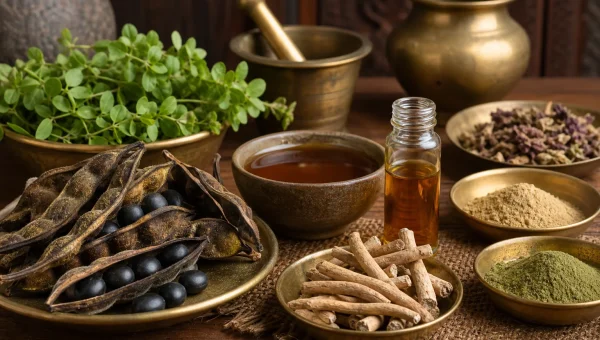
The classical preparation centers on Shashtika/Navara rice, Bala root decoction, cow’s milk, clean cloth for boluses, thread for tying, and suitable medicated oil or sesame-based oil for preliminary application. Clinics usually prepare multiple boluses so that one set can be applied while another set is being rewarmed.
- Navara or Shashtika rice
- Bala root (Sida cordifolia) decoction
- Cow’s milk, mixed with the decoction
- Cotton or linen cloth pieces for tying boluses
- Cotton thread for firm handles
- Medicated oil chosen by the practitioner, or sesame oil where appropriate
- A vessel kept on gentle heat for rewarming the boluses in the milk-decoction mixture
Preparation
The Bala decoction is prepared first, then divided. One portion is combined with milk and used to cook the rice into a soft mass. The cooked rice is divided into equal portions, placed in cloth, and tied into boluses with secure handles. The other portion of the Bala decoction and milk is kept warm so the boluses can be dipped repeatedly during the session.
- Prepare Bala decoction: Clean Bala root is boiled in water and reduced to a decoction, then filtered.
- Cook the rice: Navara rice is cooked in a portion of Bala decoction mixed with milk until soft and cohesive.
- Tie the boluses: The cooked rice is placed into cloth pieces and tied firmly so each bolus can be held and moved safely.
- Keep the warming liquid ready: A second portion of milk and Bala decoction is kept on gentle heat for dipping and rewarming the boluses.
Application Technique
In a clinic, Navara Kizhi usually begins with oil application. The boluses are tested for comfortable warmth and then applied rhythmically, with repeated dipping into the warm milk-decoction mixture. The pressure should be steady but never harsh, and the bolus must never be hot enough to burn the skin.
| Step | Action | Practical Aim |
|---|---|---|
| 1. Assessment | The practitioner checks disease stage, skin condition, heat tolerance, and whether the person is suitable for sudation. | To avoid using heat in unsuitable conditions. |
| 2. Oil application | Warm oil is applied over the selected body part or the whole body. | To prepare tissues and reduce friction during bolus application. |
| 3. Heat testing | The bolus is tested on the therapist’s hand or forearm before it touches the patient. | To prevent burns. |
| 4. Bolus application | The warm bolus is moved in gentle circular strokes over joints and long strokes over limbs and muscles. | To provide fomentation, softness, and rhythmic pressure. |
| 5. Rewarming | When the bolus cools, it is returned to the warm milk-decoction vessel and replaced with a warm bolus. | To maintain steady warmth without overheating. |
| 6. Completion | The rice residue is wiped away, the person rests, and bathing is done later as advised. | To allow the body to settle after sudation. |
Why It Is Used for Stiffness, Weakness, and Joint Comfort
Ayurvedically, Navara Kizhi combines snehana and swedana: oiling and fomentation. The rice-milk medium makes it more nourishing than dry fomentation, while the warmth and repeated bolus contact address stiffness, heaviness, coldness, and restricted movement. This is why Kerala physicians commonly place it among strengthening therapies for neuromuscular and musculoskeletal depletion rather than among harsh detoxifying procedures.
The Bala decoction adds the traditional balya emphasis of strength support, while milk and rice contribute the brimhana or nourishing direction of the therapy. The warmth softens the area, the oil protects and lubricates, and the bolus pressure gives a controlled manual input. For chronic stiffness and reduced mobility, this combination is the practical heart of the treatment.
The Clearest Role in Rheumatoid Arthritis
Rheumatoid arthritis is an autoimmune inflammatory disease that can damage joints if not properly treated. Navara Kizhi should therefore be understood as an adjunct, not a replacement. When RA is medically diagnosed, disease control with a rheumatologist remains the foundation; complementary therapies should be added only with the knowledge of the treating clinician.
In an Ayurvedic frame, RA often overlaps clinically with Amavata, where the stage of disease matters. Heavy, hot, red, intensely inflamed joints are not the ideal moment for a warm nourishing bolus therapy. Navara Kizhi is better considered after acute intensity has settled, especially when stiffness, weakness, wasting, restricted movement, or chronic Vata-dominant pain is prominent.
For hands, wrists, knees, shoulders, back, or limbs that feel stiff and depleted rather than acutely hot and angry, the therapy can be used as supportive care under supervision. It may make movement easier, reduce the feeling of tightness, and support comfort during a broader plan that includes appropriate medication, diet, rest, gentle mobility, and follow-up assessment.
A Safer Home Adaptation
A home version should be modest and conservative. It is not a home Panchakarma course and should not be used during fever, infection, open wounds, severe swelling, or uncontrolled inflammatory flare. The safest home adaptation is closer to a warm rice-bolus compress for one or two joints than to a full-body Navara Kizhi session.
- Use a small quantity of cooked Navara rice in two clean cotton boluses.
- Warm the bolus in milk and Bala decoction if advised by a practitioner; otherwise use simple gentle warmth rather than strong medicated heat.
- Apply oil lightly before the bolus only if the skin is intact and oil is suitable for the person.
- Test the bolus every time before applying it to the joint.
- Limit the session to a short, comfortable duration and stop if burning, dizziness, excess sweating, rash, or increased pain occurs.
- Do not use strong pressure over swollen, tender, unstable, or recently injured joints.
For people without access to a Kerala Panchakarma center, this simplified approach can provide the soothing warmth and gentle contact that make the therapy valuable, while avoiding the risks of an unsupervised full procedure. For complementary food support during a joint-care program, this related article on anti-inflammatory meals for joint pain can be paired with practitioner-guided care.
Who Should Not Do Navara Kizhi
Navara Kizhi uses warmth, oil, milk, and repeated manual contact, so it is not suitable for every person or every stage of disease. A qualified Ayurvedic physician should screen for contraindications before treatment.
- Active fever, acute infection, or systemic illness: Sudation is not appropriate when the body is already febrile or acutely unwell.
- Open wounds, burns, skin infection, or weeping eczema on the treatment area: Bolus application can irritate tissue and spread contamination.
- Severely hot, red, acutely swollen joints: Wait until the acute inflammatory phase is controlled.
- Diabetes with neuropathy or reduced temperature sensation: Reduced ability to feel heat increases burn risk; avoid unsupervised use.
- Deep vein thrombosis, severe varicose veins, recent fracture, or unstable injury: Heat and massage-like pressure can be unsafe.
- Uncontrolled hypertension or significant heart disease: Use only if a clinician specifically clears it.
- Pregnancy: Avoid full-body heat therapies unless supervised by a clinician trained in pregnancy-safe Ayurveda care.
- Milk allergy or strong sensitivity to dairy contact: The traditional medium uses cow’s milk, so alternatives require practitioner judgment.
For broader context on why Kerala Ayurveda uses therapies such as Kizhi so prominently, this comparison of Kerala and North Indian Ayurveda traditions helps explain the regional treatment style.
What It Will Not Do
Navara Kizhi will not halt aggressive rheumatoid arthritis, rebuild eroded cartilage, replace methotrexate or other DMARDs, or remove the need for medical monitoring. It should not be sold as a cure for autoimmune disease. Its realistic value is narrower and still meaningful: comfort, warmth, tissue support, easier movement, and a softer transition into daily activity when used at the right time.
The best results come when expectations are clear. Use Navara Kizhi as one part of a broader care plan: medical diagnosis, disease-modifying treatment when prescribed, joint-protective movement, sleep, suitable diet, and Ayurvedic assessment of digestion, strength, and dosha stage. In that setting, this old Kerala therapy still has a practical place.
Disclaimer: This article is for informational purposes only and is not a substitute for professional medical advice, diagnosis, or treatment. Consult a qualified Ayurvedic practitioner and your healthcare provider before starting Navara Kizhi, especially if you have rheumatoid arthritis, diabetes, neuropathy, pregnancy, heart disease, fever, skin disease, or are taking prescription medicines.