
Ayurvedic Cooking for Arthritis: Warm One-Pot Meals for Joint Comfort
Joint pain is not managed by food alone, but Ayurveda gives food a serious role in daily support. For a person with stiff knees, aching fingers, heaviness after meals, or flare-like swelling, the first kitchen rule is simple: make meals warm, soft, cooked, lightly spiced, and easy to digest. One-pot preparations such as khichdi, yusha-style soups, dal, rasam, and vegetable stews fit this approach because they reduce digestive burden while allowing spices, grains, pulses, vegetables, and fat to cook together into a gentle, cohesive meal.
Ayurveda discusses joint disorders through patterns rather than through a one-to-one modern diagnosis. Sandhigata Vata or Sandhivata is commonly discussed in relation to degenerative joint pain and osteoarthritis-like presentations, where Vata, dryness, degeneration, crepitus, stiffness, and painful movement are central. Amavata is commonly discussed in relation to inflammatory rheumatic presentations, where impaired digestion, ama, Vata, heaviness, swelling, stiffness, and body ache are emphasized. The food plan therefore changes slightly: Sandhivata needs warmth, softness, and appropriate unctuousness, while Amavata needs light, warm, deepana-pachana cooking that supports digestion before heavier nourishment is added.
Why One-Pot Meals Help in an Ayurvedic Arthritis Diet
One-pot cooking is not a substitute for medical care, but it suits the day-to-day needs of many people with joint pain. It keeps the food warm and moist, allows pulses and grains to become soft, reduces the need for many side dishes, and can be prepared with gentle digestive spices. For painful hands or wrists, it also reduces chopping, lifting, washing, and repeated stirring across multiple vessels.
- Ease of digestion: Soft khichdi, dal, yusha-style soups, and stews are generally easier to digest than dry, fried, cold, or heavily layered meals. This is especially useful when appetite is low, bloating is present, or food feels heavy after eating.
- Warmth and moisture: Vata is aggravated by coldness, dryness, irregular meals, and excessive fasting. Warm, moist, soupy meals are therefore preferred for stiffness, cracking, and dryness-dominant joint discomfort.
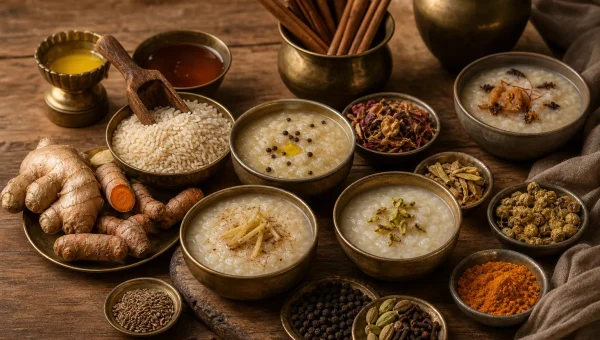
- Digestive spice support: Ginger, cumin, black pepper, asafoetida, fenugreek, and turmeric are used in small culinary quantities to support appetite, digestion, Vata movement, and Kapha-ama heaviness.
- Practicality: During painful phases, a single pot of khichdi or soup can provide two meals with less kitchen strain.
The Joint Support Tadka
This tempering is a practical kitchen base for the recipes below. Keep the quantities moderate, especially during burning acidity, active gastritis, pregnancy, bleeding disorders, or when using blood thinners or strong anti-inflammatory medicines. The aim is not to make food fiery; the aim is to make it warm, aromatic, and digestible.
| Ingredient | Amount for 2 Servings | Kitchen Role | Ayurvedic Note |
|---|---|---|---|
| Turmeric (Haridra) | 1/2 teaspoon | Adds warmth, color, and curcumin-containing turmeric to the dish. | Classically described as katu-tikta rasa, ruksha guna, ushna virya, and katu vipaka. |
| Fresh ginger (Ardraka) or dry ginger (Shunthi) | 1/2 to 1 inch fresh ginger, grated | Reduces heaviness in dal, vegetables, and soups. | Used as a digestive, warming kitchen herb; reduce if burning acidity is present. |
| Cumin (Jiraka) | 1 teaspoon | Balances the heaviness of pulses and improves aroma. | Described with deepana, pachana, rucya, and kaphavatahara actions. |
| Fenugreek seeds (Methi) | 1/4 teaspoon | Adds a bitter note; useful in small quantity for Kapha-ama heaviness. | Described as tikta rasa, snigdha guna, ushna virya, katu vipaka, deepana, kaphahara, and vatahara. |
| Black pepper (Maricha) | 1/8 to 1/4 teaspoon | Pairs well with turmeric and helps keep the meal light and warming. | Described with deepana, pachana, rucya, vatahara, and vatanulomana actions. |
| Asafoetida (Hingu) | A small pinch | Especially useful when cooking dals and beans that otherwise cause gas. | Described with anulomana, deepana, pachana, rucya, and vatakaphaprashamana actions. |
Recipe 1: Golden Moong Dal Khichdi
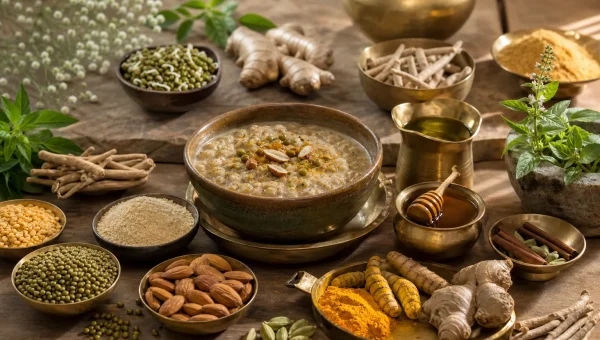
This is the foundational one-pot meal for stiff, dry, Vata-dominant joint discomfort. It is soft, warm, moist, and easy to adjust: make it thinner during low appetite and slightly thicker when strength and appetite are better.
Ingredients
This quantity serves two people and can be made thinner by adding more hot water near the end of cooking.
- 1/2 cup split yellow moong dal, washed
- 1/4 cup basmati rice, washed
- 4 to 5 cups water
- 1 to 2 tablespoons ghee
- Joint Support Tadka spices
- 1 cup chopped bottle gourd, pumpkin, ridge gourd, zucchini, or carrot
- Rock salt to taste
- Fresh coriander for garnish
Method
Cook the khichdi until the dal and rice lose their hard shape and become porridge-like; this texture is more suitable for weak digestion than a dry pulao-like preparation.
- Heat ghee in a heavy pot. Add cumin and fenugreek seeds; allow them to release aroma without burning.
- Add asafoetida and ginger. Stir briefly.
- Add turmeric and black pepper, then immediately add washed dal and rice.
- Stir for one minute so the grains are coated with ghee and spices.
- Add water, vegetables, and salt. Bring to a boil.
- Cover and simmer on low heat for 25 to 35 minutes, stirring occasionally.
- Serve warm with coriander and, for Sandhivata-type dryness, a small extra drizzle of ghee.
Recipe 2: Light Rasam for Ama-Heavy Stiffness
Rasam is a sour, peppery, spiced broth from South Indian cooking. In an Ayurvedic arthritis kitchen, it is most suitable when the person feels heavy, dull, coated on the tongue, low in appetite, or bloated. It is not ideal when there is burning acidity, mouth ulcers, strong heat, or intolerance to sour foods.
Ingredients
This version keeps the rasam light and drinkable, with spices used for warmth and digestion rather than extreme heat.
- 1 tablespoon tamarind paste dissolved in 3 cups warm water
- 1 small tomato, chopped
- 1 teaspoon cumin powder
- 1/2 teaspoon black pepper powder
- 1/4 teaspoon turmeric
- 1/4 teaspoon fenugreek seeds or a small pinch of fenugreek powder
- 1 tablespoon ghee
- 1/2 teaspoon mustard seeds
- 1 pinch asafoetida
- 6 to 10 curry leaves
- 1 small garlic clove, crushed, optional
- Rock salt to taste
- Fresh coriander
Method
Prepare rasam in one pot by tempering first and then simmering the broth in the same vessel.
- Heat ghee in a pot. Add mustard seeds and fenugreek seeds.
- Add curry leaves, asafoetida, and optional garlic. Stir until aromatic.
- Add tomato, turmeric, cumin powder, and black pepper. Stir for one minute.
- Add tamarind water and salt. Simmer for 10 to 12 minutes.
- Finish with fresh coriander and serve warm as a soup or over soft rice.
Therapeutic kitchen note: For Amavata-like heaviness, take a small cup before the main meal when appetite is dull. Do not use it as a harsh fasting substitute, and avoid making it excessively sour or spicy.
Recipe 3: One-Pot Methi-Palak Dal
This dal uses fenugreek, spinach, ginger, cumin, and turmeric in a warm, cooked form. It is better for people who tolerate legumes well; during severe bloating or acute ama-heavy phases, use moong dal instead of toor dal and make the dish thinner.
Ingredients
This recipe serves two to three people and can be made with toor dal for a fuller meal or moong dal for a lighter version.
- 1/2 cup toor dal or split moong dal, washed
- 2 cups chopped spinach
- 1 tablespoon dried fenugreek leaves, crushed
- 1/4 teaspoon fenugreek seeds
- 3 to 4 cups water
- 1 to 2 tablespoons ghee
- 1 teaspoon cumin seeds
- 1/2 teaspoon turmeric
- 1 inch ginger, grated
- 1 small garlic clove, minced, optional
- Rock salt to taste
- A few drops of lemon juice after cooking, optional
Method
Use one pot by tempering the spices first, then cooking the dal directly in the same pot.
- Heat ghee. Add cumin and fenugreek seeds.
- Add ginger and optional garlic. Stir briefly.
- Add turmeric, washed dal, water, and salt.
- Cover and simmer until the dal is very soft, about 25 to 35 minutes depending on the dal.
- Add chopped spinach and crushed dried fenugreek leaves. Simmer for 5 more minutes.
- Mash lightly, adjust water for a soup-like consistency, and finish with a few drops of lemon if suitable.
Recipe 4: Warm Shigru Leaf Soup
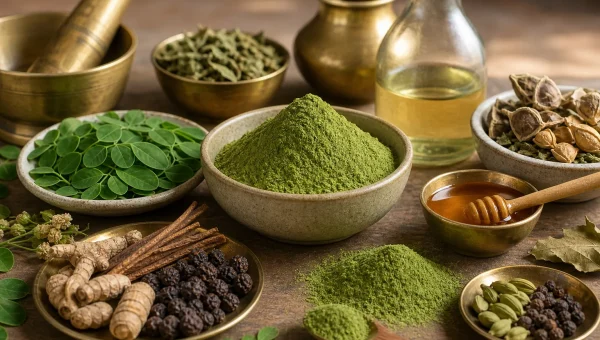
Shigru, commonly known as moringa or drumstick tree, is used in Ayurveda in different plant parts. For food, the leaves and pods are common kitchen ingredients. This soup uses moringa leaves in a mild way, supported by ginger, cumin, turmeric, and black pepper.
Ingredients
This recipe serves two and is best taken warm, not refrigerated and reheated repeatedly.
- 2 cups fresh moringa leaves, washed, or 1 to 2 tablespoons dried moringa leaf powder
- 1 small potato or 1/2 cup pumpkin, diced
- 1 small carrot, diced
- 3 cups water
- 1 tablespoon ghee
- 1 teaspoon cumin seeds
- 1/2 teaspoon turmeric
- 1/8 teaspoon black pepper
- 1 inch ginger, grated
- Rock salt to taste
Method
Add moringa leaves near the end so they stay green and pleasant rather than overcooked and bitter.
- Heat ghee in a pot. Add cumin seeds and ginger.
- Add turmeric, black pepper, potato or pumpkin, carrot, water, and salt.
- Simmer for 15 to 20 minutes until the vegetables are soft.
- Add moringa leaves and cook for 3 to 5 minutes. If using powder, stir it in during the last 2 minutes.
- Blend partially or fully, according to preference. Serve warm.
Recipe 5: Barley-Vegetable Stew for Kapha-Ama Heaviness
Yava, or barley, is described in Ayurveda with lekhana and medohara actions, making it more suitable for Kapha-heavy, sluggish, ama-prone patterns than for very dry, depleted Vata states. For a thin, dry, constipated person with Sandhivata-type dryness, use this stew occasionally and add enough ghee.
Ingredients
This recipe serves three to four people. Soaking barley improves cooking time and makes the stew softer.
- 1/2 cup pearl barley, soaked overnight
- 1 carrot, diced
- 1 cup pumpkin, diced
- 1/2 cup green beans, chopped
- 4 to 5 cups water
- 1 to 2 tablespoons ghee
- Joint Support Tadka spices
- Rock salt to taste
- Fresh coriander
Method
Cook the barley until fully tender; half-cooked barley can feel heavy and rough for weak digestion.
- Drain the soaked barley.
- Heat ghee in a pot and prepare the Joint Support Tadka.
- Add vegetables and barley. Stir for one minute.
- Add water and salt. Bring to a boil.
- Cover and simmer for 40 to 55 minutes, until the barley is soft and the stew is thick.
- Serve warm with coriander. Add extra hot water if a lighter soup consistency is needed.
Recipe 6: Practitioner-Guided Dashamoola Vegetable Broth
Dashamoola means a group of ten roots and is used in classical Ayurvedic formulations. Because it is a medicinal herb combination rather than an ordinary kitchen spice, this broth should be used only when it suits the person’s constitution, digestion, medicines, and diagnosis. It is best taken under guidance from a qualified Ayurvedic practitioner.
Ingredients
This is a light decoction-style vegetable broth, not a replacement for prescribed arthritis treatment.
- 1 tablespoon Dashamoola coarse powder from a reputable Ayurvedic pharmacy
- 5 cups water
- 1 inch ginger, sliced
- 1/2 teaspoon cumin seeds
- 1 small carrot or 1/2 cup pumpkin, chopped
- 1 teaspoon ghee
- Rock salt to taste
- Black pepper, a small pinch, optional
Method
Use a coarse decoction powder and strain well before drinking.
- Boil Dashamoola powder in water on low heat until the liquid reduces by about one-third.
- Add ginger, cumin, and vegetables. Simmer for another 15 to 20 minutes.
- Strain through a fine sieve.
- Stir in ghee and salt while warm.
- Take a small cup warm, preferably after individualized guidance.
Dietary Principles for Sandhivata and Amavata
The same recipe may be helpful for one person and unsuitable for another if the underlying pattern is different. Use the table below as a kitchen guide, not as a diagnosis.
| Principle | Sandhivata-Type Pattern | Amavata-Type Pattern |
|---|---|---|
| Main kitchen aim | Pacify Vata, reduce dryness, support lubrication and strength. | Support ama pachana, rekindle appetite, reduce heaviness, then nourish gradually. |
| Best texture | Soft, warm, moist, soupy, mildly oily. | Light, warm, thinner soups and dals; avoid very heavy or oily meals during flare-like heaviness. |
| Fats | Ghee or sesame oil in moderate individualized quantity. | Small amounts of ghee; avoid deep-fried foods and excessive oils when appetite is dull. |
| Helpful foods | Moong khichdi, vegetable soups, warm milk if tolerated, sesame preparations, soft cooked grains. | Thin moong soup, rasam, barley stew when suitable, ginger-cumin water, light vegetable soups. |
| Avoid or minimize | Cold drinks, raw salads at night, dry crackers, irregular meals, excessive fasting. | Cold foods, curd at night, heavy cheese, deep-fried foods, excessive sweets, very heavy dals, overeating. |
| When symptoms are hot or burning | Reduce black pepper, garlic, mustard, and excess sourness. | Do not force pungent rasam or strong ginger if burning, acidity, or heat signs dominate. |
How to Use These Meals Through the Week
A gentle weekly rhythm is often more useful than aggressive “detox” eating. During painful, heavy, low-appetite phases, choose thin moong khichdi, rasam, or light soup for one meal daily. During dry, degenerative stiffness, choose warm khichdi or dal with enough ghee and cooked vegetables. When appetite is strong and bowels are regular, add barley stew or moringa soup one to two times weekly according to tolerance.
Do not make every meal bitter, pungent, and restrictive. Ayurveda uses lightening when ama is present and nourishment when tissues need support. A person with long-term joint degeneration, weight loss, weakness, insomnia, dry skin, or constipation usually needs more Vata-pacifying nourishment than a person with heaviness, coating on the tongue, swelling, and dull appetite.
Safety and Medical Disclaimer
Medical Disclaimer: This article is for educational purposes only and does not constitute medical advice. Arthritis, rheumatoid arthritis, osteoarthritis, gout, autoimmune disease, and unexplained joint swelling require proper diagnosis and care. Food changes should complement, not replace, prescribed treatment. Consult a qualified Ayurvedic practitioner, rheumatologist, or healthcare provider before starting therapeutic herbs, Dashamoola, high-dose turmeric or curcumin, fasting, detox protocols, or major dietary changes, especially if pregnant, elderly, preparing for surgery, taking blood thinners, NSAIDs, steroids, methotrexate, biologics, diabetes medicines, or medicines for blood pressure, liver, kidney, or heart disease.
References
- Clinical study on Sandhigata Vata w.s.r. to Osteoarthritis and its management by Panchatikta Ghrita Guggulu (2010), PubMed Central
- Management of Amavata (rheumatoid arthritis) with diet and Virechanakarma (2015), PubMed Central
- Jaims (jaims.in)
- Physiological aspects of Agni (2010), PubMed Central
- Researchgate (researchgate.net)
- Easyayurveda (easyayurveda.com)
- Ayurvedic Pharmacopoeia of India
- Ayurvedic Pharmacopoeia of India
- Ayurvedic Pharmacopoeia of India
- Influence of piperine on the pharmacokinetics of curcumin in animals and human volunteers (1998), PubMed
- Efficacy and Safety of Curcumin and Curcuma longa Extract in the Treatment of Arthritis: A Systematic Review and Meta-Analysis of Randomized Controlled Trial (2022), PubMed Central
- Anti-Inflammatory Potential of Ethyl Acetate Fraction of Moringa oleifera in Downregulating the NF-κB Signaling Pathway in Lipopolysaccharide-Stimulated Macrophages (2016), PubMed
- Experimental evaluation of analgesic, anti-inflammatory and anti-platelet potential of Dashamoola (2015), PubMed Central
- Ayurvedic Pharmacopoeia of India
- NHS
- Mayoclinic (mayoclinic.org)
- NCCIH
The Cooking for Arthritis section feels grounded enough to try carefully. A few more examples would still help.
The extensive use of Hing in the cooking recommendations: would the sulfur compounds in hing interact with sulfur-containing medications like sulfasalazine that many arthritis patients take? I have not been able to find information on this specific interaction and would not want to add it without checking.
The nightshade restriction is the most controversial recommendation in this article. The research on nightshade alkaloids and joint inflammation is limited and contradictory. My rheumatologist says the evidence does not support eliminating tomatoes and peppers and notes that many of these vegetables have anti-inflammatory phytochemicals as well.
The spice quantities used in some of these recipes are large enough to cause gastric irritation in people whose arthritis medications, particularly NSAIDs, have already compromised the gastric mucosa. The article doesn’t address how to adapt the spice intensity for people with medication-sensitive stomachs.
I make the Haridra milk from this article every night. My bone scan last year was significantly better than my rheumatologist expected for my disease duration. I know this is anecdotal but I have been on this dietary pattern for 3 years and it is the primary consistent change I have made alongside my medication.
The plant-based protein emphasis for arthritis makes sense from both Ayurvedic and modern nutritional perspectives. Replacing red meat with legumes and seeds reduces arachidonic acid intake which is a precursor to inflammatory leukotrienes. The Ayurvedic recommendation reaches the right destination through a different explanatory path.
Reading about your father’s knees creaking like old door hinges really hit home for me.
I cannot follow the suggested meal plan strictly because of the daily cooking demands. I work full-time and have limited time. A 30-minute version of the anti-arthritis Ayurvedic kitchen with the most impactful 3-5 changes would help busy people benefit without overhauling everything simultaneously.
The Cooking for Arthritis section feels grounded enough to try carefully. I appreciate that it does not oversell the result.
I was diagnosed with juvenile arthritis at 16 and am now 34. The dietary approach from this article alongside a biological medication has been the most stable period of management I have had. The food is genuinely medicine for this condition and this article makes that case effectively.
It’s tough when daily ibuprofen starts upsetting the stomach and you have to look for another way.
the Dashamoola decoction recommendation in the article for inflammation: is it safe to take daily for months or should it be cycled? I have been taking it for 3 months and my practitioner has not specified a cycling protocol but I wonder about long-term daily use of this combination.
Three months of steady one pot meals cutting morning stiffness from 45 minutes to ten minutes sounds like a realistic goal.
The idea of drinking a warm rasam before meals to digests ama makes sense for inflammatory arthritis.
Seeing turmeric ginger cumin fenugreek black pepper and asafoetida together as a base makes me want to try the tadka in my own cooking.
Moringa leaves in a simple broth with potato and ginger seems like an easy way to get joint friendly nutrients.
Using soaked barley with carrots pumpkin and green beans in a stew feels hearty and appropriate for ama clearance.
A vegetarian dashamoola broth with ashwagandha and onion skin could be a nice substitute for bone broth.
One pot cooking reduces hand strain which is a real relief when arthritis makes gripping pots painful.
finally a halwa recipe without refined sugar. The jaggery version is so much better.
My doctor actively discouraged this after I mentioned it. Getting conflicting guidance is difficult to navigate.
How long does a typical protocol like this take to show results?
been following this blog for six months and the quality is consistently high.
just found this through Google. Is this still the current recommendation?
The classical text reference to Charaka Samhita gave this article more credibility in my eyes.
Useful post on Cooking for Arthritis. This feels more usable than a long list of herbs.
The integration of modern evidence with traditional practice is the right approach.
For Pitta-Kapha dual constitution which aspects of the protocol take priority?
the recipe says slow cook but doesnt specify temperature. Induction cooktop users need more detail.
i’m in the US and getting authentic herbs here is hard. Any trusted online sources?
Late to this discussion but the question in the first comment is still unanswered anyone have more info?
Tried the recipe but the proportions seemed off. The ginger overpowered everything else. 🙏 धन्यवाद
how does weather and season affect the protocol? Im in a hot humid climate.
i was prescribed this by a practitioner 2 years back but never understood why. now i do.
finally an article that doesnt treat Ayurveda as magic and also doesnt dismiss it entirely
the before-and-after in my experience matches what the article predicts. That’s meaningful.
The Cooking for Arthritis explanation is clearer than most short posts. This would be easier to follow with a one-week sample plan.
practical + scientific = rare combo in Ayurveda content. Good work.
Some of the preparation methods are too time-intensive for working adults. Needs a quick-version alternative.
Doing this
never thought I’d become an Ayurveda convert but here I am reading every article.
How does weather and season affect the protocol? I’m in a hot humid climate. 🙌
Which variety of rice works best for the congee version? Basmati, sona masoori, or short-grain?
Tried the recipe but the proportions seemed off. The ginger overpowered everything else.
This helped me understand Cooking for Arthritis without too much jargon. A few more examples would still help.
can leftover tadka be stored and reused the next day or does it lose potency?
i asked my dr about this. she said she doesnt have enough info on it but didnt say no
reading this in 2027 are the herb sourcing recommendations still valid? 🌿
the dosage for children per kg bodyweight would be useful to add.
tried. Liked. Continuing.
Tried this for 6 weeks without the results described. Maybe the protocol needs personalizing.
I appreciate the acknowledgment that this isn’t a substitute for professional consultation.
do the ratios change if you are doing this as preventive care versus active treatment?
I was looking for a plain explanation of Cooking for Arthritis. A few more examples would still help.
the prep time estimate is wildly optimistic. Took me nearly double what was listed.
I was looking for a plain explanation of Cooking for Arthritis. This feels more usable than a long list of herbs.
the seasonal protocol is smart. Most people try to use the same routine all year.
coming from a conventional medicine background this article impressed me with its rigor.
the IST timings in the practical section are a nice touch. Feels like its written for us.
the IST timings in the practical section are a nice touch. Feels like its written for us. 🙏
Three months later: the results held. Happy to report.
Some of these ingredients are hard to find outside major Indian grocery stores. A substitution guide would help.
is the guidance here applicable for elderly patients or is it designed for younger adults?
three herbs three outcomes surprisingly simple when laid out like this
The Cooking for Arthritis angle is useful here. This is the kind of detail readers can test slowly.
does anyone know a practitioner in Hyderabad who works with this kind of protocol?
have been searching for this explanation for years. Saved. Sharing.
nani used to say the same things in different words. There’s real wisdom here.
Can this be done alongside an allopathic treatment or should there be a gap?
can this be taken in summer or only winter months? 🙏
Reading this in 2027 are the herb sourcing recommendations still valid?
my Ayurvedic practitioner of 12 years said this is one of the better online resources she’s seen on the topic. 🌿
too theoretical without enough concrete steps. The ‘what’ is clear but the ‘how exactly’ is missing.
does this protocol need modification for someone who is fasting during Navratri?
the combination of theory and practical steps is what I appreciate most about this blog.
The recipe says slow cook but doesn’t specify temperature. Induction cooktop users need more detail. धन्यवाद
my doctor actively discouraged this after I mentioned it. Getting conflicting guidance is difficult to navigate. ✨ नमस्ते
The writing assumes India-based readers. Temperature/herb availability differs greatly outside India.
My yoga teacher recommended this site and now I see why.
Will come back to this when I hit the cooling phase very detailed.
late to this but starting today. Fingers crossed.
the Hindi terms alongside English make this usable in both languages.
i dont comment usually but this was actually helpful
The writing assumes India-based readers. Temperature/herb availability differs greatly outside India. धन्यवाद
This is now my reference article for explaining this topic to friends.
This makes sense for Cooking for Arthritis. Good starting point for a cautious reader.
going to share this at my wellness group meeting next week. Very useful.
Bookmarked
would love a video version of the preparation method
The recipe says slow cook but doesn’t specify temperature. Induction cooktop users need more detail.
Shared this with my 68-year-old father. He said it’s exactly what his vaidya prescribed 30 years ago.
the Q&A format at the end would make this even more useful. Would love a FAQ section.
my grandma was right about all of this. just didnt have the explanation.
first comment here. been lurking for months. this is the one that made me want to say thank u ठीक है
so much misinformation out there. Good to find something grounded.
Helpful
can someone here who has tried this protocol confirm the timeline? Two weeks vs six weeks?
i appreciate that the dosages are given in actual mg not just ‘a pinch’ or ‘as needed’. 💯
is this suitable for children under 5? Some of the spices seem quite warming.
The Cooking for Arthritis explanation is clearer than most short posts. The timing advice is the part I would start with.
i wish there were more clinical studies cited here. Traditional use is valuable but not sufficient evidence alone.
I liked the practical side of Cooking for Arthritis. Would be useful to see a short checklist next.
Could you address the quality certification issue in a future article? Third-party tested herbs are hard to find. नमस्ते
Tried the protocol. Week 2 no change yet but following through to the full period.
my experience perfectly matches what is described in the long-term use section.
late to this but been following this blog for six months and the quality is consistently high.
Pitta burning its way through this article and finding useful info 🔥 just kidding but yes helpful.
found this searching for answers, for Kapha-dominant types is the warm water recommendation essential or can it be room temp?
the classical text quotes are helpful context but I’d like to understand the modern interpretation better.
late to this but first comment here. been lurking for months. this is the one that made me want to say thank u
skeptical but curious. trying the minimal version first.
The Cooking for Arthritis section feels grounded enough to try carefully. The practical details matter more than people think.
The Cooking for Arthritis section feels grounded enough to try carefully. I would still ask a practitioner before changing medicines.
does ghee quality affect results significantly? I use store-bought A2 ghee.
Late to this but can leftover tadka be stored and reused the next day or does it lose potency?
does this work for people over 60? The age range in the examples skews younger.
the balance between Sanskrit terminology and plain English is really well done.
just found this via Google, how long does a typical protocol like this take to show results? ❤️
my constitution is Vata-Pitta so some of this applies and some doesn’t. A chart for dual types would help. 🙌
as someone who does both allopathy and Ayurveda I appreciate that this article doesnt demonize either.
is the guidance here applicable for elderly patients or is it designed for unger adults?
how does weather and season affect the protocol? Im in a hot humid climate. 🙏
The Cooking for Arthritis angle is useful here. The article avoids making it sound like a quick fix.
the classical text quotes r helpful context but I’d like to understand the modern interpretation better.
The reference to Ashtanga Hridayam which Sutrasthana chapter? Would like to read the original.
i appreciate the acknowledgment that this isnt a substitute for professional consultation.
Found this searching for answers, practical + scientific = rare combo in Ayurveda content. Good work.
the dose specificity here is what makes this actionable. Vague ‘take regularly’ instructions r useless.
for Kapha-dominant types is the warm water recommendation essential or can it be room temp?
real information. Not fluff. Rare.
this article connected the dots between things my vaidya told me over several years.
Late to this but my practitioner mentioned this approach last week. Nice to find a detailed written explanation.
Can leftover tadka be stored and reused the next day or does it lose potency? 🙏
The sourcing of quality herbs in my city is impossible. Makes these protocols academic for many readers.
people should know this. Sharing everywhere.
would like to see the contraindications section expanded. Too brief for something being suggested for health issues.
the reference to Ashtanga Hridayam which Sutrasthana chapter? Would like to read the original. ✨
Shared with my family group and three people are already trying it.
found this searching for answers, the reference to Ashtanga Hridayam which Sutrasthana chapter? Would like to read the original.
just found this via Google, skeptical but curious. trying the minimal version first.
found this article after searching for 3 days. Exactly what I needed.
the depth here is unusual for a blog. reads more like a textbook chapter. 💯
just found this via Google, how long does a typical protocol like this take to show results?
For Cooking for Arthritis, consistency seems like the hard part. This would be easier to follow with a one-week sample plan.
u said it better than my 45-min consult with the vaidya tbh ठीक है
found this searching for answers, just found this through Google. Is this still the current recommendation?
tried. Liked. Continuing. ✨
the comments section here is almost as useful as the article itself
just found this via Google, late to this discussion but the question in the first comment is still unanswered anyone have more info?
The Cooking for Arthritis explanation is clearer than most short posts. I would still ask a practitioner before changing medicines.
Found this searching for answers, skeptical about Ayurveda in general but this is presented honestly enough that I’ll try it.
I liked the practical side of Cooking for Arthritis. The practical details matter more than people think.
been meaning to try this for two years. This article finally pushed me to start.
the question about brand quality is important. not all suppliers are equal.
late to this but tried this for 6 weeks without the results described. Maybe the protocol needs personalizing.
Thanks for the clear writing. This isn’t easy material to explain simply.
brilliant breakdown. Forwarding this.
found this searching for answers, any reccomendation for online vaidya consultations for those of us not near an Ayurvedic clinic?
this site is different from other ayurveda blogs. feels researched not just copied.
Finally!
Is there a children’s version of this protocol? My daughter has a similar issue.
made the khichdi version with the tarka blend u described. Family loved it and my digestion felt lighter.
the balance between Sanskrit terminology and plain English is really well done. 💯
i took notes from this and created a personal protocol. Three weeks in, positive changes.
Forwarded to my whole family WhatsApp group. Three replies already asking for more details. ✨
Just found this via Google, does ghee quality affect results significantly? I use store-bought A2 ghee.
Old post but still helpful. what brand of triphala do you recommend? So many options and quality varies greatly.
Found this searching for answers, the writing assumes India-based readers. Temperature/herb availability differs greatly outside India.
Finally a halwa recipe without refined sugar. The jaggery version is so much better. नमस्ते
I appreciate that the dosages are given in actual mg not just ‘a pinch’ or ‘as needed’.
found this searching for answers, reading this in 2027 r the herb sourcing recommendations still valid?
the combination of theory and practical steps is what I appreciate most about this blog. ठीक है
can this be taken in summer or only winter months?
Will try for a month and report back here.
these spice combinations are exactly what I needed. making notes for my kitchen wall 🌿
is there a children’s version of this protocol? My daughter has a similar issue. 💯
my western trained MD friend looked at this and said the pharmacology section was reasonable.
too theoretical without enough concrete steps. The ‘what’ is clear but the ‘how exactly’ is missing. 💯
what brand of triphala do you recommend? So many options and quality varies greatly.
my Ayurvedic practitioner of 12 years said this is one of the better online resources she’s seen on the topic.