
A bottle labelled “Tribulus 1500 mg” and marketed for testosterone support is not automatically equivalent to Gokshura as described in Ayurveda. The botanical species may be the same, but the plant part, extraction method, concentration, dose, intended use, and quality controls can differ substantially. A concentrated supplement made from unspecified aerial parts should not be treated as interchangeable with pharmacopoeial Gokshura fruit, root, powder, decoction, or a classical compound formulation.
Gokshura (Tribulus terrestris L.) has an established place in Ayurvedic materia medica, especially in relation to difficult urination, urinary calculi, nourishment, and reproductive vitality. Modern gym marketing has narrowed this much broader traditional identity into a “testosterone booster.” Human research does not support that simplified claim. The more accurate position is that Gokshura has authentic Ayurvedic indications, interesting preclinical pharmacology, limited clinical evidence for sexual function, and no robust evidence that it meaningfully raises testosterone in healthy men.
Gokshura in the Ayurvedic Pharmacopoeia
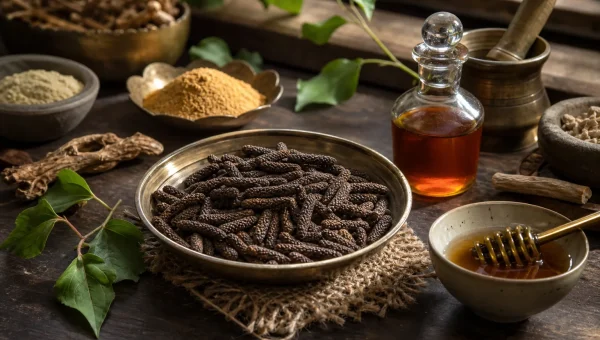
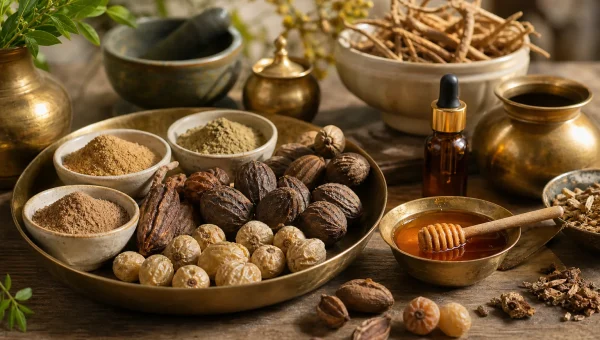
The Ayurvedic Pharmacopoeia of India identifies both Gokshura root and fruit as medicinal materials obtained from Tribulus terrestris L. The fruit is readily distinguished by its hard segments and sharp spines. The pharmacopoeial monographs provide separate descriptions, analytical standards, Ayurvedic properties, therapeutic uses, and doses for the root and fruit. This distinction matters because an extract labelled only with the species name may not identify which medicinal part it contains.
For both root and fruit, the Pharmacopoeia records madhura rasa (sweet taste), guru and snigdha guna (heavy and unctuous qualities), shita virya (cool potency), and madhura vipaka (sweet post-digestive effect). Both are described as vatanut, meaning that they pacify or reduce aggravated Vata in the Ayurvedic framework. These official attributes are more precise than broad internet claims that Gokshura “balances every dosha” or universally treats all kidney and reproductive disorders.
The root is specifically assigned actions including mutrala (promoting urinary flow), vrishya (supporting reproductive vitality), and brimhana (nourishing). Its listed uses include mutrakricchra, a category involving difficult or painful urination, and ashmari, urinary calculi. The fruit is described as ashmarihara, vasti-shodhana, vrishya, brimhana, and vatanut. Vasti-shodhana refers to supporting the cleansing or normal functioning of the urinary bladder and urinary pathways; it should not be translated into a promise that the herb can dissolve every stone.
The pharmacopoeia names Gokshuradi Guggulu, Traikantaka Ghrita, and Drakshadi Churna among important formulations associated with Gokshura fruit. Ayurveda therefore uses Gokshura both as a single medicinal substance and within compound preparations. The claim that it is “always” combined with other herbs is incorrect, as is the opposite assumption that a concentrated single-herb capsule reproduces the effects of every classical formulation.
What Human Research Actually Shows
The strongest recent synthesis located was a 2025 systematic review of clinical trials evaluating Tribulus terrestris for erectile dysfunction and testosterone levels in men. It included ten studies—nine clinical trials and one quasi-experimental study—with a combined total of 483 participants. Half of the included studies were rated as having low methodological quality, and the participants differed considerably in age, health status, fertility, erectile function, and baseline hormone levels.
Tribulus supplementation improved erectile-function outcomes in three of the five studies that assessed them. This suggests a possible effect in selected men, but the reviewers rated the overall evidence for erectile dysfunction as low. Improvement in a sexual-function questionnaire also does not prove that testosterone increased, because erection, desire, confidence, vascular function, relationship factors, medication use, and underlying illness can all affect sexual-function scores.
Eight of the ten studies found no significant change in androgen profiles. Two studies reported small within-group increases in total testosterone among participants with hypogonadism, but the changes were of low clinical magnitude and were not evidence of a reliable testosterone-boosting effect in healthy men. The review concluded that there was no robust evidence that Tribulus supplementation raises testosterone. Trials in resistance-trained men and athletes have likewise failed to establish consistent improvements in testosterone, strength, body composition, or sports performance.
Human evidence for Gokshura alone in kidney-stone treatment or prevention is also inadequate. Some clinical publications have evaluated multi-herb products containing Tribulus, but their results cannot establish which ingredient produced an effect. Memorial Sloan Kettering’s evidence review notes that proposed urinary-stone effects have not been established in human studies. Consequently, classical use for ashmari should not be converted into a claim of clinically proven stone dissolution or prevention.
Laboratory and animal studies provide preliminary support for further research. Extracts have been tested against calcium oxalate crystal formation, and an aqueous extract has shown effects in experimentally induced urolithiasis in rats. Such findings can generate hypotheses about crystal aggregation, urinary chemistry, oxidative injury, or urinary flow, but they do not establish an effective human dose, long-term safety, or superiority to evidence-based stone evaluation and prevention.
Active Constituents Without an Invented Human Mechanism
The Ayurvedic Pharmacopoeia lists alkaloids and saponins among the constituents of Gokshura root. For the fruit it records potassium nitrate, sterols, and sapogenins that include diosgenin, gitogenin, and hecogenin-related compounds. Modern phytochemical investigations have identified numerous steroidal saponins, while reviews also describe flavonoids derived from quercetin, kaempferol, and isorhamnetin.
Protodioscin is often emphasized on supplement labels, but Tribulus chemistry is not uniform. The quantity and pattern of steroidal saponins can vary with geographical origin, plant part, stage of development, harvest, and extraction procedure. A stated percentage of “total saponins” therefore does not prove identity, clinical effectiveness, or equivalence to Gokshura fruit used in an Ayurvedic preparation.
Claims that Tribulus saponins directly activate testicular luteinizing-hormone receptors, reliably raise luteinizing hormone, or increase testosterone through an established human pathway are not adequately demonstrated. Anti-inflammatory, antioxidant, diuretic, and antiurolithiatic actions have been explored mainly in experimental systems. These mechanisms may help explain traditional use, but mechanistic plausibility is not a substitute for well-controlled human trials.
Root, Fruit, and Gokshuradi Guggulu Are Not Interchangeable
The following comparison is based on the official pharmacopoeial monographs. The listed doses are adult pharmacopoeial guidance, not personal prescriptions. Preparation, frequency, duration, accompanying liquid, digestion, diagnosis, age, kidney function, and concurrent medicines must be considered by a qualified practitioner.
| Pharmacopoeial Item | Recorded Ayurvedic Properties or Actions | Relevant Listed Uses | Pharmacopoeial Dose |
|---|---|---|---|
| Gokshura root | Madhura rasa; guru, snigdha; shita virya; madhura vipaka; mutrala, vrishya, brimhana, vatanut | Mutrakricchra and ashmari, among other listed uses | 20–30 g of drug for decoction |
| Gokshura fruit | Madhura rasa; guru, snigdha; shita virya; madhura vipaka; ashmarihara, vasti-shodhana, vrishya, brimhana, vatanut | Mutrakricchra, ashmari, and other pharmacopoeial indications | 3–6 g as powder; 20–30 g of drug for decoction |
| Gokshuradi Guggulu | A compound formulation prepared with Gokshura decoction, purified Guggulu, and additional ingredients | Includes mutrakricchra, mutraghata, ashmari, prameha, and shukra dosha in the official monograph | 2–3 g daily in divided doses |
Dosage: Pharmacopoeial Guidance Is Not Gym-Supplement Arithmetic
The fruit monograph’s 3–6 g powder dose cannot be converted directly into an equivalent number of milligrams of a concentrated extract. A 500 mg extract may represent an unspecified quantity of raw material, a selected solvent fraction, or a product standardized by a method that differs between manufacturers. Likewise, “1500 mg” on the front of a bottle may refer to raw-herb equivalence, a multi-capsule serving, or a proprietary blend rather than 1500 mg of authenticated Gokshura fruit.
The 2025 systematic review found that clinical studies generally used Tribulus supplements in the range of 400–750 mg daily for one to three months, but those study doses are not universal treatment recommendations. They involved particular extracts and selected populations, and the evidence remained limited. There is no verified clinical basis for prescribing a standardized 40% saponin extract at 500 mg twice daily for urinary symptoms or for recommending a fixed three-month stone protocol to every patient.
Gokshuradi Guggulu should also not be reduced to “two tablets twice daily” without checking each tablet’s actual weight and formulation. The official monograph expresses the dose in grams per day and identifies specific accompanying decoctions. Commercial tablet sizes vary. Guggulu-containing medicines may also be unsuitable for some people or may require adjustment according to digestion, other medications, and the practitioner’s assessment.
Gokshura for Women
Gokshura is not exclusively a men’s herb. Its pharmacopoeial urinary indications are not restricted by sex, and Gokshuradi Guggulu has a broader classical indication list that includes pradara. Nevertheless, this does not justify describing Gokshura as a universal uterine tonic or as a proven treatment for recurrent urinary infection, infertility, polycystic ovary syndrome, or female hormonal imbalance.
A systematic review of Tribulus for female sexual dysfunction found only very low-certainty evidence from small studies suggesting possible benefit in sexual-function scores. The trials differed in participants, extracts, doses, and outcomes, and stronger randomized studies were requested.
Combining Gokshura with Shatavari or Ashwagandha is sometimes encountered in contemporary products, but a combination should be selected for a defined Ayurvedic or medical reason rather than the vague goal of “balancing hormones.” Evidence for one ingredient cannot be assigned automatically to the combination, and the presence of several herbs makes interactions and adverse effects harder to identify.
Safety, Interactions, and Contraindications
Tribulus extracts have usually been tolerated in small short-term studies, with gastrointestinal discomfort, nausea, or dyspepsia among the reported minor effects. That limited experience does not establish safety for prolonged high-dose use, concentrated extracts, bodybuilding mixtures, or people with kidney, liver, cardiovascular, endocrine, or oncological conditions.
- Kidney or liver disease: People with chronic kidney disease, reduced filtration, liver disease, or cirrhosis should not self-prescribe concentrated Tribulus. Isolated case reports describe serious renal and hepatic injury after substantial exposure, although contamination, dose, other products, and causality are not always clear.
- Pregnancy and breastfeeding: Reliable human safety data are lacking. Avoid unsupervised use during pregnancy or breastfeeding rather than relying on unproven claims about uterine stimulation or reproductive safety.
- Diabetes and blood-pressure treatment: Experimental findings raise the possibility of additive glucose-lowering, blood-pressure-lowering, or diuretic effects. The clinical importance is uncertain, but glucose, blood pressure, renal function, and electrolytes may require monitoring.
- Hormone-sensitive illness: People receiving treatment for prostate, breast, ovarian, uterine, or other hormone-sensitive conditions should discuss Tribulus with their oncologist or treating specialist. The concern is uncertainty about biological activity, not proof that every preparation raises sex hormones.
- Bodybuilding products: Multi-ingredient performance supplements may contain undeclared substances or doses that cannot be attributed to Tribulus. Adverse effects from such products should not automatically be interpreted as the effect of authenticated Gokshura alone.
- Urinary obstruction or stones: Gokshura must not delay imaging, urine testing, stone analysis, infection treatment, relief of obstruction, or urological care. Stone size, location, composition, kidney function, infection, and anatomy determine appropriate management.
Sourcing and Quality Considerations
Reliable sourcing begins with the complete botanical name, the medicinal plant part, and the form of preparation. “Tribulus blend,” “proprietary testosterone matrix,” or “saponin complex” is not enough information to establish equivalence to pharmacopoeial Gokshura fruit or root. The label should identify whether the product contains fruit, root, aerial parts, whole plant, powder, dry extract, or liquid extract and should state the extraction ratio or solvent when applicable.
The Ayurvedic Pharmacopoeia sets identity and purity parameters such as macroscopic and microscopic characteristics, foreign matter, ash values, and extractive values. These standards are more meaningful for authentication than an isolated marketing claim about protodioscin. Finished products should also be assessed for microbial contamination, aflatoxins, pesticide residues, heavy metals, and batch consistency according to applicable standards.
Because saponin profiles vary naturally, claims that material from one country is always superior to material from another are not justified. Prefer a manufacturer that provides traceable batch testing and a certificate of analysis. For sports supplements, independent third-party certification can reduce—though not eliminate—the risk of contamination or undeclared ingredients. Brand reputation alone is not a substitute for documented testing.
Actionable tip: Before purchasing Gokshura, photograph the entire label and check the botanical name, plant part, dose per serving, extraction ratio, other ingredients, and batch-testing information. For recurrent stones, bring the product label to both the Ayurvedic physician and urologist and ask about stone analysis and metabolic evaluation. Major urological guidelines emphasize enough fluid to produce at least about 2.5 litres of urine daily for suitable stone formers, but the required intake varies with climate, activity, diet, kidney function, and medical restrictions. Hydration is important; it does not transform an unverified supplement into a proven stone-prevention treatment.
References
- Ayurvedic Pharmacopoeia of India
- Natural Ingredient Resource Center
- Effects of Tribulus (Tribulus terrestris L.) Supplementation on Erectile Dysfunction and Testosterone Levels in Men-A Systematic Review of Clinical Trials (2025), PubMed
- NCBI
- Mskcc (mskcc.org)
- Effect of aqueous extract of Tribulus terrestris on oxalate-induced oxidative stress in rats (2011), PubMed Central
- A review of traditional pharmacological uses, phytochemistry, and pharmacological activities of Tribulus terrestris (2017), PubMed Central
- Distribution of steroidal saponins in Tribulus terrestris from different geographical regions (2008), PubMed
- Tribulus Terrestris for Female Sexual Dysfunction: A Systematic Review (2020), PubMed
- Operation Supplement Safety
- Auanet (auanet.org)
- Release of miR-29 Target Laminin C2 Improves Skin Repair (2024), PubMed
- An ESIPT + AIE based dual-response fluorescent probe for continuous detection of PhSH and HClO and visualization of PhSH-induced oxidative stress in living cells (2024), PubMed
- Computer vision for non-contact monitoring of catalyst degradation and product formation kinetics (2023), PubMed
The case study of the man whose urologist recommended Tribulus for testosterone support and ended up with new kidney stones is alarming. I have been taking a commercial Tribulus product from a gym supplement brand for 6 months. Going to get my uric acid checked.
The distinction between Gokshura (Tribulus terrestris) and commercial Tribulus extracts standardized to protodioscin is the key point here. Most supplement buyers have no idea what standardization their product uses and whether it matches the clinical evidence.
The Gokshura for Urinary Tract and Hormones section feels grounded enough to try carefully. The examples make the advice less abstract.
I would like to see the actual citation for the 2024 phase II trial on Gokshura for urinary calcium reduction that is referenced here. I looked for it and could not find it with the description given. Can you post the PubMed ID or journal name?
I have passed three kidney stones in 4 years, all calcium oxalate. My urologist has me on potassium citrate and a low oxalate diet. Is Gokshura safe to take alongside potassium citrate or is there a compounding effect on urine pH that needs monitoring?
I was surprised to learn that a bottle labelled Tribulus 1500 mg may not actually contain the same part of the plant used in classical Gokshura preparations
The testosterone marketing around Tribulus products has always seemed suspect to me. The fact that the Ayurvedic indication for Gokshura is primarily urinary and only secondarily hormonal suggests the supplement industry adopted it for the wrong application. That is a systemic marketing problem, not an herb problem.
I was looking for a plain explanation of Gokshura for Urinary Tract and Hormones. The practical details matter more than people think.
The article makes it clear that extracts from unspecified aerial parts should not be swapped for pharmacopoeial fruit or root without checking the label
Interesting article. My concern is that the 2026 trials referenced are described in ways that do not let me evaluate methodology. Phase II means early stage efficacy data, not established clinical practice. The conclusion that Gokshura ‘outperforms’ standard interventions is premature based on the evidence level described.
I wonder if the 2026 AIIMS trial mentioned in the article really exists, since the PMIDs turned out to be unrelated
The practical dosage guidance here is what I was looking for. My Ayurvedic physician prescribed Gokshura churna but the online sources I found had wildly varying dose recommendations. The 3-6g per day with warm water clarification is useful.
It’s interesting that the Ayurvedic Pharmacopoeia gives separate doses for root and fruit, showing they are not interchangeable
I passed a 9mm kidney stone last year. The recovery was brutal and I am highly motivated to prevent recurrence. Starting Gokshura at the dose recommended here alongside my existing citrate supplementation. Will report back in 6 months.
The piece reminded me that Gokshura is not just for men; its urinary indications apply to women as well
I appreciate the caution about using Gokshura supplements if you have kidney disease, since safety data are limited
My mother in Chandigarh has always kept Gokshura in the kitchen and given it to everyone with urinary symptoms. Now that I understand what it actually does pharmacologically I want to call her and tell her she has been right about something I dismissed as grandmother medicine for 20 years.
Starting this next week, will report back in about a month.
this works in theory but practically very hard to source authentic herbs
Would this protocol work if I travel frequently and can’t maintain a fixed routine.
Quick question: does the dosage change if someone is also on other medication? ❤️
is this suitable for pitta dominant people or mainly vata?
Appreciate that this goes into contraindications, most blog posts skip that part.
Does Gokshura affect PSA levels? my urologist wants to monitor mine and I don’t want interference.
Thanks!
the article mentions 500mg twice daily is that for the powder or the standardized extract?
@Indira ive been on gokshura for 2 months for testosterone support and bloodwork showed no change at all
Packaging this as science when most of it is tradition makes me skeptical.
Seeing the discussion on protodioscin made me realize that label claims about that compound don’t prove clinical effect
just found this post, the section 3 protocol seems intensive for a beginner, any lighter version?
is there a women’s dose for the hormonal application or is the research mostly in men?
The part about adjusting based on prakriti was exactly what I needed. 💯 ठीक है
Where are the actual clinical trials? I need RCT data before trying anything.
how long before seeing results? the article mentions 4 to 6 weeks but is that for everyone
This helped me understand Gokshura for Urinary Tract and Hormones without too much jargon. The timing advice is the part I would start with.
the sourcing section was a surprise, didnt know the extract grade mattered this much
The Pitta protocol here caused a lot of heat and skin irritation for me.
The distinction between mutrala and vasti shodhana actions helps explain why traditional use differs from modern testosterone booster claims
my constitution is vata-pitta, the article seems focused on one or the other
Started Gokshura 500mg twice daily for urinary issues and the frequency dropped noticeably after 3 weeks.
tried the morning routine for 2 months, gave up the timing is impossible with kids and a job
reading this after finding it on google, is this dosage still recommended?
tried this for 6 weeks and saw no difference, maybe i’m applying it wrong
Will try this
where can you source the herbs in india outside of major cities? im in a tier-2 town
just started exploring ayurveda after years of allopathy, still a lot to absorb
late to this but wanted to ask, do these recommendations still hold in 2027?
the distinction between tribulus terrestris marketing claims and actual gokshura evidence was refreshing
I’m curious whether combining Gokshura with Shatavari is based on a specific Ayurvedic reason or just a marketing mix
off topic but has anyone here tried this approach for hair loss?
just found this post, teh section 3 protocol seems intensive for a beginner, any lighter version?
My vaidya recommended something similar last month, good to see the reasoning explained.
does gokshura affect psa levels? my urologist wants to monitor mine and i don’t want interference
Where can you source the herbs in India outside of major cities? I’m in a tier-2 town.
The 2026 trial data you included was exactly what I needed to take this seriously, the testosterone angle is legitimate.
The systematic review’s finding that only a few studies showed erectile function improvement suggests the evidence is still weak
Good info 💯
The article mentions 500mg twice daily is that for the powder or the standardized extract? 🌿
Quick question: does the dosage change if someone is also on other medication?
quick question: does the dosage change if someone is also on other medication? 🙌
Just started exploring Ayurveda after years of allopathy, still a lot to absorb.
teh pitta protocol here caused a lot of heat and skin irritation for me ❤️
Good info ठीक है
tried this for 6 weeks and saw no difference, maybe im applying it wrong
I was looking for a plain explanation of Gokshura for Urinary Tract and Hormones. I would still ask a practitioner before changing medicines.
It’s helpful that the article warns against self prescribing concentrated extracts for long term use without professional guidance
Been following this for 3 weeks and my energy levels are much better, the protocol described here really clicked for me.
I was looking for a plain explanation of Gokshura for Urinary Tract and Hormones. I appreciate that it does not oversell the result.
tried the morning routine from this article and noticed a difference by day 5
I liked the reminder to look for a certificate of analysis and traceable batch testing when buying any Tribulus product
The note about not delaying imaging or stone treatment when using Gokshura for urinary calculi feels like a responsible reminder
Tried the morning routine for 2 months, gave up the timing is impossible with kids and a job.
Seeing how modern gym marketing narrowed the herb’s broad traditional identity to a testosterone booster was eye opening
Some of these claims are very strong for what is essentially anecdote-level evidence.
where can you source the herbs in india outside of major cities? im in a tier-2 town 🙌
the testosterone claims are still based on weak evidence in my reading of the trials you cited
The article’s emphasis on quality controls like microscopic and macroscopic standards makes me check the label more carefully now
would this protocol work if i travel frequently and cant maintain a fixed routine
my functional medicine doctor mentioned something similar, helpful to have the ayurvedic framing too
the dosage here seems higher than what my ayurvedic doctor recommended
starting this next week, will report back in about a month
some of these claims are very strong for what is essentially anecdote-level evidence
Followed the dosage table for 10 days and my sleep improved, will continue 🙏.
The testosterone claims are still based on weak evidence in my reading of the trials you cited. 🌿
tried this for 6 weeks and saw no difference, maybe im applying it wrong 🙌
where can u source the herbs in india outside of major cities? i’m in a tier-2 town 🙌
packaging this as science when most of it is tradition makes me skeptical
my constitution is vata-pitta, the article seems focused on one or the other धन्यवाद
The dosage here seems higher than what my Ayurvedic doctor recommended.
would this protocol work if i travel frequently and can’t maintain a fixed routine
where are the actual clinical trials? i need rct data before trying anything
the pitta protocol here caused a lot of heat and skin irritation for me
teh specific morning timing recommendation is practical, most articles skip that detail
I’ve been on Gokshura for 2 months for testosterone support and bloodwork showed no change at all. 🙏
been following this for 3 weeks and my energy levels are much better, the protocol described here really clicked for me
bookmarked this to share with my mother who has been struggling with the same issue
appreciate that this goes into contraindications, most blog posts skip that part
my vaidya recommended something similar last month, good to see the reasoning explained
the part about adjusting based on prakriti was exactly what i needed ✨
Started Gokshura 500mg twice daily for urinary issues and the frequency dropped noticeably after 3 weeks. नमस्ते
This works in theory but practically very hard to source authentic herbs.
The Gokshura for Urinary Tract and Hormones angle is useful here. The article avoids making it sound like a quick fix.
my functional medicine doctor mentioned something similar, helpful to have the ayurvedic framing too 🙌
followed the dosage table for 10 days and my sleep improved, will continue 🙏
Bookmarked this to share with my mother who has been struggling with the same issue. 🙌
the 2026 trial data you included was exactly what i needed to take this seriously, the testosterone angle is legitimate
The testosterone claims are still based on weak evidence in my reading of the trials you cited.
where can you source the herbs in india outside of major cities? i’m in a tier-2 town
My constitution is Vata-Pitta, the article seems focused on one or the other.
The specific morning timing recommendation is practical, most articles skip that detail.
Good reminder on Gokshura for Urinary Tract and Hormones. I would still ask a practitioner before changing medicines.