
Every October, I call my grandmother in Kerala. Without fail, she asks the same thing before hello: “Are you eating warm food?” She has never formally studied Vata, but she understands what cold, dry, irregular eating can do to a person when the weather turns windy, the days shorten, and routine begins to slip. In Ayurvedic language, those dry, light, cold, rough, and mobile qualities resemble Vata. When meals become cold, raw, rushed, or skipped, the same qualities can show up in the body as dryness, restlessness, irregular bowels, disturbed sleep, or a feeling of being scattered.
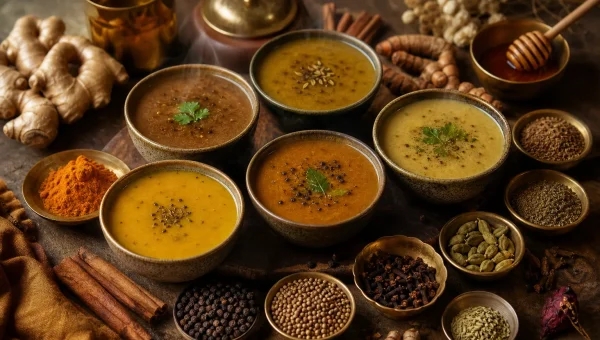
The solution my grandmother offered was not a supplement or a complicated protocol. It was a pot on the stove: warm food, cooked with enough oil or ghee, eaten at steady times. This is the practical batch-cook version of that wisdom: eight dishes you can make on Sunday afternoon to carry Vata-pacifying qualities through the working week. The emphasis is on warm, soft, moist, unctuous, gently spiced food with sweet, sour, and salty tastes kept in the foreground.
If you are new to cooking with seasonal Ayurvedic logic, our guide to Ritucharya: The Ayurvedic Seasonal Routine gives a broader framework for changing diet and daily habits with climate, appetite, and digestive strength. This article keeps the focus simple: real food, cooked in advance, refreshed properly, and eaten warm.
The Sunday Batch Cook Setup
The goal is to cook the main dishes in one Sunday session, then use the refrigerator for the first half of the week and the freezer for later portions. Start with the longest-cooking dishes, such as soup, dal, and khichdi. While those simmer, cook the rice, roast the vegetables, prepare the apple compote, roll the date balls, and blend the almond drink. Store cooked foods in small, shallow, airtight containers so they cool quickly and reheat evenly.
For food safety, keep refrigerated cooked leftovers for up to four days. Freeze the portions you plan to eat later in the week, especially Thursday and Friday meals. Reheat leftovers until thoroughly hot; soups, dals, and khichdi should be brought back to a steaming, flowing consistency with added water. A stovetop is best for restoring moisture and texture. If you use a microwave, cover the food, add a splash of water, stir or rotate it, and heat evenly.
General Vata-pacifying principles used throughout these recipes:
- Warmth: Eat the food warm rather than cold from the refrigerator.
- Unctuousness: Use ghee, sesame oil, coconut milk, tahini, or other suitable fats so the meal is not dry.
- Softness: Cook grains, legumes, and vegetables until tender and moist.
- Sweet, sour, and salty tastes: Let these tastes predominate, while using pungent spices moderately.
- Regular timing: Eat when the previous meal has digested and avoid grazing constantly on dry snacks.
Recipe 1: Sweet Potato Ginger Soup
This soup is the anchor recipe for the week. Sweet potato gives a naturally sweet taste and soft, substantial texture, while ghee and coconut milk make the soup smooth and satisfying. Fresh ginger is used in a moderate amount to support warmth without turning the soup aggressively spicy.
Prep: 10 min | Cook: 35 min | Makes: 6 servings | Stores: 3-4 days refrigerated; freeze extra portions
Ingredients
Use orange sweet potatoes if available, and keep the broth warm before adding it to the pot so the cooking stays steady.
- 1 kg sweet potatoes, peeled and cubed
- 2 tablespoons ghee
- 1 large yellow onion, roughly chopped
- 3-4 cm piece fresh ginger, grated
- 1 teaspoon cumin seeds
- 1/2 teaspoon ground coriander
- 1/4 teaspoon ground cinnamon
- 1 litre warm vegetable broth or water
- 200 ml full-fat coconut milk
- Salt to taste
- Freshly ground black pepper, optional and minimal
- Juice of half a lemon, added just before serving
Method
Cook this soup until the sweet potatoes are completely soft; the smoother the final texture, the more comforting it becomes for a Vata-style meal.
- Heat ghee in a large pot over medium heat. Add cumin seeds and let them sizzle briefly until fragrant.
- Add onion and ginger. Cook for about 8 minutes, stirring often, until softened.
- Add ground coriander and cinnamon. Stir for 1 minute.
- Add sweet potatoes and warm broth or water. Bring to a boil, reduce heat, and simmer for about 25 minutes, until the sweet potatoes are very soft.
- Blend until completely smooth with an immersion blender.
- Stir in coconut milk. Season with salt and a little black pepper if using.
- Cool quickly in shallow containers. Add lemon juice only when reheating individual servings.
Reheating tip: Reheat in a saucepan over low-medium heat with 2-3 tablespoons of water if the soup has thickened. Add a small spoon of ghee at serving time for extra smoothness.
Recipe 2: Sesame Mung Dal
Mung dal, called mudga in Sanskrit, is praised in classical Ayurvedic food chapters as one of the best pulses. It is naturally light and somewhat drying, so the Vata-friendly method is important: soak it, cook it until very soft, and enrich it with oil, warming spices, and enough liquid.
Prep: 5 min + 2 hr soaking | Cook: 40 min | Makes: 6 servings | Stores: 3-4 days refrigerated; freeze extra portions
Ingredients
This dal should finish soft and spoonable, closer to a thick soup than a dry lentil dish.
- 300 g yellow split mung dal, soaked 2 hours and drained
- 2 tablespoons cold-pressed sesame oil or ghee
- 1 teaspoon black mustard seeds
- 1 teaspoon cumin seeds
- 8 fresh curry leaves, optional
- 1/2 teaspoon turmeric
- 1 teaspoon grated fresh ginger
- 1/8-1/4 teaspoon asafoetida (hing)
- 1 litre water, plus more as needed
- 1 tablespoon tahini, stirred in at the end
- Salt to taste
- Fresh lime juice to finish
Method
Take the dal past al dente; for this preparation, complete softness is the point.
- Heat sesame oil or ghee in a heavy pot. Add mustard seeds and let them pop. Add cumin seeds and curry leaves, if using.
- Add hing, ginger, and turmeric. Stir for 30 seconds.
- Add drained dal and water. Bring to a boil, skimming any foam.
- Reduce heat, cover partially, and simmer for 35-40 minutes, until the dal is completely soft.
- Stir in tahini and salt. Add more hot water if needed until the dal is thick but flowing.
- Finish each serving with a squeeze of lime after reheating.
Storage note: Mung dal thickens considerably when cold. When reheating, add warm water generously and stir until the texture becomes soft and soupy again.
Recipe 3: Ghee Rice with Cumin
Simple rice cooked with ghee and cumin is one of the easiest supports for a Vata-pacifying meal. The key is not only the ingredient list but the texture: the rice should be warm, well-cooked, lightly oiled, and served moist rather than cold or dry.
Prep: 5 min | Cook: 25 min | Makes: 6 servings | Stores: 3-4 days refrigerated; freeze extra portions
Ingredients
Use aged white basmati rice if you have it, and rinse it well so the grains cook cleanly.
- 400 g white basmati rice, rinsed until the water runs mostly clear
- 3 tablespoons ghee
- 1 1/2 teaspoons cumin seeds
- 2 bay leaves
- 4 green cardamom pods, lightly crushed
- 800 ml water
- 1 teaspoon salt
Method
Coating the rice in ghee before adding water gives the finished dish a softer, richer quality.
- Heat ghee in a heavy pot with a tight-fitting lid. Add cumin seeds, bay leaves, and cardamom. Sizzle for about 1 minute.
- Add rinsed rice and stir for 2 minutes, coating the grains with ghee.
- Add water and salt. Bring to a boil, stir once, reduce heat to the lowest setting, and cover tightly.
- Cook for 18 minutes undisturbed. Turn off the heat and rest covered for 10 minutes before fluffing.
Reheating tip: Add 1-2 tablespoons of water per serving, cover, and heat gently in a pan. Add a small spoon of ghee when serving.
Recipe 4: Roasted Root Vegetable Bowl with Tahini-Lemon Dressing
Root vegetables make a hearty autumn bowl because they become sweet, soft, and substantial when roasted. The tahini dressing adds oiliness and a pleasant sour-salty finish. Serve the vegetables warm, and add the dressing after reheating rather than baking the dressing into the tray.
Prep: 15 min | Cook: 40 min | Makes: 6 servings | Stores: 3-4 days refrigerated; freeze roasted vegetables if needed
Ingredients
Cut the vegetables into similar-sized pieces so they soften evenly.
- 2 medium beets, peeled and cubed
- 3 large carrots, cut into thick coins
- 2 parsnips, cubed
- 1 turnip or small rutabaga, cubed
- 3 tablespoons sesame oil or ghee
- 1 teaspoon ground cumin
- 1 teaspoon ground coriander
- 1/2 teaspoon cinnamon
- Salt to taste
- Freshly ground black pepper, optional and minimal
Dressing: 3 tablespoons tahini, 1 tablespoon lemon juice, 1 teaspoon maple syrup or raw sugar, 1 small grated garlic clove, salt to taste, and 2-4 tablespoons warm water to thin.
Method
Roast until tender rather than crisp; for Vata-style cooking, softness matters more than crunch.
- Preheat oven to 200°C (400°F). Toss vegetables with sesame oil or melted ghee, spices, and salt.
- Spread on two baking trays so the pieces are not crowded.
- Roast for 35-40 minutes, tossing once halfway through, until tender and lightly caramelized.
- Whisk the dressing ingredients until smooth, adding warm water gradually.
- Store vegetables and dressing separately. Reheat the vegetables first, then add dressing just before eating.
Serving tip: Pair with ghee rice or spoon the vegetables over mung dal for a fuller lunch.
Recipe 5: Warm Spiced Apple Compote
This compote works as breakfast, dessert, or a gentle snack. Cooking the apples changes the experience completely: instead of a cold, crisp, raw fruit, you get a soft, warm, sweet preparation with ghee and aromatic spices.
Prep: 10 min | Cook: 20 min | Makes: 8 servings | Stores: 3-4 days refrigerated; freeze extra portions
Ingredients
Choose sweet apples and keep the spice level gentle so the compote remains soothing.
- 1.2 kg apples, peeled, cored, and roughly chopped
- 2 tablespoons ghee
- 2 teaspoons ground cinnamon
- 1/2 teaspoon ground cardamom
- 1 small pinch ground clove
- 1/4 teaspoon ground ginger or 1 teaspoon fresh grated ginger
- 2 tablespoons raw sugar, jaggery powder, or maple syrup
- Pinch of salt
- Juice of half a lemon
Method
Cook the apples until they collapse easily under a spoon; the finished texture should be tender and moist.
- Melt ghee in a wide heavy pan over medium heat. Add spices and stir briefly.
- Add apples, sweetener, and salt. Stir to coat.
- Cover and cook on medium-low for about 15 minutes, stirring occasionally, until the apples are soft.
- Remove the lid and cook 5 more minutes to reduce excess liquid.
- Add lemon juice. Mash roughly with a fork for a chunky texture, or blend partially for a smoother compote.
Serving tip: Reheat gently and serve with warm oatmeal, ghee rice pudding, or cinnamon almond milk.
Recipe 6: Pumpkin Khichdi
Khichdi brings rice and mung dal together into a soft, unified, easy-to-serve meal. This autumn version adds pumpkin for sweetness and body. The preparation follows a classical Ayurvedic preference for warm, cooked, moist foods when digestion needs steadiness and Vata needs grounding.
Prep: 10 min | Cook: 35 min | Makes: 6 servings | Stores: 3-4 days refrigerated; freeze extra portions
Ingredients
Use enough water to make the khichdi loose; it should thicken after cooling, not start out dry.
- 200 g white basmati rice
- 150 g yellow split mung dal
- 400 g pumpkin or butternut squash, peeled and cubed
- 3 tablespoons ghee
- 1 teaspoon cumin seeds
- 1/2 teaspoon turmeric
- 1/2 teaspoon ground coriander
- 1/8-1/4 teaspoon hing
- 1.2 litres water, plus more as needed
- Salt to taste
- Fresh coriander to garnish when serving
Method
Let the grains and dal break down into a porridge-like consistency; this is not meant to be a fluffy pilaf.
- Rinse rice and dal together until the water runs mostly clear.
- Heat ghee in a large pot. Add cumin seeds and let them sizzle.
- Add hing, turmeric, and ground coriander. Stir briefly.
- Add the rice-dal mixture and stir for 2 minutes to coat with spiced ghee.
- Add pumpkin, water, and salt. Bring to a boil, then reduce heat to low.
- Cover and cook for 30-35 minutes, stirring every 10 minutes, until everything is very soft. Add more water if it sticks.
- Keep the texture wetter than you think you need; it will thicken in the refrigerator.
Reheating tip: Add water generously when reheating, usually 3-4 tablespoons per serving. Finish with a small spoon of ghee for each bowl.
Recipe 7: Tahini Date Balls
These date balls replace dry desk snacks such as crackers, popcorn, and chips. They are dense, sweet, and oily from dates and tahini, but they are still best treated as a small snack rather than a meal. For Vata, pair them with a warm drink and avoid eating them straight from the refrigerator.
Prep: 15 min | No cook | Makes: 16-18 balls | Stores: 4 days refrigerated; freeze extra portions up to 1 month for best quality
Ingredients
The mixture should be soft enough to roll without becoming crumbly.
- 200 g Medjool dates, pitted
- 100 g tahini, well stirred
- 50 g rolled oats, blended into coarse flour
- 2 tablespoons desiccated coconut
- 1 teaspoon ground cinnamon
- 1/2 teaspoon ground cardamom
- Pinch of sea salt
- 2 tablespoons sesame seeds for rolling
Method
Let the food processor do most of the work; the dates need to become a sticky paste before the dry ingredients go in.
- Process dates in a food processor until they form a sticky paste.
- Add tahini, oat flour, coconut, cinnamon, cardamom, and salt. Process until the mixture comes together into a thick dough.
- If too sticky, add 1-2 tablespoons more oat flour. If too dry, add 1 teaspoon warm water.
- Roll into walnut-sized balls, about 25 g each.
- Roll each ball in sesame seeds.
- Refrigerate on a tray for 30 minutes to firm, then store in a container.
Serving tip: Let the balls sit at room temperature for a few minutes before eating, or pair them with warm almond milk in the afternoon.
Recipe 8: Cinnamon Almond Milk
This is a warm, spiced almond drink made from soaked almonds, dates, and gentle aromatics. It is not a substitute for medical treatment or a therapeutic milk preparation; it is simply a nourishing kitchen drink that fits the warm, soft, sweet, and gently spiced pattern of this meal plan.
Prep: 5 min + overnight soaking | Cook: 10 min | Makes: 1 litre | Stores: 3-4 days refrigerated
Ingredients
Peeling the soaked almonds gives the drink a smoother texture.
- 150 g raw almonds, soaked overnight and peeled
- 1 litre warm water
- 2 Medjool dates, pitted
- 1 1/2 teaspoons ground cinnamon
- 1/2 teaspoon ground cardamom
- 1/4 teaspoon ground ginger
- Pinch of saffron, optional
- Pinch of sea salt
Method
Heat this drink gently after blending; do not boil it hard, and do not add honey to hot preparations.
- Blend peeled almonds with 500 ml warm water until very smooth, about 2 minutes in a high-speed blender.
- Add remaining water, dates, spices, saffron if using, and salt. Blend another minute.
- For a smooth drink, strain through a nut milk bag or fine cheesecloth, squeezing to extract the liquid.
- Store in a glass bottle in the refrigerator.
- Heat individual servings gently in a small pan over low heat, stirring often. Drink warm.
Serving tip: Shake well before heating. If you want extra sweetness, use dates or a small amount of raw sugar rather than heating honey.
Weekly Meal Pairing Guide
This guide assumes you cook on Sunday, refrigerate Monday-Wednesday portions, and freeze the portions intended for later in the week. Thaw frozen portions in the refrigerator when possible, then reheat thoroughly with added water and ghee as needed.
| Day | Breakfast | Lunch | Dinner | Snack |
|---|---|---|---|---|
| Monday | Warm Apple Compote + Cinnamon Almond Milk | Pumpkin Khichdi | Sweet Potato Soup + Ghee Rice | 2 Tahini Date Balls + warm Almond Milk |
| Tuesday | Warm Apple Compote + Cinnamon Almond Milk | Sesame Mung Dal + Ghee Rice | Root Vegetable Bowl + Ghee Rice | 2 Tahini Date Balls |
| Wednesday | Warm Almond Milk + Apple Compote | Sweet Potato Soup + Ghee Rice | Sesame Mung Dal + Ghee Rice | Apple Compote, warmed |
| Thursday | Warm Apple Compote + Cinnamon Almond Milk | Thawed Pumpkin Khichdi, reheated well | Root Vegetable Bowl + Ghee Rice | 2 Tahini Date Balls + warm Almond Milk |
| Friday | Cinnamon Almond Milk + Date Ball | Thawed Sesame Mung Dal + Ghee Rice | Sweet Potato Soup + Pumpkin Khichdi | Apple Compote, warmed |
Spices to Keep Within Arm’s Reach All Autumn
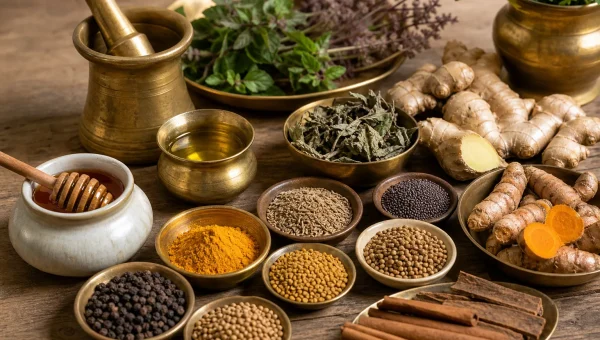
All eight recipes use a small spice set. Keep the spices fresh, use them moderately, and let them support the food rather than overpower it.
- Cumin seeds and ground cumin: Useful in dals, rice, soups, and roasted vegetables.
- Fresh ginger and ground ginger: A classic warming digestive spice; use less if you are prone to burning sensations or acidity.
- Cinnamon: Sweet, aromatic, and warming in small culinary amounts.
- Cardamom: Aromatic and pleasant in sweet dishes and warm drinks.
- Turmeric: A standard dal and khichdi spice that gives color and a mildly bitter-pungent note.
- Hing: Especially useful in legume dishes, where only a tiny pinch is needed.
- Mustard seeds: Warming and sharp; use sparingly when the rest of the meal is already spicy.
For more on Ayurvedic meal prep for different doshas and seasons, our guide to Ayurvedic Meal Prep: Dosha-Balanced Lunches covers the broader framework. For the colder months, when warm, moist, cooked foods become even more valuable, Ayurvedic Winter Nutrition: Warming Foods for Hemanta and Shishira Seasons is the natural next step.
My grandmother does not need the language of dosha to know the value of a warm pot on the stove. These recipes are not trendy or complicated. They are warm, soft, well-cooked foods prepared with enough fat, enough spice, and enough rhythm to make the week feel steadier. Autumn asks for that kind of attention.
Nothing in this article diagnoses or treats a medical condition. Use it as educational information and consult a qualified Ayurvedic practitioner or healthcare provider before starting herbs, supplements, detoxes, or therapeutic protocols, especially if pregnant, managing a medical condition, or taking medication.
The grandmother in Kerala asking ‘are you eating warm food’ before hello is my exact phone call experience with my own grandmother in Palakkad. She calls every October with the same question. She doesn’t use the word Vata but she understands the season exactly.
Batch cooking on Sunday is something I already do. Adding the Vata-pacifying principles to my existing meal prep habit took about 15 minutes extra planning and resulted in noticeably better weekday energy. The warm ghee and spices are the key variables.
The advice around Autumn Meal Prep is specific enough to be useful. Would be useful to see a short checklist next.
Can these dishes be frozen and then reheated without losing the Ayurvedic properties? I’d like to do larger batches but I’m concerned about whether ghee and certain spices change character when frozen.
My London story is identical to yours. Two years of desk sandwiches in an air-conditioned office and the same cluster of symptoms. Coming back to India and eating properly for a month resolved everything. That kind of before-and-after is hard to dismiss even without a clinical trial.
The moong dal soup recipe is the one I come back to every October. It takes 20 minutes and covers the warm, grounding, easy-to-digest requirements for Vata season in a single bowl. Adding a teaspoon of ghee at the end makes it genuinely satisfying.
Which of the eight dishes is most important if you can only add one to an existing meal prep routine? I don’t have time for all eight but I’m willing to add two or three.
The sweet potato with ghee and cumin recipe is something my daughter now makes herself. Getting a teenager to cook Vata-balancing food is an achievement that felt impossible a year ago. The taste is the winning factor.
The sweet potato ginger soup sounds perfect for chilly mornings and stores well for a few days.
The retirement health decline pattern for your grandfather is one I’ve seen repeatedly in clinical practice. Losing daily structure is genuinely destabilizing to the nervous system and digestion. The food interventions described here are palliative but the structural solution, replacing routine, is the root treatment.
I wonder if the tahini date balls stay soft after a week in the fridge.
Do these recipes translate well for Pitta or Kapha types in autumn? The article is quite Vata-focused and I have family members with different constitutions who also need seasonal meal prep guidance.
Just tried the ghee rice with cumin and it kept me full through Tuesday.
Anyone else find the pumpkin khichdi needs extra water when reheating?
Looks like the roasted root veg bowl would pair nicely with a spoon of ghee.
Maybe the cinnamon almond milk could replace my usual oat latte.
I’m curious about the asafoetida amount and whether it really reduces gas.
The advice to avoid microwaving makes sense for preserving texture.
Sweet spices like cardamom and clove in the apple compote feel very autumnal.
Do the tahini date balls work well as a pre workout snack?
I appreciate the tip to add lemon juice only when reheating the soup.
That opening about the grandmother asking if you are eating warm food before saying hello — my mother does this every single phone call and I used to brush it off. Trying the sesame and root vegetable khichdi from the batch list this weekend. Do the dishes hold well if you freeze individual portions, or does the texture change too much?
how does the 3am cortisol spike theory align with modern HPA axis research, any citations asked this earlier
for those of us with Pitta-Vata combined type is the protocol different from pure Vata
Seems like a solid plan to batch cook everything in a Sunday afternoon.
Made the spiced sweet potato mash from the batch list on Sunday and it held up in the fridge for four days, which I did not expect. Ate it with dal on Wednesday night and my stomach was noticeably calmer than it usually is mid-week when I get lazy with food. What ghee quantity do you suggest for reheating without it going heavy?
@Rekha the article is very confident about Vata being the cause of 3am waking. but many people wake then due to glucose crashes too
for those of us with Pitta-Vata combined type is the protocol different from pure Vata asked this last week
tried the entire protocol for a month. my sleep if anything got worse. I think there’s huge individual variation asked this just now
the article mentions Abhyanga before bed but doesnt specify oil. sesame or coconut for Vata type
after reading the sleep architecture section I changed my dinner to 7pm instead of 9pm. my deep sleep percentage on my tracker went up
how does the 3am cortisol spike theory align with modern HPA axis research, any citations
the article is very confident about Vata being the cause of 3am waking. but many people wake then due to glucose crashes too asked this recently
warm spiced milk with nutmeg at bedtime sounds basic but it genuinely works for early morning waking
tried the entire protocol for a month. my sleep if anything got worse. I think there’s huge individual variation
which specific ashwagandha preparation works better for sleep quality, the root powder or the extract asked this just now
for those of us with Pitta-Vata combined type is the protocol different from pure Vata asked this just now
the article mentions Abhyanga before bed but doesnt specify oil. sesame or coconut for Vata type asked this just now
the article mentions Abhyanga before bed but doesn’t specify oil. sesame or coconut for Vata type
brahmi oil on the head before bed leaves a mess on the pillow. not practical for most people, should mention that
which specific ashwagandha preparation works better for sleep quality, the root powder or the extract asked this earlier
the article mentions Abhyanga before bed but doesn’t specify oil. sesame or coconut for Vata type asked this earlier
💯 the article mentions Abhyanga before bed but doesn’t specify oil. sesame or coconut for Vata type
tried the entire protocal for a month. my sleep if anything got worse. I think there’s huge individual variation
the 3am Vata waking thing described my life exactly. brahmi oil head massage before bed has helped more than melatonin ✨
Any side effects?
the article mentions Abhyanga before bed but doesnt specify oil. sesame or coconut for Vata type asked this last week
after reading the sleep architecture section I changed my dinner to 7pm instead of 9pm. my deep sleep percentage on my tracker went up asked this last week
the lifestyle changes in section 3 about screen time and Vata aggravation saved my sleep. medication-free now
for those of us with Pitta-Vata combined type is the protocol different from pure Vata asked this recently
brahmi oil on the head before bed leaves a mess on the pillow. not practical for most people, should mention that asked this recently
after reading the sleep architecture section I changed my dinner to 7pm instead of 9pm. my deep sleep percentage on my tracker went up asked this just now
how does the 3am cortisol spike theory align with modern HPA axis research, any citations asked this last week
the lifestyle changes in section 3 about screen time and Vata aggravation saved my sleep. medication-free now asked this just now