
There is a particular quality to Delhi winters that I find almost medicinal. The moment the air turns sharp in November, the city’s kitchens shift register. Mustard oil comes forward. Sesame laddoos appear in sweet shops. Bajra rotis and ghee-rich preparations begin to feel more natural than dry, light meals. My own kitchen makes this transition without much deliberate thought, because these seasonal shifts are embedded in the food culture here. Ayurveda gives a clear framework for why this winter change of diet makes sense.
Classical Ayurveda divides the year into six ritus or seasons. The winter period includes two of them: Hemanta, early winter from roughly mid-November to mid-January, and Shishira, late winter from roughly mid-January to mid-March. These two seasons share a fundamental principle: cold outside concentrates digestive power inside. In Ayurvedic language, the cold wind restrains the body’s heat, making agni strong enough to digest heavier and more nourishing foods.
Charaka Samhita, Sutra Sthana chapter 6, describes this winter regimen in detail. In Hemanta, the digestive fire of a strong person becomes capable of digesting foods that are heavy in quantity and substance. If adequate food is not supplied, that sharpened digestive power can disturb the body’s own tissues and aggravate Vata. This is the central paradox of Ayurvedic winter nutrition: the season that feels cold and demanding is also the season in which the body is best prepared to receive strengthening, unctuous, and building food.
Why Winter Strengthens Digestion
The Ayurvedic explanation is straightforward. Cold wind and low temperature restrain heat at the surface and concentrate it internally. Because of this, winter is not treated as a time for habitual under-eating, raw salads, dry snacks, or extreme fasting. The classical advice is to feed the stronger winter agni with substantial meals, warm water, unctuous foods, sour and salty tastes, milk products, sugarcane products, oils, fats, and freshly harvested grains.
This does not mean eating without discrimination. Ayurveda always adjusts diet by appetite, constitution, age, activity, disease state, and local climate. A person with sluggish digestion, diabetes, high Kapha symptoms, inflammatory disease, or a medically restricted diet should not copy a heavy winter regimen mechanically. The principle is to use winter’s stronger digestive capacity wisely, not to overload the body.
The Brimhana Foods of Winter
Brimhana means nourishing, strengthening, and building. In winter, this quality appears in foods that are warm, cooked, unctuous, sustaining, and grounding. Classical passages include milk products, sugarcane products, oils, fats, new rice, wheat preparations, and heavier foods suitable to the season. Ashtanga Hridaya also lists preparations made with wheat, black gram, sugarcane products, milk products, fresh grain, fats, and oils for Hemanta.
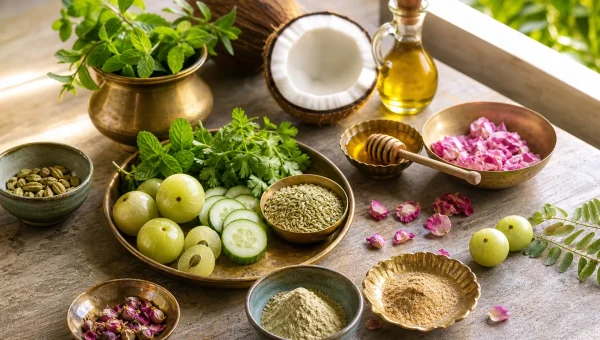
For a vegetarian North Indian kitchen, this translates beautifully into wheat rotis with ghee, urad dal, moong cooked with ghee, warm milk preparations, rice cooked fresh and served hot, sesame-jaggery sweets, panjiri, root vegetables, cooked greens, and spice-supported dals. The point is not heaviness for its own sake; the point is well-cooked nourishment that matches cold weather and stronger appetite.
Classical texts also mention meat preparations and fermented drinks in the diet of their original social and climatic context. A modern vegetarian household can preserve the same Ayurvedic logic through ghee, milk, urad, wheat, sesame, jaggery, nuts, roots, and warming spices, without needing to reproduce every ancient food item literally.
Warming Spices: The Winter Kitchen Pharmacy
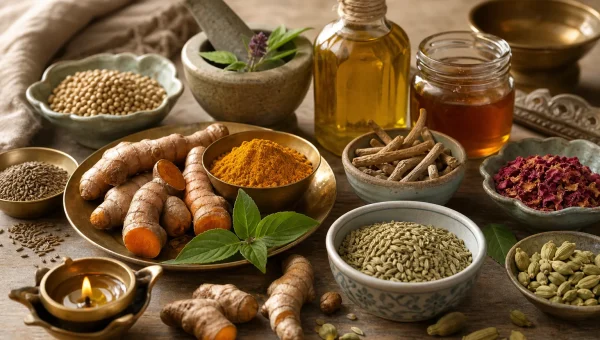
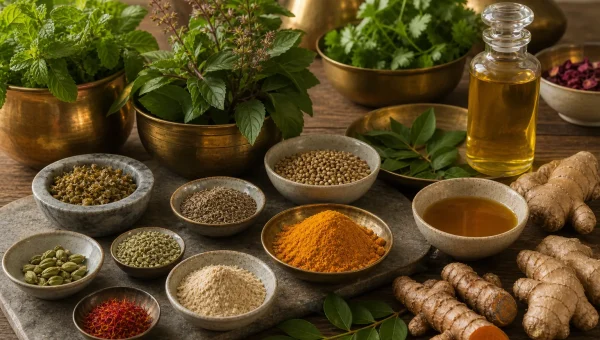
The winter spice palette naturally becomes warmer and sharper. Ginger, dry ginger, black pepper, long pepper, ajwain, cumin, cinnamon, cardamom, cloves, and fenugreek help make heavier meals easier to digest. These spices are best used as part of food rather than as aggressive self-medication.
Trikatu, the classical combination of dry ginger, black pepper, and long pepper, is one of Ayurveda’s best-known pungent formulations. It is heating and sharp, so it is not suitable for everyone in large or repeated doses. A pinch in food may suit some people in cold weather, but therapeutic use should be guided by a qualified Ayurvedic practitioner, especially for people with acidity, ulcers, bleeding disorders, pregnancy, heat symptoms, or regular medication use.
Seasonal Food Guide: Hemanta vs Shishira
Hemanta and Shishira are similar, but Shishira is described as colder and drier because of the onset of Adana Kala. Therefore the Hemanta regimen generally continues into Shishira, with extra attention to staying warm, avoiding cold and dry foods, and protecting the body from wind.
| Food Category | Hemanta (mid-Nov to mid-Jan) | Shishira (mid-Jan to mid-Mar) | Ayurvedic Rationale |
|---|---|---|---|
| Primary grain | Wheat, fresh rice, warm rotis | Wheat with bajra or other regional winter grains | Cooked, substantial grains suit stronger winter digestion |
| Legume focus | Urad dal, moong with ghee | Urad, moong, and warming regional dals | Heavier dals should be well-cooked and supported with ghee and spices |
| Fat source | Ghee, sesame oil, suitable edible oils | Ghee, sesame oil, mustard oil where regionally suitable | Unctuousness counters cold and dryness |
| Sweetener | Jaggery and sugarcane products in moderation | Jaggery, sesame-jaggery sweets in moderation | Classical winter diet includes sugarcane products; moderation remains essential |
| Dairy | Warm milk, ghee, butter, milk preparations | Warm milk and ghee if digestion permits | Milk products are part of the strengthening winter regimen |
| Vegetables | Cooked roots, carrots, beets, greens | Cooked greens, roots, soups, saag | Vegetables should be cooked, warm, and not overly dry |
| Special winter foods | Panjiri, til laddoo, warm halwa | Gajak, chikki, til-gur preparations | Sesame, jaggery, ghee, and grains reflect the season’s nourishing logic |
Complete Recipe: Urad Dal with Ghee, Ginger, and Jaggery
Urad dal is a heavy and strengthening pulse, so winter is the time many traditional kitchens handle it best. This recipe keeps the preparation warm, soft, spiced, and unctuous. The small amount of jaggery is optional; it rounds the taste and reflects the winter use of sugarcane products without turning the dish into dessert.
Ingredients (serves 4):
- 1 cup split urad dal, soaked for 1-2 hours
- 3-4 cups water
- 2 tbsp ghee
- 1 tsp cumin seeds
- 1/2 tsp dry ginger powder or 1 tsp grated fresh ginger
- 1/4 tsp black pepper powder
- 1 small pinch cardamom powder
- 1/2 tsp rock salt, or to taste
- 1-2 tsp grated jaggery, optional
Method: Pressure cook the soaked urad dal with water and salt until very soft. In a separate pan, heat ghee and add cumin seeds. When they release aroma, add ginger and black pepper, then stir briefly on low heat. Add the cooked dal and simmer until creamy. Switch off the heat and stir in jaggery if using. Serve hot with wheat roti, bajra roti, or rice, adding a little extra ghee if digestion and health condition permit.
Winter Milk and Ksheerpaka-Style Nourishment
Ksheerpaka is a milk-based Ayurvedic preparation in which herbs are processed with milk and water. For everyday winter nourishment, even plain warm milk with cardamom, a little dry ginger, or a pinch of nutmeg can be enough when milk suits the person. Milk should not be forced on those who do not digest it well.
Ashwagandha milk is often used in Ayurvedic practice as a strengthening preparation, but Ashwagandha is an herb, not a casual spice. Use it only when it is appropriate for your constitution and health status. A simple practitioner-guided version is to simmer milk and water with the advised quantity of Ashwagandha, reduce gently, strain, and drink warm. For a non-herbal household version, simmer milk with cardamom and a small pinch of dry ginger, then sweeten lightly if needed.
Sesame Til Laddoo: Winter’s Most Beloved Sweet
The Makar Sankranti season keeps sesame and jaggery at the center of Indian winter food culture. Til laddoo, gajak, chikki, til-gul, and similar sweets combine oil-rich sesame with jaggery and warming aromatics. Ayurveda does not require eating large quantities of sweets, but a small seasonal portion can sit naturally within a winter diet when appetite, activity, and metabolic health allow it.
To make til laddoos at home, dry roast 2 cups sesame seeds on low to medium heat until aromatic. Warm 1 cup grated jaggery with 1-2 tablespoons water until it reaches a sticky, soft-ball consistency. Mix the sesame into the jaggery, add cardamom if desired, and shape into laddoos while still warm. Store in an airtight container. For most people, this is a seasonal sweet, not an unlimited tonic.
Staying Grounded Through Shishira
As Hemanta turns into Shishira, the cold remains but dryness increases. Charaka advises that the Hemanta regimen should continue in Shishira, with extra care to stay in warm, less windy places. This is not the ideal time for cold drinks, raw-heavy diets, very light meals, or excessive bitter, astringent, and dry foods.
Cooked winter greens such as sarson, methi, bathua, spinach, and other local saag can still be part of the plate when prepared with ghee or oil, spices, and adequate warmth. The correction is in the method: greens should support the meal rather than turn the whole diet into a dry, scraping cleanse. The stronger lightening strategy belongs more naturally to spring, when accumulated Kapha begins to loosen.
Winter, then, is not a season to fear food. It is a season to cook deeply, eat warm, use ghee and oil intelligently, favor substantial meals over cold grazing, and build steadiness. Sesame, jaggery, urad dal, wheat, warm milk, root vegetables, and spice-supported dals are not random cravings of the season; they are the food culture’s memory of a principle Ayurveda states clearly: when winter strengthens agni, nourishment becomes medicine-like when used with judgment.
Nothing in this article diagnoses, treats, or cures a medical condition. Use it as educational information and consult a qualified Ayurvedic practitioner or healthcare provider before starting herbs, supplements, detoxes, fasting routines, or therapeutic protocols, especially if pregnant, breastfeeding, managing diabetes, digestive disease, thyroid disease, autoimmune disease, kidney disease, heart disease, or taking regular medication.
References
- Charaka Samhita — Tasyashiteeya Adhyaya
- Easyayurveda (easyayurveda.com)
- Charaka Samhita — Ojas
- Ijrap (ijrap.net)
- Liebertpub (liebertpub.com)
- Sesame (Sesamum indicum L.): A Comprehensive Review of Nutritional Value, Phytochemical Composition, Health Benefits, Development of Food, and Industrial Applications (2022), PubMed Central
- En (en.wikipedia.org)
- En (en.wikipedia.org)
- Easyayurveda (easyayurveda.com)
- Kamaayurveda (kamaayurveda.in)
- Nature (nature.com)
can you address how this changes for different age groups? I’m in my 50s and wondering if the protocol needs modification.
The section on timing is something I’ve never seen addressed elsewhere. So important.
I keep coming back to this article. There’s always something new I pick up on each read
after trying so many things this is the first one that actually makes sense for my body type tbh
my practitioner recommended almost the exact same thing. great to see it validated here
as someone with a family history of this condition, preventive approaches like these give me hope
I live in Shimla and winter nutrition becomes crucial at 7000 feet where temperatures drop severely for 4 months. The recommendations in this article for Til and Ghee heavy diets are exactly what local families here have always eaten through winter. Reading the Ayurvedic reasoning behind traditional Pahadi cuisine is satisfying.
Thank you for engaging with this so deeply! Your perspective adds so much value to the conversation here.
As someone with a family history of this condition, preventive approaches like these give me hope.
The recommendation to eat Urad dal heavily in winter confuses me because I was told Urad is heavy for digestion and not suitable for people with weak digestive fire. The article presents it positively for all winter nutrition. Could you clarify who should and shouldn’t increase Urad consumption in winter?
I appreciate your thoughtful question. I’ll address this in more detail in an upcoming post, but in the meantime, the key is to listen to your body and adjust accordingly.
This is such encouraging feedback. Keep going with the protocol and feel free to share updates!
what’s the best time of year to start this? Does the season matter for effectiveness?
For Winter Nutrition, consistency seems like the hard part. I appreciate that it does not oversell the result.
I have adapted my winter diet using many of these principles from Ayurveda over the past 3 years in a northern climate. The increase in warm oils, root vegetables, and spices like ginger and cinnamon has genuinely reduced my seasonal depression symptoms compared to eating the same way year round.
Been waiting for someone to write about this topic properly. You delivered.
literally printing this for my fridge. super practical
My mother has been doing this her whole life and she’s the healthiest 70-year-old I know
Helpful for beginners but if you already know the basics, there’s not much new here. Was hoping for more advanced protocols.
man i wish i found this article sooner. years of trial and error i didnt need
Great to hear this is working for you. Your grandmother’s wisdom was ahead of its time!
For Winter Nutrition, consistency seems like the hard part. The examples make the advice less abstract.
I’m cautiously interested but the lack of dosage specificity concerns me. ‘A pinch of this, some of that’ isn’t how effective medicine works
changed my perspective completely!! i was doing it all wrong before this
The way you connect traditional wisdom with modern understanding is brilliant.
Thank you for sharing your experience, it’s important that readers see the full range of outcomes, not just success stories. Not every approach works for everyone.
The general advice is sound but the claim that this ‘cures’ or ‘fixes’ the condition is irresponsible wording. ‘May help manage’ is more accurate.
been practicing this for about a month now and the difference is noticeable. thanks for breaking it down so clearly
I struggled with this for years before discovering Ayurveda. Six months later, I barely recognize my old self.
The sesame seed balls or Til Ladoo mentioned here as a traditional winter food are something my Gujarat family has made for Makar Sankranti every year. Good to see the nutritional reasoning behind a tradition I have followed without fully understanding.
Thank you for the honest feedback. You’re absolutely right that individual responses vary, and we should emphasize that more. We’ll update the article to include stronger caveats about individual variation.
This helped me understand Winter Nutrition without too much jargon. The article avoids making it sound like a quick fix.
The article made me notice how my own switch to mustard oil in November feels less random and more intentional.
This helped me understand Winter Nutrition without too much jargon. I appreciate that it does not oversell the result.
I tried incorporating Ashwagandha in warm milk every night through this past winter and the combination with better sleep hygiene made my immunity noticeably stronger. I usually get 3-4 colds each winter. This winter I had one mild cold that resolved in 4 days.
The Chyawanprash recommendation is well known but I find the commercially available versions vary enormously in quality and Amalaki content. Making it at home as the article describes is preferable but also very time-consuming. Are there brands with transparent quality standards that can be trusted?
Sesame laddoos showing up in sweet shops now seems like a tasty signal that the body’s digestive fire is ready for heavier foods.
I tried strictly following an Ayurvedic winter diet for one full season. My energy was higher and digestion better than previous winters. The extra fat and warming spices in every meal felt indulgent at first but the body seemed to actually need it given the cold and shorter days.
i keep reading that you should eat for your dosha but also eat for the season and these two things sometimes conflict. a Pitta type in winter for example would be eating cooling foods for their dosha but warming foods for the season. how is this conflict resolved in practice?
Reading about Hemanta and Shishira split helped me understand why my grandmother always insists on warm milk with ginger before bed.
It’s interesting that winter actually strengthens Agni even though the weather feels harsh on the outside.
After trying urad dal with jaggery and ghee I found the combination surprisingly satisfying on a cold evening.
One practical tip I took away is to replace white sugar with jaggery in my morning tea during the colder months.
Such a clear link between seasonal eating and Ojas building makes the ancient advice feel surprisingly relevant today.
For anyone curious about Shishira foods the recommendation to add bitter greens like sarson saag feels like a sensible tweak.
I appreciate the reminder that storing sesame seeds and ghee is not just tradition but a way to support deeper immunity through winter.
i’d want a peer-reviewed source for the urad dal recommendation for vata in winter before recommending to patients.
interesting. did you try the warming spice blend you listed with or without food?
adding the ghee and black pepper combination to my protocol. This post made it clear why.
Will try this 🙏
similar issue here. still figuring out your note about heavier meals being appropriate in hemanta for my situation.
tried the sesame ladoo recipe for winter exactly as described, got no results after 6 weeks. maybe I have a different constitution ❤️
for the sesame ladoo recipe for winter, my practitioner said start low and increase.
the article is good but the sesame ladoo recipe for winter should come with a stronger dosage caution.
the part about the ghee and black pepper combination was exactly what I needed. added it to my routine last month.
the part about the sesame ladoo recipe for winter was exactly what I needed. added it to my routine last month.
starting the sesame ladoo recipe for winter next week. will update if I remember to. नमस्ते
Seems overhyped to me. the ghee and black pepper combination didn’t work for anyone in my family.
asked my vaidya about the sesame ladoo recipe for winter. he agreed but said to add triphala first.
this matches what I found too. good to know others had the same result.
trying to understand the warming spice blend you listed a bit more. how long before results show?
the explanation of the warming spice blend you listed was clear and not oversimplified. appreciated.
The Winter Nutrition section feels grounded enough to try carefully. The article avoids making it sound like a quick fix.
asked my vaidya about the warming spice blend you listed. he agreed but said to add triphala first.
starting your note abt heavier meals being appropriate in hemanta next week. will update if I remember to.
Trying to understand the ghee and black pepper combination a bit more. how long before results show?
Not sure I fully get the warming spice blend you listed yet. Will re-read the section.
what’s the source for the urad dal recommendation for vata in winter? asking because I want to look at the original research.
the studies behind the sesame ladoo recipe for winter are small sample sizes. hard to draw conclusions.
The Winter Nutrition section feels grounded enough to try carefully. The examples make the advice less abstract.
my ayurveda practitioner confirmed what you wrote about the urad dal recommendation for vata in winter. good to have it in writing.
the article is good but your note about heavier meals being appropriate in hemanta should come with a stronger dosage caution.
question about the ghee and black pepper combination , what if someone has high pitta? same dosage? 🙌
The urad dal recommendation for vata in winter , the quality of supplements varies so much in India. hard to replicate results.
Question about the ghee and black pepper combination , what if someone has high pitta? same dosage?