
At a glance
| Elements | Earth and water |
| Main qualities | Heavy, slow, cool, oily, smooth, soft, dense, stable and cohesive |
| Governs | Structure, strength, lubrication, endurance, immunity, growth, fertility, patience, memory and emotional steadiness |
| Primary sites | Chest, throat, head, stomach, joints, lymph/rasa dhatu and fatty tissue |
| Season | Late winter and spring; Kapha often accumulates in cold damp weather and aggravates as spring warmth melts and mobilises it |
| Balancing principle | Lighten, warm, dry, stimulate and mobilise |
Understanding
Kapha dosha is the principle of cohesion, nourishment and stability in Ayurveda. Formed from earth and water, it gives the body substance, moisture, lubrication and resilience. In balance, Kapha supports strong tissues, good immunity, calm sleep, steady energy, patience, compassion and a grounded mind. Its classical qualities are heavy, slow, cold, oily, smooth, soft, dense and stable; therefore, anything with similar qualities can increase Kapha, while opposite qualities—light, warm, dry, sharp, mobile and stimulating—help keep it balanced.
When balanced vs aggravated
Balanced Kapha appears as good stamina, stable joints, healthy body weight, clear affection, calm confidence, forgiveness, sound sleep and steady digestion without heaviness. Aggravated Kapha appears when the system becomes too heavy, cold, damp or stagnant. This may show as lethargy, oversleeping, low motivation, sluggish digestion, coated tongue, congestion, excess mucus, water retention, weight gain, dullness, attachment, possessiveness or resistance to change. Kapha tends to increase with overeating, frequent snacking, excess sweets and dairy, daytime sleeping, lack of exercise, cold damp weather and a routine that is too sedentary.
Balancing diet
Favour
- Warm, light, freshly cooked meals with a mildly drying and stimulating quality.
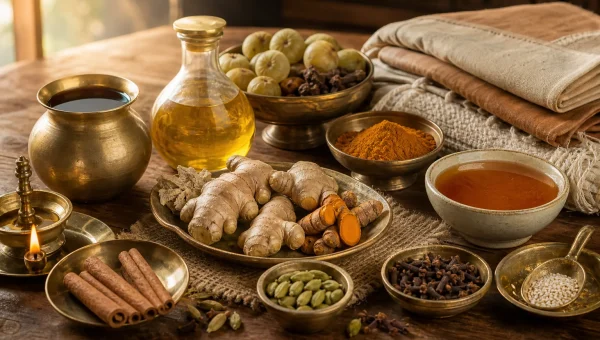
- Pungent, bitter and astringent tastes, such as ginger, black pepper, mustard seed, fenugreek, turmeric, leafy greens, bitter gourd, lentils and barley.
- Light grains such as barley, millet, buckwheat and old rice in moderate quantity.
- Legumes such as mung beans, masoor dal, chickpeas and horse gram when well cooked with spices.
- Cooked vegetables, especially cruciferous greens, gourds, beans, carrots, radish, onion and garlic if suitable.
- Warm water, ginger tea, tulsi tea or spice-infused water sipped through the day.
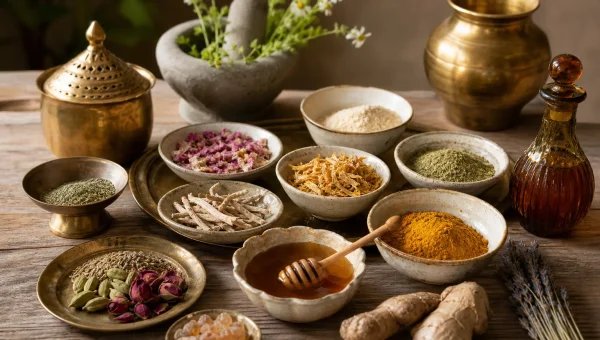
- Honey in small amounts as a traditional Kapha-reducing sweetener, never heated or cooked.
Reduce
- Heavy, oily, cold, stale, fried or excessively sweet foods.
- Large portions of wheat, new rice, refined flour, pastries, sweets and sugary drinks.
- Excess dairy, especially curd, cheese, cold milk, ice cream and creamy preparations.
- Banana, mango, dates and very sweet fruits when Kapha symptoms are active.
- Frequent snacking, late dinners and eating before the previous meal is digested.
- Cold drinks, refrigerated foods and iced desserts.
- Excess salt, which can increase water retention and heaviness.
Daily routine
Kapha benefits from a routine that is active, warm and varied. Wake early, ideally before sunrise, and avoid sleeping during the day unless medically necessary. Begin the morning with tongue cleaning, warm water and movement that raises heat and circulation, such as brisk walking, surya namaskar, cycling, strength training or vigorous yoga according to capacity. Dry powder massage, known as udvartana, is traditionally used for Kapha-type heaviness and oiliness, while heavy oil massage should be used sparingly when congestion or lethargy is present. Keep meals regular but not excessive, make lunch the main meal, keep dinner light and early, and create mental stimulation through learning, purposeful work, travel, decluttering and social engagement. Spring is the key season to be especially disciplined with diet, exercise and lightness.
Best herbs
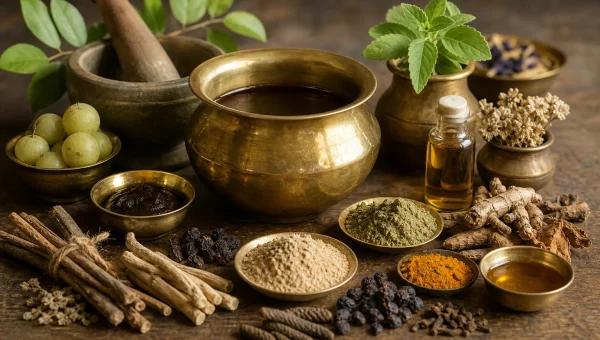
Classically, Kapha is balanced by herbs and formulas with warming, pungent, bitter, astringent, scraping and digestive actions. Commonly used herbs include dry ginger, black pepper, long pepper, turmeric, tulsi, trikatu, triphala, guggulu and punarnava, selected according to the person’s constitution, strength, digestion and symptoms. Trikatu is traditionally used to kindle agni and reduce Kapha-type sluggishness; triphala supports bowel regularity and gentle cleansing; guggulu is used in classical practice where Kapha, meda and ama are involved; and punarnava is valued for Kapha-associated fluid heaviness. These herbs are not one-size-fits-all and may be unsuitable in acidity, pregnancy, bleeding tendency, high heat states, certain medications or chronic disease unless supervised.
Signs of imbalance
- Heaviness in the body or head
- Lethargy, low motivation or excessive sleep
- Slow digestion, poor appetite or feeling full for a long time
- Thick tongue coating, nausea or a sweet/heavy taste in the mouth
- Coldness, dampness or clammy skin
- Chest congestion, sinus congestion, cough or excess mucus
- Water retention, puffiness or swelling tendency
- Gradual weight gain or difficulty losing weight
- Oily skin, sluggish circulation or a sense of stagnation
- Emotional attachment, possessiveness, sadness, dullness or resistance to change
FAQ
The quickest safe starting point is to combine early waking, daily vigorous movement, warm light meals, reduced sweets and dairy, and warm spiced drinks. Kapha responds well to consistency, stimulation and reducing heaviness.
Yes, but dairy should usually be limited and chosen carefully. Warm, spiced milk in small amounts may suit some people, while curd, cheese, ice cream and cold milk commonly aggravate Kapha when congestion, heaviness or sluggish digestion is present.
Light fasting or a lighter diet can be useful for Kapha when strength is adequate and there is no pregnancy, frailty, eating disorder, uncontrolled diabetes or serious illness. Ayurveda generally favours appropriate lightening rather than harsh fasting, so it should match the person’s condition and digestive strength.
References
- Charaka Samhita, Sutra Sthana — classical teachings on tridosha, dosha qualities, samanya-vishesha principle, agni and langhana-brimhana principles.
- Sushruta Samhita, Sutra Sthana — classical discussion of doshas, their qualities, sites and role in health and disease.
- Ashtanga Hridaya, Sutra Sthana — descriptions of Kapha qualities, dosha balance, daily routine and seasonal regimen, including Kapha management in spring.
- Bhavaprakasha Nighantu — traditional dravyaguna descriptions of herbs such as shunthi, pippali, maricha, haridra, tulasi, triphala ingredients, guggulu and punarnava.
- Ayurvedic Pharmacopoeia of India — official monographs for identity and quality standards of classical Ayurvedic herbs used in Kapha-related practice.


This was a clear breakdown of Kapha, especially the heavy and cool qualities. The food list makes the pattern easy to understand.
The emphasis on warm, light meals and earlier dinners feels very practical for colder months. Barley and mung beans sound like a simple place to start.
Appreciate the way the article connects Kapha with structure, patience, and steady energy instead of just weight gain.
The daily routine section made the whole thing feel actionable, especially waking early and getting movement in before the day gets too heavy.
Using pungent, bitter, and astringent tastes as a guide is a helpful shortcut. That is easier to remember than a long do and do not list.
The seasonal angle makes sense too. Late winter and spring are exactly when everything seems to get sluggish and damp.
nice balance between traits, diet, and herbs. The explanation of trikatu versus triphala versus guggulu was especially useful.
How strict do you have to be with dairy if Kapha signs are only mild? Curious whether small amounts of yogurt are still workable.
Would this approach look different for someone who is active every day versus someone mostly at a desk?
The article mentions udvartana and stronger exercise. Is there a good way to choose between those if joints already feel stiff?
Wondering how long warm water and ginger tea usually take to make a noticeable difference in digestion or congestion.
A lot of this sounds logical, but I would want stronger evidence before assuming the herb recommendations work the same for everyone. Dosage and product quality seem like they could change the results a lot.
The food guidance makes sense on paper, though cutting out curd, cheese, and many fruits could be hard to maintain long term. Not sure how practical that is for most households.
Interesting framework, but the symptoms listed for aggravated Kapha overlap with a lot of other issues like sleep habits, allergies, and digestion problems. I would be careful about treating the dosha label as the whole explanation.