
Pitta skin has a recognizable pattern. When it is balanced, the skin often looks warm, clear, bright, and well-toned. When Pitta is aggravated, the same heat and sharpness can show up as redness, burning, sensitivity, inflamed blemishes, flushing, and dark marks after irritation. Once you understand this pattern, the routine becomes simpler: cool the skin, calm Pitta, protect the barrier, and avoid adding more heat internally or externally.
Ayurveda does not approach this kind of skin only as a surface problem. It looks at the interaction of Pitta, Bhrajaka Pitta in the skin, and Rakta Dhatu. For Pitta-prone skin, the goal is not to strip, scrub, or over-treat. The goal is steady cooling support through diet, herbs, lifestyle, and gentle topical care.
How Pitta Shows Up on Your Skin
Pitta dosha is associated with heat, sharpness, transformation, and metabolic activity. In the skin, Pitta aggravation often appears as a hot, reactive pattern rather than a dry or heavy pattern. The skin may look flushed, feel warm to the touch, and react quickly to sun, heat, spicy food, alcohol, anger, or stress.
Common Pitta-skin signs include:
- Redness and flushing that worsens with heat, sun exposure, spicy food, alcohol, hot showers, or emotional intensity
- Inflamed blemishes that are red, tender, pustular, or painful rather than mainly clogged or waxy
- Burning, stinging, or sensitivity from products that other skin types may tolerate easily
- Post-blemish darkening or uneven tone after inflammation settles
- Heat rash tendency or small irritated bumps during hot, humid weather
- Reactive patches that become pink, red, itchy, or hot after over-cleansing, exfoliation, or sun exposure
Classical Ayurvedic discussion of skin disease appears under Kushtha, where skin disorders are understood through dosha involvement and tissue disturbance. Pitta-dominant presentations are especially associated with signs such as redness, burning, heat, suppuration, and inflammatory change. This is why a Pitta-focused routine must be cooling, non-irritating, and consistent rather than aggressive.
The Internal Fix: Cooling, Pitta-Pacifying Herbs
For Pitta skin, internal herbs are traditionally selected to cool Pitta, support Rakta Dhatu, and reduce heat-related reactivity. These herbs should be chosen according to constitution, digestion, season, symptoms, medications, pregnancy status, and overall health. Use concentrated extracts, long courses, or combinations only with guidance from a qualified Ayurvedic practitioner or healthcare provider.
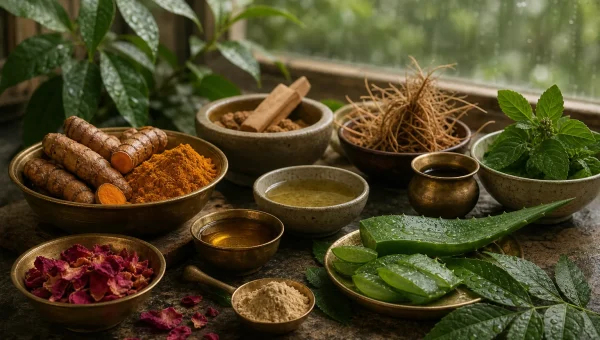
Manjistha (Rubia cordifolia)
Manjistha is a classical Ayurvedic herb recognized in the Ayurvedic Pharmacopoeia of India as Rubia cordifolia. It is widely used in traditional practice when Pitta and Rakta involvement show up as redness, heat, inflammatory blemishes, and uneven tone after irritation. It is best used as part of a broader Pitta-cooling plan rather than as a stand-alone shortcut.
Traditional use: Manjistha powder is commonly used in small gram-range doses, often after meals or as directed in a formulation. The Ayurvedic Pharmacopoeia lists 3-6 g of the drug in powder form as the adult dose range for the monograph. Sensitive users should start only under practitioner guidance, especially if taking medication or using other herbs.
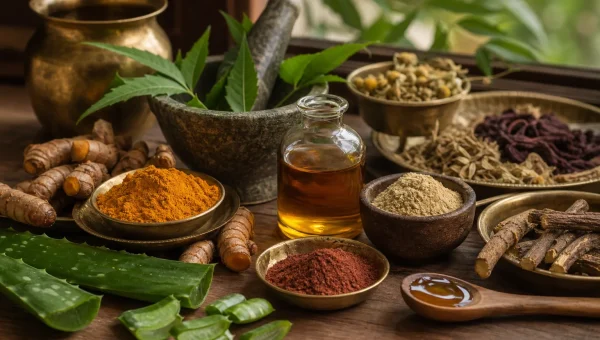
Neem (Azadirachta indica)
Neem is bitter, cooling, and Pitta-pacifying. The Ayurvedic Pharmacopoeia lists Nimba leaf as Azadirachta indica and describes it with Tikta Rasa, Ruksha and Laghu Guna, Shita Virya, and Pittanashaka action. This makes it a traditional choice for heat, itching, inflammatory skin tendencies, and Pitta-Kapha skin patterns.
Traditional use: Nimba leaf powder is listed in the Ayurvedic Pharmacopoeia in a 1-3 g adult dose range, while Nimba stem bark is listed in a 2-4 g powder range. Neem is not appropriate during pregnancy, while trying to conceive, or for unsupervised long-term use. Avoid self-dosing concentrated Neem extracts unless supervised by a qualified practitioner.
Sariva (Hemidesmus indicus)
Sariva, also called Indian sarsaparilla, is one of the gentler cooling herbs used in Pitta and Rakta presentations. The Ayurvedic Pharmacopoeia identifies Sveta Sariva as the root of Hemidesmus indicus and lists it with sweet taste, cooling potency, sweet post-digestive effect, and Raktashodhaka action. It is traditionally used where heat, itching, skin irritation, and blood-related Pitta signs are present.
Traditional use: Sariva may be used as a decoction or in classical preparations such as Sarivadyasava. A simple home-style decoction may be prepared by simmering dried Sariva root in water and reducing it before drinking, but the exact dose and form should be individualized by a practitioner.
Aloe Vera (Kumari)
Kumari, or aloe vera, is commonly used topically for its cooling and soothing quality. For Pitta skin, fresh pure aloe gel can be useful when the face feels hot, tight, or reactive. It should be patch tested first, because even cooling substances can irritate some sensitive skin.
Traditional use: Apply a thin layer of pure aloe gel to clean skin and let it absorb before moisturizer. Internal aloe products should be used cautiously and only with professional guidance, especially during pregnancy, digestive disorders, kidney disease, or while using medication.
The Pitta Skincare Routine: What Goes on Your Face
Pitta skin usually improves with fewer products, cooler textures, and less friction. The routine should protect the barrier, reduce heat, avoid harsh exfoliation, and prevent sun-triggered inflammation. Patch test every new herb, oil, mask, or sunscreen on a small area before applying it to the whole face.
Morning Routine
The morning routine should be cooling, protective, and minimal. Avoid hot water, rough towels, scrubs, strong acids, and too many active serums when the skin is already red or irritated.
- Cleanse gently. Use lukewarm water and a mild cleanser, massaging with fingertips rather than scrubbing. If tolerated, a very soft paste of sandalwood powder and milk or rose water can be used occasionally, but avoid it if the skin stings, cracks, or flares easily.
- Tone with rose water. Pure Gulab Jal can be patted onto damp skin. Satapatrika is described in the Ayurvedic Pharmacopoeia as cooling, Pitta-pacifying, and complexion-supporting.
- Moisturize lightly. If the skin feels hot and oily, use aloe gel followed by a simple non-irritating moisturizer. If the skin is dry and not actively inflamed, a few drops of a well-made Kumkumadi Taila may be used sparingly after patch testing.
- Apply sunscreen. Broad-spectrum SPF 30 or higher is essential for redness-prone and pigmentation-prone skin. Mineral sunscreens containing zinc oxide or titanium dioxide are often better tolerated by sensitive skin, but the best sunscreen is the one your skin accepts and you use daily.
Evening Routine
The evening routine should remove sunscreen and pollution without stripping the skin. Pitta skin does not need aggressive nightly treatments; it needs calm repetition.
- Cleanse without heat. Remove sunscreen with a gentle cleanser. If using oil cleansing, choose a small amount of a tolerated oil and follow with a mild cleanser so residue does not clog pores.
- Use a cooling treatment. Apply a Pitta-cooling mask once or twice weekly. On non-mask nights, use pure aloe gel or a bland moisturizer if the skin feels warm or reactive.
- Use night oil carefully. Kumkumadi Taila may suit dry, dull, or uneven Pitta skin when used sparingly. Avoid heavy oiling over active pustular acne, very hot inflammation, or skin that feels congested after oils.
DIY Pitta Cooling Face Mask
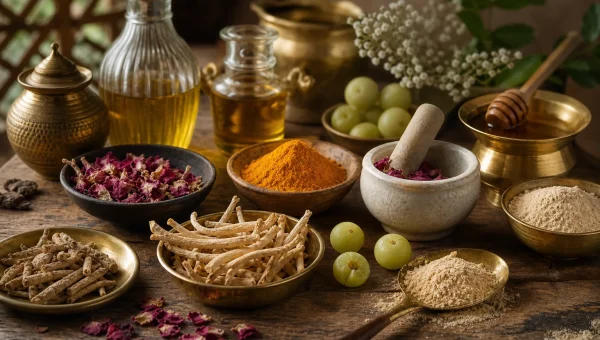
This mask is designed for red, warm, reactive, Pitta-prone skin. It uses cooling Ayurvedic ingredients in a simple paste and should be made fresh each time. Do not use it on open wounds, infected lesions, broken skin, or immediately after exfoliation.
| Ingredient | Amount | Purpose |
|---|---|---|
| Red sandalwood powder (Raktachandana) | 1 tablespoon | Cooling, Pitta-pacifying, complexion-supporting |
| Manjistha powder | 1/2 tablespoon | Traditional Rakta-Pitta support for redness-prone, uneven-looking skin |
| Rose water | Enough to form a paste | Cooling carrier, gentle toner, Pitta support |
| Pure aloe vera gel | 1 teaspoon | Soothing, hydrating, cooling support |
| Raw honey | 1/2 teaspoon, optional | Humectant support; skip if skin is very hot, reactive, acne-prone, or honey-sensitive |
Instructions: Mix the dry powders first. Add rose water gradually until a smooth paste forms. Fold in aloe gel. Apply a thin even layer to clean skin and leave it on for 10-15 minutes. Do not let the mask dry into a hard crust. Rinse with cool or lukewarm water and apply aloe gel or a light moisturizer.
Frequency: Use once weekly for maintenance or up to twice weekly during mild redness. Stop if the skin burns, stings, becomes itchy, or looks more irritated afterward.
Shelf life: Make fresh each time. Discard any leftover mixed paste.
The Diet Piece: You Cannot Skip This
No topical routine will stay effective if the diet keeps adding heat. Ayurveda describes Pitta as aggravated by sour, salty, pungent, hot, and sharp inputs, while sweet, bitter, astringent, and cooling inputs help pacify it. During a flare-up, the diet should be simple, cooling, freshly prepared, and easy to digest.
Increase:
- Sweet, juicy, cooling fruits such as sweet grapes, pomegranate, ripe pear, melon, and coconut
- Bitter and astringent vegetables such as bitter gourd, leafy greens, coriander leaves, and tender cooked vegetables
- Fresh cilantro, coriander seed, fennel seed, and small amounts of cumin for gentle digestive support without excess heat
- Cooling grains and meals such as rice, moong dal, soft khichari, and vegetable stews
- Small amounts of ghee if digestion tolerates it, especially with warm meals rather than cold snacks
- Coconut water or room-temperature water instead of iced drinks, alcohol, or excessive coffee
Reduce during flare-ups:
- Very spicy foods, chili, hot sauces, and excess black pepper
- Very sour foods such as vinegar-heavy dressings, pickles, sour curd, and excessive citrus
- Excess salt, packaged snacks, fried food, and reheated oily food
- Alcohol, especially when the skin is already red, hot, itchy, or inflamed
- Excess coffee or stimulants that increase heat, acidity, or flushing
- Fermented foods if they clearly trigger redness, itching, heat, or breakouts for you
A simple daily beverage for Pitta-prone skin is coriander-cumin-fennel tea. Use equal parts coriander seed, cumin seed, and fennel seed, about 1 teaspoon total per cup. Steep in hot water for 5-10 minutes, strain, and drink warm or at room temperature.
Lifestyle Triggers Pitta Skin People Miss
Pitta skin is often triggered by heat, friction, sun, pressure, anger, and over-treatment. Even a good herbal routine can fail if daily habits keep provoking the skin.
- Hot showers and rough cleansing. Hot water and scrubbing can aggravate heat and sensitivity. Use lukewarm water, fingertips, and a soft towel, especially on the face.
- Midday sun exposure. Heat and UV exposure can worsen redness and pigmentation-prone skin. Use shade, hats, protective clothing, and broad-spectrum sunscreen, especially during strong daylight hours.
- Intense exercise during peak heat. Pitta types often enjoy intense workouts, but overheating can show up quickly on the skin. Choose early morning or evening exercise and cool down gradually.
- Emotional heat. Anger, irritability, overwork, and suppressed frustration can intensify Pitta patterns. Cooling breath practices such as Sheetali or Sheetkari may be useful when learned correctly and practiced gently.
- Too many harsh actives. Retinoids, strong exfoliating acids, benzoyl peroxide, scrubs, and multiple serums can irritate already inflamed skin. Pare back to gentle care first, then reintroduce actives slowly with professional guidance.
A Realistic Timeline
Use this as an observation framework, not a promise. Pitta skin can calm noticeably when heat triggers are removed, but diagnosed skin conditions and long-standing inflammation need individualized care.
- First 1-2 weeks: The skin may feel less hot, less tight, and less reactive if spicy food, hot water, harsh actives, and sun exposure are reduced consistently.
- Weeks 3-6: Redness episodes and new inflamed blemishes may become less frequent when diet, sleep, sunscreen, and gentle topical care are steady.
- Weeks 6-12: Uneven tone and post-blemish marks often take longer than redness to improve. Continue sunscreen and avoid picking, scrubbing, and heat triggers.
- After 3 months: Maintenance becomes the priority. Foods and products that were reduced during a flare can sometimes be reintroduced slowly, one at a time, while watching the skin response.
The key is consistency. A cooling mask once a week will not undo daily hot showers, strong exfoliation, excess chili, alcohol, and midday sun. Pitta skin responds best when the whole routine moves in the same direction: less heat, less friction, more protection, and steady cooling support.
If you have a diagnosed skin condition such as rosacea, eczema, psoriasis, dermatitis, recurrent infections, painful cystic acne, or unexplained rashes, consult a dermatologist and a qualified Ayurvedic practitioner before changing your treatment plan. Neem is not recommended during pregnancy or while trying to conceive. Check herb-drug interactions if you take prescription medication. This article is for educational purposes only and does not replace medical advice.
References
- NCCIH
- Charaka Samhita — Dosha
- Charaka Samhita — Kushtha Chikitsa
- Ayushdhara (ayushdhara.in)
- Ayurvedic Pharmacopoeia of India
- Ia800501 (ia800501.us.archive.org)
- NCBI
- Plant immunomodulators for termination of unwanted pregnancy and for contraception and reproductive health (1997), PubMed
- NCCIH
- Aad (aad.org)
- Aad (aad.org)
- Aad (aad.org)
For The Pitta Skin, consistency seems like the hard part. Small daily changes are easier to follow than a perfect plan.
Thank you for sharing the practical tip about sourcing. That’s something I’ve been confused about
For The Pitta Skin, consistency seems like the hard part. This feels more usable than a long list of herbs.
I’d been spending a fortune on fancy serums. After implementing the Ayurvedic basics here, oil cleansing, herbal toners, the diet changes, my skin looks better than it ever did.
I switched to an Ayurvedic skincare routine six months ago and the improvement in my skin texture is genuinely remarkable. My esthetician keeps asking what Im doing differently.
I appreciate the inclusion of internal herbs alongside topical treatments. True Ayurvedic skincare addresses both and most mainstream content focuses only on what goes on the skin.
That’s a really important distinction you’ve made. I think a lot of people skip the preparation phase and then wonder why results are inconsistent.
the Ubtan recipe here works better for my skin than any commercial exfoliant I’ve tried. And it costs a fraction of the price. My whole family has switched.
I’m a dermatologist interested in integrative approaches and the discussion of skin as a reflection of gut health is something I discuss with patients regularly.
For The Pitta Skin, consistency seems like the hard part. I would still ask a practitioner before changing medicines.
The hair care section in your related article brought me here. Now I’m going down a rabbit hole of Ayurvedic beauty knowledge. Everything connects so logically
I had the exact same confusion about this. Glad the article cleared it up for both of us.
The Rasa and tissue nourishment explanation is a really different way of thinking about skin health. Surface-level treatments make more sense when you understand the layers beneath.
the stress-skin connection section is so important. My skin always flares during deadlines and understanding the cortisol-Pitta link gives me something actionable to work with
so encouraging to hear! Starting my first week and this is motivating me to stick with it.
The explanation of how processed foods affect skin at a systemic level helped me make the dietary changes I’d been resistant to. External changes alone weren’t working.
For The Pitta Skin, consistency seems like the hard part. The safety notes could be expanded a little.
the recipe proportions seem off compared to what my Ayurvedic doctor prescribed. Could you clarify the source for these specific ratios?
I shared this with my book club, we have a wellness focus this month. Everyone immediately wanted to try the face mask recipe. It’s become our next group activity
That’s a very fair point. We always recommend working with a qualified practitioner alongside any self-guided protocol. We’ll add a more prominent disclaimer.
I have Pitta skin and the cooling, calming recommendations here resonate exactly with what my skin responds well to. Finally a skincare approach built for my constitution.
great question, I’ve been wondering the same thing. Following this thread for the answers
Followed this advice for a month. Not only did it not help, my symptoms actually got slightly worse before I went back to my doctor.
As someone with Kapha skin tendencies, the specific guidance for my skin type is so much more useful than generic skincare advice. My pores are visibly clearer
Same here! The practitioner recommendation made all the difference for me. Don’t try to do this without guidance.
The clarification on why certain popular skincare ingredients can aggravate certain skin types according to this framework explains so much about my personal reactions.
Useful post on The Pitta Skin. This would be easier to follow with a one-week sample plan.
I was nodding along reading your comment. Exactly my experience too
For The Pitta Skin, consistency seems like the hard part. This would be easier to follow with a one-week sample plan.
The emphasis on oil as medicine rather than something to avoid on skin was hard to accept at first. Three months later, my formerly oily skin is actually balanced. Mind blown.
The professional background you bring to this comment is really valuable. Thank you for reading and contributing.
I’d rate this a 6/10. Good foundational info but lacks the specificity needed to actually implement. More like an introduction than a protocol.
i appreciate the effort but where are the clinical trials? anecdotal evidence isnt enough tbh
Valid concerns. Ayurveda works best as a complementary approach, not a replacement for evidence-based medicine. Thank you for highlighting this important distinction.
Been using pitta for about 3 months now and the difference in how I feel is real. My practitioner said the same things this article covers so good to have it spelled out.
The section on manjistha caught my eye because I’ve been looking for a blood purifying herb that isn’t too harsh.
The niacinamide observation is worth highlighting. It is widely recommended for redness and inflammation but I had the exact experience described here where it seemed to increase sensitivity over time. The Pitta explanation for why a normally anti-inflammatory ingredient can backfire in this constitution is genuinely useful clinical information.
My skin went from constant low-grade redness to genuinely calm for the first time in years after I cut out the nightshades and fermented foods the article flags for Pitta types. I was skeptical because those are healthy foods by most standards. Turns out healthy-in-general and healthy-for-my-constitution are not the same thing.
As a dermatologist I appreciate the clinical framing here, though I would add that reactive skin in the Pitta presentation often has a compromised barrier component that benefits from ceramide-based support alongside the dietary and lifestyle changes described. The two approaches are not in conflict and combining them tends to produce faster results.
The seasonal flare pattern described here matches what I see in myself every summer without fail. I always assumed it was just heat and sweat. The Pitta-season connection explains why the flares start even before the actual hot weather arrives, which never made sense to me under the simple heat hypothesis.
I wonder if the rose water toner step would feel too sticky on my already oily T zone.
My dermatologist was supportive when I mentioned I wanted to try a Pitta-pacifying approach alongside the prescription treatment. The combination of cooling dietary changes and reducing the number of actives I was layering on made a bigger difference than either approach alone. I think the integrative framing here is the right one.
After reading about neem’s anti fertility note, I’ll skip it until I’m sure it’s safe for me.
The idea that spicy food triggers flushing makes sense; I’ve noticed my cheeks glow after eating curry.
The part about spicy food triggering skin flares in Pitta types is so consistent with my experience that I almost thought the article was written about me specifically. I am from South India and the family diet is inherently very heating. Managing that while staying connected to the food culture has been a real challenge.
It’s interesting that the article links rosacea symptoms to Pitta imbalance, I’d like to see more research on that.
My morning routine already uses sandalwood powder, but I’ve never mixed it with cold milk before.
One thing I’m skeptical about is the claim that ghee improves skin luster; I’m curious if anyone has seen real results.
The point about retinol making Pitta skin worse is something I wish someone had told me two years ago. I spent a lot of money on actives that kept my skin in a permanent state of low-grade irritation. Once I stopped and switched to cooling, simpler formulations the redness started calming down. I had no framework for why until reading this.
If you have sensitive skin, the recommendation to avoid hot showers seems like an easy first step.
The timeline table gave me hope; seeing improvement in week three to four feels realistic.
I appreciate the warning about layering retinol on inflamed skin; I’ll pare back my actives for now.
The DIY mask with red sandalwood and manjistha sounds simple enough to try this weekend.
Honestly, the biggest takeaway for me was understanding that skin reacts to internal heat, not just external products.