Acoustic Trauma Ayurvedic Ear Treatment: Shravana Indriya Recovery Support
Acoustic trauma Ayurvedic ear treatment is best understood as supportive care for Karna, the ear, and Shravana Indriya, the auditory sense faculty, after exposure to very loud sound. A single impulse such as a blast, gunshot, firecracker, or speaker burst, as well as repeated exposure to loud music, machinery, traffic, or headphones, can produce muffled hearing, ear fullness, ringing, sound sensitivity, or pain. Ayurveda offers a Vata-pacifying recovery approach through protected hearing, gentle Karna care, Nasya, calming sound practices, and Rasayana support, while urgent hearing loss, suspected eardrum injury, vertigo, bleeding, or severe pain require prompt ENT evaluation.
From the Ayurvedic perspective, the ear is especially sensitive to Vata disturbance because hearing depends on subtle movement, space, nerve conduction, and the clear functioning of Prana Vayu in the head and sense organs. Sudden loud sound can disturb this delicate sensory field, producing ringing, dryness, instability, hypersensitivity, anxiety, and disturbed sleep. When heat, burning, throbbing, inflammation, or irritability are present, the same presentation may also carry Pitta features; the therapeutic direction remains soothing, unctuous, gentle, and protective rather than stimulating.
Modern hearing science describes noise-induced hearing loss as injury caused by sound that is too loud, too close, or too prolonged. It may be temporary or permanent, and repeated exposure at or above 85 dBA increases risk. Loud sound can also produce tinnitus, the perception of ringing, buzzing, hissing, or other sound without an external source. Ayurveda should therefore be used as a careful complement to audiology and medical assessment, not as a substitute for urgent care when red flags are present.
The Practical Triage Window After Loud Noise
The first step after acoustic trauma is to separate mild post-noise ear fatigue from possible medical emergency. A temporary threshold shift may feel like muffled hearing after a loud event and can improve over hours to a few days, but persistent hearing reduction, sudden one-sided hearing loss, vertigo, drainage, bleeding, severe pain, or blast exposure needs urgent evaluation. Sudden sensorineural hearing loss is treated as time-sensitive because corticosteroid treatment may be most useful when started early under medical supervision.
| Presentation | Typical Pattern | Reversibility | Ayurvedic Supportive Focus |
|---|---|---|---|
| Temporary threshold shift | Muffled hearing after loud sound, often improving within hours to a few days | Often reversible, though repeated episodes still increase long-term risk | Acoustic rest, Vata-calming routine, practitioner-approved ear oil only when the eardrum is intact |
| Permanent threshold shift | Persistent hearing loss after inner-ear damage | Permanent hair-cell loss is not reversed by herbs or oils | Rehabilitation support, hearing protection, sleep and stress support, tinnitus management |
| Eardrum or middle-ear injury | May follow blast, gunshot, slap injury, pressure injury, or severe acoustic event | Requires medical assessment | No oil, drops, irrigation, or self-treatment until ENT clearance |
| Post-noise tinnitus | Ringing, buzzing, hissing, or tonal sound that may settle or persist | Often manageable even when not fully removable | Bhramari, low-level sound enrichment, Vata-soothing routine, sleep support |
| Hidden listening difficulty | Trouble hearing speech in noise despite partial recovery of hearing thresholds | Needs audiology follow-up | Hearing conservation, reduced noise load, nervous-system calming |
Ayurvedic care is most appropriate when it protects the ear from further injury, calms Vata, supports sleep, and reduces the distress that often amplifies tinnitus. It should never delay urgent assessment when hearing loss is sudden, severe, one-sided, painful, or associated with trauma.
Karna Purana and Karna Tarpana: Medicated Ear Oil Care
Karna Purana or Karna Tarpana, the gentle filling or oleation of the ear with oil, is a classical Ayurvedic measure for Vata-type ear care. Charaka places ear oiling within daily regimen and describes regular ear oil use as protective against Vata disorders of the ear, difficulty in hearing, and stiffness around the neck and jaw. In an acoustic-trauma context, this principle should be applied conservatively: oil is considered only when the eardrum is intact and there is no discharge, infection, bleeding, severe pain, vertigo, recent surgery, or ear tube.
Gentle home-support version for mild post-noise ringing or dryness, only when the ear is clearly intact:
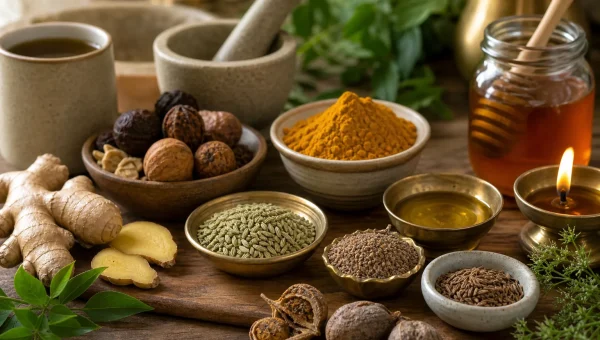
- Oil choice: Use a clean, practitioner-recommended ear oil. Plain warm sesame oil may be used only by those already advised that it suits them; stronger medicated oils should be selected by a qualified Ayurvedic practitioner.
- Temperature: Warm only to comfortable body temperature. The oil should feel neutral and soothing on the inner wrist, never hot.
- Amount: Use a small amount, such as 2-3 drops, rather than flooding the ear during the acute post-noise period.
- Method: Lie with the treated ear facing upward, instill the drops gently, rest for 5-10 minutes, then wipe only the outer ear. Do not push cotton buds or plugs deep into the canal.
- Timing: Evening use is preferred when the aim is Vata calming and sleep support. Stop if pain, irritation, blocked sensation, dizziness, or discharge appears.
- Absolute safety rule: Do not put oil or any ear drops into the ear after blast exposure, gunshot exposure, bleeding, drainage, suspected ruptured eardrum, severe pain, sudden hearing loss, or vertigo unless an ENT clinician has cleared the ear.
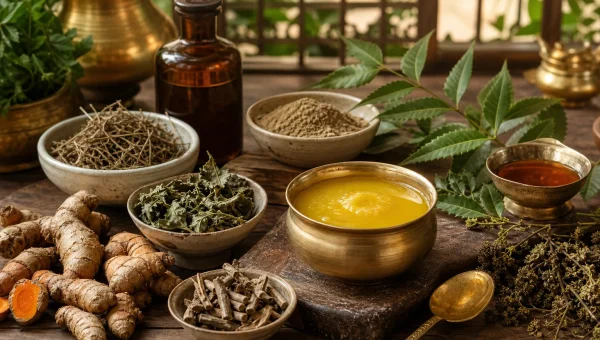
For chronic noise-related tinnitus, Karna Purana is not a cure for damaged inner-ear hair cells. Its role is supportive: reducing dryness, calming Vata, easing the jaw-neck-ear region, and making the evening routine more settled. Prescription oils such as Brahmi-based, Bala-based, or other classical taila preparations should be individualized according to constitution, symptoms, season, and ear status.
Nasya for Prana Vata and Head-Sense Support
Nasya is the Ayurvedic nasal route used for the head and sense-organ region. Classical teaching describes the nose as the gateway to the head, and Charaka includes Anu Taila Nasya within daily regimen for nourishing and supporting the sense organs. In acoustic trauma recovery, Nasya may be used by a practitioner to calm Prana Vata, support the head-neck region, and reduce dryness or tension that worsens ear discomfort.
A mild Pratimarsha-style Nasya approach is generally gentler than intensive nasal therapy, but it should still be individualized. It is not a replacement for ENT care and should be avoided or deferred during acute infection, fever, heavy congestion, immediately after meals, or whenever the person feels worse with oil use. People with complex medical conditions, pregnancy, chronic sinus disease, or medication use should take guidance before using nasal oils.
Internal Rasayana and Nervine Support
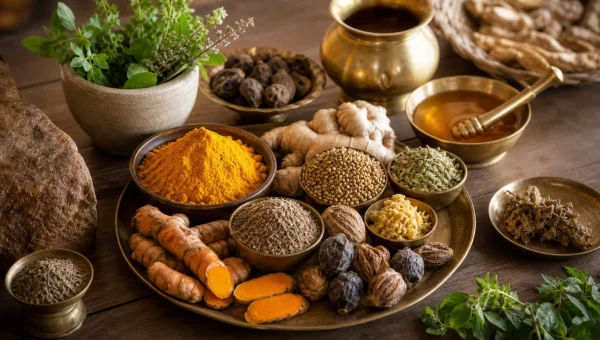
Internal herbs for acoustic trauma should be framed as supportive Rasayana and nervous-system care, not as a promise to regenerate destroyed hair cells or reverse permanent sensorineural hearing loss. A qualified Ayurvedic practitioner may choose herbs that nourish, calm Vata, support sleep, reduce stress reactivity, and provide antioxidant nutritional support while the person also follows hearing-protection and medical guidance.
- Amalaki: Amalaki is a classical Rasayana fruit used for nourishment, Pitta soothing, and antioxidant support. It is most appropriate when the post-noise picture includes heat, irritability, dryness after strain, or a need for gentle daily rejuvenation.
- Brahmi: Brahmi is used as a Medhya Rasayana for mental calm, attention, and nervous-system steadiness. Because the name Brahmi may refer to Bacopa monnieri, Centella asiatica, or regional combinations, the exact botanical and dose should be specified rather than assumed.
- Ashwagandha: Ashwagandha is a Rasayana herb traditionally used for Vata depletion, stress resilience, strength, and sleep support. It is better suited to dry, anxious, depleted, insomnia-linked tinnitus patterns than to hot, inflamed, or highly Pitta presentations.
Herbs should be avoided or used only with medical supervision during pregnancy, complex illness, liver disease, autoimmune disease, thyroid medication use, sedative use, or when taking anticoagulants, anticonvulsants, psychiatric medicines, or other prescription drugs. The safer principle is to treat the person and the pattern, not the word “tinnitus” alone.
Bhramari and Sound Enrichment for Tinnitus
Nada Chikitsa, the therapeutic use of sound, supports the same practical aim used in modern tinnitus care: reducing the contrast between tinnitus and silence, calming the nervous system, and training attention away from the ringing. Bhramari Pranayama is a simple form of humming sound practice that creates a soft internal vibration without exposing the ear to loud external sound.
Gentle Bhramari practice:
- Sit upright with the jaw relaxed and the shoulders soft.
- Inhale quietly through the nose without strain.
- Exhale with a low, smooth humming sound, like a bee, keeping the volume comfortable.
- Practice 5-10 rounds once or twice daily, preferably in a calm room.
- Do not press the ears closed during acute ear pain, pressure, dizziness, infection, or suspected trauma.
For night-time tinnitus, gentle sound enrichment may be more useful than total silence. A fan, rain sound, soft nature sound, or white noise at a very low volume can reduce the sharp contrast that makes ringing feel intrusive. The sound should remain below conversational level and should never be used to mask tinnitus at a loud volume.
Recovery Lifestyle and Hearing Protection
The recovery environment is central to acoustic-trauma care. The ear should be protected from a second loud exposure while symptoms are settling, and the nervous system should be kept steady through sleep, hydration, regular meals, and reduced stimulatory load. This is both practical hearing conservation and Ayurvedic Vata management.
- Protect the ear: Avoid concerts, loud speakers, power tools, fireworks, gunfire, and prolonged traffic noise during the recovery period. Use properly fitted hearing protection when loud sound cannot be avoided.
- Pause headphone strain: Avoid headphones during active muffled hearing or ringing. When returning to them, use low volume, short sessions, and breaks.
- Choose gentle sound, not harsh silence: If tinnitus becomes more obvious in quiet rooms, use low-level neutral background sound rather than loud masking.
- Support sleep: Keep a regular bedtime, reduce late-night screens, and use a calming evening routine such as warm foot massage, quiet breathing, or practitioner-approved oiling.
- Limit aggravators: Excess alcohol, nicotine, and large amounts of caffeine can worsen tinnitus perception in some people. Do not start high-dose aspirin or frequent painkillers for ear symptoms without medical advice.
- Do not change prescribed medication alone: Some medicines can be associated with tinnitus or hearing symptoms, but stopping them abruptly can be dangerous. Speak with a healthcare provider if symptoms began after a medication change.
When to Seek Urgent Care
Seek urgent ENT or emergency medical care for sudden hearing loss, one-sided hearing loss, severe ear pain, vertigo, bleeding, fluid discharge, blast or gunshot exposure, head injury, facial weakness, neurological symptoms, or tinnitus that appears with sudden hearing reduction. Do not put oil, herbal drops, or any liquid into the ear when eardrum rupture is possible. Acoustic trauma with significant hearing loss belongs first in medical evaluation; Ayurveda can support recovery once danger signs have been addressed.
Medical Disclaimer: Acoustic trauma with significant hearing loss, sudden hearing loss, suspected tympanic membrane rupture, blast exposure, vertigo, bleeding, discharge, or severe pain requires urgent evaluation by an ENT specialist or qualified healthcare provider. Permanent sensorineural hearing loss from hair-cell destruction cannot be reversed by herbs, oils, pranayama, or home remedies. Use Ayurvedic ear oil, Nasya, herbs, and breathing practices only with appropriate guidance and never as a reason to delay medical care.
Nothing in this article diagnoses or treats a medical condition. Use it as educational information and consult a qualified Ayurvedic practitioner or healthcare provider before starting herbs, supplements, oils, Nasya, or therapeutic protocols, especially if pregnant, managing a condition, treating a child, or taking medication.
References
- Nidcd (nidcd.nih.gov)
- Nidcd (nidcd.nih.gov)
- World Health Organization
- NCBI
- Nidcd (nidcd.nih.gov)
- My (my.clevelandclinic.org)
- Mayoclinic (mayoclinic.org)
- Mayoclinic (mayoclinic.org)
- Nidcd (nidcd.nih.gov)
- Charaka Samhita — Matrashiteeya Adhyaya
- Easyayurveda (easyayurveda.com)
- Easyayurveda (easyayurveda.com)
- NCBI
- An overview on ashwagandha: a Rasayana (rejuvenator) of Ayurveda (2011), PubMed Central
- Phyllanthus emblica: a comprehensive review of its phytochemical composition and pharmacological properties (2023), PubMed Central
- Sciencedirect (sciencedirect.com)
- Mayoclinic (mayoclinic.org)
- Merckmanuals (merckmanuals.com)