Autumn Dry Skin Ayurvedic Moisturizing: The Seasonal Skin Shift
Autumn dry skin Ayurvedic moisturizing is not about applying the same moisturizer year-round; it is about noticing how the skin changes as the climate moves from the heat and humidity of late summer toward cooler, drier days. In the classical Indian seasonal frame, Sharada is placed roughly from mid-September to mid-November, and Hemanta from mid-November to mid-January. This makes October-November a practical transition window for skin care: the routine should remain gentle enough for post-summer Pitta sensitivity while gradually adding the unctuous, warming, Vata-supportive measures needed as cold and dryness increase.
Ayurveda describes Sharada as a season in which Pitta is easily aggravated, while Hemanta introduces stronger cold exposure and a greater need for nourishment, oiling and warmth. For skin care, this means avoiding harsh scrubbing, overheating, excessive fragrance and overly stimulating treatments, while introducing damp-skin oiling, richer emollients and a protective seal where the skin feels tight, flaky or rough.
Bhrajaka Pitta is traditionally associated with the skin’s complexion and radiance rather than being a literal moisturizer. A balanced autumn routine supports this natural luminosity by protecting the skin barrier, calming visible heat and preserving softness through properly timed hydration and oiling.
The Layered Moisturizing Approach
The biggest mistake in autumn skin care is applying a thick balm to skin that is already dry and dehydrated. A better approach is sequential: first dampen the skin, then apply a small amount of oil or emollient, then seal areas that lose moisture quickly. This Ayurvedic-style layering also matches modern skin-barrier care, where hydration, emollients and occlusives work together to reduce water loss from the outer skin layer.
| Layer | Product Type | Ayurvedic-Inspired Option | Skin Function |
|---|---|---|---|
| Layer 1 – Hydration | Water-based dampening | Clean water, a simple fragrance-free mist, or a very mild floral water if tolerated | Dampens the stratum corneum before oiling |
| Layer 2 – Oil | Thin oil layer | Warm sesame oil for the body; a lighter facial oil only if it suits the skin | Provides snigdha, emollient support |
| Layer 3 – Moisturize | Creamy emollient | Small amount of ghee-sesame blend or a plain, fragrance-free cream | Softens rough, flaky areas |
| Layer 4 – Seal | Occlusive balm | Beeswax-based body balm used sparingly on shins, heels, elbows and hands | Reduces transepidermal water loss |
Apply these layers after bathing while the skin is still slightly damp. Use the richest seal only where dryness is pronounced; the face, chest and acne-prone areas usually need a lighter hand than the shins, feet, elbows and hands.
The Autumn Body Oil: Sesame-Based Warm Blend
Sesame oil, or Tila Taila, is one of the most suitable autumn body oils in Ayurveda when the skin feels dry, rough and cold. Classical references describe Tila as snigdha, guru, sukshma, ushna in virya, Vata-pacifying and useful for snehana. Its modern fatty-acid profile also makes it a practical emollient oil, as sesame oil is rich in oleic and linoleic acids and contains antioxidant lignans and tocopherols.
DIY autumn body oil recipe:
- 100 ml cold-pressed, untoasted sesame oil
- 10-20 ml almond oil, optional, only if there is no nut sensitivity
- 1 teaspoon dried rose petals, optional, for a mild aromatic preparation
- 3-4 strands saffron, optional, used sparingly
Preparation: Warm the sesame oil gently using a double boiler. Add the optional rose petals and saffron, keep the heat very low for 20-30 minutes, then strain through clean cloth into a dry glass bottle. Do not fry the herbs or allow water to enter the oil. Prepare a small batch and discard it if the smell, texture or appearance changes.
Application technique: Warm the bottle in a bowl of hot water, then apply the oil to clean, slightly damp skin. Use slow, gentle strokes on the limbs and circular strokes around joints. Leave it on for 10-20 minutes before a lukewarm bath, or apply a very thin layer after bathing if the skin remains tight.
The Autumn Body Butter: Ghee-Beeswax Seal
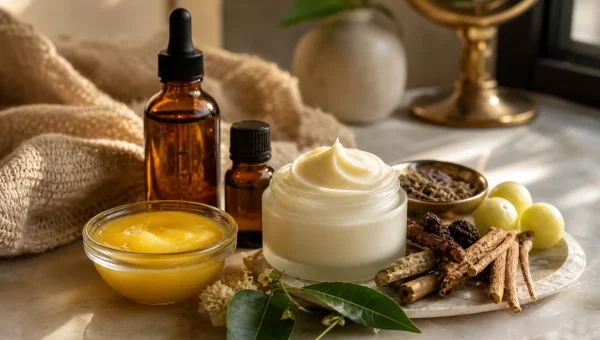
A ghee-beeswax body butter is a rich sealing preparation for the driest parts of the body during the autumn-to-early-winter transition. Beeswax functions as an occlusive waxy layer, while ghee, sesame oil and butter-like emollients soften the skin surface. This preparation is best used in a thin layer on intact skin, especially over damp skin or over a light oil layer.
Recipe for a small batch:
- 2 tablespoons grated beeswax or beeswax pellets
- 2 tablespoons cow’s ghee
- 2 tablespoons shea butter or cocoa butter as a modern emollient base
- 1 tablespoon sesame oil
- A small pinch of sandalwood powder, optional, if well tolerated
Preparation: Melt the beeswax and shea or cocoa butter in a double boiler. Remove from heat and stir in the ghee and sesame oil until smooth. Add sandalwood only after the mixture begins cooling. Pour into a clean, dry tin or glass jar and let it set. Apply a pea-sized amount to shins, heels, elbows, forearms and hands after oiling. Avoid applying heavy beeswax balms to acne-prone facial skin.
Face-Specific Autumn Lepa
The face often becomes reactive in autumn because it is exposed to wind, washing, indoor dryness and temperature changes. Facial autumn care should therefore be gentler than body care: shorter masks, less scrubbing, fewer essential oils and only a few drops of oil on damp skin.
Gentle autumn facial lepa:
- 1 tablespoon finely milled red lentil flour
- Enough warm milk or plain water to make a soft paste
- 2-3 drops sesame oil, almond oil or a facial oil already known to suit your skin
- A tiny pinch of sandalwood powder, optional, for Pitta-prone heat and redness
Apply the paste to the face and neck for 5-8 minutes only; do not let it dry into a hard crust. Rinse with lukewarm water using light pressure, pat dry, then apply 1-3 drops of a suitable facial oil while the skin is still slightly damp. If Kumkumadi Taila already suits your skin, it can be used in this step at night in a very small quantity. If the face is acne-prone, rosacea-prone or easily irritated, keep the routine simpler and avoid heavy oils and occlusive balms.
The Pre-Bath Oil Ritual: Abhyanga Adaptation
Abhyanga becomes especially valuable as the weather moves toward Hemanta. Classical seasonal guidance for cold weather includes oil massage, body rubbing, head oiling, warmth and protection from cold wind. For autumn dry skin, the practical adaptation is warm sesame oil on the body before bathing, followed by a gentle bath that does not strip away every trace of oil.
Use 2-4 tablespoons of warm sesame oil for the body. Apply it 10-20 minutes before bathing, protect the floor from slipping, then bathe with lukewarm water and a mild cleanser only where needed. After bathing, pat dry rather than rubbing hard. If the skin still feels tight, apply a thin second layer of oil or a small amount of beeswax body butter to the driest areas.
The same seasonal logic may be applied to scalp care when the scalp becomes dry, flaky or tight, but medicated hair oils and scalp treatments should be chosen according to prakriti, scalp condition and tolerance. The comprehensive hair oiling guide explains scalp-specific oiling choices in more detail.
When to Modify the Protocol
Use sesame oil and richer seals when the skin is dry, rough, cold, flaky and tight. Use a lighter routine when the skin is hot, red, itchy, acne-prone or rash-prone. During active eczema, psoriasis, rosacea, infection, open wounds or unexplained irritation, avoid home experiments and get individualized guidance before applying oils, herbs, masks or occlusive preparations.
Safety Disclaimer: The recipes and practices in this article are general skincare guidance. Patch test every new oil, lepa or balm on the inner forearm before full application. Avoid nut oils if you have nut sensitivity, avoid beeswax if you react to bee products, and stop any preparation that causes burning, itching, rash or swelling. People with eczema, psoriasis, rosacea, acne, allergies or other dermatological conditions should consult a dermatologist or qualified Ayurvedic practitioner before changing their skincare routine.
Nothing in this article diagnoses, treats or cures a medical condition. Use it as educational information and consult a qualified Ayurvedic practitioner or healthcare provider before starting herbs, medicated oils, supplements, detoxes or therapeutic protocols, especially if pregnant, managing a health condition or taking medication.
References
- Charaka Samhita — Tasyashiteeya Adhyaya
- Charaka Samhita — Ritucharya
- Charaka Samhita — Kala
- Charaka Samhita — Shadvirechanashatashritiya Adhyaya
- Ayurvedic Pharmacopoeia of India
- Extension (extension.okstate.edu)
- Frontiersin (frontiersin.org)
- Transepidermal water loss (TEWL): Environment and pollution-A systematic review (2022), PubMed Central
- Seasonal changes in epidermal ceramides are linked to impaired barrier function in acne patients (2018), PubMed
- NCBI
- Aad (aad.org)
- Aad (aad.org)