
Ritu Sandhi: Navigating the Seasonal Transition to Protect Dosha Balance
Ritu sandhi is the Ayurvedic seasonal junction: the period where one ritu, or season, gives way to the next. In the classical description, it is not merely a single week but a fourteen-day bridge made of the last seven days of the outgoing season and the first seven days of the incoming season. Ayurveda treats this window as important because the body is moving from one pattern of diet, activity, digestion, sleep, temperature, and dosha expression into another.
Ashtanga Hridaya explains that, during ritu sandhi, the regimen of the previous season should be given up gradually and the regimen of the next season should be adopted gradually. Sudden discontinuation or sudden adoption of a different regimen may create asatmya, a state of non-habituation in which the body has not adjusted to the new diet and routine. The practical point is simple: do not change food, herbs, exercise, sleep, oiling, and exposure habits abruptly at the turn of a season.
Seasonal living is also affected by place. The classical Indian calendar places each ritu in two-month blocks, but actual climate differs by region, altitude, humidity, urban heat, and personal constitution. A person in North India, South India, Europe, or North America may feel the same Ayurvedic transition at slightly different calendar dates. For practical use, follow the classical pattern while also observing the local signs of the season: temperature, wind, dryness, rainfall, daylight, appetite, skin dryness, bowel pattern, sleep, and energy.
The Autumn-to-Winter Ritu Sandhi
The transition from sharad ritu, autumn, to hemanta ritu, early winter, is a shift from pitta-pacifying autumn care toward the stronger agni and greater cold-season nourishment of early winter. In the traditional Indian seasonal framework, sharad runs roughly from mid-September to mid-November and hemanta from mid-November to mid-January. In cooler climates, or in years when cold sets in late, the practical transition may be felt closer to late November or early December.
Sharad is the season in which pitta that has accumulated during the rainy season becomes aggravated. Its diet therefore emphasizes light foods with bitter, sweet, and astringent qualities, such as shali rice, mudga, amla, patola, and honey, while avoiding excessive sun, curd, heavy food, strong alcohol, day sleep, and excess oil or fat. Hemanta, by contrast, is described as a season of strong body strength and powerful digestive fire, with emphasis on nourishing, unctuous, warm foods and the sweet, sour, and salty tastes. The ritu sandhi practice is the art of moving from one pattern into the other without shocking digestion.
| Transition Phase | Diet Transition | Herbal Transition | Lifestyle Transition |
|---|---|---|---|
| Days 1-3 | Continue mostly autumn food: warm but light meals, shali rice, mudga, cooked vegetables, and mild bitter-sweet-astringent flavors. Begin reducing very cold drinks and raw meals. | Avoid starting strong heating herbs on your own. Keep herbs simple unless already prescribed. | Reduce excess sun exposure and late nights. Begin warming the morning routine gently. |
| Days 4-7 | Make most meals cooked and warm. Add soups, thin khichdi, soft grains, mung preparations, and moderate ghee if digestion is clear. | If a practitioner has advised digestive support, this is the window to adjust it gradually rather than abruptly. | Begin regular oiling with a suitable vata-pacifying oil if appropriate. Keep exercise steady but not exhausting. |
| Days 8-10 | Increase hemanta-style nourishment: warm grains, dal, root vegetables, wheat preparations, milk foods if suitable, ghee, and sour-salty accents in moderation. | Chyawanprash or other rasayana preparations may be considered only when suitable for the person, appetite, season, and medical context. | Protect the body from cold wind, use warm water for bathing, and keep the feet and head warm in colder regions. |
| Days 11-14 | Settle into the early-winter pattern: warm, unctuous, nourishing food matched to appetite and activity. Avoid skipping meals when hunger is strong. | Continue only the herbs that are appropriate and tolerated. Heating formulas such as trikatu are not universal winter supplements. | Maintain abhyanga, warmth, regular meals, steady movement, and sufficient sleep as the winter baseline. |
A Gentle Digestive Reset During Ritu Sandhi
A ritu sandhi reset should be gentle, warm, and food-based unless a qualified practitioner has specifically prescribed a therapeutic procedure. It is not the right moment for a harsh fast, unsupervised purgation, extreme calorie restriction, or aggressive detox. The purpose is to simplify digestion while the body is adjusting to the new season.
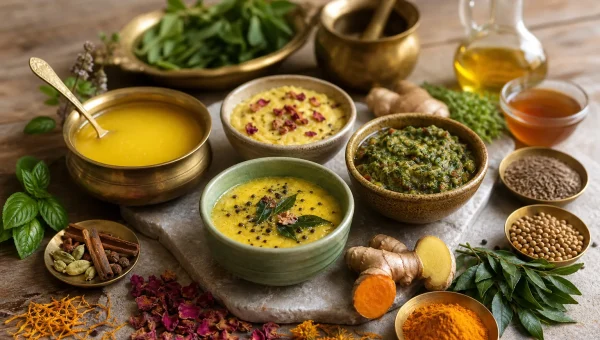
For many people, two to three days of simple warm meals can be enough: soft khichdi made from rice and split mung, thin mung soup, cooked vegetables, warm water, small amounts of ghee when suitable, and mild spices such as cumin, coriander, fennel, or fresh ginger according to constitution. This approach keeps the diet light enough for agni to organize itself while still giving nourishment. People with diabetes, pregnancy, eating disorders, frailty, chronic illness, medication use, or a history of digestive disease should not attempt any cleanse without professional guidance.
Classical autumn care also mentions pitta-pacifying measures such as bitter ghee, virechana, and raktamokshana, but these are clinical therapies rather than home wellness practices. They belong under the supervision of a qualified Ayurvedic practitioner, not in a general seasonal self-care routine.
The Autumn-to-Winter Dosha-Specific Adjustments
The same seasonal transition does not affect every constitution in the same way. Autumn-to-winter care should be adjusted according to prakriti, current imbalance, climate, age, work demands, and digestive strength.
Vata types: This transition often feels drying, cooling, and destabilizing. Favor warm, cooked, moist, and grounding meals; regular mealtimes; adequate healthy fats; warm oil abhyanga; protection from cold wind; and a steady sleep schedule. Watch for constipation, anxiety, disturbed sleep, dry skin, cracking joints, and irregular appetite. If these appear strongly, increase warmth and routine rather than adding many herbs at once.
Pitta types: Autumn is pitta’s sensitive season, and early winter gradually calms pitta through coldness. Do not jump too quickly from autumn cooling foods into very hot, pungent, fried, sour, or salty winter foods. Keep some light, pitta-friendly elements in the first half of the transition, such as cooked mung, rice, bitter greens, amla, and gentle ghee. As winter appetite strengthens, add nourishment without overheating the system.
Kapha types: Early winter may improve strength, but heavy food, day sleep, low movement, excess sweets, and excess dairy can create dullness and congestion in kapha-prone people. Favor warm cooked meals, brisk morning movement, lighter dinners, ginger water if suitable, and occasional dry powder massage or dry brushing. Kapha accumulation is classically associated more with late winter and its aggravation with spring, so the autumn-to-winter window is a good time to prevent heaviness before it becomes established.
Kitchen Transitions: What Goes, What Comes In
The practical kitchen transition is the heart of ritu sandhi. During sharad, the diet protects pitta with lighter, cooler-in-effect foods and bitter, sweet, and astringent tastes. During hemanta, the diet must support stronger appetite, cold weather, and the need for warmth and lubrication. The skill is to move slowly from one emphasis to the other.
Phase down gradually: frequent raw salads, cold smoothies, chilled drinks, very light summer-style meals, excessive bitter-only eating, and the habit of under-eating when true hunger is strong. Also reduce the autumn restrictions only gradually; do not suddenly overload the system with heavy curd, fried food, excess oil, or excessive sour and salty foods.
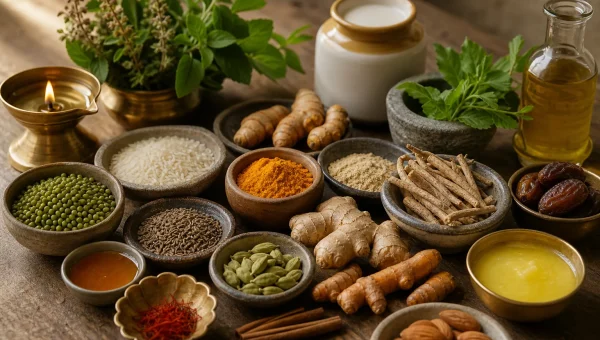
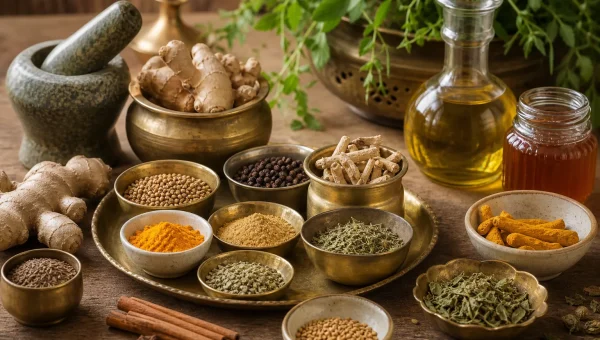
Phase in gradually: warm breakfasts, soups, stews, soft khichdi, mung dal, cooked root vegetables, wheat preparations if tolerated, ghee, suitable milk preparations, warm water, and vata-pacifying oil massage. Fresh ginger, cumin, coriander, fennel, black pepper, cinnamon, and mustard seed may be used according to constitution and digestive tolerance, but the spicing should support digestion rather than irritate pitta.
By the end of the fourteen-day transition, the digestive system should no longer feel confused by alternating cold, raw, light meals and heavy winter meals. Warm cooked food should feel natural, appetite should be steady, bowel movements should remain regular, and energy should feel grounded rather than heavy.
Ritu Sandhi as Preventive Medicine Practice
Ritu sandhi is a preventive discipline within ritucharya. Ayurveda describes seasonal dosha movement through accumulation, aggravation, and pacification; if seasonal regimens are ignored, dosha disturbance can progress into deeper stages of pathogenesis. The value of ritu sandhi is that it addresses imbalance early, before it becomes firmly expressed as illness.
Over many years, the person who respects seasonal junctions learns to read the body before it becomes loud. Dryness, heaviness, acidity, disturbed sleep, congestion, low appetite, strong hunger, mood fluctuation, and bowel change are treated as seasonal messages rather than random inconveniences. In this way, ritu sandhi becomes more than a diet plan: it becomes a recurring checkpoint for agni, dosha balance, sleep, movement, and resilience.
Medical Disclaimer: This article is for educational and lifestyle guidance only. Seasonal routines, herbs, rasayana preparations, cleansing practices, and therapeutic procedures should be adapted to the individual. Consult a qualified Ayurvedic practitioner and healthcare provider before starting herbs, supplements, purgation, detoxes, fasting, or major dietary changes, especially if pregnant, nursing, elderly, underweight, managing a medical condition, or taking medication.
Nothing in this article diagnoses, treats, or cures a medical condition. Use it as educational information and seek professional care for persistent symptoms or health concerns.
Can the ghee-based preparations be taken by someone with elevated LDL cholesterol?
That’s my concern too. My lipid numbers are already borderline and I’ve been cautious about adding ghee. If the ghee is used in small therapeutic amounts rather than as a cooking fat, the impact on LDL might be minimal, but I’d want to check with a doctor first.
Is the protocol different for someone in a tropical climate where the temperature drop is minimal?
Do children need to follow a modified version of the Ritu Sandhi guidelines?
Does it still count if I missed the first three days of the transition window and started on day four?