
My Grandmother’s Kitchen Smelled Like a Temple
Every morning at 5 AM, my Nani would start cooking. Not just any cooking, but a deliberate, almost meditative preparation of food that she believed could shape the mind. Fresh moong dal simmered with cumin and hing. Chapatis rolled from whole wheat. Seasonal vegetables cooked with mild spices, enough ghee to make them soft, and enough attention to make the whole kitchen feel quiet. She never used the word “sattvic.” She just said, “Yeh khana dimag ko saaf rakhta hai” — this food keeps the mind clean.
Decades later, I understand that she was practicing one of the most cherished dietary frameworks in the yoga-Ayurveda tradition. A sattvic way of eating is not a crash diet or a punishment plan. It is a way of choosing food that is fresh, digestible, moderate, cleanly prepared, and supportive of steadiness, clarity, and spiritual practice.
What Makes Food Sattvic, Rajasic, or Tamasic?
In the language of the three gunas, food is understood by the quality it tends to encourage in body and mind. The Bhagavad Gita describes sattvic food as nourishing, wholesome, pleasing, and supportive of life, strength, health, happiness, and satisfaction. Rajasic food is described as excessively bitter, sour, salty, hot, pungent, dry, or burning. Tamasic food is described as stale, tasteless, putrid, leftover, impure, or unsuitable for clear living.
| Quality | Traditional Effect | Typical Foods | After Eating You May Feel |
|---|---|---|---|
| Sattvic | Clarity, steadiness, contentment | Fresh fruits, cooked vegetables, whole grains, mild pulses, milk, ghee, nuts, seeds, natural sweeteners used moderately | Light, nourished, calm |
| Rajasic | Heat, stimulation, restlessness, drive | Very spicy, very sour, very salty, fried, caffeinated, or intensely stimulating foods | Stimulated, heated, restless, craving more |
| Tamasic | Heaviness, dullness, lethargy, cloudiness | Stale leftovers, spoiled food, overprocessed food, alcohol, heavy and hard-to-digest food | Heavy, sleepy, foggy |
Preparation matters as much as the ingredient. A fresh bowl of warm dal can be sattvic in effect, while the same food eaten stale, cold, or after it has lost its freshness moves away from that quality. Ayurveda’s practical rule is simple: eat food that is warm, freshly prepared, suitable to your digestion, and taken with attention rather than distraction.
The Complete Sattvic Foods List
This list keeps the spirit of the kitchen I grew up in: fresh, seasonal, vegetarian, mildly spiced, and easy to digest. It also leaves room for constitution, season, appetite, and local availability.
Grains (Dhanya)
Grains give structure and steadiness to a sattvic meal when cooked well and eaten in the right quantity. Traditional Indian kitchens often favor rice and wheat, while barley is especially valued in Ayurveda for lighter, drying qualities useful where Kapha heaviness is present.
- Basmati rice or other good-quality rice, preferably well washed and cooked soft
- Whole wheat chapati or phulka made fresh
- Barley (yava), especially for those who tolerate lighter, drier grains well
- Millets, amaranth, or quinoa when suited to digestion and region
- Oats, preferably plain and cooked rather than instant sweetened packets
Legumes (Shimbi)
Legumes provide substance and protein, but in sattvic cooking they are usually soaked, cooked soft, and seasoned with digestion-friendly spices. Moong is especially loved because it cooks easily and is gentle compared with heavier beans.
- Moong dal, yellow or green, cooked soft
- Masoor dal, split and hulled, used moderately
- Toor dal, well cooked and taken according to digestion
- Fresh green peas
- Simple kitchari made from rice and moong dal
Dairy (Dugdha)
Traditional sattvic food often includes dairy, especially milk and ghee, but only when it is fresh, ethically sourced where possible, and well tolerated. People who do not digest dairy well can keep the sattvic principle by choosing simple, nourishing vegetarian foods without forcing milk products.
- Fresh cow’s milk, boiled and taken warm when suitable
- Ghee used in small, appropriate quantities
- Fresh paneer made the same day
- Fresh curd or yogurt, preferably not old, sour, or taken at night
- Fresh buttermilk (takra), diluted and spiced lightly when appropriate
Fruits and Vegetables
Fresh, seasonal produce is central to sattvic cooking. Fruits are usually best eaten simply and separately, while vegetables are often cooked until tender with mild spices and a little ghee or oil.
- Seasonal fruits such as mango, pomegranate, dates, figs, banana, apple, pear, papaya, and grapes
- Gourds such as lauki, parwal, tinda, pumpkin, and ash gourd
- Carrots, beets, sweet potatoes, and tender greens
- Cucumber and coriander for cooling freshness when digestion allows
- Lightly cooked seasonal sabzi rather than heavy, greasy preparations
Sweeteners and Fats
Sattvic food is not sugar-free, but sweetness is used with restraint. Ghee is valued for nourishment, while honey is traditionally treated with caution and should not be cooked or heated.
- Raw honey added only after food or drink has cooled to a comfortable temperature
- Jaggery or unrefined cane sugar in small amounts
- Ghee in quantities suited to appetite and constitution
- Fresh coconut
- Sesame oil or other good-quality oils used moderately
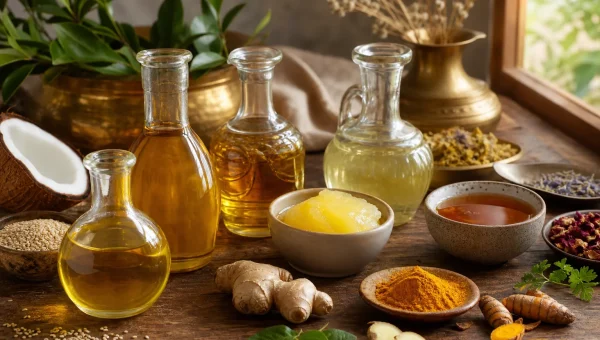
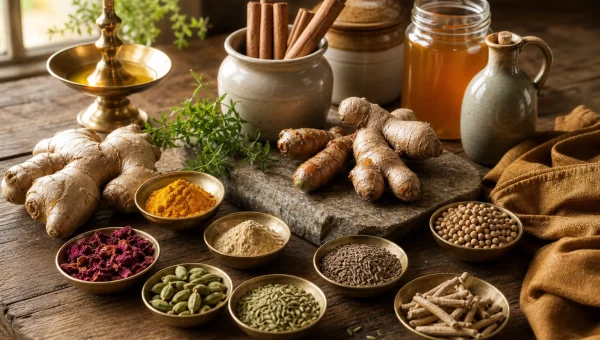
Spices (Sattvic-Friendly)
Sattvic spice use is gentle. The aim is not to numb the tongue or provoke heat, but to make food aromatic, digestible, and satisfying.
- Turmeric (haridra)
- Cumin (jeera)
- Coriander (dhania)
- Fennel (saunf)
- Fresh ginger in small amounts
- Cardamom (elaichi)
- Saffron (kesar) in small culinary quantities
- Asafoetida (hing), especially in dal and legume dishes
The Big Question: What About Onion and Garlic?
This is the most common question I get. Many strict sattvic and yogic kitchens avoid onion and garlic because they are considered too stimulating for meditation, mantra practice, and subtle mental steadiness. My Nani never used either in her morning cooking, though garlic appeared in specific household preparations when someone needed stronger, warming support.
Ayurveda does not treat garlic as useless or forbidden in every context. Lashuna, or garlic, is a recognized medicinal and dietary substance in Ayurvedic literature, valued especially for its strong, heating, penetrating character. That is exactly why strict sattvic cooking usually keeps it out of daily meditative meals: not because it has no value, but because its value belongs to a different purpose.
For spiritual practice, retreats, mantra sadhana, or periods of deep meditation, avoid onion and garlic completely. For everyday household eating, a person who is not following strict sattvic discipline may use them moderately if they suit digestion, season, and health needs. The sattvic principle is not perfectionism; it is clarity, moderation, and appropriateness.
A Full Day of Sattvic Eating: Practical Meal Plan
A sattvic day is built around freshness, regular timing, simple cooking, and a calm eating environment. The meals below are practical for an Indian kitchen and can be adjusted for constitution, appetite, climate, and medical needs.
Early Morning (6:00 AM)
Warm spiced milk or herbal tea
Heat 1 cup of milk with a pinch of cardamom and a small pinch of turmeric if it suits you. Let it cool to a comfortable drinking temperature before adding a little honey, or skip the honey and drink it plain. This kind of warm, simple start is meant to settle Vata and begin the day without shocking digestion.
Breakfast (7:30–8:00 AM)
Poha with vegetables
This was a staple in our house, and I still make it weekly because it is quick, light, and satisfying when prepared fresh.
- 1.5 cups thick poha, rinsed and drained
- 1 tablespoon ghee
- 1/2 teaspoon cumin seeds
- 8–10 curry leaves
- 1/2 cup fresh green peas
- 1 medium carrot, finely diced
- 1/4 teaspoon turmeric
- Salt to taste
- Fresh coriander leaves and a squeeze of lemon to finish
Heat ghee in a pan. Add cumin and curry leaves. Add the vegetables with turmeric and a few tablespoons of water. Cook covered until just tender. Add the drained poha and salt, then toss gently until warm and soft. Finish with lemon and coriander. Serve immediately.
For a fuller routine, pair this with a steady Ayurvedic morning routine rather than eating while rushing, scrolling, or standing.
Lunch (12:00–1:00 PM), The Main Meal
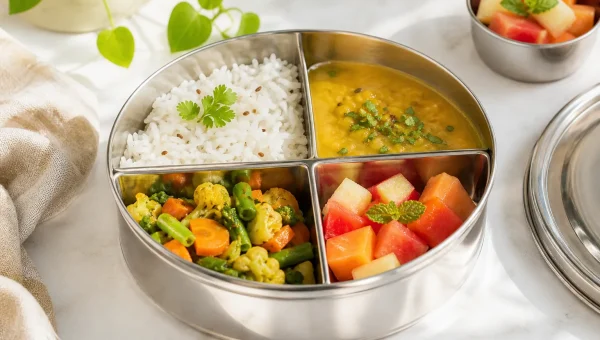
Classic sattvic thali
Lunch is traditionally treated as the main meal because the middle of the day is the natural time for stronger appetite and activity. Keep it complete but not excessive: grain, dal, vegetable, a small accompaniment, and a quiet few minutes to eat properly.
A balanced sattvic thali may include:
- Grain: 1 cup steamed rice or 2 fresh chapatis
- Dal: Soft moong dal with mild tadka
- Vegetable: Seasonal sabzi cooked with ghee and gentle spices
- Fresh side: Cucumber, carrot, or beet in small quantity if digestion allows
- Accompaniment: Fresh buttermilk or a small bowl of fresh curd when suitable
My Nani’s Moong Dal Recipe
This is the foundation of sattvic cooking in many homes: soft, warm, fragrant, and easy to digest. The beauty is in restraint.
- 1 cup yellow moong dal, washed well
- 3 cups water
- 1/2 teaspoon turmeric powder
- 1 tablespoon ghee
- 1 teaspoon cumin seeds
- 1 small pinch hing
- 1 small piece of fresh ginger, grated, optional
- Salt to taste
- Fresh coriander and a squeeze of lemon to finish
Cook the dal with water and turmeric until soft and slightly broken down. In a small pan, heat ghee, add cumin, then hing and ginger if using. Pour this over the cooked dal. Add salt, simmer briefly, and finish with coriander and lemon. Eat warm, not as a cold leftover.
For a deeper reset, the kitchari cleanse protocol follows the same foundation of rice, moong, ghee, mild spices, warmth, and simplicity.
Evening (4:00 PM)
Fresh fruit or soaked almonds
Choose one seasonal fruit, or take 5–6 almonds soaked overnight and peeled. Keep this snack simple. The aim is to refresh energy without spoiling dinner or creating heaviness.
Dinner (6:30–7:00 PM)
Light and early
Dinner should be lighter than lunch and finished well before sleep. Soft khichdi made with rice and moong dal, vegetable soup, or a small portion of dal with cooked vegetables works better than a heavy, oily meal late at night.
What Happens When You Eat Sattvic for 21 Days
I did this experiment myself before recommending it to anyone. For three weeks, I ate strictly sattvic: no coffee, no onion or garlic, no leftovers, no processed food, and no eating in a rush. The change was not dramatic in a cinematic way; it was quieter than that.
- Days 1–5: The strongest change was caffeine withdrawal. Food felt mild, and I noticed how much I depended on stimulation rather than nourishment.
- Days 6–12: My appetite became more regular. Sleep felt easier when dinner was light and early.
- Days 13–21: Meditation felt less forced. I could taste simple spices more clearly, and the mind had a quieter kind of focus.
The point of a 21-day sattvic period is not to prove superiority over every other diet. It is a practical way to experience how freshness, regularity, mildness, and restraint affect your own body and mind.
Common Mistakes People Make
Most people do not fail at sattvic eating because the food is difficult. They fail because they turn it into another rigid identity. Sattvic eating works best when it is steady, warm, fresh, and realistic.
- Going 100% overnight. Start with one sattvic meal per day, usually lunch, and build from there.
- Calling all raw food sattvic. Raw food is not automatically sattvic. Cold smoothies and large raw salads can aggravate Vata in some people. Sattvic food is often cooked, warm, and easy to digest.
- Treating it as a weight-loss diet. Its traditional purpose is clarity, moderation, and spiritual steadiness. Weight changes may happen, but they are not the central aim.
- Ignoring Prakriti and season. A Kapha-dominant person may need less dairy and sweetener than a Vata-dominant person. Your dosha assessment should shape the details.
- Eating “sattvic” food in a tamasic way. Fresh khichdi eaten while angry, distracted, overeating, or very late at night loses much of the point.
Who Should and Shouldn’t Follow a Strict Sattvic Diet
Sattvic eating is especially suited to meditation practitioners, yoga students, people seeking a calmer food routine, and anyone who wants to simplify meals without losing nourishment. When planned properly, it can include grains, pulses, vegetables, fruits, nuts, seeds, milk products if tolerated, and enough variety to support daily life.
A strict version is not ideal for everyone. Athletes in heavy training, growing children, pregnant or breastfeeding women, people with medical conditions, and anyone with a history of restrictive eating should not follow a narrow version without professional guidance. A sattvic diet should create steadiness, not fear around food.
My Nani lived with a kind of food wisdom that was simple but not simplistic: fresh ingredients, mild spices, food served warm, and a cook whose mind was present. She never framed it as a diet plan. She just cooked in a way that made the body feel cared for and the mind feel clear.
This article is for educational purposes only. Consult a qualified Ayurvedic practitioner, registered dietitian, or healthcare provider before making significant dietary changes, especially if you are pregnant, breastfeeding, managing a medical condition, taking medication, or recovering from disordered eating.
References
- Holy-bhagavad-gita (holy-bhagavad-gita.org)
- Holy-bhagavad-gita (holy-bhagavad-gita.org)
- Holy-bhagavad-gita (holy-bhagavad-gita.org)
- Charaka Samhita — Rasa Vimana
- Studies on the physicochemical characteristics of heated honey, honey mixed with ghee and their food consumption pattern by rats (2010), PubMed Central
- Easyayurveda (easyayurveda.com)
- Tools (tools.myfooddata.com)
- Position of the Academy of Nutrition and Dietetics: Vegetarian Diets (2016), PubMed
- Verywellhealth (verywellhealth.com)
- Ayurvedic Pharmacopoeia of India
I switched to eating this way about two months ago and my digestion has completely transformed. I used to have bloating every single day. It’s almost gone now.
I appreciate that you explained WHY these foods are recommended, not just what they are. Understanding the reasoning helps me make better choices when I’m in situations not covered by the list.
I’m a chef and Ive been incorporating these principles into my menu development. The food combining guidance especially has influenced how I think about recipe creation.
I run a small Ayurvedic cooking class in my city and I share resources with participants. This article is going on the required reading list immediately
I’ve been following this for three weeks. The first week was an adjustment but by week two I felt notably more energized. The midday slump I used to have has mostly disappeared.
The food combining rules here helped me understand why certain meals left me feeling heavy and uncomfortable even when the individual foods were healthy.
I work in healthcare too and I appreciate you engaging with this from a clinical standpoint.
This has been sitting in my bookmarks for weeks and I finally read it today. Going to implement starting Monday. Thank you for making this so approachable.
The The Sattvic Diet explanation is clearer than most short posts. Would be useful to see a short checklist next.
The timing guidance around eating is new to me. I’d never considered when I eat as significant as what I eat. Already experimenting with making lunch my biggest meal
The seasonal eating section is so logical once you read it. Eating what grows locally and seasonally is the original human diet. We just forgot somewhere along the way.
Finally addressed my ghee confusion! I’d been avoiding it thinking fat is fat. Understanding it as medicine rather than just a cooking fat completely changes things.
I had a very similar experience! The first few weeks are the adjustment period, it really does get better.
The recipe at the end is now a household staple. My kids even like it, which is the real test. So much easier to eat well when the food is genuinely delicious
Your persistence through the adjustment period is inspiring. I’m currently in it and your comment helps.
My nutritionist and my Ayurvedic practitioner have me working together and articles like this help me bridge the two frameworks in my own cooking.
I appreciate you sharing the skeptical perspective too. It keeps the conversation grounded
The meal plan here is so practical. I was intimidated by Ayurvedic cooking but seeing it broken down like this makes it feel achievable for a busy working parent
I love Ayurveda but I think we do it a disservice when we present it as an alternative to evidence-based medicine rather than a complement
As someone with a science background, I find the mechanism explanations here a bit hand-wavy. Correlation isn’t causation.
would love to see a version of this for people who travel frequently. Maintaining Ayurvedic eating habits while eating out or at hotels is really challenging
great question, I’ve been wondering the same thing. Following this thread for the answers.
nice article but oversimplifying dosha assessment is a bit irresponsible. people need trained practitioners for that
The The Sattvic Diet explanation is clearer than most short posts. The main idea is clear even if someone is new to Ayurveda.
The spice information here overlaps beautifully with what I learned from my Indian mother-in-law. She always cooked this way intuitively. Now I understand the science behind it.
Thank you for sharing your experience, it’s important that readers see the full range of outcomes, not just success stories. Not every approach works for everyone.
Halfway through this article I was nodding along, then the second half lost me with claims that felt more like marketing than medicine.
I tried the morning routine recommended here including the warm water with lemon and ginger and within a week my afternoon energy crash was noticeably better.
That’s a very fair point. We always recommend working with a qualified practitioner alongside any self-guided protocol. We’ll add a more prominent disclaimer.
Sattvic diet changed my relationship with food more than any elimination diet I tried before. The framework isn’t about restriction it’s about choosing foods that support mental clarity. That shift in framing made the difference for me after years of failing elimination diets.
I was resistant to giving up raw salads, feels counterintuitive when you’ve been told salads are healthy. But three weeks of warm cooked vegetables and my digestion is so much calmer.
thank you so much for sharing your experience! It’s really encouraging to hear from others on this journey
I love how this connects food to season rather than giving one-size-fits-all advice. I always felt worse eating the same things in winter as in summer. Now I understand why.
Your experience with the diet changes mirrors mine almost exactly. Week two is when it clicks.
The The Sattvic Diet explanation is clearer than most short posts. The practical details matter more than people think.
I’m skeptical of any dietary framework that categorizes foods as having specific effects on mental and spiritual states. The garlic and onion exclusion in particular the clinical evidence against alliums for most people is essentially nonexistent. This seems more like religious practice than nutrition science.
My daughter’s anxiety significantly reduced after 3 months of mostly Sattvic eating. The removal of tamasic foods especially processed snacks and heavy meat was the biggest shift. Her teachers noticed a difference in focus.
The seasonal variation in Sattvic foods is something practitioners don’t emphasize enough. The same principle that says eat light in summer, heavier in winter applies to Sattvic foods ghee for example is more Sattvic in winter and more Rajasic in summer context.
Can you address Sattvic eating for people with IBS? Some of the recommended Sattvic foods like raw salads and certain dairy are problematic for me even though they’re categorically Sattvic.
The fresh food emphasis cooked and eaten within a few hours is practically difficult for modern lives with meal prep culture. Any Sattvic framework that’s functional for real people needs to address the meal prep / leftover question more directly.
The prohibition on overnight leftovers this is something my grandmother insisted on and I always thought was superstition. Understanding the tamasic quality of stale food explains the traditional insistence in a way that makes practical sense.
I came for The Sattvic Diet and this answered the main question. A few more examples would still help.
The ego and Sattva section is where this moves from dietary prescription to philosophy. I think some readers will find that meaningful and others will find it alienating. Both reactions are valid.
My Jain family has followed a variant of Sattvic eating for generations. The overlap between Jain dietary practice and Sattvic principles is significant and worth noting for readers familiar with Jain food culture.
The way the author describes their grandmother’s kitchen at 5 AM makes the sattvic idea feel lived rather than theoretical.
I came for The Sattvic Diet and this answered the main question. Would be useful to see a short checklist next.
My meditation teacher recommends Sattvic diet and the correlation between diet and meditation depth is something I’ve experienced directly. Heavier meals before meditation are noticeably more difficult. The connection is real in practice even if hard to measure.
It’s interesting how the article links the freshness of ingredients to the sattvic quality, tying old kitchen wisdom to modern antioxidant research.
Sometimes I wonder if skipping onion and garlic entirely is necessary for everyday meals, especially when the author allows moderate cooked versions later.
A practical takeaway is the emphasis on warm, cooked dishes like moong dal tadka, which seems easier to digest than raw salads for many body types.
I appreciated the clear breakdown of gunas and how foods shift categories based on preparation, it gave me a new lens for meal planning.
One thing that stands out is the reminder that sattvic eating aims at mental clarity and spiritual awareness, not just weight loss or detox trends.
The onion-garlic avoidance is where I struggle. The article’s explanation, heating rajasic quality, doesn’t address the nutrition loss.
Doing this
The section on freshly cooked food within 3 hours, is that from cooking completion or from when you start eating?
The rajasic vs tamasic vs sattvic classification of foods is interesting but I’d like more details on edge cases. Where does coffee fit?
Does the sattvic diet change seasonally? Following a cooling sattvic protocol in winter seems counterproductive for some body types.
Does the seasonal fruit emphasis in sattvic diet address how to handle out-of-season organic produce that’s nutritionally superior?
Late to this but the milk and honey section was interesting. I had assumed honey was rajasic due to sweetness.
The point about tamasic foods reducing mental clarity, I notice this clearly on days I eat heavy meat-based meals. Your science explanation helps.
The clarification that sattvic doesn’t mean vegetarian surprised me. I assumed they were equivalent.
I’ve been trying to reduce rajasic foods for a month and my meditation practice does feel quieter. Hard to quantify but the correlation is real.
Useful
Just found this through a yoga retreat recommendation. The sprouts and freshly pressed juice section is very practical to implement first.
started last week based on this article. will update in a month
the garlic-onion debate never ends in yoga communities. this article at least explains the reasoning even if i disagree
The recipe at the end using moong dal, ghee and rock salt is my go-to now. Simple and genuinely satisfying.
This makes sense for The Sattvic Diet. Small daily changes are easier to follow than a perfect plan.
Same here
Will try
i tried sattvic for 2 weeks and lost weight but that might just be cutting processed food. hard to separate sattvic effect from clean eating effect
Does age affect how this works? I’m 52 and wondering if the protocol needs adjustment.
The bit about eating in silence is underrated advice. I tried it for a week and noticed how much calmer digestion was.
I did a 21-day sattvic challenge after reading this. Energy was stable, anxiety lower, sleep improved. Went back to normal after and felt the difference.
The approach described here is different from what my vaidya recommends. Is there a regional variation in this protocol?
Do sattvic guidelines apply to children? My daughter’s school yoga program recommends it but I’m not sure about restricting her diet at 9.
The connection to Ayurvedic psychology through the gunas is the clearest explanation I’ve seen connecting food and mental states.
Useful post on The Sattvic Diet. The main idea is clear even if someone is new to Ayurveda.
this lifestyle is completely impractical for people with demanding jobs. making fresh food 3 times a day is not realistic
I’ve been following something like this for 8 months without knowing the name. The ghee-cooked vegetables approach you describe is what I eat daily.
the herb quality varies so much between suppliers. any brand recommendations for what’s described here
Just tried this for the first time this week. Too early to say but no adverse effects so far.
Skeptical but trying anyway because conventional medicine hasn’t helped. Will report back.
The 3-week timeline seems optimistic based on my experience. More like 6 weeks for me.
I came here from the Instagram post. The article has way more detail than the summary. Bookmarked.
Any guidance for people who travel frequently? Hard to maintain a consistent protocol.
I have a question about the timing, morning or evening for best results with this?