Night Shift Health Ayurveda: A Practical Recovery Plan for Those Who Work the Dark Hours
Night shift health in Ayurveda begins with realism. Classical Ayurveda treats food, sleep, and regulated use of energy as foundational supports of life, and it treats repeated night wakefulness as a stressor that must be compensated rather than ignored. Modern occupational-health guidance also recognizes night work as a circadian strain associated with sleep loss, impaired alertness, and higher long-term metabolic and cardiovascular risk. The goal is not to make night work physiologically identical to day work; it is to reduce harm, protect sleep, preserve agni, steady vata, and keep the worker safe.
Applied Ayurvedic assessment reads chronic night work as a repeated disruption of nidra and ahara. Irregular timing, long wakefulness, sensory strain, and unstable routines aggravate vata. Screens, bright light, urgency, caffeine, and overheated work environments can provoke pitta. Daytime sleep, sluggish digestion, heavy nocturnal eating, and low movement can increase kapha and ama. The practical plan is built around stable anchors: a protected daytime sleep window, warm digestible meals, intelligent light exposure, careful use of herbs, and deliberate transition practices on days off.
The Adapted Dinacharya for Night Shift Workers
The schedule below assumes a common 11:00 PM-7:00 AM shift and should be moved earlier or later to match the actual rota. In Ayurveda this is not a replacement for the classical sunrise-based dinacharya; it is a damage-mitigation routine for people who cannot avoid ratrijagarana. The most important anchors are the same every workday: wake time, main meal time, light exposure, post-shift wind-down, and a protected sleep window.
| Clock Time | Practice for Night Shift Worker | Practical Purpose | Ayurvedic Action |
|---|---|---|---|
| 2:30-3:30 PM | Wake, wash, drink warm water, get outdoor light or bright indoor light, and do gentle mobility. | Creates a consistent “day-start” signal after protected sleep. | Steadies vata and clears post-sleep kapha without forcing intensity. |
| 4:00-5:00 PM | First warm meal: cooked grains, dal, porridge, soup, eggs if taken, or stewed fruit. | Starts the digestive rhythm with food that is easy to process. | Supports agni without cold, raw, or dry foods that aggravate vata. |
| 7:30-9:00 PM | Main meal before work: warm, substantial, freshly cooked, and not greasy. | Provides sustained energy before the most disruptive eating window begins. | Protects agni and reduces the need for heavy food after midnight. |
| 10:00-10:30 PM | Optional short nap before shift if safe and practical. | Improves alertness before the work period. | Prevents vata depletion from prolonged wakefulness. |
| 11:00 PM-2:00 AM | Use brighter work light where appropriate, hydrate, and keep caffeine limited to the early part of the shift. | Supports alertness while limiting interference with later sleep. | Maintains prana and focus without excessive stimulation. |
| 12:00-2:00 AM | Light snack only if needed: soup, small kitchari portion, cooked fruit, or warm milk if suitable. | Prevents hunger without overloading digestion during the biological night. | Pacifies vata while avoiding ama-forming heaviness. |
| 2:00-6:00 AM | Reduce food volume, avoid fried and heavy meals, use warm water or herbal tea, and reduce bright light when duties allow. | Prepares the body for the post-shift sleep period. | Protects agni, prevents kapha stagnation, and calms late-night vata. |
| 7:00-8:00 AM | Dim the home environment, eat lightly only if hungry, and move directly into sleep preparation. | Shortens the gap between shift end and sleep. | Signals rest and reduces vata disturbance after work. |
| 8:00 AM-2:00/3:00 PM | Sleep in a dark, quiet, cool room with phone off, blackout curtains, eye mask, or earplugs if needed. | Protects the core sleep block after night duty. | Restores ojas and reduces accumulated vata strain. |
The Night Shift Herb Plan
Herbs are optional supports, not replacements for sleep, meal timing, medical monitoring, or workplace safety. Use single herbs conservatively, introduce only one at a time, and choose preparations from reputable suppliers. Anyone who is pregnant, breastfeeding, taking sedatives, thyroid medicine, diabetes medicine, blood-pressure medicine, psychiatric medicine, anticoagulants, or antiepileptic medicines should get individualized guidance before using herbs.
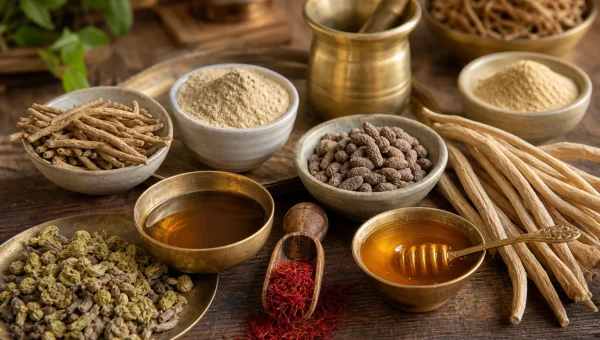
Ashwagandha: Ashwagandha is classically described as a rasayana, balya, and vata-kapha-pacifying root. It is most appropriate in a night-shift pattern marked by depletion, stress reactivity, muscular weakness, anxious fatigue, and poor recovery after sleep. A practitioner may place it near the end of the shift when the intention is sleep support, or with food in the worker’s active period when the intention is strength and restoration. Traditional powder doses differ from standardized extracts, so dosing should follow the preparation and the person rather than a fixed online formula.
Brahmi: Brahmi, identified in the Ayurvedic Pharmacopoeia as Bacopa monnieri, is a medhya rasayana used for learning, memory, and mental steadiness. For night workers it is better understood as a longer-term cognitive and nervous-system support, not as an acute stimulant for the middle of the shift. It is commonly taken with food, and people prone to nausea, loose stools, medication interactions, or significant medical conditions should use it only with qualified guidance.
Tulsi: Tulsi is warm, aromatic, dipani, and kapha-vata balancing in Ayurvedic use. A cup of tulsi tea in the first half of the shift can replace repeated late-night coffee for workers who need a warm, light, non-heavy drink. A practical preparation is 1 teaspoon dried tulsi leaf, or a small handful of fresh leaves, steeped in hot water. Avoid making even herbal tea a reason to keep delaying sleep after the shift.
Jatamansi: Jatamansi is a traditionally calming herb and should be reserved for practitioner-guided use, especially in shift workers who must drive, operate machinery, or remain responsible for safety-critical tasks. It should not be combined with alcohol, sedatives, or sleep medicines unless a clinician specifically approves. Because Nardostachys jatamansi is conservation-sensitive and internationally regulated in trade, only legitimate and sustainable sourcing should be considered.
Protecting Gut Health and Agni During Night Work
Agni is most stable when meals follow a predictable rhythm. For night workers, the safest compromise is to eat the main meal before the shift, keep midnight-to-dawn intake light and warm, and avoid heavy, fried, oily, very sweet, and large raw meals in the biological night. This matches Ayurveda’s preference for freshly cooked, warm, digestible food when agni is vulnerable and modern shift-work nutrition advice to reduce food intake between midnight and 6:00 AM.
Appropriate night-shift foods include warm dal, kitchari, vegetable soups, cooked grains, stewed fruit, lightly spiced vegetables, and modest protein portions. Ginger, cumin, fennel, and coriander may be used according to constitution and tolerance. Workers with pitta symptoms such as acidity, burning, irritability, or heat should avoid relying on very pungent spices and strong coffee to push through the night.
Triphala can be considered when constipation, irregular bowel habits, or sluggishness appear, but it should be individualized. Triphala is a classical combination of haritaki, amalaki, and bibhitaki. The Ayurvedic Pharmacopoeia lists haritaki as anulomana and rasayana, and amalaki as tridoshajit and rasayana. People with diarrhea, pregnancy, dehydration, inflammatory bowel disease, frailty, or medication-sensitive conditions should not self-prescribe it.
Managing Off-Days and Transitions
The riskiest pattern for many night workers is a complete flip to daytime living on every day off, followed by an abrupt return to nights. A compromise pattern is often more stable: on work nights, sleep soon after the shift; on days off, keep part of the delayed schedule, such as sleeping from about 3:00-4:00 AM until noon or early afternoon when family and social life allow. This gives the body some repeated sleep hours across the week instead of forcing a full circadian reversal every few days.
Use days off for vata repair rather than intensity. Favor unhurried meals, abhyanga with warm sesame oil if appropriate, gentle walking, sunlight after waking, reduced screen load, and reduced caffeine. If a long break from night duty is available, use it for a steady sleep-wake rhythm, not for aggressive fasting, intense cleansing, or sleep deprivation disguised as productivity.
Light Exposure Management: The Non-Negotiable
Light is the strongest practical lever for a night worker. During the first half of the shift, bright light helps alertness. During the second half, reduce bright and blue-rich light when duties allow so the post-shift body is not pushed further into daytime activation. On the commute home, use blue-blocking or dark eyewear only in a way that does not compromise driving or workplace safety; the sleep goal is never worth a road-safety risk.
After arriving home, keep the house dim, avoid scrolling in bed, and move directly into a dark, quiet bedroom. After waking in the afternoon, get bright light soon after rising to signal the start of the active period. This creates a repeating light-dark pattern: light when you need alertness, darkness when you need sleep.
Pranayama and Recovery Practices for the 3:00-4:00 AM Trough
The deepest subjective dip of the night is usually managed best with a layered approach: safe task rotation, hydration, brief movement, cool air, appropriate early-shift caffeine, and, when permitted, a short planned nap before or during the shift. Ayurveda adds gentle nervous-system regulation rather than stimulation. A few rounds of nadi shodhana before work or during a quiet break can settle vata, while bhramari after the shift can ease the transition toward sleep.
Do not use calming breathing practices when you must remain highly vigilant, drive, operate machinery, or respond to emergencies. When sleepiness becomes unsafe, the correct intervention is sleep, relief coverage, transport help, or medical evaluation, not herbs or breathing exercises.
Medical Disclaimer: This article is for educational and lifestyle guidance. Night shift work is associated with serious long-term health risks that require appropriate medical monitoring. The herbal and lifestyle strategies described are supportive measures, not treatments for any medical condition. Consult a qualified Ayurvedic practitioner and a licensed healthcare provider before starting herbs, supplements, detoxes, or therapeutic protocols, especially if pregnant, breastfeeding, managing a health condition, driving after shifts, operating machinery, or taking medication. Always prioritize workplace and road safety.
References
- Ratrijagarana night wakefulness and its impact on Manasika Bhava mental characteristics among industrial workers: A descriptive cross-sectional study (2022), PubMed Central
- Association between night shift work and cardiovascular disease: a systematic review and dose-response meta-analysis (2025), PubMed Central
- Shift work and vascular events: systematic review and meta-analysis (2012), PubMed Central
- Stacks (stacks.cdc.gov)
- Iarc (iarc.who.int)
- Association between night shift work and the risk of type 2 diabetes mellitus: a cohort-based meta-analysis (2024), PubMed Central
- CDC
- CDC
- CDC
- CDC
- Practice parameters for the clinical evaluation and treatment of circadian rhythm sleep disorders. An American Academy of Sleep Medicine report (2007), PubMed Central
- CDC
- CDC
- NIH
- Sciencedirect (sciencedirect.com)
- Ayurvedic Pharmacopoeia of India
- NIH Office of Dietary Supplements
- Ayurvedic Pharmacopoeia of India
- NCBI
- Tulsi – Ocimum sanctum: A herb for all reasons (2014), PubMed Central
- A randomized, double-blind, placebo-controlled trial investigating the effects of an Ocimum tenuiflorum (Holy Basil) extract (Holixer(TM)) on stress, mood, and sleep in adults experiencing stress (2022), PubMed Central
- Central nervous system depressant activity of Jatamansi (Nardostachys jatamansi DC.) rhizome (2020), PubMed Central
- Nardostachys jatamansi (D.Don) DC.-Challenges and opportunities of harnessing the untapped medicinal plant from the Himalayas (2020), PubMed
- Traffic (traffic.org)
- NCCIH
- FDA