
A person with trigger finger may feel a painful click, catch, or lock when bending and straightening a finger. In modern medical language this is stenosing tenosynovitis, most often involving thickening or irritation around the flexor tendon and the A1 pulley at the base of the finger. An Ayurvedic plan does not replace diagnosis or urgent care, but it can offer a careful, conservative support framework for tendon comfort, local stiffness, hand warmth, tissue lubrication, and repetitive-strain habits.
This post presents a practical Ayurvedic tendon-care protocol for mild to moderate trigger finger, especially when the pattern is chronic, stiff, dry, painful, and worsened by repetitive hand work. It keeps medical care in the picture while using classical Ayurvedic principles of Vata pacification, snehana oleation, swedana fomentation, appropriate herbs, and ergonomic correction.
What Trigger Finger Is
Trigger finger is commonly described as irritation, swelling, or narrowing around the flexor tendon sheath near the A1 pulley. The tendon may no longer glide smoothly, so the finger catches, clicks, locks, or suddenly releases. Conventional care may include rest, splinting, anti-inflammatory medicines, corticosteroid injection, hand therapy, or surgical release of the A1 pulley when conservative measures fail or locking becomes severe.
Because the condition can worsen, a clinician should evaluate persistent pain, repeated locking, inability to straighten the finger, numbness, weakness, marked redness, heat, fever, or rapidly increasing swelling. Ayurveda is best used as supportive care alongside an appropriate diagnosis rather than as a substitute for ruling out infection, inflammatory arthritis, diabetes-related hand disease, or structural tendon problems.
What Ayurveda Sees in Trigger Finger
Trigger finger is not named as a separate classical disease in the major Ayurvedic texts. In Ayurvedic reasoning, it can be approached as a localized Vata disorder affecting snayu and kandara, the fibrous and tendon-like structures responsible for support and movement. When Vata becomes dry, cold, rough, constricted, or irregular in these tissues, the clinical picture may include pain, stiffness, restricted motion, creaking or catching sensations, and difficulty with smooth flexion and extension.
Caraka’s discussion of Vatavyadhi includes Snayugata Vata, meaning Vata situated in tendon or ligament-like tissues. The same chapter repeatedly emphasizes that aggravated Vata is relieved by opposite qualities: warmth, oiliness, steadiness, softness, nourishment, and properly applied fomentation. This makes snehana and swedana central to an Ayurvedic hand protocol for a stiff, painful, catching finger.
When swelling, heaviness, coating, sluggish digestion, or morning stiffness accompany the complaint, the practitioner may also consider Kapha and Ama involvement. In that pattern, treatment must balance two needs: softening and lubricating the tendon region without making the tissue more congested, and gently improving circulation and channel movement without overusing heat or force.
The Ayurvedic Treatment Logic
The goal is not to force the finger open. The goal is to make the local tissue warmer, better lubricated, less guarded, less irritated, and less burdened by repetitive strain. A sound Ayurvedic plan usually works through five coordinated steps: reduce aggravating causes, apply warm oleation, follow with mild fomentation, use suitable herbs or medicated oils, and retrain daily hand use.
- Remove the cause: reduce repetitive gripping, cold exposure, long uninterrupted typing, and forceful finger use.
- Pacify local Vata: use warm oil, gentle massage, and steady daily rhythm rather than harsh manipulation.
- Support smooth gliding: combine warmth with mild tendon-gliding movements within a pain-free range.
- Address Kapha-Ama signs: use lighter food, warm water, and practitioner-selected herbs when swelling or heaviness is present.
- Protect the tendon: use splinting or medical hand therapy when prescribed, especially for night locking or recurrent catching.
Phase 1: Snehana, or Warm Oleation
The first phase focuses on softening dryness and roughness in the palm, finger base, and forearm flexor line. Warm sesame oil is a classical Vata-pacifying oil, and a practitioner may choose a medicated oil such as Mahanarayana Taila when the person’s constitution, skin tolerance, and condition are suitable. The oil should be pleasantly warm, never hot.
Daily warm oil application: Warm a small amount of sesame oil or prescribed medicated oil. Massage the palm, the base of the affected finger, the finger itself, and the inner forearm for 5–10 minutes using slow, gentle strokes. Do not press hard over the painful nodule or force the finger to unlock. After massage, cover the hand with a warm cotton cloth for another 10 minutes.
Warm hand soak option: Place the oiled hand in comfortably warm water for 10–15 minutes, or wrap it in a warm damp towel. This is especially useful when the hand feels cold, stiff, dry, and tight. Avoid soaking if there is broken skin, infection, fresh injection-site irritation, burning pain, or a skin reaction to the oil.
Internal oleation: Small dietary use of ghee may be appropriate for some Vata-dominant people, but internal oleation should not be treated as a universal prescription. A qualified Ayurvedic practitioner should decide whether ghee, dose, timing, and duration are suitable, especially in people with metabolic disorders, digestive weakness, gallbladder disease, or restricted medical diets.
Phase 2: Swedana, or Mild Fomentation
After oleation, mild heat helps reduce stiffness and supports local movement. Classical Vata management uses fomentation after oiling, including steam, warm bolus, warm cloth, and localized heat methods. For trigger finger, the heat should be gentle and localized; excessive heat can worsen swelling or irritate the skin.
Simple home fomentation: After oil massage, apply a warm towel to the palm and finger base for 5–10 minutes. Keep the finger relaxed. The hand should feel more comfortable after the procedure, not more swollen or throbbing.
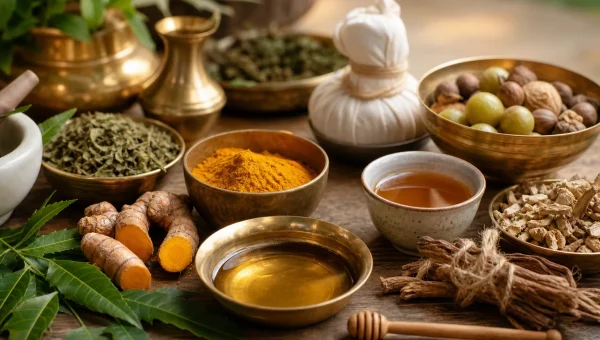
Practitioner-guided bolus: A small cloth pouch warmed with dry materials such as sesame seed or rock salt may be used by trained practitioners for Vata-type stiffness. This should be avoided when the area is red, inflamed, very tender, numb, infected, or heat-sensitive.
Gentle movement after warmth: Once the hand is warm, slowly bend and straighten the finger within a comfortable range. Tendon-gliding movements are common in hand rehabilitation, but they should be gentle, non-forceful, and stopped if they increase locking or pain.
Phase 3: Lepa and Upanaha for Local Support
When the pain is localized at the palm crease or finger base, topical herbal application may be added after the skin has tolerated plain oil. In Ayurveda, lepa and upanaha are external applications used for painful, stiff, or swollen areas. For a small tendon region, the application should be mild, clean, and time-limited.
Nirgundi leaf paste: Fresh or dried Nirgundi leaves may be made into a paste with warm water and applied thinly over the painful palm region for 15–30 minutes, then washed off. Do this two or three times weekly if the skin tolerates it. Do not apply to broken skin, rashes, infection, or immediately after injections or procedures.
Nirgundi oil alternative: When fresh leaves are not available, a practitioner may choose a prepared Nirgundi oil for local massage. A patch test is wise before using any herbal oil, especially in people with sensitive skin, eczema, allergies, or pregnancy.
Herbs and Formulations Used in Ayurvedic Tendon Support
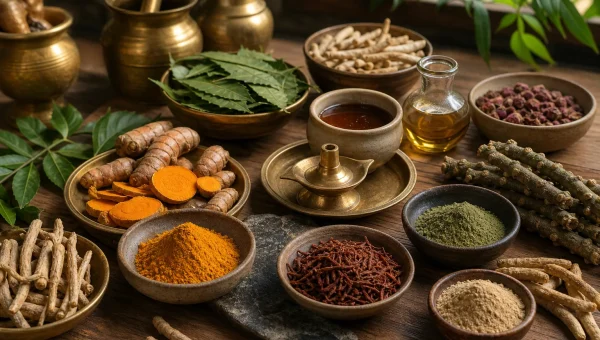
The following herbs are relevant because they are used in Ayurveda for Vata, painful stiffness, swelling, or musculoskeletal discomfort. They should not all be taken together without assessment. Internal herbs and classical formulations require attention to digestion, constitution, pregnancy status, liver health, thyroid status, blood-thinning medicines, and other prescriptions.
| Ayurvedic Name | Botanical / Form | Common Use in This Context | Practical Note |
|---|---|---|---|
| Shallaki / Kunduru | Boswellia serrata resin | Used for Vata-Kapha musculoskeletal pain and inflammatory discomfort | Use standardized products only under guidance, especially if taking blood thinners or preparing for surgery |
| Guduchi | Tinospora cordifolia stem | Used when systemic inflammation, low resilience, or Ama-associated patterns are considered | Internal use should be supervised in pregnancy, autoimmune disease, liver disease, or when taking immunosuppressive medicines |
| Rasna | Pluchea lanceolata | Classically used in Vata formulations for pain, stiffness, and restricted movement | May be used as decoction, oil, or part of a compound formula as selected by a practitioner |
| Nirgundi | Vitex negundo leaf | Used externally for painful swelling, stiffness, and local musculoskeletal discomfort | Best started topically with a patch test; avoid broken skin and pregnancy unless supervised |
| Yogaraj Guggulu | Classical Guggulu-based compound | Used by practitioners for Vata-type musculoskeletal stiffness and pain when digestion permits | Requires caution with thyroid medicines, anticoagulants, liver disease, and medicines metabolized through CYP pathways |
| Mahanarayana Taila | Classical medicated oil | Used externally for Vata-related pain, stiffness, and dryness | Apply warm and gently; discontinue if rash, burning, or swelling increases |
Internal Medicine Must Be Individualized
Classical Ayurvedic formulations can be useful when the whole person shows a broader Vata pattern: dry skin, cold hands, cracking joints, insomnia, anxiety, constipation, erratic routine, low tissue nourishment, or chronic repetitive strain. They are less suitable when the presentation is acutely hot, infected, rapidly swelling, or medically unstable.
Yogaraj Guggulu: This formulation is often chosen for Vata-type musculoskeletal stiffness and pain, but it is not a casual supplement. Guggulu-containing products can affect drug metabolism and thyroid-related parameters, and some combination products have been associated with liver concerns. Use it only under professional guidance.
Rasna-based preparations: Rasna appears in classical Vata formulations, including oil preparations described for Vata disorders. A practitioner may choose Rasna decoction, Rasna oil, or a compound preparation depending on whether the person needs drying, warming, nourishing, or channel-opening support.
Shallaki and Guduchi: These herbs may be considered when the person’s pattern includes inflammation, swelling, or chronic tissue irritation. The decision to use them internally should account for current medicines, digestion, allergies, pregnancy status, and liver or immune conditions.
Ergonomic and Movement Adaptations
No Ayurvedic protocol for a repetitive strain condition is complete without changing the strain pattern. Repeated gripping, cold exposure, long typing sessions, forceful mouse use, and sleeping with the fingers curled tightly can keep the tendon irritated even when oils and herbs are used correctly.
- Keep the wrist neutral while typing and avoid resting the palm edge hard on the desk.
- Use a lighter grip on the mouse, pen, tools, steering wheel, and phone.
- Take a 2–3 minute hand break every 60–90 minutes during keyboard work.
- Keep the hands warm in air-conditioned rooms, especially if cold worsens stiffness.
- Use a night splint only when recommended by a hand therapist or clinician, and make sure it does not cause numbness or pressure pain.
Gentle tendon-gliding sequence: After warmth, open the hand, make a loose hook fist, return to open, make a gentle full fist, return to open, then touch the fingertip toward the thumb without forcing range. Repeat slowly for a few rounds. Stop if the finger locks, snaps painfully, or becomes more inflamed.
When Panchakarma-Style Care May Help
For chronic cases that remain stiff after several weeks of home care, a trained Ayurvedic practitioner may use localized procedures rather than stronger self-treatment. These may include more structured oleation, localized steam, medicated oil retention adapted to the hand, or poultice therapy. Such procedures should be gentle, clean, and avoided when infection, acute inflammation, neuropathy, or vascular compromise is suspected.
Localized oil retention: A small dough boundary may be placed around the painful region of the palm and filled with warm medicated oil for a short period. This is an adapted local oleation method and should be performed by someone trained in temperature control, skin safety, and appropriate case selection.
Poultice therapy: Practitioner-selected upanaha may be used when stiffness and Vata pain dominate. Strong heating poultices are not suitable for every trigger finger case; they can aggravate burning, redness, or swelling when the presentation is Pitta-dominant or acutely inflamed.
What Improvement Should Look Like
Improvement should be gradual and functional. Useful signs include less morning stiffness, less pain at the finger base, fewer episodes of catching, easier opening of the hand after sleep, and reduced fear of movement. The finger should not be forced through a lock, and a worsening lock is a reason to return to medical evaluation.
Corticosteroid injections can help many people, but recurrence after injection varies widely, and some people need repeat treatment or surgery. An Ayurvedic support plan is most sensible when it is used to improve the local tissue environment, daily hand habits, warmth, lubrication, and Vata balance while appropriate medical options remain available.
Safety Notes and Contraindications
Trigger finger care must remain cautious because a locked or inflamed finger is not always a simple Vata complaint. Consult a qualified healthcare provider and a qualified Ayurvedic practitioner before beginning internal medicines or delaying recommended medical treatment.
- Seek urgent medical care for fever, severe redness, spreading swelling, pus, intense throbbing pain, recent puncture wound, or sudden inability to move the finger.
- Do not use hot oil, steam, or poultices over infection, open wounds, fresh burns, numb skin, or areas with poor circulation.
- People with diabetes, rheumatoid arthritis, thyroid disease, pregnancy, liver disease, bleeding disorders, or recurrent locking should get individualized care.
- Shallaki may increase bleeding risk in people taking blood thinners or preparing for surgery.
- Guggulu formulations may interact with medicines metabolized through CYP pathways and may affect thyroid-related parameters.
- Guduchi, Guggulu, and compound formulations should be avoided or supervised carefully in liver disease, autoimmune conditions, pregnancy, and complex medication use.
- Stop any topical herb or oil if rash, itching, burning, swelling, or pain increases.
One Practical Step to Start Today
Warm a teaspoon of sesame oil between your palms, massage the affected finger base and palm gently for 5 minutes before bed, cover the hand with a warm cloth for 10 minutes, and then rest the hand. Repeat for 7 nights while tracking morning stiffness, clicking frequency, and pain. Stop if symptoms worsen, and seek professional evaluation if the finger locks repeatedly or cannot straighten comfortably.
This post is for educational purposes only. Trigger finger can require medical treatment, especially when locking, severe pain, diabetes, inflammatory arthritis, infection, or loss of function is present. Please consult a qualified healthcare provider and a qualified Ayurvedic practitioner before beginning self-treatment, internal herbs, or delaying recommended care.
References
- Orthoinfo (orthoinfo.aaos.org)
- NHS
- Nature (nature.com)
- Charaka Samhita — Vatavyadhi Chikitsa
- Jaims (jaims.in)
- Ayurvedic Pharmacopoeia of India
- Ayurvedic Pharmacopoeia of India
- Ayurvedic Pharmacopoeia of India
- Ayurvedic Pharmacopoeia of India
- Mskcc (mskcc.org)
- Tinospora cordifolia (Giloy): An insight on the multifarious pharmacological paradigms of a most promising medicinal ayurvedic herb (2024), PubMed Central
- Webmd (webmd.com)
- Antioxidant and Antiinflammatory Activity of Vitex negundo (2008), PubMed Central
- Mskcc (mskcc.org)
- NCCIH
I had the same trigger finger situation, cortisone twice, second one barely lasted. I found the protocol described here and followed it for 14 weeks. My finger moves freely now without clicking or pain.
Is this appropriate for De Quervain’s tenosynovitis or specifically for trigger finger? The tendon involvement seems similar but the anatomical location is different.
Graphic designer with trigger finger here. The work situation you describe is my work situation. Three hours of keyboard time today and my ring finger is catching. Will talk to my Ayurvedic practitioner about this protocol.
The Snayugata Vata framing makes the condition understandable in a way the orthopedic explanation didn’t. Knowing it’s a Vata accumulation in the tendon canal gives me a framework for what diet and lifestyle changes to make alongside the topical treatment.
The description of Priya’s keyboard work really hit home for me as a remote designer.
My orthopedic surgeon said the third cortisone was the last option before surgery. I’m now four months into the protocol described here. Still have occasional catching but no more cortisone and no surgery date.
The work modification piece is mentioned but not developed enough. Reducing keyboard time is the advice but the article doesn’t address what to do when that isn’t possible. The ergonomic component needs more specifics.
I wonder if warming sesame oil before bed would help with the morning stiffness I feel.
The part about Trigger Finger (Snayugata Vata) feels realistic. Would be useful to see a short checklist next.
Reading about Nirgundi poultice made me curious about where to find fresh leaves locally.
Does the protocol work for Kapha-type trigger finger? The article focuses on Vata tendon presentations but I have thick, slow-swelling presentation that sounds more Kapha to me.
The three phase approach seems detailed, but I’m not sure I could stick to the oil soak every night.
Three fingers affected after years of salon work. Cortisone was offered for all three. I’m using this protocol and after 8 weeks, one finger is almost completely resolved and the other two are improved.
It’s interesting how Ayurveda links Vata imbalance to repetitive typing habits.
Has anyone tried combining Yogaraj Guggulu with regular stretching exercises for tendon health?
The article mentions avoiding Nirgundi during pregnancy; that’s an important safety note.
The Pindatailam application technique matters. I was just rubbing it in and not getting much. A Panchakarma technician showed me the specific direction and pressure for tendon work and results improved.
I appreciated the practical tip about massaging oil into the palm before sleep; seems easy to try.
Seeing the research on Boswellia’s effect on 5-LOX made me look up supplement labels.
I’m skeptical about claiming lasting relief without injections, but the case study is compelling.
For someone who works 9 hours at a keyboard, the ergonomic suggestions feel especially relevant.
The idea of using a warm salt sesame bag for fomentation sounds like something I could assemble at home.
After reading about the recurrence rate of corticosteroid shots, I’m more open to trying a longer herbal regimen.
where do u buy quality herbs in India? the market stuff seems adulterated
the dose ranges seem very broad, like 1 to 3 grams is quite a big difference. would be more helpful with narrower guidance
Is the distinction between early-stage and advanced trigger finger addressed in terms of when Ayurvedic treatment has reasonable efficacy versus requiring intervention?
One thing that stood out was the emphasis on improving tendon glide rather than just masking pain.
I notice the article doesn’t address interactions with thyroid medication. Is there a concern there?
The Trigger Finger (Snayugata Vata) angle is useful here. Good starting point for a cautious reader.
shared this with my mom, she has been struggling with this for years and finally has a proper plan
the finger-specific Nasya-like oil application described here, is there any evidence for oil penetration into tendon sheath through topical application? 💯
Is there a difference in outcome between using the classical formulation versus the standardized extract?
finally something that explains the dosage properly instead of just saying ‘take as needed’
Good reminder on Trigger Finger (Snayugata Vata). Small daily changes are easier to follow than a perfect plan.
Could you clarify whether the herbal preparation needs to be freshly made each day or if a week’s batch is acceptable?
tried it, didnt work for me. maybe need proper vaidya supervision
good artcle, bookmarked. will share w/ my doctor next visit
the digestive angle makes sense to me but i’m curious about the topical applications mentioned briefly at the end 🙌
some of the herb names in english vs sanskrit are confusing, i ended up buying the wrong thing
honestly i’ve been doing this for 2 months and the results are underwhelming. might just be my body type
had a locked trigger finger and waited too long trying conservative measures. ended up needing surgery anyway. don’t delay if locking is happening
Good reminder on Trigger Finger (Snayugata Vata). The safety notes could be expanded a little.
finding the herbs in my city is nearly impossible, the ones available are often low quality
Good reminder on Trigger Finger (Snayugata Vata). This feels more usable than a long list of herbs.
are hot fomentation and cold avoided? or does the treatment use either? not clear from the article
The mechanism explanation is interesting. I would like to understand whether the effect diminishes with long-term use.
can you take this during pregnancy or is it contraindicated? my wife is asking ✨
what brand of ashwagandha do you recommend? KSM-66 or Sensoril or just regular churna?
how long u take this before seeing results? asking for my dad
does anyone know if this works the same way for Kapha types? feels like the article is more Vata focused
I appreciate the distinction between the acute and chronic management approaches. That nuance matters a lot.
I started this protocol last month. Would it be acceptable to continue Triphala alongside it or would that be too much?
tried this last month, honestly surprised how well it worked for me
can kids take this? what age is safe
same issue here, doc said try ayurveda. will try this n update ✨
I came for Trigger Finger (Snayugata Vata) and this answered the main question. This feels more usable than a long list of herbs.
wen to take, before or after food? confused by diff sources
did the Snehana protocol at home with Mahanarayan oil for 6 weeks, finger movement returned without the cortisone injection my doctor suggested
what’s the recommended dose for someone with a Pitta constitution? the article mentions general ranges but i want to confirm ✨