
After winter, many people notice drier lengths, rougher ends, more static, and a fuller brush than usual. Cold wind, indoor heating, hats, scarves, frequent hot-water washing, and reduced scalp oil distribution can leave the hair shaft rough and fragile, while diffuse shedding may also reflect seasonal cycling, stress, low iron, thyroid imbalance, or low vitamin D.
Spring is a useful time to reset your hair care. The weather is warmer, heavy winter friction reduces, fresh seasonal foods become easier to include, and longer daylight makes it a good season to rebuild consistent scalp, nutrition, and sleep habits. This 4-week protocol keeps the original goal simple: reduce breakage, restore softness, support the scalp, and know when shedding needs medical attention.
Assessing Your Winter Damage
Before you begin, separate hair-shaft damage from true shedding. Hair that snaps along the lengths needs lubrication, gentle handling, and cuticle protection. Hair that comes out from the root in large numbers may need internal assessment as well as topical care.
Breakage damage: Hair snaps when combed, split ends are visible, and the mid-lengths feel rough instead of smooth. Common contributors include dry indoor air, friction from wool scarves and winter caps, aggressive brushing, hot tools, and harsh washing.
Moisture and surface damage: Hair looks dull, feels brittle, develops static, and loses softness quickly after conditioning. This often reflects a roughened cuticle, low lubrication, repeated washing, or mineral buildup from water. Use mild cleansing and avoid over-clarifying while the hair is fragile.
Diffuse shedding: More hair in the drain, a thinner ponytail, or a wider part line can be seasonal, but it can also follow illness, crash dieting, stress, childbirth, medication changes, iron deficiency, thyroid imbalance, or vitamin D deficiency. If the shedding is sudden, heavy, patchy, painful, or lasts more than a few weeks, do not rely on home care alone.
The 4-Week Spring Hair Revival Program
This program combines traditional Ayurvedic hair practices with practical modern hair-care principles. It cannot permanently repair a hair fiber that is already split or broken, but it can reduce friction, improve softness, protect the cuticle, and support healthier new growth from the scalp.
Week 1: Soften and Strengthen the Hair Shaft
Winter-weathered hair needs slip, gentle protein, and less friction before heavier oiling or herbal glossing. Start with a conditioning mask that makes combing easier and reduces snapping during washing.
Treatment 1: Methi-Egg Conditioning Mask, once or twice this week
- 2 tablespoons Methi seeds, soaked overnight
- 1 whole egg, or 2 eggs for long hair
- 1 tablespoon plain yogurt
- Optional: 1 teaspoon coconut oil for very dry ends
Grind the soaked fenugreek into a smooth paste. Mix with beaten egg and yogurt. Apply section by section to damp hair, focusing on the mid-lengths and ends rather than rubbing aggressively into the scalp. Cover with a shower cap and leave for 25-35 minutes. Rinse first with cool water, then cleanse gently with a mild shampoo.
Methi is described in the Ayurvedic Pharmacopoeia of India as a mucilaginous seed when soaked, with snigdha quality and vatahara action. In a hair mask, that mucilage gives slip and helps reduce combing friction. Egg and yogurt add temporary conditioning and protein support for weathered lengths. Skip egg if you are sensitive to it, and use only soaked fenugreek, yogurt, and a little coconut oil instead.
Daily support this week: Eat adequate protein at meals. For many adult women, about 46 g per day is the baseline requirement, though needs rise with body size, training, pregnancy, lactation, illness recovery, or medical advice. Vegetarian options include dal, paneer, curd, tofu, nuts, seeds, and well-planned grain-legume combinations.
Week 2: Oil, Moisture, and Amla Gloss
Once the hair has more slip, focus on lubrication and moisture retention. In Ayurveda, oiling is not just a beauty step; it is a protective practice for dryness, roughness, and excess vata in the hair and scalp.
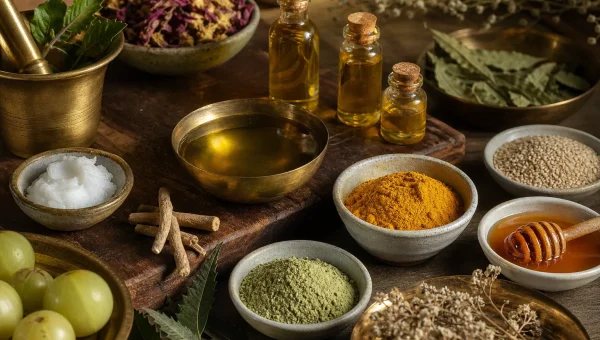
Treatment 2: Coconut-Amla Conditioning Oil, 2-3 applications this week
- 4 tablespoons coconut oil
- 1 teaspoon Amalaki powder
- 5-6 fresh curry leaves, optional
Warm the coconut oil gently. Add amla powder and curry leaves, keep on very low heat for a few minutes, then turn off the flame and allow it to infuse. Strain through cloth if you dislike residue. Apply the warm oil to the scalp and lengths, massage the scalp for 5 minutes, wrap with a warm towel, and leave for 1-2 hours before washing with a mild cleanser.
Amalaki is listed in the Ayurvedic Pharmacopoeia of India as a rasayana and tridoshajit fruit containing ascorbic acid and tannins. Coconut oil is especially useful for dry, weathered hair because it can reduce protein loss from both undamaged and damaged hair fibers. Use a modest amount; too much oil or powder residue can make fine hair feel heavy.
Daily support this week: Continue steady protein intake and hydration. Add 1 tablespoon ground flaxseed or chia seed to food if it suits your digestion; plant omega-3 fats such as alpha-linolenic acid are found in flaxseed and can be part of a balanced diet.
Week 3: Scalp Massage and Bhringaraja
Hair growth begins at the follicle, so Week 3 focuses on the scalp. Gentle oil massage supports comfort, reduces dryness, improves manageability, and helps you notice early signs of irritation, dandruff, patches, or inflammation.
Treatment 3: Bhringaraja Scalp Oil, 2-3 applications this week
- 3 tablespoons Bhringaraja oil
- 1 teaspoon castor oil for very dry scalps, optional
- 2-3 drops rosemary essential oil, optional and only if well tolerated
Mix the oils and warm slightly. Part the hair into sections and apply directly to the scalp using fingertips or a dropper. Massage for 5-10 minutes with slow circular movements, using enough pressure to move the scalp without scratching. Leave for 1-3 hours, or overnight if your scalp tolerates oil well. Wash gently.
Bhringaraja is classified in the Ayurvedic Pharmacopoeia of India with keshya action and appears in classical hair-oil formulations such as Bhringaraja Taila, Bhringamalakadi Taila, and Nili Bhringadi Taila. Rosemary essential oil should always be diluted, patch-tested, and avoided on irritated scalps, in pregnancy, and for children unless a qualified practitioner approves it.
Mid-week scalp cleanse: Mix 1 tablespoon rice flour with 1 tablespoon yogurt into a soft paste. Apply lightly to the scalp before washing, massage gently for 1-2 minutes, and rinse thoroughly. Do not scrub if you have dandruff flare, wounds, scalp psoriasis, eczema, pain, or active hair fall. Avoid turmeric in this scrub if you have light hair, a sensitive scalp, or do not want staining.
Week 4: Seal, Gloss, and Protect
The final week is about protecting the progress you made. A plant gloss can add body and shine, but it must be chosen carefully because true henna deposits color and can feel drying on some hair types.
Treatment 4: Henna or Cassia Gloss, once this week
- For color deposit: 3 tablespoons pure Mehendi powder from Lawsonia inermis, body-art quality and additive-free
- For little to no red-orange color: 3 tablespoons cassia powder, often sold as “neutral henna,” though it is not true henna
- 1 tablespoon yogurt
- 1 teaspoon coconut oil
- Warm water as needed
Mix the powder with warm water into a thick paste. For true henna, allow dye release according to the product instructions, then add yogurt and coconut oil before applying. Apply mainly to the lengths if you want gloss without scalp heaviness. Leave for 45-90 minutes, rinse thoroughly, and shampoo the next day if needed.
Pure Lawsonia inermis contains plant dye and tannins that bind to hair keratin and can leave the hair feeling fuller and glossier. It is not a protein treatment, and it can change hair color. Always strand-test first, avoid “black henna” or unknown dye mixtures, and never use a product that causes burning, itching, swelling, or rash.
Internal Support: Don’t Skip This Part
Topical care improves the hair you already have, but new growth depends on nutrition, hormones, sleep, stress load, and scalp health. Keep the internal plan simple, food-first, and guided by testing when shedding is significant.
- Amalaki: Use as food, fresh juice, or powder if suitable for your digestion. It is a classical rasayana and is traditionally valued for cooling, nourishing, and antioxidant support.
- Shatavari: Consider only under guidance if you are using it as a women’s tonic. In Ayurveda it is madhura, tikta, shita virya, rasayana, balya, and stanyakara; it is not a universal hair-loss supplement for every person.
- Iron and ferritin: If diffuse shedding is significant, ask a clinician about CBC, ferritin, iron studies, thyroid function, vitamin D, and B12. Do not self-prescribe iron or Loha Bhasma. Use mineral preparations only from properly tested sources and only under a qualified practitioner’s supervision.
- Protein intake: Keep daily protein consistent from dal, beans, paneer, tofu, curd, eggs if taken, nuts, seeds, and other quality sources.
- Digestive suitability: If a herb causes acidity, loose stools, heaviness, itching, headache, rash, or menstrual changes, stop it and consult a practitioner.
The Spring Haircut Tradition
A spring trim is practical: removing rough, split, or transparent ends helps the hair look denser and reduces further fraying along the shaft. Trimming does not make follicles grow faster, but it prevents damaged ends from making the entire length look thinner and uneven.
If you are trying to preserve length, trim only what is visibly frayed. For many people, 1-2 cm is enough; heavily split ends may need more. After the trim, continue weekly oiling or a light pre-wash treatment, reduce heat styling, use a wide-tooth comb, and protect the hair from harsh sun and chlorine as summer approaches.
When to see a professional: It is common to shed about 50-100 hairs a day, but sudden heavy shedding, bald patches, scalp pain, redness, scaling, pus, eyebrow loss, menstrual changes, fatigue, unexplained weight change, or shedding that continues for more than a few weeks needs evaluation by a dermatologist or healthcare provider.
Four weeks is enough to make the hair feel softer, less rough, and easier to manage. Keep the rhythm gentle: one strengthening mask when needed, one oiling session each week, adequate protein, and medical testing when shedding is more than ordinary seasonal change. Spring recovery works best when beauty care, Ayurvedic wisdom, and sensible health checks support each other.
Nothing in this article diagnoses, treats, or cures a medical condition. Use it as educational information and consult a qualified Ayurvedic practitioner or healthcare provider before starting herbs, supplements, mineral preparations, detoxes, or therapeutic protocols, especially if pregnant, breastfeeding, managing a condition, taking medication, or experiencing significant hair loss.
References
- Seasonality of hair shedding in healthy women complaining of hair loss (2009), PubMed
- Seasonal changes in human hair growth (1991), PubMed
- Does D matter? The role of vitamin D in hair disorders and hair follicle cycling (2010), PubMed
- NCBI
- Aafp (aafp.org)
- Aad (aad.org)
- Ayurvedic Pharmacopoeia of India
- Effect of mineral oil, sunflower oil, and coconut oil on prevention of hair damage (2003), PubMed
- Ayurvedic Pharmacopoeia of India
- NIH Office of Dietary Supplements
- Ia800501 (ia800501.us.archive.org)
- Hair growth promoting activity of Eclipta alba in male albino rats (2008), PubMed
- Rosemary oil vs minoxidil 2% for the treatment of androgenetic alopecia: a randomized comparative trial (2015), PubMed
- NCCIH
- Ayurvedic Pharmacopoeia of India
- A cosmetic senna, Cassia obovata: ‘neutral henna’ (1981), PubMed
- FDA
- Health (health.gov)
- Iron Deficiency and Nonscarring Alopecia in Women: Systematic Review and Meta-Analysis (2022), PubMed Central
- Diagnosis and treatment of female alopecia: Focusing on the iron deficiency-related alopecia (2023), PubMed
- NCCIH
- FDA
- Aad (aad.org)
The straw ends and alarming brush hair is February for me without fail. This article’s timing is perfect. The castor-bhringraj hot oil protocol is the one I’ve followed every spring for three years now and the difference by April is noticeable enough that people comment.
The Spring Hair Revival section feels grounded enough to try carefully. The examples make the advice less abstract.
The Shikakai and reetha hair wash for removing winter oil buildup is something my mother did every spring. The explanation of why chemical shampoo stripping the scalp is different from the gentle saponin cleaning of these herbs is the theoretical backing I was missing.
The Spring Hair Revival section feels grounded enough to try carefully. Good starting point for a cautious reader.
The Brahmi oil application specifically for the scalp tension related to winter stress is an interesting claim. The neurological relationship between scalp tension and hair follicle health is something conventional trichology doesn’t address.
I did the four-week protocol described here and the texture improvement was observable but the density change takes longer as stated. The shine returned in week two. The strength (less breakage on a comb) in week three. Density still in progress but the trajectory is encouraging.
The diet recommendation alongside the topical treatment is where most hair care articles drop the ball. You can apply every oil that exists but if you’re still eating winter-heavy foods and not getting seasonal spring greens the follicle nourishment is suboptimal.
The ponytail test hit home, I realized my ends felt like straw after winter.
Where do you source authentic Bhringraj and Brahmi oils that aren’t diluted with carrier oils and relabeled? I’ve found the quality variation in commercial products to be enormous and have no way to assess it from the label.
The protein-rich spring foods recommendation is helpful. Drumstick leaves, sesame, soaked methi seeds. These are foods with established hair-health relevance in traditional nutrition and the spring timing for incorporating them is practical.
Does the protocol change for color-treated or chemically processed hair? The winter damage is different for processed hair and some of the traditional oils might interact with hair color.
Wondering if the egg and fenugreek mask works better with a warm or cool rinse?
The seasonal hair fall in spring being normal shedding versus problem shedding distinction is something dermatologists often fail to make. Not every spring shed is a crisis. The article correctly frames when to treat versus when to support.
I’ve been doing weekly oiling for three months and my hair has improved but I can’t tell whether it’s the oil, the improved diet, the better sleep I’ve been getting, or spring itself. The confounders here are real. Attribution to the protocol specifically is difficult.
Static electricity in dry indoor air has been a problem, and the moisture flooding week seems useful.
Does anyone know if neutral henna (cassia obovata) still gives the strengthening benefits without color?
The scalp massage with bhringraj and castor oil feels like a nice ritual, though I wonder how long to leave it on.
Checking ferritin levels before adding iron supplements seems like a smart step mentioned in the internal support section.
Trimming an inch off damaged ends in spring actually helps hair look fuller as it grows back, which matches the spring haircut tradition note.
Good read
Thanks!
@Neha Doing this
shikakai alone dried my scalp badly. the article could mention that some people need to add reetha to balance
This helped me understand Spring Hair Revival without too much jargon. I would still ask a practitioner before changing medicines.
🙏 @Rohit would prefer more citations in the text itself
which of these approaches works best for Kapha constitution? the article mixes all three doshas
how often should the hot towel wrap be done? twice a week or is daily too much for fine hair?
will try and report back. fingers crossed
If shedding seems dramatic, getting a blood panel before trying any DIY mask is a cautious approach worth considering.
been doing this for 6 months, amazing difference in energy levels
not sure if its the herbs or the diet changes that made the difference
does the approach differ for someone with multiple doshas elevated at once?
tried the DIY shikakai powder wash for 2 months. transition period is brutal, hair felt waxy for 3 weeks. then amazing
not sure about some of the claims here. would like to see proper citations for the traditional references
following this from UK, hard to find some of these herbs here
sharing with my mom
started this protocol 2 weeks ago. nothing notable yet but will report back in a month
the basic concepts here match what I learned in my yoga teacher training
bhringraj grown in my garden makes a much stronger oil than anything I’ve bought commercially
धन्यवाद for the detailed protocol
The Spring Hair Revival angle is useful here. Good starting point for a cautious reader.
the seasonal rotation idea is something I had never considered before
what about hair loss from postpartum hormonal changes? the causes section mentions this but the treatment protocol doesn’t differentiate
my vaidya in Pune recommended exactly this. nice to see it confirmed here
Very helpful, thank you
❤️ useful
Saved this
this is the most detailed breakdown of the topic I’ve found. saving for reference
after 6 months of consistent oiling with brahmi infused oil my hair thickness noticeably improved. takes patience though
Will try
the mineral deficiency angle is underplayed. most hair loss I see in my practice traces to iron and zinc before anything else
my vaidya says the same thing about agni being central to everything
been following this blog for 6 months and this is one of the more grounded posts
I wish more doctors knew about this approach 🌿
sorry off-topic but anyone here used Ayurveda for autoimmune conditions generally?
same here