Haritaki Varieties: Pathya, Chetaki, and Vijaya Types Clinically Compared
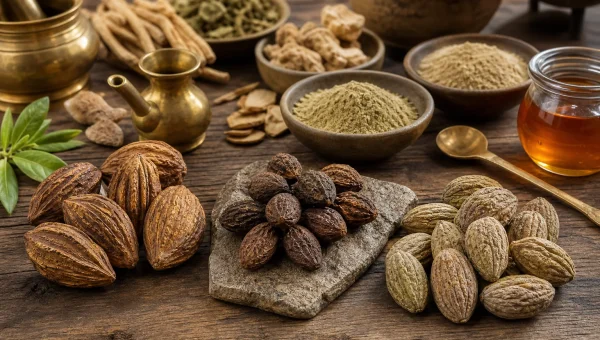
Haritaki Varieties: A Clinical Comparison of the Seven Types Haritaki is the mature fruit pericarp of Terminalia chebula Retz., a...

September 12, 2026
Ayurvedic articles on Phytochemistry
Haritaki Varieties: A Clinical Comparison of the Seven Types Haritaki is the mature fruit pericarp of Terminalia chebula Retz., a...
Pomegranate Ellagic Acid Research: What the Data Actually Shows Pomegranate, known in Ayurveda as dadima (Punica granatum), deserves a careful...
One of the Best-Studied Antidepressant Herbs You Have Probably Not Been Prescribed Saffron (Crocus sativus), known in Ayurveda as Kunkuma...
Reading Herb Labels Without the Chemistry Degree The supplement market now places a “standardized to X% active compound” claim on...
The Part-Specific Chemistry Behind Neem Medicinal Parts Research Azadirachta indica, known in Ayurveda as Nimba, is often discussed as one...
The Steroidal Saponins Behind Two Classical Ayurveda Herbs When an Ayurvedic practitioner prescribes shatavari (Asparagus racemosus) for nourishing, reproductive, lactation,...
Decoding the Chemistry Behind Ayurveda’s Three-Fruit Rasayana Triphala is one of Ayurveda’s most widely used polyherbal formulations. Its name simply...
A Modern Molecular Window Into Kalmegh Kalmegh, botanically Andrographis paniculata (Burm. f.) Wall. ex Nees, is officially listed in the...
The Cholesterol-Blocking Compounds Hiding in Traditional Herbs When people look for a natural way to support healthy cholesterol, Ayurveda offers...
Rosmarinic Acid in Ayurvedic Herbal Practice: Tulsi and Mint for Allergy-Season Support, with Brahmi as Medhya Support When allergic rhinitis...