Oleanolic Acid in Triphala: The Hepatoprotective and Anti-Diabetic Compound Hiding in Plain Sight
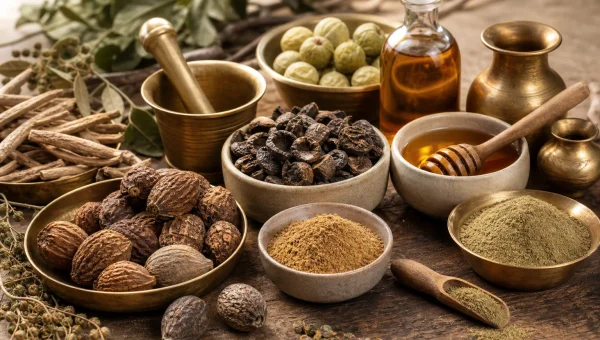
Oleanolic Acid in Triphala: A Liver and Glucose-Metabolism Lens on a Classical Formula Triphala is the classical three-fruit formulation made...

Ayurvedic articles on Phytochemistry
Oleanolic Acid in Triphala: A Liver and Glucose-Metabolism Lens on a Classical Formula Triphala is the classical three-fruit formulation made...
Ursolic Acid in Ayurvedic Herbs: A Triterpene Link Between Tulsi, Strength, and Metabolic Support Ursolic acid is a naturally occurring...
The Molecular Logic Behind Ayurveda’s Kashaya Rasa Kashaya rasa, the astringent taste, is one of the six tastes described in...
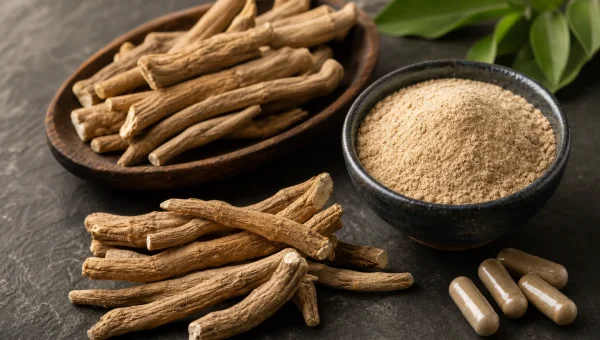
The Plant Part Problem in Ashwagandha Supplementation Ashwagandha (Withania somnifera) products are not all the same. A capsule may contain...
Beyond “Methi Lowers Blood Sugar”: Understanding the How Fenugreek seeds (Trigonella foenum-graecum Linn.), known as methi in Hindi and methika...
When a Flavonoid Clarifies an Ayurvedic Anti-Allergy Pattern Quercetin is a plant flavonol in the wider polyphenol family, found in...
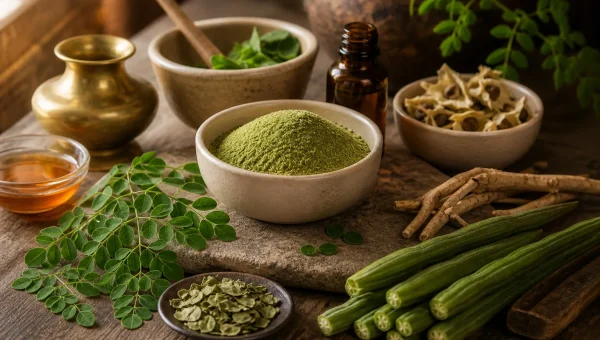
Moringa is nutritionally useful, but many “superfood” comparisons mix fresh leaves, dried powder, and other foods on different moisture bases....
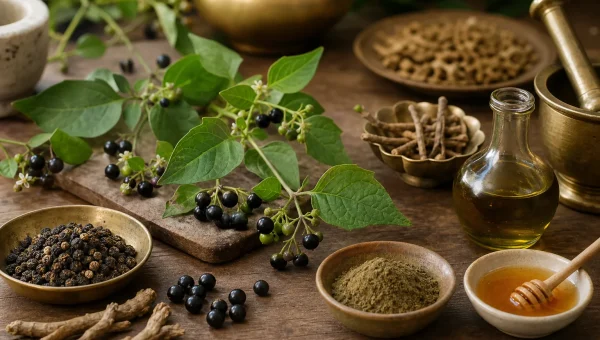
Kakamachi is an established Ayurvedic drug with a defined pharmacopoeial profile, while modern hepatoprotective evidence remains predominantly preclinical. The Ayurvedic...
When a supplement company markets ashwagandha as “standardized to 5% withanolides,” it is making a claim about phytochemical content. But...
Computational methods now give researchers practical ways to investigate the chemical complexity of Ayurvedic plants and formulas without experimentally testing...