
Ashwagandha is a powerful Ayurvedic herb, but it is not a “take it forever and keep increasing the dose” supplement. The most sensible way to use it is as a defined course: take it for a clear purpose, observe whether sleep, stress tolerance, strength, recovery, or vitality actually improve, then pause and reassess. That is the real value of cycling. It protects the herb’s usefulness, reduces dose creep, and keeps the practice closer to Ayurveda’s dose-aware, person-specific approach.
Why Continuous Ashwagandha Use Needs Review
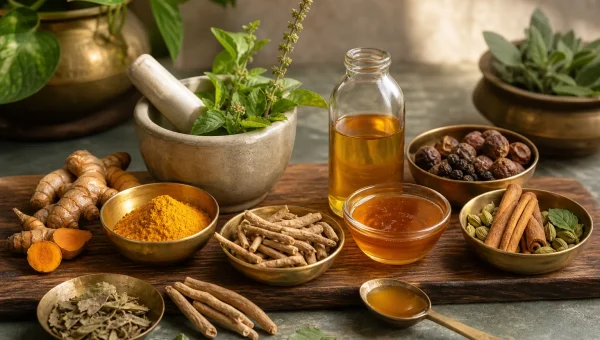
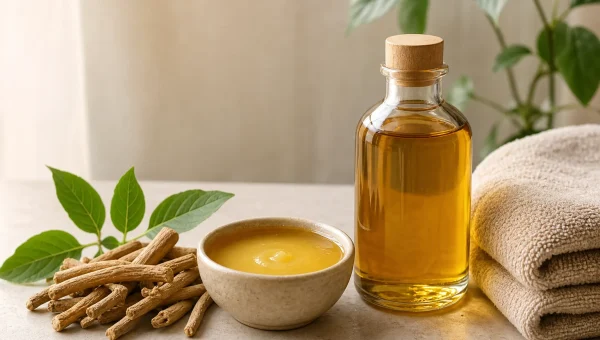
Ashwagandha (Withania somnifera) is called Ashvagandha in Sanskrit, a name commonly explained through ashva (horse) and gandha (smell), referring to the characteristic odor of the root. In the Ayurvedic Pharmacopoeia of India, Ashvagandha is the dried mature root of Withania somnifera Dunal, not the leaf, and its classical profile is tikta and kaṣāya rasa, laghu guṇa, uṣṇa vīrya, and madhura vipāka. Its actions are listed as rasāyana, vāta-kapha-hara, balya, and vājīkaraṇa.
Modern supplement language often calls ashwagandha an adaptogen, meaning it is used to support the body’s response to stress. That does not make it a daily vitamin. Human trials commonly use ashwagandha for finite periods such as 6 to 12 weeks, while major safety summaries distinguish short-term use from many months or years of continuous use. The practical lesson is simple: use ashwagandha as a course, not as an indefinite habit.
What Classical Ayurveda Actually Supports
Ayurveda treats rasāyana as rejuvenative therapy aimed at supporting strength, vitality, longevity, memory, tissue quality, and resistance to disease. Classical rasāyana is not merely a capsule routine; it includes diet, conduct, digestion, purification where appropriate, formulation choice, dose, season, age, strength, constitution, and the person’s present imbalance. The right herb for one person may be too heating, too heavy, too stimulating, or simply unnecessary for another.
For ashwagandha specifically, the pharmacopoeial adult dose is given for root powder, traditionally 3–6 g, but modern extracts are not gram-for-gram equivalents of crude root powder. Root extracts, high-withanolide products, and root-plus-leaf extracts behave differently from classical root powder or classical formulations such as Ashvagandhādi Leha. A responsible cycle begins by confirming the form, dose, purpose, and safety fit before deciding how long to continue.
Why Benefits Can Fade During Long, Unreviewed Use
When people say ashwagandha “stopped working,” the problem is often not the herb alone. It may be unclear dosing, an unsuitable form, poor sleep hygiene, ongoing overtraining, unresolved anxiety triggers, digestive overload, thyroid sensitivity, medication interaction, or simply the mistake of trying to force the same effect month after month. Planned breaks help separate true benefit from habit.
1. Stress and sleep pathways need observation
Ashwagandha is associated with stress-response pathways, cortisol changes, and GABA-related activity. That is why many people use it for calmness, sleep, and pressure tolerance. But if the herb becomes something you cannot sleep without, the cycle needs review. A break lets you see whether your baseline has improved, whether the dose is still appropriate, and whether the original problem now needs a different approach.
2. Thyroid changes matter
Ashwagandha can influence thyroid markers in some people. In an 8-week clinical trial involving adults with subclinical hypothyroidism, ashwagandha root extract changed TSH, T3, and T4 compared with placebo. This may be relevant for selected people under supervision, but it is a reason for caution in anyone with hyperthyroidism, thyroid medication use, palpitations, heat intolerance, tremor, unexplained weight change, or worsening insomnia.
3. Digestive and liver signals should not be ignored
Ashwagandha can cause stomach upset, loose stools, nausea, vomiting, and drowsiness in some users. Rare liver injury cases have also been reported, usually appearing after weeks of use. Any new itching, yellowing of the eyes or skin, dark urine, pale stools, unusual fatigue, right-upper abdominal discomfort, or unexplained nausea should be treated as a stop-and-seek-care signal rather than something to push through.
Cycling Protocols That Respect Ayurveda and Safety
The following schedules are practical templates, not personal prescriptions. They are built around the fact that most human use data is short-term and that Ayurveda favors dose, timing, digestion, constitution, and purpose over permanent unsupervised use. Choose the gentlest effective plan, and do not increase the dose just because the first-week feeling becomes less noticeable.
Protocol 1: The 6–8 Week Root-Extract Course
This is the most practical approach for people using a standardized root extract for stress, sleep, recovery, or general vitality. Use the product only within its label directions and preferably under professional guidance, especially if it is standardized for withanolides. Many commonly studied root-extract regimens fall in the 300–600 mg/day range, but the correct amount depends on the product, person, and purpose.
- On phase: 6–8 weeks of consistent use.
- Pause: 2–4 weeks completely off ashwagandha.
- Review before restarting: sleep, anxiety, digestion, heat signs, thyroid symptoms, medication changes, training load, and whether the herb is still needed.
This cycle works well when the goal is to avoid dose creep. If the benefit is clear, the dose stays stable, and there are no safety signals, the same course can be repeated after the break. If the benefit is unclear, do not restart automatically.
Protocol 2: The Seasonal 8–12 Week Course
This is closer to an Ayurvedic rhythm for people using traditional root powder, milk-based preparations, or practitioner-prescribed formulations. It gives enough time to assess strength, sleep, nourishment, recovery, and nervous-system steadiness without turning the herb into a year-round dependency.
- On phase: 8–12 weeks.
- Pause: about 4 weeks.
- Best suited for: root powder, classical formulations, and people being guided according to constitution, digestion, season, and strength.
This approach is especially useful for people who are lean, depleted, overworked, recovering, or using ashwagandha as a nourishing rasāyana. It is not ideal for people with strong heat signs, active thyroid concerns, or a tendency toward heaviness, sluggish digestion, or congestion unless a qualified practitioner adjusts the plan.
Protocol 3: The Weekday Cycle
A weekday cycle is a lighter option for people who want support during demanding work or training days but do not want to take ashwagandha every day. It should still include a longer pause after several weeks.
- On phase: Monday to Friday.
- Off phase: Saturday and Sunday.
- Longer review pause: take 2–4 weeks off after 8–12 weeks of this pattern.
This is not a substitute for medical supervision, and it is not a way to make high doses safe. Its main advantage is behavioral: it prevents the supplement from becoming automatic and creates a built-in check on whether the herb is still useful.
What to Do During the Off-Cycle
The off-cycle should not become a game of replacing ashwagandha with another strong supplement. The first layer is always routine: regular sleep timing, adequate food, appropriate training recovery, reduced late stimulants, breathwork, meditation, and attention to digestion. These foundations are often the difference between “ashwagandha works” and “ashwagandha is covering up a lifestyle problem.”
| Goal During the Break | Ayurvedic Direction | Practical Focus |
|---|---|---|
| Maintain sleep quality | Calm vāta, reduce evening stimulation, support routine | Consistent bedtime, warm evening routine, fewer late screens and stimulants |
| Maintain stress resilience | Strengthen daily rhythm rather than adding more stimulation | Breath practice, meditation, walking, realistic workload boundaries |
| Maintain training recovery | Support nourishment, digestion, and rest | Protein-rich meals, adequate calories, planned rest days, less overreaching |
| Need herbal support | Use practitioner-selected alternatives only when appropriate | Jatamansi or Brahmi may be considered in suitable cases, but they are not automatic substitutes |
The most important rule is to avoid stacking multiple calming, sedating, thyroid-active, or hormone-active products without guidance. A break is meant to simplify the system, not create a more complicated one.
Signs You Should Pause Ashwagandha Now
A pause is wise when the herb is no longer producing a clear benefit or when new symptoms appear. Do not respond to fading effects by doubling the dose. Use the following signs as a reason to stop, reassess, and seek professional advice where needed.
- Dose creep: the amount that felt useful no longer feels useful, and you are tempted to keep increasing it.
- Sleep changes: new insomnia, middle-of-the-night waking, excessive drowsiness, or disturbing changes in sleep quality.
- Heat or thyroid-like symptoms: palpitations, tremor, heat intolerance, unexplained irritability, sweating, or unexplained weight change.
- Digestive upset: nausea, loose stools, vomiting, abdominal discomfort, or loss of appetite that began after starting the product.
- Liver warning signs: itching, yellow eyes or skin, dark urine, pale stools, unusual fatigue, or persistent nausea.
- Medication changes: starting or changing thyroid medication, sedatives, anticonvulsants, diabetes medication, blood pressure medication, immunosuppressants, or other prescriptions.
- Life-stage or procedure changes: pregnancy, trying to conceive, breastfeeding, upcoming surgery, or a new diagnosis involving the thyroid, liver, autoimmune system, or hormone-sensitive prostate disease.
How to Stop Without Turning the Break Into a Problem
Most people using a moderate, short-term root product can simply finish the course and stop for the planned break. If you have been taking high doses, combining multiple ashwagandha products, using it nightly for sleep or anxiety, or taking prescription medications, stop under professional guidance rather than making abrupt changes on your own.
During the first week off, keep the routine steady. Do not add several new supplements at once. Watch sleep, mood, digestion, heart rate, heat signs, and energy. If symptoms appear, the answer is not to restart blindly; it is to review the dose, product quality, diagnosis, medicines, and whether ashwagandha is the right herb for your current state.
Ashwagandha Forms and Cycling Considerations
Not all ashwagandha products should be treated the same. Classical Ayurveda and the pharmacopoeial standard center on the mature root. Modern supplement products may use root extract, root powder, root-plus-leaf extract, gummies, capsules, liquids, or blends with many other herbs. Cycling decisions should change according to form and potency.
- Root powder: closest to the pharmacopoeial crude drug form. It is traditionally used with attention to digestion, constitution, and vehicle such as milk or ghee where appropriate.
- Standardized root extract: more concentrated and easier to overuse. A 6–8 week course with a break is usually more sensible than open-ended daily use.
- Root-plus-leaf or high-withanolide extracts: not the classical pharmacopoeial standard for Ashvagandha root. Ayurveda-oriented use should favor root-only products unless a qualified professional has a clear reason otherwise.
- Leha, arishta, and compound formulations: these are formulation-specific and should not be treated as identical to single-herb extract capsules.
- Multi-ingredient “stress” or “testosterone” blends: harder to assess because side effects or interactions may come from any ingredient in the blend.
Who Should Not Take Ashwagandha Without Medical Clearance
Ashwagandha is not appropriate for everyone. The following groups should avoid self-prescribing it and should consult a qualified healthcare provider or Ayurvedic practitioner before use.
- Pregnant or breastfeeding people: avoid use unless specifically directed by a qualified clinician.
- People with thyroid disorders: especially hyperthyroidism, Graves’ disease, thyroid medication use, or unstable thyroid labs.
- People with autoimmune conditions: especially those using immunosuppressive therapy.
- People with liver disease or elevated liver enzymes: use extra caution because liver injury has been reported.
- People with hormone-sensitive prostate cancer: avoid unless cleared by the treating physician.
- People taking sedatives, anticonvulsants, thyroid medicines, diabetes medicines, blood pressure medicines, or immunosuppressants: use only with medical guidance.
- People preparing for surgery: stop and disclose use to the surgical team according to medical advice.
Ashwagandha remains one of Ayurveda’s valuable rasāyana herbs when used with respect for form, dose, timing, constitution, digestion, and safety. The best long-term approach is not endless escalation. It is a clear course, a planned pause, and an honest review of whether the herb is still needed.
It did not need to be forced. It needed a well-timed rest.
Disclaimer: This article is for informational purposes only and does not replace professional medical advice. Consult a qualified Ayurvedic practitioner or healthcare provider before using ashwagandha, especially if you take prescription medication, have a diagnosed medical condition, are pregnant or breastfeeding, have thyroid, liver, autoimmune, or prostate-related concerns, or are planning surgery.
References
- NIH Office of Dietary Supplements
- Ayurvedic Pharmacopoeia of India
- Charaka Samhita — Rasayana
- Charaka Samhita — Rasayana Adhyaya
- NCCIH
- Mdpi (mdpi.com)
- Direct evidence for GABAergic activity of Withania somnifera on mammalian ionotropic GABAA and GABAρ receptors (2015), PubMed
- Ferulic Acid Esters and Withanolides: In Search of Withania somnifera GABA(A) Receptor Modulators (2019), PubMed
- Efficacy and Safety of Ashwagandha Root Extract in Subclinical Hypothyroid Patients: A Double-Blind, Randomized Placebo-Controlled Trial (2018), PubMed
- NCBI
- Ministry of AYUSH
- Fssai (fssai.gov.in)
- Ayurvedic Pharmacopoeia of India
I was skeptical of the Rasayana herbs but my bloodwork after three months on the protocol was meaningfully different. My GP was surprised and asked what I’d changed.
My wife shared this with me and it’s prompted us to rethink our whole family’s approach to health. The constitutional framework makes sense and the recommendations are practical.
The connection you made between those two things is really insightful. I hadn’t thought of it that way before
The performance-focused framing here is how I wish more Ayurvedic content was presented. Speaking the language of vitality and optimization rather than just sickness makes it accessible
Your persistence through the adjustment period is inspiring. I’m currently in it and your comment helps.
My father-in-law from India has been telling me about these practices for years. Reading this helped me understand why they work, which helped me actually commit to them.
The two-week rebound you described after stopping cold turkey — is that typical, or was it because of the extended duration? I’ve been on it for about eight months daily and I’m nervous about what stopping will feel like. Should I taper rather than stop all at once when I take my first break?
The relationship between Ojas and resilience is something I now explain to my high-performing executive clients. Ayurveda has a sophisticated model for sustainable performance.
Been following this for four months. Not only has my energy improved but my mood regulation and stress response are noticeably different. My wife says I seem calmer
Same here! The practitioner recommendation made all the difference for me. Don’t try to do this without guidance.
The sleep quality section is what brought me here and it’s worth the read for that alone. The evening protocol has transformed my sleep architecture completely.
I had the exact same confusion about this. Glad the article cleared it up for both of us.
The safest part of the Ashwagandha Cycling advice is keeping it simple. I appreciate that it does not oversell the result.
I appreciate you sharing the skeptical perspective too. It keeps the conversation grounded.
I notice a lot of Ayurveda content online makes very bold claims. This article is better than most, but still could use more caveats.
The morning ritual described here gets me off my phone and into my body before the day takes over. That alone has improved my mental health significantly.
I appreciate that this doesn’t promise miracles or quick fixes. The honest timeline expectations and lifestyle requirements make this feel legitimate rather than like a sales pitch
it’s wonderful to see both believers and skeptics engaging respectfully in the comments. That’s how we all learn.
The gut health-testosterone connection is fascinating and underappreciated in mainstream men’s health media. This explains so much about why digestive health affects performance.
We appreciate your candid feedback. You’re right that we should distinguish more clearly between traditional knowledge and clinical evidence. We’re working on adding more research citations.
the lifestyle changes recommended here are excellent. The supplement recommendations, less so. Hard to know what dose actually works.
I came to Ayurveda skeptically through a friend’s recommendation and stayed because the results were undeniable. My testosterone levels actually improved with this approach.
I’ve been using it for a year and can confirm, the results you’re describing are consistent with my longer-term experience
I shared this with three friends who are all dealing with similar energy and vitality issues. We’re doing a 90-day protocol together. Check back for our group results.
The safest part of the Ashwagandha Cycling advice is keeping it simple. Would be useful to see a short checklist next.
Your experience with the diet changes mirrors mine almost exactly. Week two is when it clicks
The recipe proportions seem off compared to what my Ayurvedic doctor prescribed. Could you clarify the source for these specific ratios?
I had almost this identical experience with flatlined effects around the six-month mark. I genuinely thought my batch had gone bad and ordered from a different brand. Never occurred to me that the herb itself needed a rest. The body adapting makes complete sense now that I think about it the way you’ve framed it here.
I had exactly the experience described in the opening of this article. 11 months of daily ashwagandha, felt great for the first 4, neutral by month 7, and by month 10 I had baseline anxiety that did not exist before I started. The cycling protocol is what I should have known from the beginning.
I’m 52 and started noticing the energy decline my friends were describing as ‘just aging.’ Six months of following this protocol and I feel more energetic than I did at 45
I have a question about the timing, morning or evening for best results with this?
I’d been relying on coffee for energy for years. Transitioning to the herb protocol here over three months has given me steadier, more sustainable energy without the crashes.
The 6-weeks-on 2-weeks-off cycle is described here but my practitioner uses an 8-week on, 4-week off protocol. Is there evidence for one schedule over another or is the main point simply that any consistent cycling is better than continuous use?
The rebound anxiety after stopping cold turkey is real and nobody talks about it. I went through almost exactly what you described — months six through nine were the worst, kept upping the dose wondering why it stopped working. Wish I had read about cycling before I started. Starting over now with the four weeks on, one week off schedule.
Does the cycling protocol change at all depending on why someone is taking it? My main reason is sleep and stress rather than gym performance, and I’m wondering if the off-week timing matters — like is it better to take the break during a low-stress period or does it not make a difference?
This is so helpful to read. Im just starting out with this and hearing positive experiences helps me stay motivated.
The stress-cortisol-testosterone connection described here matches what I’ve read in sports science. Good to see the Ayurvedic parallel explained so clearly
While I appreciate the Ayurvedic perspective, some of the dietary advice here contradicts current nutritional research. Balance is key.
Started the ashwagandha protocol my Ayurvedic doctor recommended last summer and my energy has been noticeably more consistent. This explains the mechanism.
Is there a difference in efficacy between the churna form and capsules for ashwagandha? I’ve heard the powder absorbs differently.
My Ayurvedic vaidya says ashwagandha is in the Rasayana category and was designed for seasonal use in classical practice, not year-round daily supplementation. The cycling advice in this article aligns with the original intent of Rasayana herbs, which were prescribed for defined courses not indefinite daily use.
The breakdown of GABA receptor downregulation really clarifies why the effects faded after a few months.
Does the ashwagandha protocol change for different prakritis? My assessment came back as Vata-Pitta and I’m not sure if the standard approach applies.
Has anyone tried the weekday 5/2 split and noticed if weekend breaks are enough to keep tolerance low?
What is the appropriate way to restart after the break? Just go back to the original dose or start at a lower dose and build back up? I had a significant enough reaction during my first break week that I want to manage the reintroduction more carefully.
I wonder if the taper method would work for other adaptogens like rhodiola.
The seasonal cycle aligns nicely with traditional Ayurvedic courses, makes sense to give the body a reset.
Using jatamansi for sleep during off weeks sounds like a smart swap that avoids hitting the same receptors.
I’m curious about the sensoril dosage adjustment and whether a 6/2 cycle actually prevents faster tolerance.
The thyroid stimulation point is important; I hadn’t considered that long term use could disrupt sleep via T4 elevation.
It’s helpful to see concrete supplement suggestions for the off cycle, especially shatavari for recovery.
Do the authors recommend any lab tests before starting ashwagandha, like baseline cortisol or thyroid panels?
The caution about concurrent benzodiazepine use feels necessary; mixing GABA modulators can be risky.
ashwagandha 600mg KSM-66 genuinely changed my stress response. The cycling tip here explains why week 9 felt less effective.
What about KSM-66 specifically? The manufacturers say it’s designed for continuous use. Seems like conflicting advice.
started cycling after reading batch 1 of your ashwagandha series. can confirm the 2-week break does seem to reset the effects
The point about not stopping cold turkey but tapering during the off-cycle is something most guides miss completely.
My integrative doctor recommended 12 weeks on, 4 weeks off. Your 8-2 protocol seems shorter. Is there a basis for the difference?
Just found this via Google, is the 8-on-2-off protocol still the standard recommendation or has this been updated?
I tried taking a 4-week break as you suggested and my sleep quality dropped noticeably. That confirmed it was working.
The 8-weeks-on, 2-weeks-off cycle you described, is that for KSM-66 specifically or does it apply to full-spectrum powder too?
I would like more detail on Ashwagandha Cycling. I would still ask a practitioner before changing medicines.
my vaidya told me never to cycle, always take continuously. so there’s clearly disagreement even among practitioners
I’ve been taking ashwagandha daily for 6 months with no breaks. After reading this I’ll start cycling. Wish I’d found this sooner.
The explanation for why breaks matter in terms of HPA axis adaptation was clearer than anything I’ve read from supplement brands.
took ashwagandha for anxiety and cycling actually helped me gauge how much of the calmness was real vs placebo. still not sure.
Has anyone tried cycling ashwagandha while also taking brahmi continuously? Wondering if they interact.
Will try
The receptor downregulation argument makes sense but I haven’t seen actual studies cited for it. Can you link to specific papers?
I cycle 6 on, 1 off and that seems to work better for me than the 8-2 schedule. Bodies are different I guess.
Did you mean withanolide content should stay above 5% during cycling or is 2.5% standard extract fine?
The section on thyroid interaction during the off-cycle is something I’ve never seen covered anywhere else. Important info.
The 600mg twice daily dose you mentioned in the cycling section, is that total per day or per dose?
tbh i forget to cycle. just take it every day. is that actually a problem or theoretical
Doing this
Same here
interesting but i wish there was more on ashwagandha for women specifically, all the studies cited seem to be on men
The sensoril vs KSM-66 comparison in the cycling context was well handled. Different extracts, different cycling needs.
been using these recommendations from the Ashwagandha Cycling article for about 3 weeks now. seeing some improvement.
started last week based on this article. will update in a month
The approach described here is different from what my vaidya recommends. Is there a regional variation in this protocol?
I came here from the Instagram post. The article has way more detail than the summary. Bookmarked.
Just tried this for the first time this week. Too early to say but no adverse effects so far.
Does age affect how this works? I’m 52 and wondering if the protocol needs adjustment.