
Period pain is real. It is not “just cramps,” and you do not need to apologize for needing relief. Ayurveda treats menstrual pain as a meaningful signal, not as something to ignore.
In Ayurvedic understanding, painful menstruation is commonly discussed as kashtartava and is closely related to classical descriptions of Udavartini Yonivyapad, where disturbed Vata, especially Apana Vata, obstructs the smooth downward movement of menstrual flow. The practical approach is to calm Vata, support warmth and unctuousness, ease digestion, reduce pelvic tension, and choose remedies according to the person’s constitution and symptoms.
These eight remedies combine quick comfort measures with longer-term Ayurvedic support. Some are best during active cramps; others work better when used consistently before the expected period. Use gentle quantities, observe your response, and consult a qualified Ayurvedic practitioner or healthcare provider if pain is severe, recurrent, new, or associated with heavy bleeding.
1. Ginger-Jaggery Tea for Warm, Quick Comfort
Ginger is a classical Ayurvedic digestive and Vata-Kapha balancing herb. Its warmth makes it especially suitable when cramps come with coldness, heaviness, nausea, sluggish digestion, or bloating.
Recipe:
- 1 inch fresh ginger root, grated or thinly sliced
- 1 to 2 teaspoons jaggery, according to taste
- 1.5 cups water
- A small pinch of cinnamon powder, optional
Boil the ginger in water for 7 to 8 minutes on medium heat. Strain, add jaggery and cinnamon, and sip while warm.
Why it helps: In Ayurveda, ginger supports dipana, pachana, anulomana, and Vata-Kapha balance. Its pungent constituents include gingerols and shogaols. Jaggery makes the drink more nourishing and palatable, while cinnamon adds gentle warmth for people who tolerate warming spices well.
When to take: Take 1 cup when cramps begin, then another cup later in the day if needed. Keep total intake moderate; if using dry ginger powder instead of fresh ginger, stay within small culinary amounts unless guided by a practitioner.
Safety note: Use ginger cautiously if you have active acidity, ulcers, bleeding disorders, are taking blood thinners, or are pregnant. Consult your healthcare provider if you are unsure.
2. Shatavari Milk for Reproductive Nourishment
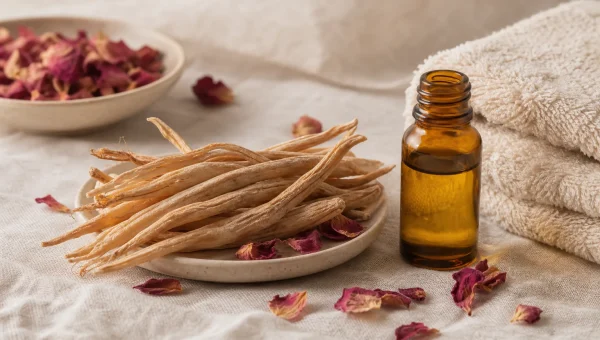
Shatavari is a classical Ayurvedic reproductive tonic prepared from the root of Asparagus racemosus. It is sweet-bitter in taste, heavy and unctuous in quality, cooling in potency, and traditionally used as a nourishing rasayana and balya herb.
Recipe:
- 1/2 teaspoon Shatavari powder
- 1 cup warm milk or warm almond milk
- 1/2 teaspoon ghee
- A pinch of cardamom powder
- Jaggery to taste, optional
Warm the milk gently. Remove from heat, stir in Shatavari powder, ghee, cardamom, and jaggery, and drink warm.
Why it helps: Shatavari’s sweet, unctuous, cooling, and nourishing qualities make it suitable when menstrual discomfort is accompanied by dryness, depletion, irritability, heat, fatigue, or weakness. Ghee adds softness and nourishment, which is useful in Vata-dominant discomfort.
When to take: Take once daily at bedtime or in the evening for 6 to 8 weeks, then reassess. This is a long-term tonic rather than an emergency cramp remedy.
Safety note: Avoid self-prescribing Shatavari if you are pregnant, have an asparagus allergy, use hormone-related medication, or have a history of estrogen-sensitive conditions such as estrogen-receptor-positive breast cancer. Consult a qualified practitioner before long-term use.
3. Warm Castor Oil Pack for Lower-Abdominal Ease
A warm oil pack combines two Ayurvedic comfort principles for Vata: oiliness and warmth. It is best used externally for lower-abdominal tightness, dull aching, and cramping that feels better with heat.
What you need:
- 1 to 2 tablespoons cold-pressed castor oil
- A soft cotton or flannel cloth
- A hot water bottle or heating pad
- An old towel to protect clothing and bedding
Method: Warm the castor oil slightly. Apply it over the lower abdomen or soak the cloth lightly in the oil. Place the cloth over the lower abdomen, cover with a towel, and apply gentle heat for 20 to 30 minutes. Rest quietly while the pack is in place.
Why it helps: Ayurveda uses warm, unctuous external care to calm Vata and reduce cold, dry, tense qualities. Heat also helps relax the lower abdomen and can provide meaningful comfort during primary menstrual cramps.
When to use: Use during active cramping, once daily as needed. Do not sleep with an electric heating pad on.
Safety note: Do not use castor oil packs during pregnancy, over broken or irritated skin, during unusually heavy bleeding, or if heat worsens your symptoms. Castor oil should not be taken internally for menstrual pain unless prescribed by a qualified clinician.
4. Ashoka Bark Decoction for Heavy, Painful Bleeding Patterns
Ashoka bark, from Saraca asoca, is a classical Ayurvedic uterine-support herb. It is especially associated with Asrgdara, a traditional category linked with excessive uterine bleeding.
Recipe:
- 1 teaspoon coarse Ashoka bark powder, or about 5 grams coarse bark
- 2 cups water
- A small amount of jaggery, optional
Simmer Ashoka bark in water until reduced to about 1 cup. Strain through a fine cloth. Add a small amount of jaggery only if needed for taste.
Why it helps: Ashoka is described as bitter and astringent in taste, light and dry in quality, cooling in potency, and traditionally used in bleeding and inflammatory conditions. It is more appropriate when period pain is accompanied by heavy flow, heat, or a sense of pelvic inflammation than when symptoms are mainly dryness and scanty flow.
When to take: Take 1/4 cup once or twice daily for a few days before the expected period and during the first 1 to 3 days of bleeding, but only if it suits your constitution and does not worsen dryness or pain.
Safety note: Use Ashoka under practitioner guidance if you have fibroids, endometriosis, irregular bleeding, fertility treatment, pregnancy, anemia, or heavy bleeding. Heavy bleeding needs medical evaluation, not only home care.
5. Self-Massage with Warm Sesame Oil
Gentle self-massage, or abhyanga, is a simple Vata-calming practice. During menstrual discomfort, the aim is not deep pressure but steady warmth, softness, and relaxation around the lower abdomen and lower back.
What you need:
- 2 to 3 tablespoons warm sesame oil
- Optional: a practitioner-recommended medicated Ayurvedic oil for Vata conditions
Method: Warm the oil to a comfortable temperature. Apply it to the lower abdomen in slow circular movements for 5 to 7 minutes. Then apply oil to the lower back and sacrum with gentle downward strokes. Follow with a warm bath or warm towel if comfortable.
Why it helps: Sesame oil is a standard Ayurvedic oil base, and warmth plus gentle touch helps counter Vata’s cold, dry, mobile qualities. Lower-back massage is especially useful when cramps radiate to the sacrum or thighs.
When to do it: Use once daily during the first days of the period or for 3 to 5 days before the expected period if premenstrual tightness is common.
Safety note: Avoid strong abdominal pressure during menstruation. Stop if massage increases bleeding, dizziness, nausea, or pain.
6. Ajwain Water for Cramps with Gas and Bloating
Ajwain, called Yavani in Ayurveda, is hot, pungent, sharp, digestive, and traditionally used for abdominal pain, gas, bloating, and obstructed downward movement.
Recipe:
- 1/2 to 1 teaspoon ajwain seeds
- 1 cup hot water
Dry roast the ajwain for about 30 to 60 seconds until fragrant. Add to hot water, cover, steep for 5 minutes, strain, and drink warm.
Why it helps: Ajwain is described as shulahara, anulomana, dipana, and pachana. It is especially suitable when cramps are accompanied by gas, abdominal distension, sluggish digestion, or a feeling that Vata is “stuck.”
When to take: Take once when bloating-type cramps appear. A second cup may be taken later the same day if tolerated.
Safety note: Avoid frequent or high-dose ajwain if you have acidity, ulcers, burning sensations, very heavy bleeding, or pregnancy. Its heating quality is not suitable for every period pattern.
7. Diet Modifications During Your Period
Diet during menstruation should reduce digestive burden and support Apana Vata. Warm, soft, moist, freshly cooked meals are usually better tolerated than cold, dry, raw, or very heavy foods.
Foods to Favor
Choose foods that feel grounding, easy to digest, and gently nourishing. Keep meals simple, warm, and regular.
- Warm, cooked, moist foods: soups, stews, kitchari, soft rice, porridge
- Small amounts of healthy fats: ghee, sesame oil, or coconut oil according to constitution
- Nourishing foods: dates, soaked raisins, cooked apples, ripe bananas, rice, mung dal
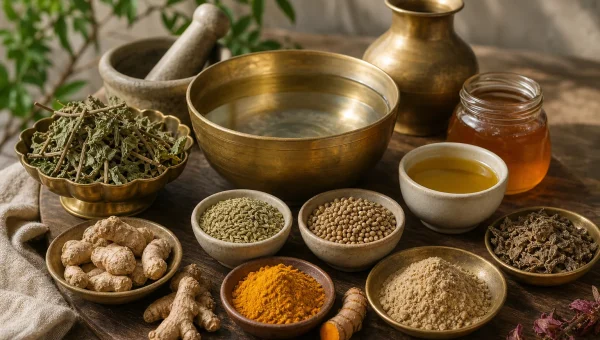
- Gentle spices: cumin, fennel, coriander, turmeric, ginger, and small amounts of cinnamon
- Warm drinks: ginger tea, fennel tea, cumin-coriander-fennel tea, or plain warm water
Foods to Reduce
Reduce foods and drinks that feel cold, drying, bloating, irritating, or overstimulating during your own cycle.
- Cold and raw foods: large salads, smoothies, ice cream, refrigerated leftovers
- Very dry foods: crackers, chips, dry cereals, hard-to-digest snacks
- Excess caffeine: especially if it worsens anxiety, loose stools, sleep, or cramps
- Excessively pungent or fried foods: especially when bleeding is heavy, hot, or burning
- Carbonated drinks: especially when bloating is already present
A simple period-day plan may include warm oatmeal with dates and ghee for breakfast, vegetable soup with rice for lunch, and light kitchari for dinner. Eat enough to stay steady, but avoid overeating when digestion feels low.
8. Dashamoola Tea for Vata-Type Aching
Dashamoola means “ten roots” and refers to a classical grouping of five larger roots and five smaller roots used in many Ayurvedic preparations. It is most appropriate when period discomfort has a Vata pattern: aching, lower-back pain, body soreness, bloating, stiffness, or pain that improves with warmth.
How to use:
- Use quality-tested Dashamoola powder, coarse kwatha churna, or a practitioner-recommended decoction product.
- If using coarse powder: simmer 1 teaspoon in 2 cups water until reduced to about 1 cup. Strain well.
- If using prepared granules or tablets: follow the label or practitioner instructions.
Why it helps: Dashamoola is used in Ayurveda for Vata-Kapha and pain-related patterns. As a warm decoction, it fits the period pattern where cramps come with backache, heaviness, stiffness, gas, or body pain.
When to take: Take once daily for 3 to 5 days before the expected period and during the first 1 to 3 days of bleeding, if it suits you. Use twice daily only with professional guidance.
Safety note: Avoid self-prescribing Dashamoola during pregnancy, while trying to conceive, with kidney disease, during heavy or unexplained bleeding, or while taking multiple medications unless guided by a qualified practitioner.
Building Your Period Comfort Kit
You do not need all eight remedies at once. Choose according to your main symptom pattern and keep the plan simple for at least three cycles.
| Your Primary Concern | Start With |
|---|---|
| Immediate cramp relief with coldness | Ginger-jaggery tea + warm castor oil pack |
| Cramps with gas and bloating | Ajwain water + warm, soft meals |
| Heavy, painful, hot-feeling periods | Medical evaluation + practitioner-guided Ashoka |
| Long-term dryness, fatigue, or depletion | Shatavari milk + Vata-pacifying diet |
| Lower-back ache and whole-body soreness | Warm sesame oil massage + Dashamoola tea |
Start with one or two remedies, track your response, and avoid combining many herbs at once. If a remedy increases pain, bleeding, heat, acidity, nausea, or dizziness, stop using it.
When to See a Doctor
Home remedies are appropriate only for mild, familiar menstrual discomfort. Seek medical evaluation if your pain is severe, suddenly worse than usual, not improving after a few cycles of self-care, associated with fever or foul discharge, or linked with pain during intercourse, pelvic pain outside your period, or difficulty with daily activities.
Also seek care for bleeding that soaks through a pad or tampon every hour, bleeding lasting longer than 7 days, bleeding between periods, dizziness, fainting, anemia symptoms, or sudden cycle changes. Conditions such as endometriosis, adenomyosis, fibroids, pelvic inflammatory disease, ovarian cysts, and other gynecologic conditions require proper diagnosis and may need medical treatment alongside Ayurvedic support.
Disclaimer: These remedies are intended for general menstrual comfort and are not substitutes for professional medical care. Consult a qualified Ayurvedic practitioner or healthcare provider before using herbs if you are pregnant, trying to conceive, breastfeeding, taking hormonal contraceptives, using blood thinners, managing a chronic illness, or taking prescription medication. Choose quality-tested Ayurvedic products because contaminated or poor-quality products can be unsafe.
Your period does not have to be something you dread. With warm care, individualized remedies, and timely medical attention when needed, real comfort is possible. You deserve that.
References
- Charaka Samhita — Menstrual disorders
- Role of Uttara Vasti with Trivrit and Lasuna oil in the management of primary dysmenorrhea (2010), PubMed Central
- Ayurvedic Pharmacopoeia of India
- SAGE Journals
- NCCIH
- NCCIH
- Ayurvedic Pharmacopoeia of India
- Webmd (webmd.com)
- Continuous low-level topical heat in the treatment of dysmenorrhea (2001), PubMed
- Continuous, low-level, topical heat wrap therapy as compared to acetaminophen for primary dysmenorrhea (2004), PubMed
- Nature (nature.com)
- Dravyaguna notes
- Charaka Samhita — Swedadhyaya
- Banyanbotanicals (banyanbotanicals.com)
- Ayurveda (ayurveda.com)
- Ayurveda (ayurveda.com)
- Researchgate (researchgate.net)
- Ijpsr (ijpsr.com)
- Pharmaceutical standardization of Kamsaharitaki granules (2015), PubMed Central
- ACOG
- ACOG Committee Opinion No. 760: Dysmenorrhea and Endometriosis in the Adolescent (2018), PubMed
- ACOG
- NCCIH
sent this to 3 friends whove been asking about ayurveda. perfect intro
The ‘just take an ibuprofen’ dismissal is real and it’s frustrating. I’m not looking to power through. I’m looking for what’s actually happening and what can help at the root level. This article treats menstrual pain as something worth addressing properly.
Which of the eight remedies is most effective for the first day specifically? Day one is always severe for me and I need something with relatively fast onset rather than a two-week preparation protocol.
The Apana Vata framing of menstrual pain explains why heat relieves it more than most other applications. You’re supporting the downward movement that’s being obstructed rather than just suppressing pain signals.
Is there guidance on these remedies for someone with endometriosis alongside primary dysmenorrhea? The protocols seem calibrated for functional menstrual pain but endo-related pain has a different underlying mechanism.
The ginger and jaggery combination my grandmother used to make for me in college was on this list and I was skeptical at the time. Now understanding the prostaglandin mechanism makes me regret dismissing it. It was actually working.
Three of these remedies have solid enough evidence that my women’s health physiotherapist was already recommending them. The magnesium connection, the heat application, and the dietary changes in the days before. Seeing them grounded in Ayurvedic theory as well as evidence makes the combined approach feel more coherent.
The diet preparation in the week before menstruation is the piece I never did before. I would wait until the pain started to reach for any remedy. Starting to reduce Vata-aggravating foods five days before has changed my first day experience significantly.
Is it safe to use the castor oil pack during active menstruation? I’ve read conflicting advice and some sources say it should be used only in the pre-menstrual week.
The ginger-jaggery tea recipe sounds easy to try at home.
the shatavari and ashoka combination my Vaidya prescribed has made my third and fourth days manageable for the first time in years. i was on mefenamic acid monthly before. not gone completely but the quality of those days has changed enough that i call it a success
Sharing this with my girlfriend who has had severe dysmenorrhea for years. The practical list format means she can actually try things rather than reading a general overview that leaves her wondering where to start.
I wonder if the ajwain water works as fast as they say.
Using a castor oil heat pack seems like a soothing way to relax cramps.
Has anyone tried the shatavari milk before bed and noticed better sleep?
I like the diet tips about warm soups and avoiding raw salads during my period.
The ashoka bark decoction requires a bit of simmering but might be worth it for heavy flow.