
Late Winter Ayurveda Shishir Ritu: Reading the Season’s Signals
Late winter, or Shishira ritu, is the season when cold still dominates while the drying influence of the sun’s northward course begins to appear. Ayurveda describes this period as part of adana kala, the half of the year in which dryness gradually increases and bodily strength begins to be drawn outward by sun and wind. The practical aim in Shishira is therefore not a harsh cleanse or a raw, austere diet. It is warm protection, steady nourishment, and early management of kapha so that the accumulated heaviness of winter does not become more troublesome as Vasanta, spring, begins.
Classical Ayurveda frames this season through the movement of kapha. Kapha accumulates during Hemanta and Shishira, and the spring sun liquefies and mobilizes that accumulated shleshma, disturbing agni and creating the conditions for spring heaviness, congestion, and sluggish digestion. The Shishira strategy is preventive but gentle: keep the body warm, keep meals digestible, avoid excess cold and damp foods, and reserve stronger kapha-reducing measures for the transition into Vasanta or for practitioner-guided use.
Why Shishira Requires Different Strategies Than Hemanta
Shishira resembles Hemanta, early winter, but it is not simply “more of the same.” Hemanta’s intense cold strongly contains digestive fire, allowing robust people to digest heavier, unctuous foods. Shishira still requires warmth and nourishment, yet the season carries greater dryness because adana kala has begun. Charaka’s instruction is to follow the Hemanta pattern while giving special attention to warm, less windy shelter and protection from cold exposure.
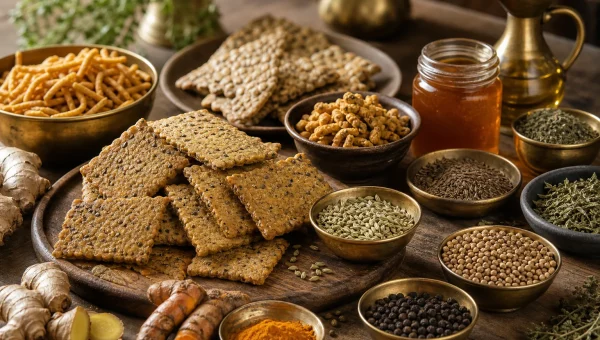
This means the late-winter shift should be moderate, not extreme. Do not abruptly replace warm winter food with raw salads, cold juices, dry crackers, or a diet dominated by pungent, bitter, and astringent tastes. Those lightening measures belong more naturally to Vasanta or to specific kapha conditions under guidance. In Shishira, the better approach is to keep food warm, moist, freshly cooked, and digestible while reducing the obvious kapha-loading excesses: late heavy dinners, cold dairy, excessive sweets, fried foods, and large portions taken without real hunger.
The Shishira Ritu Daily Food Framework
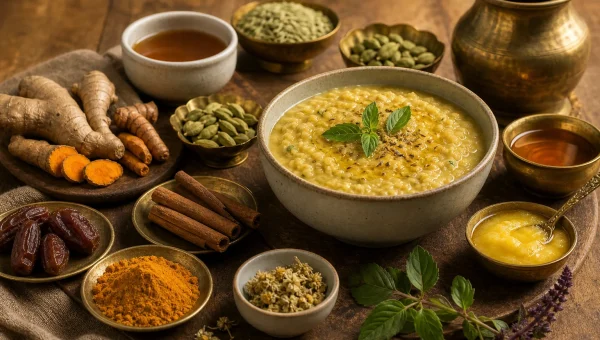
The central food principle for Shishira is warm, cooked, protected nourishment with enough digestive support to prevent heaviness. Meals should feel sustaining without becoming dull or clogging. Use spices as culinary aids, not as aggressive medicine: ginger, cumin, ajwain, black pepper, hing, mustard seed, and turmeric can be helpful in small amounts when suited to the person’s digestion and constitution.
| Meal Time | Shishira Ritu Foods | Useful Culinary Spices | Foods to Reduce |
|---|---|---|---|
| Morning, after warming the body | Warm water; freshly cooked porridge, light khichadi, or a small warm breakfast when hungry | Fresh ginger, dry ginger, cumin, a little black pepper | Cold smoothies, refrigerated foods, dry breakfast snacks, cold milk |
| Midday, main meal | Warm dal, cooked vegetables, rice or roti in a suitable portion, a little ghee when digestion supports it | Cumin, coriander, mustard seed, turmeric, hing | Large sweet dishes, excessive curd or cold dairy, fried foods, overeating |
| Evening | Vegetable soup, thin dal, or a smaller portion of the midday meal served warm | Ajwain, hing, fresh ginger, black pepper in small quantity | Heavy cheese, late-night sweets, cold salads, large grain portions at night |
| Before bed, only if needed | Warm water or a practitioner-chosen herbal support | None required; avoid turning bedtime into a medicine routine without guidance | Self-prescribed herbal powders, sweet dairy drinks, heavy snacks |
Kapha-Smart Vegetables Without Making Shishira Too Dry
Vegetables are best taken cooked, warm, and lightly unctuous in Shishira. Bitter greens, radish, mustard greens, methi leaves, drumstick, cabbage, cauliflower, and similar winter vegetables can fit well when they are prepared with heat, moisture, and digestive spices. The correction is important: in late winter these foods should not become a cold, dry, raw-food program. Charaka specifically cautions against food and drink that are cold, light, vata-provoking, or dominated by pungent, bitter, and astringent tastes during Shishira.
A practical Shishira side dish is a warm methi-mooli sabzi. Temper mustard seed and cumin in a small amount of ghee or oil, add hing, then add thinly sliced radish and cook until the sharpness softens. Add fresh methi leaves, turmeric, a little dry ginger, salt, and a small squeeze of lime if sour taste is suitable. This gives a bitter-pungent note without making the entire meal austere. Serve it with warm dal and a modest portion of rice or roti according to appetite and digestion.
Grain choice should follow agni, constitution, local habit, and the heaviness of the rest of the meal. Fresh warm rotis, rice, millet preparations, or khichadi can all be appropriate when portioned wisely and served hot. The broader Ayurvedic principle is not to chase one “perfect” grain, but to match food quality, preparation, and quantity to the season and to the person’s digestive strength. The connections between grain selection, seasonal eating, and digestive fire are explored in the agni digestive fire foundation article.
Trikatu and Honey: A Targeted, Not Universal, Option
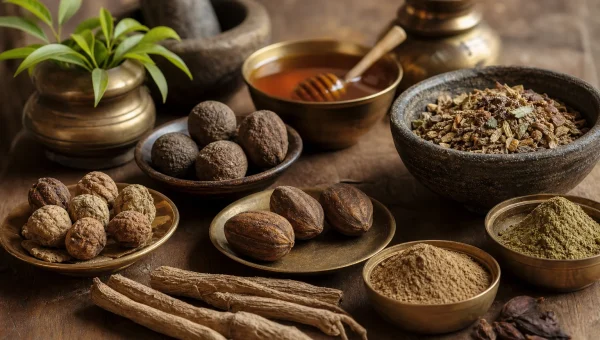
Trikatu is the traditional three-spice combination of shunthi, maricha, and pippali: dry ginger, black pepper, and long pepper. Its role is deepana and pachana, supporting appetite and digestion while addressing kapha-type heaviness when those signs are actually present. In Shishira this can be useful for a person with coldness, heaviness, mucus tendency, and sluggish appetite, but it is not a universal daily medicine for every body type.
For most people, the safest home expression of Trikatu is culinary rather than medicinal: small amounts of ginger, black pepper, ajwain, cumin, mustard seed, or hing used in warm cooked food. Trikatu churna, pippali courses, haritaki at bedtime, and honey-based anupana should be selected by a qualified practitioner, especially for people with acid dyspepsia, heartburn, burning sensations, bleeding tendencies, high-pitta signs, pregnancy risk, constipation with dry hard stool, or regular medication use.
Exercise and Movement in Late Winter
Shishira supports stronger movement for healthy adults with good strength, provided the body is protected from cold wind and exercise is not forced beyond capacity. Classical Ayurveda praises vyayama for lightness, steadiness, appetite, and reduction of excess fat, and it places winter and spring among the seasons in which exercise is especially suitable. The practical late-winter rule is to create warmth without exhaustion: brisk walking after the body is warmed, steady Surya Namaskar, strength work, or other sustained movement that leaves the body clear rather than depleted.
Kapha-dominant people often benefit from a more vigorous routine that brings mild sweating, while vata-dominant people should keep movement warm, rhythmic, and not overly drying. Pitta-dominant people can exercise consistently but should avoid competitive overheating. Exercise is not advised immediately after meals or when a person is exhausted, very hungry, very thirsty, pregnant, very young, elderly, ill, or dealing with conditions in which exertion is inappropriate.
Udvartana, dry powder massage, has a stronger classical place in Vasanta, when kapha is being mobilized. In the last days of Shishira, it may be introduced gently for a kapha-heavy person who tolerates it, followed by warm bathing and adequate oiling where dryness is present. For sensitive, dry, or vata-aggravated people, warm oil abhyanga is often the better late-winter foundation.
Herbal Support for Shishira Ritu
Herbs should be chosen according to prakriti, vikriti, age, digestive strength, medication use, and disease state. The following classical ingredients may be relevant in kapha-heavy late winter when individually appropriate, but they should not be treated as a blanket seasonal prescription.
- Shunthi (dry ginger, Zingiber officinale): A pungent, warming digestive herb used for deepana and pachana. It is more appropriate when coldness and sluggish digestion are present than when there is burning, reflux, or marked pitta aggravation.
- Maricha (black pepper, Piper nigrum): Sharp, light, drying, and heating, with classical kapha-clearing and digestive actions. It should be used sparingly in food and cautiously in people with acidity or heat signs.
- Pippali (long pepper, Piper longum): A deeper digestive-respiratory herb with kapha-related and rasayana use in classical dravya-guna. Longer courses or medicinal doses belong under practitioner supervision.
- Haritaki (Terminalia chebula): Traditionally valued for anulomana, deepana, rasayana, and broad dosha-balancing action. It is not simply a nightly laxative; dose, timing, and suitability matter.
- Warming kitchen spices: Cumin, ajwain, hing, mustard seed, turmeric, and ginger can support the Shishira food pattern when used in cooked meals rather than as excessive dry powders.
Dinacharya Adjustments for Shishira Ritu
Daily routine in Shishira should emphasize warmth, protection, and steadiness. Begin the morning by warming the body: avoid direct exposure to cold wind, sip warm water if suitable, move gently before heavier exercise, and bathe warm rather than cold. Warm oil abhyanga remains appropriate for many people because Shishira is cold and increasingly dry; focus especially on the head, ears, joints, chest, back, and feet when the body feels dry or stiff.
After the main meal, a short period of quiet sitting is preferable to a long daytime sleep, especially as spring approaches and kapha begins to mobilize. Evening should be calmer, warmer, and lighter: keep the head and neck protected, eat a smaller cooked dinner, and avoid late heavy snacks. For nasal care, do not self-prescribe nightly nasya drops as a universal routine; discuss nasya with a qualified practitioner, particularly if you have sinus disease, pregnancy, bleeding tendency, recent respiratory infection, or sensitivity to oils. The broader role of nasal oil therapy is covered in the nasya therapy guide.
The Transition into Vasanta
The junction between Shishira and Vasanta is ritu sandhi: the last seven days of the outgoing season and the first seven days of the incoming season. Ayurveda advises gradual change here. Do not abruptly drop all winter nourishment, and do not continue heavy winter habits deep into spring. Instead, slowly reduce heavy, sweet, sour, overly unctuous, and cold foods while increasing lighter warm meals, cooked greens, appropriate movement, and kapha-clearing routines.
This is the time when dry massage, stronger exercise, lighter suppers, and practitioner-guided kapha therapies become more relevant. Entering Vasanta with steady digestion, warm routines, and reduced winter heaviness is the real purpose of a Shishira protocol. The protocols for managing these transitions are outlined in the ritu sandhi seasonal transition guide.
Medical Disclaimer: This content is for educational purposes only and does not constitute medical advice. Ayurvedic seasonal routines, herbs, powders, oils, and supplements should be adapted to individual constitution, age, digestion, pregnancy status, medications, and health conditions. Consult a qualified Ayurvedic practitioner and healthcare provider before beginning herbal supplementation or therapeutic routines, and do not delay needed medical care.
Started the Shishir prep last November and for the first span I did not develop the heavy Kapha congestion I always get by January.