Obesity Ayurvedic Medoroga Treatment: The Six-Stage Framework
Obesity ayurvedic medoroga treatment is best understood as a staged plan rather than a single herb protocol. Classical Ayurveda discusses this condition mainly as sthaulya or ati-sthaulya, a kapha-meda dominant disorder in which meda and mamsa increase excessively, especially around the abdomen, buttocks and breasts, while strength and enthusiasm do not rise in proportion. In this view, the goal is not merely to reduce a number on the scale; it is to remove the causes, restore appropriate agni, reduce excess kapha-meda, reopen obstructed channels and protect the other dhatus from depletion.
Charaka describes excessive obesity through eight major defects: reduced lifespan, impaired movement, difficulty in sexual activity, debility, unpleasant body smell, excessive sweating, excessive hunger and excessive thirst. He also links the condition to factors such as heavy, sweet, cold and unctuous foods, lack of exercise, day sleep and a sedentary pattern. The pathogenesis is described as meda obstructing the channels, disturbing the movement of vata and intensifying hunger and thirst. Sushruta’s six-stage model of disease progression, from accumulation to complication, gives a useful framework for matching treatment intensity to the clinical picture.
Assessing Your Stage: Classical and Modern Markers
The six stages below adapt the classical shatkriyakala sequence to medoroga assessment. These stages are not a substitute for medical diagnosis, but they help organize Ayurvedic decision-making. Alongside pulse, tongue, appetite, stool, sleep, sweating, mobility and body-composition signs, modern cardiometabolic markers such as waist circumference, blood pressure, fasting glucose, HbA1c, triglycerides, HDL cholesterol and liver assessment can help determine when care must escalate.
| Stage | Clinical Picture | Ayurvedic Focus |
|---|---|---|
| Stage 1: Sanchaya | Early kapha-meda accumulation, increasing waist, heaviness, post-meal drowsiness, reduced enthusiasm for movement. | Remove causes: heavy, sweet, cold, oily meals, frequent snacking, day sleep and inactivity. Begin light, warm, regular meals and daily movement. |
| Stage 2: Prakopa | Kapha-meda aggravation with sluggish digestion, stronger cravings, bloating, irregular appetite and progressive weight gain. | Use langhana, rukshana, appropriate spices, meal discipline, walking and supervised deepana-pachana herbs when suitable. |
| Stage 3: Prasara | Meda begins to disturb wider channels; sweating, heaviness, fatigue on exertion and central adiposity become more prominent. | Add structured diet, objective tracking, udvartana, stronger pathya planning and practitioner-guided medohara formulations. |
| Stage 4: Sthana Samshraya | Kapha-meda lodges in vulnerable tissues; joint discomfort, poor mobility, fatty-liver tendency, raised glucose, lipids or blood pressure may appear. | Combine Ayurvedic care with medical monitoring. Intensify lifestyle correction while avoiding harsh depletion. |
| Stage 5: Vyakti | Clear manifestation of ati-sthaulya with excess abdomen, breasts or buttocks, excessive sweating, hunger, thirst, fatigue and reduced movement. | Use a full supervised plan: pathya diet, exercise, udvartana, selected formulations and regular clinical review. |
| Stage 6: Bheda | Complications such as type 2 diabetes, cardiovascular disease, fatty liver disease, sleep apnea, gout or severe joint limitation may be present. | Integrated medical care is essential. Panchakarma or strong herbs should be considered only after assessment of strength, age, agni, medicines and comorbidities. |
For South Asian adults, central adiposity is commonly assessed at a lower waist threshold than Western cutoffs: 90 cm or above for men and 80 cm or above for women. In NCEP/ATP III-style Western thresholds, abdominal obesity is commonly marked at 102 cm or above for men and 88 cm or above for women. These numbers do not define the whole Ayurvedic picture, but they are useful warning signs when medoroga is moving from cosmetic weight gain toward metabolic risk. The Ayurvedic understanding of channel obstruction is detailed in our article on the srotas system.
The Core Herb Protocol: Classical Medohara Supports
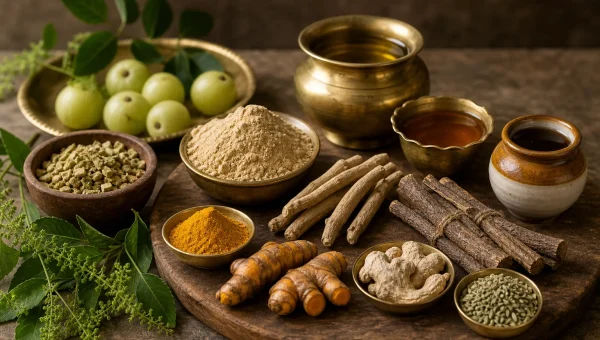
Classical medoroga care begins with cause-removal and pathya before herbs. Charaka’s management of obesity includes foods and drinks that reduce kapha and meda while protecting vata, dry udvartana, and selected substances such as guduchi, musta, triphala, takrarishta, honey, vidanga, nagara, barley, amalaki and shilajit combinations. The Ayurvedic Pharmacopoeia of India lists guggulu as medohara and includes medoroga among its therapeutic uses. These supports should be selected according to constitution, digestion, bowel pattern, heat signs, medical history and current medicines.
| Herb / Formulation | Classical Role | Typical Use in a Staged Plan | Safety Boundary |
|---|---|---|---|
| Shuddha Guggulu including Triphala Guggulu or Medohara Guggulu where appropriate |
Medohara; used for meda-kapha accumulation and medoroga. | Usually reserved for Stage 3 onward, especially when heaviness, stiffness and lipid-risk patterns are present. API single-drug guggulu dose is 2-4 g; prepared tablets vary by product and practitioner direction. | Avoid self-prescribing in pregnancy, lactation, active liver disease, rash-prone states or when taking prescription medicines without supervision. |
| Triphala | Listed by Charaka among substances used in obesity management. | Useful when bowel regularity, kapha-meda heaviness and dietary discipline need gentle daily support. | Adjust to bowel tolerance; use supervision with pregnancy, chronic diarrhea, frailty or multiple medicines. |
| Trikatu Churna sunthi, maricha, pippali |
Deepana-pachana support for kapha and mandagni. | Short courses may be used before meals when appetite is dull, digestion is heavy and there are no strong pitta symptoms. Classical dosage references commonly place it around 1-3 g with honey or warm water. | Avoid or use carefully with acidity, reflux, ulcers, burning sensations, bleeding disorders, high pitta states and pregnancy. |
| Guduchi-Musta-Triphala Approach | Charaka lists guduchi, musta and triphala in the management of obesity. | A practitioner may choose this direction when kapha-meda is accompanied by heat, sluggish metabolism, heaviness and appetite irregularity. | Use clinical guidance when diabetes medicines, liver disease, autoimmune conditions or complex prescriptions are present. |
| Pathya Foods barley, mudga, kulattha, kodrava and other light grains or pulses |
Dietary foundation for reducing kapha-meda without starving the body. | Best used as the main daily intervention in Stage 1 and Stage 2, and continued as the base of care in later stages. | Modify for digestion, kidney disease, gout tendency, frailty, pregnancy and individual tolerance. |
Diet and Daily Protocol: Langhana Without Depletion
Ayurveda does not treat medoroga with starvation. For the obese patient, Charaka recommends a reducing approach that is satisfying enough to protect vata while still decreasing kapha and meda. This is the practical meaning of langhana in medoroga: lighten the load, improve digestion, create appropriate hunger, reduce heaviness and remove the causes that keep feeding kapha-meda.
A simple daily structure begins with warm water in the morning, bowel regularity, walking or suitable exercise, and meals built around light, warm, freshly prepared foods. Barley, green gram, horse gram, cooked vegetables, thin buttermilk preparations where suitable, and measured use of pungent-bitter-astringent tastes are more appropriate than heavy sweets, fried foods, cold dairy-heavy meals, refined snacks and late-night eating. Daytime sleep, constant sitting and eating before the previous meal is digested should be corrected early because they directly reinforce kapha-meda accumulation.
The intermittent fasting parallel should be applied carefully. Classical Ayurveda includes upavasa among lightening measures, but fasting is only one tool within langhana. A practical and safer starting point is to stop grazing, eat only after true hunger returns, keep dinner light and early, and maintain a simple overnight food-free window when strength, medicines and medical status allow it. People using insulin, sulfonylureas, blood-pressure medicines, steroid medicines, psychiatric medicines, or anyone with pregnancy, eating-disorder history, frailty or chronic disease should not attempt fasting without clinical guidance. The dosha-specific approach to meal timing is discussed in our intermittent fasting dosha protocol.
Udvartana: The Physical Mobilization of Kapha-Meda
Udvartana is the classical dry powder rubbing therapy used to reduce kapha and meda. Charaka includes dry udvartana in obesity management, and the Ashtanga Hridaya describes udvartana as kapha-reducing, meda-reducing, firming to the body and supportive for the skin. It is best understood as an adjunct that supports circulation, skin tone, heaviness reduction and kapha-meda mobilization alongside diet and exercise.
In a professional setting, udvartana is performed with dry, warming, rough powders selected according to the patient’s constitution and skin tolerance, using firm upward or opposite-hair-direction strokes for about 20-30 minutes before a warm bath. At home, keep the practice gentler: patch-test first, use a fine powder such as barley flour, chickpea flour or a practitioner-approved herbal powder, rub for 5-10 minutes, and stop if burning, rash or dizziness occurs. Avoid strong mustard, excessive dry ginger or harsh scrubbing on sensitive skin. Do not perform udvartana over eczema, wounds, active rashes, varicose veins, fever, pregnancy-related vulnerability or unexplained pain unless a practitioner specifically approves it.
When to Escalate to Panchakarma or Medical Care
Panchakarma is an escalation step, not a home detox. Charaka includes purification therapies within the broader category of langhana and indicates stronger approaches for robust patients with substantial dosha, kapha, pitta or waste accumulation. In medoroga, procedures such as virechana, basti or other Panchakarma steps must be selected only after assessing strength, age, digestion, blood pressure, glucose status, liver function, medicines and complications. The full context for supervised cleansing therapies is covered in our panchakarma complete guide.
Stage 5 and Stage 6 presentations require integrated care. Type 2 diabetes, cardiovascular disease, fatty liver disease, sleep apnea, gout, severe osteoarthritis, hypertension and marked mobility limitation should be managed with appropriate medical testing and follow-up. Ayurvedic herbs, diet, udvartana and Panchakarma can be supportive when properly selected, but they should not replace prescribed medicines, emergency care or specialist management.
Medical disclaimer: This article is for educational purposes only and does not diagnose, treat or cure any condition. Obesity and metabolic syndrome require individualized assessment. Consult a qualified Ayurvedic practitioner and a licensed healthcare provider before starting herbs, supplements, fasting, udvartana or Panchakarma, especially if pregnant, breastfeeding, managing diabetes, heart disease, liver disease, kidney disease, hypertension, thyroid disease, gout, eating-disorder history, or taking any prescription medication.
References
- Charaka Samhita — Ashtauninditiya Adhyaya
- Sushruta Samhita — Sutra Sthana 21.36-40
- International-diabetes-federation (international-diabetes-federation.s3.eu-west-1.amazonaws.com)
- Onlinelibrary (onlinelibrary.wiley.com)
- Emro (emro.who.int)
- NIDDK
- Charaka Samhita — Langhanabrimhaniya Adhyaya
- Ayurvedic Pharmacopoeia of India
- Ijrap (ijrap.net)
- NCBI
- Drugs (drugs.com)
- Easyayurveda (easyayurveda.com)