
Carpal tunnel syndrome is often felt as tingling, numbness, burning, aching, or weakness around the wrist and hand, especially in the thumb, index, middle, and part of the ring finger. In Ayurveda, a mild-to-moderate presentation of this pattern can be approached as an upper-limb Vata disorder: overuse, cold exposure, dryness, strain, and repetitive motion disturb the normal movement and nourishment of the hand, wrist, forearm, and related nerve pathways. The Ayurvedic goal is not to ignore the anatomy of the wrist, but to combine local relief, Vata-pacifying care, and removal of the causes that keep compressing or irritating the region.
Carpal Tunnel Through an Ayurvedic Lens
In contemporary anatomy, carpal tunnel syndrome occurs when the median nerve is compressed as it passes through the carpal tunnel at the wrist. The typical symptom pattern includes numbness, tingling, burning, pain, night waking, symptoms that may travel toward the forearm, and in more advanced cases weakness or clumsiness of the hand. Ayurveda describes comparable upper-limb Vata presentations under the broader field of Vatavyadhi. Vishwachi is traditionally described as a Vata disorder affecting the arm and hand, with impairment of arm function when Vata afflicts structures extending from the back of the arm toward the hand and fingers.
Vishwachi should not be treated as a perfect one-word synonym for every case of carpal tunnel syndrome. A practitioner must still distinguish median nerve compression at the wrist from cervical radiculopathy, diabetic neuropathy, thyroid-related neuropathy, repetitive strain injury, inflammatory arthritis, trauma, and other causes of hand numbness. As an Ayurvedic working framework, however, Vishwachi helps guide treatment toward Vata-pacifying oleation, warmth, rest from the causative strain, and systemic Vata regulation.
Treatment Principle: Snehana, Swedana and Nidana Parivarjana
The practical Ayurvedic foundation is simple: apply Snehana to counter dryness and friction, follow with gentle Swedana to reduce coldness and stiffness, and practice Nidana Parivarjana by removing the repeated wrist stress that keeps provoking symptoms. Classical Vatavyadhi management gives importance to oleation, fomentation, massage, warmth, and Basti for Vata disorders, while modern conservative care gives importance to neutral wrist position, night splinting, rest from aggravating actions, and early attention to progressive weakness.
Phase 1: External Snehana for the Wrist, Hand and Forearm
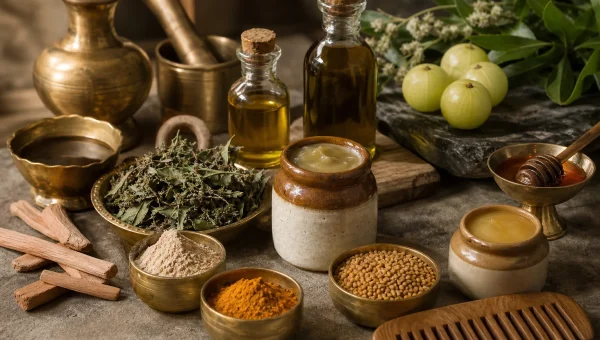
External Snehana is the safest starting point for many mild Vata-type wrist complaints. Use enough warm sesame oil, Mahanarayana Taila, or another practitioner-selected Vatahara oil to lightly coat the palm, wrist, forearm, and elbow region. Massage gently for 7–10 minutes, using comfortable strokes over the palm and forearm and avoiding hard pressure directly over the carpal tunnel. The purpose is to bring warmth, softness, and ease to the tissues without provoking more tingling.
A practical routine is to apply the oil in the evening or before sleep, especially when symptoms are worse at night. The hand should feel relaxed and warm after massage, not swollen, irritated, or more numb. If oil application increases burning, rash, swelling, or pain, stop and consult a qualified practitioner.
Phase 2: Gentle Swedana After Oil
Swedana is traditionally used after oil application in Vata disorders to reduce coldness, stiffness, aching, tingling, and pricking sensations. For home care, keep it gentle: after oil massage, place a warm moist towel around the wrist and forearm for 5–10 minutes. The heat should be pleasantly warm, never burning. Avoid strong heat over areas with reduced sensation because the skin may not accurately detect injury.
In a clinical setting, a practitioner may use Nadi Sweda, Patra Pinda Sweda, or another localized fomentation method depending on the person’s strength, constitution, inflammation, and sensitivity. Heavy heat should not be used over acute swelling, infection, open skin, recent injury, or unexplained severe pain.
Phase 3: Practitioner-Selected Vata-Supportive Herbs
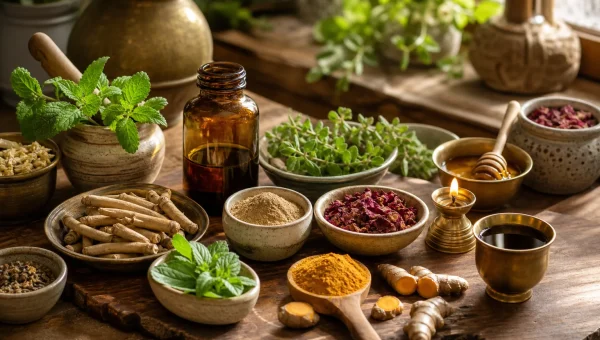
Internal herbs should be chosen by a qualified Ayurvedic practitioner after assessing constitution, digestion, sleep, bowel habits, medication use, blood pressure, liver history, pregnancy status, and the severity of the nerve symptoms. The aim is to support Vata regulation and tissue strength, not to force a single herb protocol onto every wrist complaint.
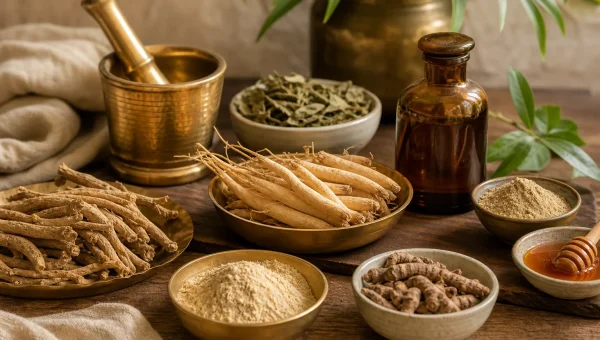
- Ashwagandha root (Withania somnifera): Traditionally used as a strengthening Rasayana and Balya herb. It may be considered when the person has fatigue, weakness, poor recovery, disturbed sleep, and a dry Vata presentation. It should be avoided in pregnancy and used cautiously with liver history, thyroid conditions, sedative medicines, autoimmune disease, or multiple medications.
- Bala root (Sida cordifolia): Traditionally used in Vata disorders for strength and support of the neuromuscular system. Because Sida cordifolia can contain ephedrine-type alkaloids, it should not be self-prescribed. It is especially unsuitable without supervision in hypertension, heart disease, anxiety, hyperthyroidism, pregnancy, lactation, stimulant use, or significant cardiovascular risk.
- Guduchi stem (Tinospora cordifolia): Traditionally used as a Rasayana and in inflammatory or depleted states. It should be used with correct plant identification, appropriate dose, and professional guidance, especially in people with liver disease, autoimmune conditions, or unexplained jaundice, fatigue, itching, dark urine, or abdominal pain.
- Dashamoola: The ten-root group is widely used in Vata disorders and appears in classical Vata management contexts, especially where pain, stiffness, and deeper tissue involvement are present. Decoction strength, dose, and suitability should be individualized.
Mineral preparations and Bhasma products should not be used as casual home supplements for tingling or numbness. They require proper indication, quality assurance, dose selection, and supervision by a qualified Ayurvedic physician.
Phase 4: Clinical Basti for Systemic Vata
Basti is a central classical therapy for aggravated Vata. In a person whose wrist symptoms sit within a wider Vata picture—constipation, poor sleep, dryness, variable appetite, anxiety, cracking joints, chronic pain, and depletion—a physician may consider a structured Basti plan as part of Panchakarma or outpatient Ayurvedic care. This is a clinical therapy and should not be improvised at home.
For daily home support, the safer systemic approach is regular warm meals, adequate hydration, bowel regularity, sleep discipline, reduced cold exposure, and avoiding long periods of repetitive hand strain. These measures do not replace Basti, but they support the same Vata-pacifying direction.
Workstation and Daily Habits
Nidana Parivarjana is essential because continued wrist compression can overpower any oil, herb, or therapy. The wrist should remain as neutral as possible during typing, mouse use, phone use, cooking, gripping tools, or cycling. Repeated wrist flexion, forceful gripping, prolonged pressure on the heel of the palm, and sleeping with the wrist bent can aggravate symptoms.
- Use a neutral wrist position: Keep the wrist straight rather than bent sharply upward or downward while typing or using a mouse.
- Reduce force: Type lightly, avoid gripping the mouse tightly, and choose tools with handles that do not compress the palm.
- Take frequent breaks: Every 25–30 minutes, pause for 2–3 minutes and gently move the fingers, wrist, elbow, shoulder, and neck.
- Use a night splint when appropriate: A neutral wrist splint during sleep can reduce nighttime bending and may ease night tingling and numbness.
- Protect from cold: Keep the hands and forearms warm in cold weather or strong air conditioning, especially when symptoms are Vata-like: dry, aching, variable, tingling, and worse at night.
Simple Daily Protocol
The following protocol is a conservative support plan for mild-to-moderate symptoms. It should be adjusted or stopped if symptoms worsen, become constant, or include weakness. Severe presentations require medical assessment rather than prolonged home treatment.
| Intervention | Protocol | Frequency | Reassessment Point |
|---|---|---|---|
| Neutral wrist care | Keep the wrist straight during typing, mouse use, phone use, and sleep | Daily | Ongoing |
| Micro-breaks | Gentle finger, wrist, forearm, shoulder, and neck movement | 2–3 minutes every 25–30 minutes of repetitive work | Ongoing |
| Warm oil Abhyanga | Warm sesame oil, Mahanarayana Taila, or practitioner-selected Vatahara oil over hand, wrist, and forearm | Once daily, preferably evening | 2–4 weeks |
| Gentle Swedana | Warm moist towel after oil application; avoid excessive heat | 5–10 minutes, 3–5 times weekly | 2–4 weeks |
| Night splint | Neutral wrist splint while sleeping when advised or tolerated | Nightly | 2–6 weeks |
| Internal herbs | Ashwagandha, Bala, Guduchi, Dashamoola, Ghrita, or other medicines only if individually prescribed | As directed by practitioner | 4–8 weeks or as advised |
| Clinical Basti or Panchakarma | Supervised Ayurvedic therapy for systemic Vata involvement | As prescribed | Clinic-guided |
When to Seek Medical Care Promptly
Seek prompt medical evaluation if numbness becomes constant, grip strength decreases, objects begin slipping from the hand, the thumb muscles look smaller, pain travels strongly from the neck, symptoms follow injury, or symptoms do not improve with conservative care. Carpal tunnel syndrome with clear weakness, thenar muscle wasting, severe nerve compression, or progressive loss of sensation may require surgical evaluation. Ayurvedic care can support mild-to-moderate cases and recovery routines, but it should not delay necessary medical treatment.
Safety: This article is educational and does not diagnose or treat a medical condition. Consult a qualified Ayurvedic practitioner and a healthcare provider before starting herbs, supplements, medicated oils, Ghrita, Bhasma or mineral preparations, Basti, Panchakarma, or therapeutic protocols—especially if pregnant or breastfeeding, elderly, diabetic, hypertensive, dealing with liver, thyroid, heart, autoimmune, or neurological disease, or taking regular medication.
References
- NCBI
- Orthoinfo (orthoinfo.aaos.org)
- Aafp (aafp.org)
- Mayoclinic (mayoclinic.org)
- Mayoclinic (mayoclinic.org)
- Effect of wrist posture on carpal tunnel pressure while typing (2008), PubMed Central
- Charaka Samhita — Vatavyadhi Chikitsa
- Ebharatisampat (ebharatisampat.in)
- Charaka Samhita — Basti
- Ayurmedinfo (ayurmedinfo.com)
- Miracledrinksclinic (miracledrinksclinic.com)
- Miracledrinksclinic (miracledrinksclinic.com)
- Journalijar (journalijar.com)
- NCCIH
- Webmd (webmd.com)
- Pib (pib.gov.in)
- Tinospora Cordifolia (Giloy)-Induced Liver Injury During the COVID-19 Pandemic-Multicenter Nationwide Study From India (2022), PubMed
- Analytical profile of Brahmi Ghrita: A polyherbal Ayurvedic formulation (2012), PubMed Central
🌿 Ergo keyboard changes made more difference than any supplement. Not dismissing Ayurveda but tool use is primary cause.
The classical references you include make this more credible than most Ayurveda blogs.
Same here
Software engineer with bilateral carpal tunnel for 3 years. The Vishwachi Vata framework is new to me. What distinguishes it from standard Vata Vyadhi?
I’m a software developer and the wrist and finger tingling described here maps almost exactly to what I’ve been experiencing for the past year. The part about Vishwachi Vata being aggravated by repetitive fine-motor strain without adequate rest — that framing is new to me. Has anyone here actually followed the nerve recovery protocol and noticed improvement in grip strength?
Had carpal tunnel surgery 2 years ago on the right, now left wrist symptomatic. Trying to avoid second surgery.
Doing this
The tingling in the index and middle finger that wakes you at night — that description is so specific and it’s exactly what I’ve been dealing with. My neurologist confirmed CTS but I haven’t wanted to go straight to surgery. Really glad to find a post that takes the Ayurvedic angle seriously rather than just listing generic herbs.
This is a carpal tunnel post so fatty liver treatment isn’t really covered here — different system entirely. But if you’re looking for Ayurvedic approaches to liver health, Bhumi Amla and Punarnava tend to come up most often in that context. Worth doing a separate search.
My Ayurvedic doctor recommended the same thing last month. Good to find it confirmed here.
Started Yogaraj Guggulu 3 months ago. Tingling reduced but grip strength still weak. 🙌
The Pinda Sweda for nerve recovery, is that contraindicated in acute phase with significant swelling?
Karpasasthi Basti for wrist, my Vaidya recommended this last year. After 7 sessions significant relief.
🙏 Just found this. Really helpful for my situation.
Useful
Will try
धन्यवाद for explaining this so clearly
Late to this post, found it via Google. Is this still the recommended approach in 2027? 🙏
Found this helpful. The Carpal Tunnel in the Digital Age section was particularly useful for my situation.
Found this helpful. The Carpal Tunnel in tje Digital Age section was particularly useful for my situation.
✨ Found this helpful. The Carpal Tunnel in the Digital Age section was particularly useful for my situation.
I tried the Mahanarayan Taila massage twice a day and noticed less tingling after a week.
Found tjis helpful. The Carpal Tunnel in the Digital Age section was particularly useful for my situation.
💯 Found this helpful. The Carpal Tunnel in the Digital Age section was particularly useful for my situation.
Found this helpful. The Carpal Tunnel in the Digital Age section was particularly useful fpr my situation. (asking as someone dealing with this since 2022)
🙌 Found this helpful. The Carpal Tunnel in the Digital Age section was particularly useful for my situation.
Does the Brahmi Ghritam dose need to be taken with warm water every morning?
The Pinda Sweda bolus sounds time consuming but could be worth trying for wrist relief.
I wonder if Ashwagandha alone would help or if the full herb combo is necessary.