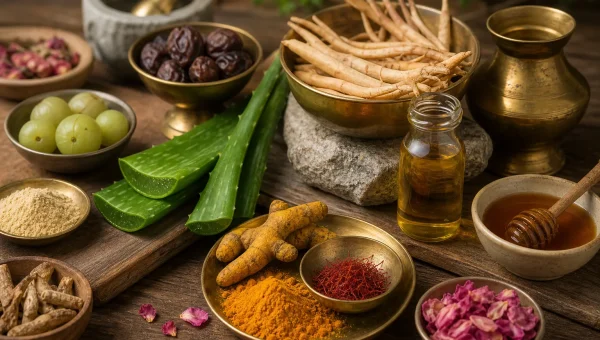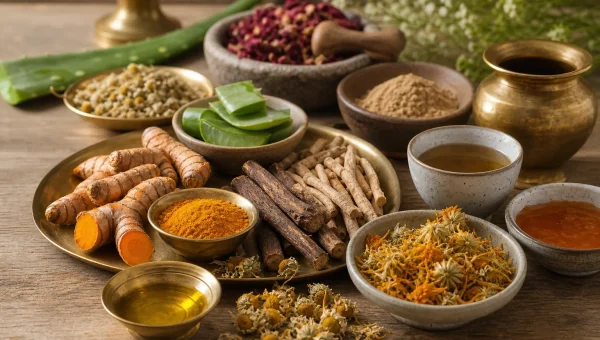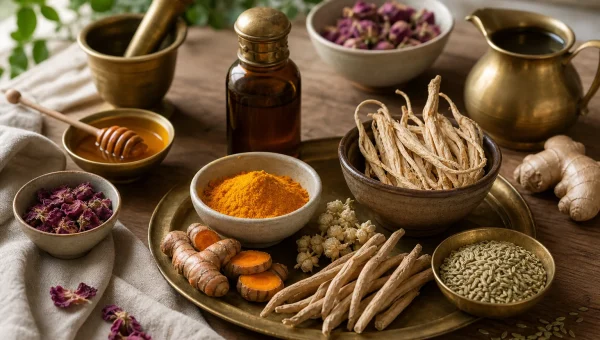
Menopausal Weight Gain and Ayurveda: Addressing the Root Medoroga Pattern
Menopausal weight gain in Ayurveda is best understood as an overlap between age-related metabolic change and menopause-linked fat redistribution. Modern menopause literature distinguishes ordinary midlife weight gain from the tendency for fat to shift toward the abdomen as ovarian estrogen declines. From an Ayurvedic lens, this pattern fits the medoroga or sthoulya framework: excess medo dhatu, kapha heaviness, impaired agni, and obstructed movement through the channels, occurring at a life stage in which vata naturally becomes more prominent.
This is not simply a willpower problem. The menopause transition can change body composition even when the scale changes only modestly: abdominal fat may rise, lean mass may decline, sleep may become disturbed, and glucose-lipid markers may become less favorable. Ayurveda interprets this as a need to treat the root pattern rather than only the visible weight: rekindling agni, reducing kapha-meda accumulation, preserving mamsa dhatu, calming vata, and avoiding harsh depletion that worsens dryness, insomnia, anxiety, or hot flushes.
Classical Ayurvedic discussion of excessive adiposity appears under atisthaulya and related meda-kapha patterns. Charaka describes excess nourishment, heavy-sweet-cold-unctuous intake, lack of exercise, day sleep, and hereditary tendency as contributors to excessive corpulence. For menopausal women, the same meda-kapha logic must be combined with rajonivritti care: the reproductive transition is usually assessed with vata predominance, while individual symptoms may show pitta heat, kapha-meda stagnation, or both.
The Vata-Kapha Medoroga Diagnostic Framework
The therapeutic challenge is to reduce kapha and medo dhatu without aggravating vata. A very drying, low-calorie, over-exercising plan may temporarily reduce weight but can worsen insomnia, dryness, joint pain, cravings, mood fluctuation, and hot flushes. A well-designed Ayurvedic protocol separates the symptom pattern first, then chooses herbs, diet, movement, and daily rhythm accordingly.
| Menopausal Symptom | Likely Ayurvedic Pattern | Weight Gain Connection | Common Ayurvedic Support |
|---|---|---|---|
| Hot flushes, night sweats, heat intolerance | Pitta aggravation with vata instability | Sleep disturbance can worsen appetite rhythm, fatigue, and metabolic regulation | Shatavari, cooling breath practices, pitta-pacifying meals |
| Central weight gain, heaviness, sluggishness | Kapha-meda accumulation with manda agni | Excess medo dhatu and abdominal adiposity are the primary visible pattern | Triphala, guggulu-based formulas, warming spices, regular vyayama |
| Joint pain, stiffness, dryness, cracking | Vata aggravation | Pain and dryness can reduce movement and weaken muscle-preserving activity | Abhyanga, Dashamula, Bala, gentle strength training |
| Anxiety, restlessness, emotional eating | Vata disturbance affecting manas | Irregular sleep and stress eating can reinforce kapha-meda accumulation | Ashwagandha, Brahmi, stable meal timing, evening wind-down routine |
| High fasting glucose, cravings, post-meal sleepiness | Kapha-meda with impaired agni and channel obstruction | Glucose instability encourages hunger, fatigue, and abdominal fat gain | Fenugreek, protein-forward meals, legumes, bitter and astringent vegetables |
The Central Herb Protocol for Menopausal Medoroga
Herb selection for menopausal weight management should be metabolic without being punishing. The goal is not to dry the body aggressively, but to improve agni, support bowel rhythm, regulate kapha-meda accumulation, steady stress physiology, and protect tissues that become vulnerable in vata-predominant later life. Herbs should be chosen according to constitution, symptoms, medications, digestion, and laboratory findings.
Triphala as the foundation: Triphala is the classical three-fruit combination of Amalaki, Bibhitaki, and Haritaki. In a menopausal medoroga protocol, it is most useful as a gentle support for bowel regularity, digestive rhythm, and kapha-meda clearance. A common practitioner-guided approach is Triphala powder at bedtime with warm water, adjusted to bowel response and constitution. It should not be treated as a stand-alone fat-loss remedy; it works best when paired with warm meals, adequate protein, daily walking, and resistance exercise.
Guggulu for kapha-meda and lipid patterns: Purified guggulu and guggulu-containing formulations are traditionally used where kapha, meda, heaviness, sluggish metabolism, and lipid disturbance are prominent. Navaka Guggulu is a classical medoroga-oriented formulation containing guggulu along with Triphala and Trikatu. Because guggulu may be unsuitable for some people with thyroid disease, liver disease, hormone-sensitive conditions, anticoagulant use, or multiple medications, it should be used only under qualified supervision.
Shatavari for heat, dryness, and depletion: Shatavari is not a primary weight-loss herb, but it is valuable when the menopausal picture includes hot flushes, night sweats, vaginal or systemic dryness, irritability, and tissue depletion. In such cases, reducing weight without nourishing vata can worsen symptoms. Shatavari can help balance the cooling and nourishing side of the plan while the kapha-meda side is addressed through diet, movement, digestive spices, and appropriate formulas.
Ashwagandha for stress, sleep, and vata stability: Ashwagandha is best suited when weight gain is linked with stress, poor sleep, fatigue, anxiety, or loss of routine. In a vata-kapha menopausal pattern, it can support steadier sleep and resilience while strength training rebuilds mamsa dhatu. The ashwagandha versus rhodiola comparison can help readers understand when a grounding adaptogen is more appropriate than a stimulating one. Ashwagandha should be avoided or used cautiously in pregnancy, autoimmune disease, thyroid disorders, liver disease, sedative use, and complex medication plans unless supervised.
The Menopausal Dietary Protocol: Specific to the Vata-Kapha Pattern
The menopausal diet for this pattern should be warm, satisfying, protein-forward, fiber-rich, and easy to digest. It should reduce kapha-promoting habits such as heavy late dinners, frequent sweets, cold foods, excessive dairy desserts, fried snacks, day sleeping, and grazing, while still protecting vata through regular meals, cooked foods, healthy fats in moderation, and spices that kindle agni without overheating pitta.
Protein priority: Preserving mamsa dhatu is central after menopause because lean mass tends to decline during midlife. A practical target for many women is about 1.0-1.2 g protein per kilogram of body weight daily, with higher needs possible during resistance training or under clinical nutrition guidance. Mung dal, lentils, chickpeas, tofu, paneer in moderation, curd when suitable, nuts and seeds in small amounts, and well-spiced legumes can provide protein while supporting satiety and bowel regularity.
Fenugreek for glucose steadiness: Fenugreek seed is a useful food-level support when cravings, post-meal sleepiness, central weight gain, or prediabetic tendencies are present. A practical approach is 1 teaspoon of soaked fenugreek seeds in the morning, or fenugreek used regularly in cooking. It should be introduced gradually because it can cause digestive discomfort in some people and may enhance the effect of glucose-lowering medicines.
Cruciferous vegetables daily: Broccoli, cauliflower, cabbage, radish, mustard greens, kale, and Brussels sprouts provide fiber, bitter-astringent taste, and indole compounds involved in estrogen metabolism. For vata-sensitive digestion, they are best cooked with cumin, coriander, ginger, black pepper, ajwain, or hing rather than eaten cold and raw. They are supportive foods within the protocol, not a substitute for strength training, meal rhythm, or medical care.
Meal rhythm and agni protection: A steady rhythm is more important than severe restriction. Lunch should usually be the most substantial meal, dinner should be lighter and earlier, and breakfast should match appetite and constitution. Warm water or herbal infusions, ginger-cumin-coriander seasoning, and mindful eating help protect agni while reducing the kapha tendency toward heaviness and stagnation.
Exercise: Strength Training as Vyayama for Women Over 50
No Ayurvedic protocol for menopausal medoroga is complete without vyayama. Classical Ayurvedic obesity management includes appropriate diet, moderate exercise, yoga, and breathing practices. For postmenopausal body composition, the most complete plan combines resistance training to preserve or rebuild muscle, aerobic movement to reduce fat mass, and mobility or yoga practices to keep vata balanced.
A practical weekly structure is two to three sessions of progressive strength training, daily walking, and two or more short yoga or mobility sessions. Strength training should include squats or sit-to-stand patterns, hip hinges, rows, presses, loaded carries, and core stability, adapted for joint health and experience level. The intensity should be warming and progressive, not exhausting. Excessive high-intensity training, fasting workouts, or sleep-depriving routines can aggravate vata and pitta in women who already have hot flushes, insomnia, anxiety, or joint pain.
Monitoring Progress Beyond the Scale
The scale is an incomplete metric during menopause because the most important change is often body composition: less abdominal fat, better strength, improved waist measurement, steadier glucose, better sleep, and preserved or increased lean mass. A woman may lose fat and gain muscle with only a small change in total body weight, yet her metabolic risk and vitality may improve substantially.
More meaningful monitoring includes waist circumference, hip-to-waist pattern, strength progression, walking capacity, sleep quality, bowel regularity, fasting glucose or HbA1c, lipid profile, blood pressure, and optional body-composition testing every three to four months. Waist targets should be interpreted with ethnicity-specific cutoffs; for many South Asian and several other female populations, 80 cm is used as an abdominal obesity threshold in metabolic risk screening. Tracking these measures over six to twelve months gives a clearer picture than weighing alone.
Medical Disclaimer: This article is for educational purposes only. Menopausal weight gain, hot flushes, thyroid symptoms, diabetes risk, lipid abnormalities, abnormal bleeding, depression, and rapid unexplained weight change require appropriate medical evaluation. Ayurvedic herbs and formulas should be individualized by a qualified Ayurvedic practitioner and coordinated with a healthcare provider, especially if you use diabetes medication, thyroid medication, hormone therapy, anticoagulants, sedatives, blood pressure medication, or have liver disease, kidney disease, cardiovascular disease, cancer history, or planned surgery. Do not stop prescribed treatment without medical guidance.
References
- World Health Organization
- Imsociety (imsociety.org)
- Swanstudy (swanstudy.org)
- Insight (insight.jci.org)
- Charaka Samhita — Ashtauninditiya Adhyaya
- Ijmedicine (ijmedicine.com)
- Jaims (jaims.in)
- Sleep, Health, and Metabolism in Midlife Women and Menopause: Food for Thought (2018), PubMed Central
- Therapeutic Uses of Triphala in Ayurvedic Medicine (2017), PubMed Central
- Effects of Triphala on Lipid and Glucose Profiles and Anthropometric Parameters: A Systematic Review (2021), PubMed Central
- Link (link.springer.com)
- A Systematic Review and Meta-Analysis of Ayurvedic Herbal Preparations for Hypercholesterolemia (2021), PubMed
- Guggul for hyperlipidemia: a review by the Natural Standard Research Collaboration (2005), PubMed
- Guggulipid for the treatment of hypercholesterolemia: a randomized controlled trial (2003), PubMed
- Jaims (jaims.in)
- Efficacy and Safety of Shatavari Root Extract for the Management of Menopausal Symptoms: A Double-Blind, Multicenter, Randomized Controlled Trial (2024), PubMed Central
- Efficacy and Safety of Shatavari (Asparagus racemosus) Root Extract for Perimenopause: Randomized, Double-Blind, Placebo-Controlled Study (2025), PubMed Central
- A prospective, randomized double-blind, placebo-controlled study of safety and efficacy of a high-concentration full-spectrum extract of ashwagandha root in reducing stress and anxiety in adults (2012), PubMed Central
- NIH Office of Dietary Supplements
- Sarcopenia in Menopausal Women: Current Perspectives (2022), PubMed Central
- Protein Requirements and Recommendations for Older People: A Review (2015), PubMed Central
- Espen (espen.org)
- Mdpi (mdpi.com)
- Link (link.springer.com)
- Effect of fenugreek (Trigonella foenum-graecum L.) intake on glycemia: a meta-analysis of clinical trials (2014), PubMed Central
- Lpi (lpi.oregonstate.edu)
- Altered estrogen metabolism and excretion in humans following consumption of indole-3-carbinol (1991), PubMed
- The effects of exercise training on body composition in postmenopausal women: a systematic review and meta-analysis (2023), PubMed Central
- Frontiersin (frontiersin.org)
- International-diabetes-federation (international-diabetes-federation.s3.eu-west-1.amazonaws.com)
- NCCIH
- Ayush (ayush.delhi.gov.in)