
A man in his late forties may first notice prostate trouble as sleep disruption: waking several times at night to urinate, waiting for the stream to begin, passing urine in a weak or interrupted flow, and feeling that the bladder has not fully emptied. These symptoms should not be ignored or hidden out of embarrassment. They deserve a proper urological evaluation, and they can also be supported through an Ayurvedic plan that focuses on Apana Vata, urinary channel health, digestion, pelvic circulation, and sustainable daily habits.
Benign prostatic hyperplasia, or BPH, is a non-cancerous enlargement of the prostate gland that becomes more common with age, especially after 40. Ayurveda does not describe the modern anatomical prostate in the same way as contemporary urology, but urinary patterns resembling BPH are traditionally assessed through Mutravaha Srotas, Apana Vata, Mutrakrichra, and Mutraghata. In simple terms, the Ayurvedic focus is to support unobstructed downward flow, reduce Kapha-Meda congestion, maintain healthy elimination, and preserve the strength of Shukra Dhatu and the lower pelvic region.
Ayurvedic View of Prostate Health
Apana Vata governs the downward-moving functions of urination, defecation, ejaculation, and pelvic elimination. When Apana Vata becomes disturbed, urination may become irregular, hesitant, painful, incomplete, or obstructed. Kapha and Meda can contribute heaviness, swelling, sluggishness, and congestion, especially in sedentary men or those with metabolic imbalance. Shukra Dhatu, the seventh of the seven bodily tissues, is also relevant because male reproductive vitality and urinary function share the same lower pelvic field of care in Ayurveda.
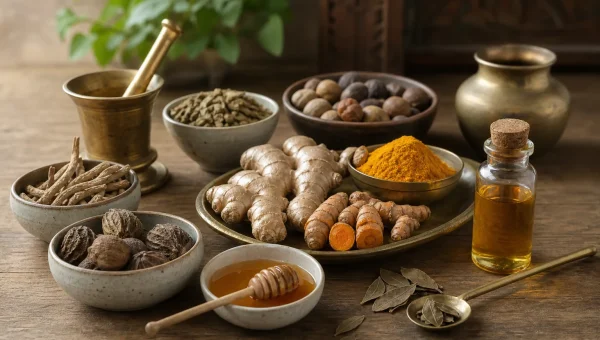
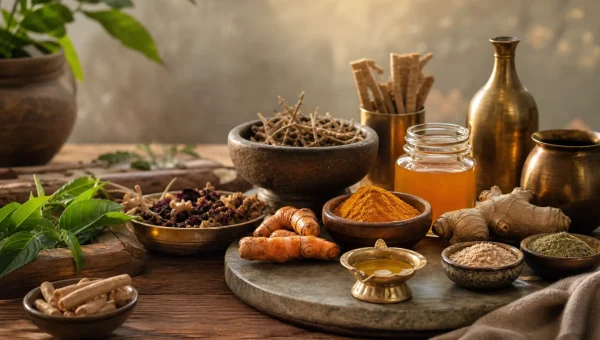
Five Ayurvedic Herbs for Prostate Support
The following herbs are traditionally used in Ayurvedic urogenital care. They should be selected according to constitution, digestion, urinary symptoms, strength, medications, PSA status, and the presence or absence of infection, stones, kidney disease, or suspected malignancy.
1. Gokshura (Tribulus terrestris)
Gokshura is one of the central Ayurvedic herbs for the urinary and reproductive systems. The Ayurvedic Pharmacopoeia of India describes Gokshura fruit as madhura in rasa, guru and snigdha in guna, shita in virya, and madhura in vipaka. Its actions include mutrala, vatanut, vrishya, bastishodhana, and ashmarihara. For men with weak flow, nighttime urination, irritation, or Apana Vata disturbance, Gokshura is used to support smoother urinary function and strength in the lower urinary tract.
2. Varuna (Crataeva nurvala)
Varuna bark is a classical Ayurvedic urinary herb. The Ayurvedic Pharmacopoeia of India lists its actions as bhedi, dipana, and vata-shleshmahara, with therapeutic use in mutrakrichra and ashmari. In prostate-support protocols, Varuna is most suitable when the urinary picture includes obstruction, heaviness, sluggish flow, gravel-like discomfort, or Kapha-type congestion. It is commonly used as a decoction herb and in classical combinations rather than as an isolated casual supplement.
3. Shilajit (Purified Asphaltum)
Shilajit is a mineral-rich resinous substance used in Ayurveda as a rasayana when properly purified and prescribed. It is associated with strength, rejuvenation, urinary support, and male vitality. Because raw or poorly tested Shilajit products may contain unsafe contaminants, it should be used only in purified, quality-tested form and under practitioner guidance, especially by men with kidney disease, gout, high uric acid, diabetes, or those taking long-term medications.
4. Guggulu (Commiphora wightii / Commiphora mukul)
Guggulu is the purified oleo-gum-resin of Commiphora wightii, traditionally valued for Kapha-Meda disorders, shotha, granthi, medoroga, and rasayana use. In prostate-oriented care, Guggulu is not used simply as a “prostate pill”; it is chosen when the broader pattern includes Kapha accumulation, metabolic sluggishness, tissue congestion, or inflammatory heaviness. It is most often used in classical formulations such as Gokshuradi Guggulu, Kaishora Guggulu, or Chandraprabha Vati, depending on the full clinical picture.
5. Punarnava (Boerhavia diffusa)
Punarnava means “that which renews again.” The Ayurvedic Pharmacopoeia of India describes Punarnava as mutrala, shothahara, anulomana, and vata-shleshmahara. It is especially relevant when urinary symptoms are accompanied by swelling, heaviness, water retention, sluggish elimination, or a Kapha-Vata pattern. In men with suspected kidney disease, edema, urinary retention, or multiple medications, Punarnava should be used only with professional supervision.
Classical Dose References and Use Notes
The following table gives pharmacopoeial raw-drug reference ranges where available. These are not self-prescription instructions, and they should not be directly converted to concentrated extracts, tablets, or proprietary products without professional guidance.
| Herb | Classical / Pharmacopoeial Part | Reference Range | Use Note |
|---|---|---|---|
| Gokshura | Fruit or root of Tribulus terrestris | Fruit powder 3 to 6 g; decoction drug 20 to 30 g | Used for mutrakrichra, ashmari, urinary support, and lower urinary tract balance. |
| Varuna | Stem bark of Crataeva nurvala | Decoction drug 20 to 30 g | Used for mutrakrichra, ashmari, and obstructive Kapha-Vata urinary patterns. |
| Shilajit | Purified Shilajatu / Asphaltum | Practitioner-determined only | Use only purified, quality-tested material; avoid raw or unverified resin. |
| Guggulu | Purified oleo-gum-resin of Commiphora wightii | 2 to 4 g | Usually used after purification and in classical formulations for Kapha-Meda and shotha patterns. |
| Punarnava | Whole plant of Boerhavia diffusa | Decoction drug 20 to 30 g | Used for mutrala and shothahara support where swelling or water retention is present. |
Classical Formulations Used for Urinary Patterns Resembling BPH
Ayurvedic prostate care is usually more effective when the formulation is matched to the patient’s pattern rather than chosen only by the name of the diagnosis. Burning, obstruction, retention, heaviness, weakness, constipation, edema, and metabolic status all change the choice of medicine.
- Gokshuradi Guggulu: A classical Guggulu-based formulation containing Gokshura, purified Guggulu, Shunthi, Maricha, Pippali, Haritaki, Bibhitaka, Amalaki, and Musta. It is commonly selected for urinary obstruction, Mutravaha Srotas imbalance, Kapha-Vata urinary patterns, and lower urinary tract support.
- Chandraprabha Vati: A classical multi-ingredient herbo-mineral tablet traditionally used for urinary, metabolic, and reproductive indications. Because it contains many ingredients, including Shilajit and Guggulu in traditional references, it should be used only under a qualified practitioner’s supervision.
- Varunadi Kwatha / Kashayam: A decoction approach centered on Varuna and used in urinary obstruction, stone tendency, and Kapha-Vata urinary presentations. It is usually taken as part of a larger plan that also corrects digestion, hydration, bowel regularity, and pelvic circulation.
Dietary Guidelines for Men Over 40
Food choices for prostate support should reduce heaviness in the pelvis, prevent constipation, protect digestion, and avoid bladder irritants. The best diet is warm, freshly prepared, moderate in quantity, easy to digest, and adjusted according to body type, season, appetite, and urinary symptoms.
| Category | Recommended | Reduce or Avoid |
|---|---|---|
| Grains | Barley, old rice, millet, oats, and other fiber-rich grains as tolerated | Heavy refined flour meals, excess white rice, and late-night overeating |
| Proteins | Mung dal, well-cooked lentils, moderate paneer or tofu if digested well | Heavy fried proteins, processed meats, and very large evening portions |
| Vegetables | Cooked gourds, pumpkin, asparagus, leafy greens, carrots, and seasonal vegetables | Excessively spicy, oily, sour, or gas-forming preparations when symptoms flare |
| Fats | Small amounts of ghee, sesame oil, or olive oil according to digestion | Hydrogenated oils, repeatedly heated oils, and deep-fried snacks |
| Beverages | Warm water during the day and herbal teas chosen by a practitioner | Alcohol, excess caffeine, carbonated drinks, very cold drinks, and large fluid intake close to bedtime |
| Specific foods | Pumpkin seeds, pomegranate, cooked pumpkin, and fiber-rich meals that keep the bowels regular | Processed salty snacks, very spicy dinners, and foods that worsen acidity, burning, or urgency |
Lifestyle Modifications: The Ayurvedic Framework
Daily movement supports Apana Vata and pelvic circulation. Brisk walking, gentle squats within capacity, hip-opening stretches, and pelvic floor awareness can be useful for men with early urinary symptoms. Practices such as Mula Bandha, Ashwini Mudra, Baddha Konasana, and Paschimottanasana should be learned gently and avoided during acute pain, infection, severe retention, recent surgery, or significant medical instability.
Avoiding Vega Dharana, the suppression of natural urges, is an important Ayurvedic principle for urinary and bowel health. Regularly delaying urination, suppressing bowel movements, ignoring constipation, or straining during elimination can disturb Apana Vata and aggravate lower pelvic discomfort.
Abhyanga with warm sesame oil over the lower abdomen, hips, thighs, and lower back may be used as a supportive Apana Vata practice when there is dryness, stiffness, tension, or poor sleep. It should be avoided over active skin infection, fever, acute inflammation, severe pain, or any condition where oil massage has been medically restricted. Our Abhyanga guide provides a step-by-step protocol.
When to Seek Medical Evaluation
Ayurvedic support is best used alongside proper diagnosis. Urinary symptoms can arise from BPH, urinary tract infection, prostatitis, bladder problems, medicines, stones, kidney disease, or prostate cancer, so persistent symptoms deserve evaluation by a qualified healthcare provider.
- Inability to urinate at all
- Severe lower abdominal pain or painful urinary retention
- Blood in the urine
- Fever, chills, painful urination, or urgent frequent urination suggesting infection
- Repeated urinary tract infections
- Known bladder stones, kidney disease, or worsening kidney function
- Rapidly worsening symptoms, abnormal prostate examination, or concern about PSA changes
Safety and Disclaimer
All herbal doses and formulations should be individualized by a qualified Ayurvedic practitioner and coordinated with a healthcare provider or urologist when symptoms are moderate to severe. Men with PSA elevation, suspected prostate cancer, urinary retention, kidney disease, diabetes, hypertension, gout, heart disease, or long-term medication use should not begin herbs or herbo-mineral preparations without professional supervision. Shilajit and herbo-mineral formulations must be purified and quality-tested. This content is educational and does not replace medical advice, diagnosis, prostate cancer screening, or urgent care.
Actionable Tip: Starting tonight, reduce alcohol and excess caffeine, keep dinner lighter, avoid large fluid intake for the final two to three hours before sleep, and add one tablespoon of raw or lightly roasted pumpkin seeds with the evening meal if they suit your digestion. Track nighttime urination, urgency, weak stream, and incomplete emptying for two weeks, and share that record with your practitioner or urologist.
References
- NIDDK
- NIDDK
- Aafp (aafp.org)
- Critical analysis of herbs acting on Mutravaha srotas (2010), PubMed Central
- Ijrti (ijrti.org)
- Artoflivingretreatcenter (artoflivingretreatcenter.org)
- Ayurvedic Pharmacopoeia of India
- Ia800501 (ia800501.us.archive.org)
- Natural Ingredient Resource Center
- Irjay (irjay.com)
- Network pharmacology analysis of Chandraprabha Vati: A new hope for the treatment of Metabolic Syndrome (2024), PubMed Central
- Chemical Analysis of Native Himalayan Shilajit: An Evaluation of an Ayurvedic Formulation (2025), PubMed Central
- Hazardous or Advantageous: Uncovering the Roles of Heavy Metals and Humic Substances in Shilajit (Phyto-mineral) with Emphasis on Heavy Metals Toxicity and Their Detoxification Mechanisms (2024), PubMed
- FDA
- Effects of pumpkin seed in men with lower urinary tract symptoms due to benign prostatic hyperplasia in the one-year, randomized, placebo-controlled GRANU study (2015), PubMed
- Pumpkin seed oil (Cucurbita pepo) versus tamsulosin for benign prostatic hyperplasia symptom relief: a single-blind randomized clinical trial (2021), PubMed Central
I am 52 and going through exactly the same situation as Rajesh in this article. Three times a night, weak stream, not discussing it with anyone. My wife found this online and sent it to me. Starting with Varuna and Gokshura this week.
I had a PSA scare at 48 and my urologist recommended watchful waiting. I added Kanchanar Guggulu to my daily routine after consulting an Ayurvedic physician alongside the watchful waiting. My urologist has not objected and my PSA has been stable for 18 months.
The diet section on reducing red meat and dairy for prostate health is consistent with the conventional urology literature too. The Ayurvedic framework for why these foods aggravate the condition is different but the dietary recommendation lands in the same place.
I have been on tamsulosin for 2 years for BPH. The medication helps the stream but does nothing for sleep quality because I still wake twice a night even with the stream improved. Would combining this Ayurvedic protocol with tamsulosin be safe? My urologist has no opinion on this.
For Prostate Health, consistency seems like the hard part. This would be easier to follow with a one-week sample plan.
For Prostate Health, consistency seems like the hard part. The safety notes could be expanded a little.
Rajesh’s experience mirrors what many men describe when they first notice changes in urinary flow.
I have been doing Shirodhara and pelvic steam baths at an Ayurvedic center here in Delhi for 3 months for prostate symptoms. The nocturia reduced from 4 visits to 1 per night. I was surprised the pelvic treatment protocol made such a direct difference.
Has anyone tried combining Gokshura with regular walking and noticed a difference in urgency?
As someone who waited too long before addressing prostate symptoms, my message to other men is: address this earlier than you think you should. The Ayurvedic preventive approach described here makes a lot more sense starting at 40 than waiting until 55 when symptoms are disruptive.
My PSA was 3.8 at 49. My urologist said monitor. My Ayurvedic practitioner said treat actively because Ayurveda does not have a concept of watchful waiting for something that is already imbalanced. That philosophical difference in approach was interesting to me.
The emphasis on warm sesame oil massage for the lower abdomen feels like a practical addition to daily routine.
I find the dietary table helpful, especially the suggestion to favor mung dal over red meat.
It would be useful to see more data on how Shilajit interacts with common blood pressure meds.
The article makes a strong case for looking at prostate health through the lens of tissue balance rather than just size.
Does the recommended dosage of Varuna bark need adjustment for someone with a sensitive stomach?
You have an article about prostate health linked to a search for neck pain. *eye roll* The internet is so unreliable and sloppy these days. Do better and maybe try less AI.
I appreciated the clarification that Ayurvedic approaches work best alongside conventional checkups.
Many readers might overlook the link between excess fat tissue and reduced Shukra formation, yet it’s explained clearly here.
The mention of Mootrakrichra and Mootraghat adds cultural depth that’s often missing in Western discussions.
Would like to see PSA scores tracked systematically in patients on this protocol. PSA is the marker most urologists will accept as evidence
tamsulosin for 2 years. medication helps the stream but I still wake twice a night. would combining this Ayurvedic protocol with tamsulosin be safe?
Address prostate symptoms earlier than you think you should. the Ayurvedic preventive approach at 40 makes more sense than waiting until 55 when symptoms are disruptive
found this post helpful. will try the suggested approach. (ref 1923-13)
Trying a simple evening snack of raw pumpkin seeds seems like an easy experiment to try.
I was looking for a plain explanation of Prostate Health. The safety notes could be expanded a little.
The part about Rajesh being too embarrassed to mention it for two years is probably more common than anyone admits. My father was the same way — he managed similar symptoms quietly for years before my mother finally got him to talk to anyone. The detail about nightly bathroom trips reducing significantly within six months is what I’d like to share with him. Were the dietary changes a major part of the protocol or mostly supplementary to the herbal treatment?
pelvic steam baths at Ayurvedic center in Delhi for 3 months. nocturia reduced from 4 visits to 1 per night ठीक है
PSA was 3.8 at 49. urologist said monitor. Ayurvedic practitioner said treat actively because Ayurveda does not have a concept of watchful waiting for something already imbalanced
It’s reassuring to see safety notes about PSA monitoring and the advice to involve a urologist before starting herbs.
❤️ PSA scare at 48. added Kanchanar Guggulu alongside watchful waiting. PSA has been stable for 18 months
❤️ Address prostate symptoms earlier than you think you should. the Ayurvedic preventive approach at 40 makes more sense than waiting until 55 when symptoms are disruptive
pelvic steam baths at Ayurvedic center in Delhi for 3 months. nocturia reduced from 4 visits to 1 per night
pSA scare at 48. added Kanchanar Guggulu alongside watchful waiting. PSA has been stable for 18 months
💯 pSA scare at 48. added Kanchanar Guggulu alongside watchful waiting. PSA has been stable for 18 months
found this post helpful. will try the suggested approach. (ref 1923-15)
would like to see PSA scores tracked systematically in patients on this protocol. PSA is the marker most urologists will accept as evidence ✨
🙌 would like to see PSA scores tracked systematically in patients on this protocol. PSA is the marker most urologists will accept as evidence
would like to see PSA scores tracked systematically in patients on this protocol. PSA is the marker most urologists will accept as evidence 🙏
pSA scare at 48. added Kanchanar Guggulu alongside watchful waiting. PSA has been stable for 18 months धन्यवाद
The Prostate Health angle is useful here. The safety notes could be expanded a little.
found this post helpful. will try the suggested approach. (ref 1923-35)
found this post helpful. will try the suggested approach. (ref 1923-20)
not related to this post but does anyone know a good practitioner in Hyderabad?
would like to see PSA scores tracked systematically in patients on this protocol. PSA is the marker most urologists will accept as evidence 🌿
Address prostate symptoms earlier than you think you should. the Ayurvedic preventive approach at 40 makes more sense than waiting until 55 when symptoms are disruptive ✨
found this post helpful. will try the suggested approach. (ref 1923-24)
found this post helpful. will try the suggested approach. (ref 1923-25)
found this post helpful. will try the suggested approach. (ref 1923-26)
found this post helpful. will try the suggested approach. (ref 1923-27)
found this post helpful. will try the suggested approach. (ref 1923-28)
address prostate symptoms earlier than you think you should. the Ayurvedic preventive approach at 40 makes more sense than waiting until 55 when symptoms are disruptive ❤️
❤️ would like to see PSA scores tracked systematically in patients on this protocol. PSA is the marker most urologists will accept as evidence
🌿 address prostate symptoms earlier than you think you should. the Ayurvedic preventive approach at 40 makes more sense than waiting until 55 when symptoms are disruptive
I came for Prostate Health and this answered the main question. This is the kind of detail readers can test slowly.
found this post helpful. will try the suggested approach. (ref 1923-33)
I came for Prostate Health and this answered the main question. The timing advice is the part I would start with.
I came for Prostate Health and this answered the main question. This feels more usable than a long list of herbs.