Eczema Diet Triggers Ayurveda: The Vicharchika Elimination Protocol
Eczema diet triggers Ayurveda begins with a practical observation: many people with eczema notice that certain foods seem to worsen itching, redness, oozing, dryness, or sleep disturbance. Ayurveda approaches this pattern through agni, ama, food compatibility, and the classical skin-disease category of kushtha. Vicharchika is the Ayurvedic comparison most often used for eczema-like eruptions, especially when itching, eruptions, discoloration, and exudation are present, but it should not be treated as a one-to-one substitute for a modern dermatological diagnosis.
The purpose of this protocol is not to make diet the only treatment for eczema. It is a structured way to identify personal food triggers while keeping meals nourishing, simple, cooked, and compatible with the Ayurvedic pathya approach for skin disorders. Standard eczema care, moisturization, avoidance of irritants, and medical treatment remain important, especially when the skin is infected, widespread, painful, or disturbing sleep.
Classically, vicharchika is included among the minor forms of kushtha. The signs described include kandu itching, eruptions or papules, dark or blackish-brown discoloration, and excessive discharge. Ayurveda describes all kushtha as involving the three doshas, with vicharchika described as kapha-predominant. In practical diet planning, kapha-linked itching and stickiness, pitta-linked burning or oozing, and vata-linked dryness or scaling all need to be considered.
Before You Eliminate Foods
An elimination diet should be temporary, deliberate, and supervised when there is any risk of nutritional deficiency, known food allergy, childhood eczema, pregnancy, underweight, an eating-disorder history, or severe disease. If a food has ever caused anaphylaxis, throat swelling, wheezing, faintness, or a rapid whole-body reaction, do not reintroduce it at home. Food allergy testing and oral food challenges belong under the care of an allergist or qualified healthcare professional.
Before changing the diet, take clear baseline photographs of the affected areas, record itch on a 0-10 scale, note sleep quality, and write down current topical medicines, soaps, detergents, sweating, stress, weather changes, and menstrual or hormonal patterns where relevant. This baseline prevents guesswork. A true trigger pattern is suspected only when the same food repeatedly worsens symptoms and symptoms settle again when that food is removed.
Phase 1: The 6-Week Elimination (Weeks 1-6)
The six-week elimination is a diagnostic window, not a permanent diet. It is best used when eczema is stable enough to observe clearly and when the person can maintain adequate calories, protein, fat, minerals, and variety. If eczema does not improve during the first few weeks, the restriction should not be made broader and broader; the plan should be reviewed with a dermatologist, allergist, dietitian, physician, or qualified Ayurvedic practitioner.
Foods eliminated for 6 weeks: milk and dairy foods, eggs, wheat, soy, peanuts, tree nuts, fish, shellfish, and sesame when sesame is part of the allergy plan or is suspected from the history. From the Ayurvedic kushtha perspective, also avoid curd or yogurt, fish, heavy fried flour preparations, black gram, radish, jaggery, sesame, excessive sour foods, excessive salty foods, alcohol, and incompatible combinations. Remove any known personal trigger even if it is not on a standard allergen list.
About ghee and milk allergy: ghee is traditionally important in many Ayurvedic contexts, and medicated ghee is mentioned in classical skin-disease management. However, plain ghee is still milk-derived. People with confirmed milk allergy, previous anaphylaxis to milk, or instructions to avoid milk proteins should not self-test ghee during elimination; they may use a suitable non-dairy cooking fat under professional guidance.
Optional personal-suspect foods: tomato, eggplant, capsicum, chilli pepper, and white potato should not be treated as universal eczema triggers. They may be removed during this phase only when the person’s diary repeatedly suggests a connection, when the practitioner wants to test them separately, or when they are commonly eaten in spicy, sour, fried, or fermented preparations that already aggravate symptoms.
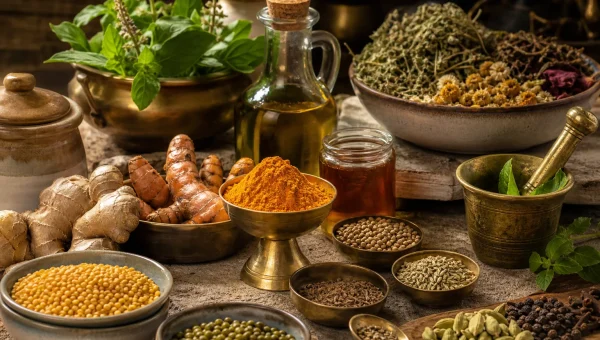
Foods that remain: well-cooked rice, aged grains where available, millet, sorghum, quinoa, yellow split mung dal, tolerated lentils or peas, cooked vegetables, bitter greens, fresh coriander, fennel, small culinary amounts of turmeric, and simple non-dairy fats when dairy is being avoided. The plate should be warm, freshly prepared, moderately spiced, and easy to digest rather than raw, cold, oily, very sour, or heavily processed.
Vegetables and Fruits That Fit the Strict Phase
The safest elimination plate is not built from exotic substitutes; it is built from simple cooked foods with low seasoning and consistent preparation. Cooked vegetables are easier to standardize during a diagnostic diet because raw salads, sauces, dressings, pickles, packaged seasonings, and chutneys can introduce hidden allergens, sour ingredients, preservatives, or incompatible combinations.
Vegetables to emphasize: bottle gourd, ash gourd, ridge gourd, zucchini, cooked cucumber, carrots, beetroot, green beans, pumpkin, leafy greens, and small amounts of peas if tolerated. Bitter greens and light vegetables fit the classical pathya direction for kushtha, while very heavy, oily, sour, fried, or stale preparations should be avoided.
Fruits to use carefully: pears, ripe banana, papaya, and fresh coconut may be used in modest portions when tolerated. During the strict phase, keep fruit simple and avoid sour fruit juices, dried fruits, fruit preserves, vinegar-based preparations, and sweetened packaged fruit products. Fruit should support the diet, not replace cooked meals.
The Gut-Friendly Ayurvedic Plate
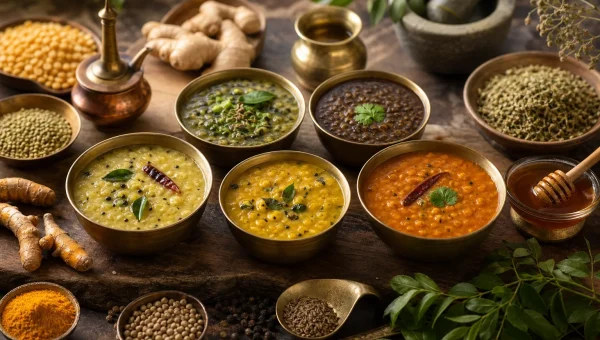
The gut-friendly strategy in this protocol is Ayurvedic and practical: reduce dietary noise, support agni, avoid incompatible foods, and use simple meals that make symptom tracking clear. A typical plate can include rice or another tolerated grain, yellow split mung dal, one or two cooked vegetables, a small amount of tolerated fat, and mild herbs such as coriander or fennel. Turmeric may be used in culinary amounts if tolerated, but concentrated supplements should not be started without professional advice.
Mung dal is especially useful because mudga is classically included among suitable foods in kushtha diet, and it offers a light, protein-containing base when dairy, eggs, nuts, and seafood are being removed. The goal is not extreme restriction; the goal is a repeatable, nourishing baseline from which each reintroduced food can be judged clearly.
Weekly Tracking Schedule
Use the same tracking method every day: skin photographs once weekly, itch score daily, sleep score daily, stool and digestion notes, and a brief food diary. Do not change soaps, detergents, oils, herbs, supplements, or topical medicines casually during the strict phase unless a clinician asks you to do so, because each new change makes the food results harder to interpret.
| Week | Phase | Food Focus | What to Monitor |
|---|---|---|---|
| Week 0 | Preparation | Plan meals, remove hidden allergens, record baseline | Photos, itch score, sleep, current medicines |
| Weeks 1-2 | Strict elimination | Common allergen groups removed; simple cooked meals | Itch, redness, oozing, digestion, sleep |
| Weeks 3-4 | Assessment | Continue only if nutrition and symptoms are acceptable | Clear improvement, no weight loss, no excessive restriction |
| Weeks 5-6 | Stable baseline | Keep the same safe foods and preparations | Lowest stable symptom pattern before testing |
| Week 7 onward | Reintroduction | One food group at a time, starting with a small amount | Immediate reaction, delayed flare, digestion, sleep |
Phase 2: Reintroduction Protocol (Week 7 Onward)
The reintroduction phase gives the protocol its value. Add back only one food group at a time. Start with a small amount, then a normal portion if there is no immediate reaction, and keep all other foods unchanged. Record itching, redness, oozing, dryness, digestion, and sleep for the next several days. If a flare occurs, stop that food and return to the stable baseline before testing the next group.
A practical order is to test lower-risk or nutritionally important foods first, such as wheat or soy if they are commonly used in the person’s diet, and to leave foods with a stronger allergy history for specialist guidance. Milk, egg, peanut, tree nut, fish, shellfish, and sesame should be reintroduced cautiously when there is any history of immediate reaction. A supervised oral food challenge may be needed when the allergy history is unclear or when a child has been avoiding a major food group.
Do not interpret one difficult day as proof of a trigger. Heat, sweat, wool, fragrances, detergents, stress, sleep loss, infection, topical changes, and seasonal dryness can all worsen eczema. A food trigger becomes more convincing when it repeatedly produces the same pattern after reintroduction and the skin improves when that food is removed again.
How to Interpret Results
If the strict phase produces clear improvement and one food repeatedly worsens eczema during reintroduction, that food becomes part of the person’s individual trigger map. It may need to be avoided for a defined period while nutrition is replaced through safe alternatives. Long-term avoidance of major food groups should be reviewed with a qualified practitioner or dietitian so that calcium, protein, essential fats, iron, zinc, vitamin D, and overall calories remain adequate.
If the strict phase does not produce meaningful improvement, the diet should not become more restrictive. Reintroduce foods with guidance and look carefully at non-food drivers: barrier damage, irritant contact, infection, sweat, climate, stress, sleep, allergens in the environment, and inadequate anti-inflammatory skin treatment. Ayurveda would also reassess agni, bowel pattern, ama, incompatible food habits, and the dosha presentation rather than assuming every flare is caused by a hidden food.
When to Get Medical Care
Seek medical care promptly if eczema becomes painful, rapidly spreading, hot, swollen, crusted, pus-filled, blistered, or associated with fever, flu-like symptoms, swollen lymph nodes, or cold-sore-like lesions. These can indicate infection or another condition that needs medical treatment. Children, infants, pregnant people, people with severe eczema, and anyone with known food allergy should not follow a broad elimination diet without professional supervision.
Medical Disclaimer: This content is for educational purposes only and does not constitute medical advice. Eczema elimination diets, particularly in children, should be supervised by a registered dietitian, dermatologist, allergist, physician, or qualified Ayurvedic practitioner to prevent nutritional deficiencies and unsafe food reintroduction. Severe eczema, infected eczema, eczema with anaphylaxis history, or eczema that does not respond to dietary measures requires professional evaluation.
Nothing in this article diagnoses or treats a medical condition. Use it as educational information and consult a qualified Ayurvedic practitioner or healthcare provider before starting herbs, supplements, detoxes, or therapeutic protocols, especially if pregnant, managing a condition, taking medication, or planning a diet for a child.