
Menopause is not a single moment, even though menopause itself is defined clinically after 12 consecutive months without a menstrual period. The wider transition begins earlier, often with cycle changes, lighter or heavier bleeding patterns, sleep disturbance, hot flushes, mood changes, and vaginal or urinary dryness. This is why a useful Ayurvedic menopause guide should not treat every woman in her 40s, 50s, and 60s as if she needs the same plan. The support that helps before symptoms intensify is different from the support needed during active vasomotor symptoms, and different again from the nourishment, bone, heart, and nervous-system care needed after menopause.
Before: The Perimenopause Preparation Phase (Often Early-to-Mid 40s)
In Ayurveda, midlife is understood as a time when the heat, drive, and metabolic sharpness associated with Pitta gradually give way to the dryness, lightness, irregularity, and depletion associated with Vata in later life. Perimenopause preparation is therefore not about “stopping” menopause. It is about entering the transition with stronger digestion, steadier sleep, calmer stress physiology, better mineral reserves, and a more nourished reproductive and nervous system.
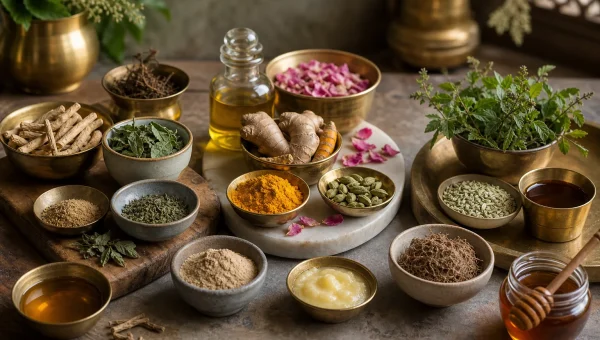
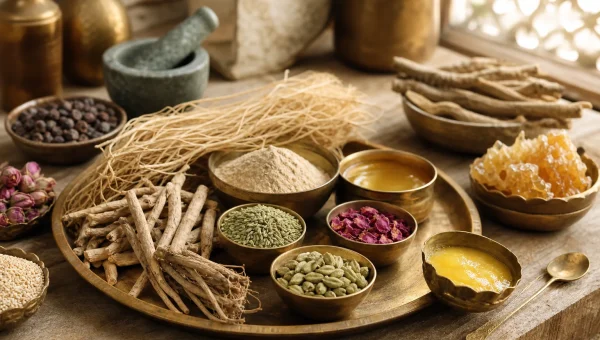
Shatavari (Asparagus racemosus) is one of the core Ayurvedic roots for this phase when the picture is dry, depleted, heated, or sleep-disruptive. The Ayurvedic Pharmacopoeia of India describes Shatavari root as madhura and tikta in rasa, guru and snigdha in guna, shita in virya, and madhura in vipaka, with actions that include balya, rasayana, pittahara, medhya, vatahara, and stanyakara. In practical terms, it is used as a cooling, nourishing, Vata-Pitta-supportive herb rather than as a one-size-fits-all “female hormone pill.” Classical powder dosing is commonly in the gram range, while capsules and extracts should be taken according to product strength and practitioner guidance.
Bone building should begin before bone loss becomes visible. Around the menopause transition, many women lose bone more quickly, and some lose a substantial amount of bone density in the years surrounding the final menstrual period. The Ayurvedic approach pairs mineral nourishment with agni support, tissue nourishment, strength work, and medical screening when indicated. Calcium-rich foods, adequate protein, vitamin D assessment, weight-bearing movement, and resistance training are foundational. Mineral preparations such as Praval Pishti or Kukkutandatvak Bhasma, and bone-support formulations containing Laksha, Guggulu, or Asthishrinkhala, should be used only when prescribed by a qualified practitioner and sourced from manufacturers that test for heavy metals and contaminants.
Stress management is menopause preparation. Chronic stress aggravates Vata, disrupts sleep, increases cravings, and makes hot flushes, palpitations, and mood swings harder to tolerate when hormones begin fluctuating. Daily oil massage, regular meals, a fixed bedtime, gentle pranayama, and reduced late-night stimulation are not small lifestyle details; they are the base of perimenopause care. Ashwagandha (Withania somnifera) may be useful for some stressed, depleted, poorly sleeping women, but it is not suitable for everyone and should be used carefully in thyroid disease, liver disease, autoimmune conditions, pregnancy, sedative use, or complex medication routines.
During: Active Menopause Management (Usually Mid-40s to Mid-50s)
This is the phase when symptoms often become most noticeable. From an Ayurvedic perspective, active menopause commonly combines Vata instability with Pitta heat: irregular cycles, anxiety, light sleep, dryness, and palpitations reflect Vata disturbance, while hot flushes, night sweats, irritability, acidity, and burning sensations reflect Pitta aggravation. The goal is to cool without weakening digestion, nourish without clogging the channels, and stabilize Vata without suppressing the body’s natural transition.
Hot Flash Management
Hot flushes are best approached as heat moving through an unstable system. The Ayurvedic strategy is to reduce Pitta triggers, protect hydration, steady Vata, and use cooling herbs or mineral preparations only when appropriate for the individual.
- Shatavari: useful when hot flushes occur with dryness, depletion, poor sleep, or irritability; dose depends on preparation strength and constitution.
- Praval Pishti, Mukta Pishti, or Kamadudha Rasa variants: traditionally used in Pitta conditions, but should be taken only under practitioner supervision because mineral preparations require correct sourcing and dosing.
- Cooling kitchen supports: fennel tea, coriander-cumin water, soaked raisins, coconut water when suitable, and meals built around cooling, easy-to-digest foods.
- External cooling: sandalwood paste or rose water on the forehead, chest, or soles can be soothing when the skin feels hot and sleep is disturbed.
Dietary support should focus on reducing personal triggers rather than following rigid rules. Many women do better when they limit alcohol, late caffeine, very spicy food, excess sour or fermented foods at night, and heavy dinners. Cooling foods such as cucumber raita, coconut water, and fennel tea can be useful when digestion tolerates them. Soy foods or isoflavone-containing foods may suit some women, but they should be discussed with a clinician in hormone-sensitive conditions or when taking endocrine therapy.
Sleep Support
Menopausal insomnia often comes from more than one source: night sweats, anxiety, lighter sleep, early waking, pain, urinary symptoms, and an overstimulated nervous system. Ayurveda treats this as a Vata-calming priority because poor sleep amplifies every other symptom.
Jatamansi (Nardostachys jatamansi) and Tagara (Valeriana wallichii) are traditional sleep-support herbs used when the mind is restless and sleep is light. They should be used under guidance, especially with sedatives, antidepressants, alcohol use, liver concerns, or daytime drowsiness. A simple night routine can be more powerful than adding multiple herbs: finish dinner early, dim lights, avoid heated discussions and screens late at night, massage the feet with warm sesame oil or Brahmi Taila, and take a small cup of warm milk with a tiny culinary pinch of nutmeg if milk is suitable for digestion.
Mood Stabilization
Anxiety, irritability, tearfulness, and emotional reactivity during menopause are not character flaws. They arise when hormonal fluctuation, sleep loss, Vata disturbance, and Pitta heat affect the mind and nervous system together. Ayurveda supports mood by stabilizing routine, protecting sleep, improving digestion, and using medhya and rasayana herbs when indicated.
Brahmi (Bacopa monnieri), Shankhpushpi, Guduchi, Mandukaparni, and Yashtimadhu are used in different medhya contexts depending on constitution and symptoms. The classical Medhya Rasayana group associated with Charaka includes Mandukaparni, Yashtimadhu, Guduchi, and Shankhpushpi. These should not be treated as interchangeable. Yashtimadhu, for example, is not appropriate for everyone and requires caution in high blood pressure, kidney disease, edema, or potassium imbalance.
Vaginal and Urinary Comfort
Vaginal dryness, painful intimacy, urinary urgency, and recurrent irritation are common after estrogen declines, but many women delay mentioning them. Ayurveda views this pattern through Vata dryness, tissue depletion, and loss of local lubrication, while modern gynecology describes it as part of genitourinary syndrome of menopause.
Internal nourishment with suitable fats, adequate hydration, regular bowel movements, and herbs such as Shatavari may support a dry, depleted pattern. For local comfort, use medically appropriate vaginal moisturizers or lubricants, and seek gynecologic care for pain, bleeding, recurrent urinary symptoms, or severe dryness. Herbal oils, ghee, or aloe preparations should not be inserted intravaginally unless specifically prepared for that use and prescribed by a qualified clinician. Prescription vaginal estrogen or other local therapies can be appropriate when symptoms are significant, and they can often be combined with broader Ayurvedic support for sleep, digestion, and nervous-system steadiness.
After: Post-Menopause Support (Often 55+)
After the most intense transition symptoms settle, the focus changes. The post-menopausal years are more Vata-dominant: dryness, tissue depletion, joint stiffness, lighter sleep, slower recovery, and a greater need for sustained nourishment. This phase asks for long-term attention to the heart, bones, cognition, muscle, digestion, and emotional resilience.
Cardiovascular Focus
After menopause, cardiovascular risk deserves more attention because heart disease is a major cause of illness and death in women, and risk increases as estrogen levels decline with age. Ayurvedic support can be valuable here, but it must be integrated with blood pressure checks, lipid testing, glucose monitoring, exercise, sleep care, and medical treatment when prescribed.
Arjuna (Terminalia arjuna) is a classical hṛdya herb used for cardiac support and should be considered an adjunct, not a replacement for cardiology care. If a cardiologist has prescribed statins, antihypertensives, antiplatelets, anticoagulants, or diabetes medication, those should not be stopped because an herb has been added. Guggulu is used in Ayurveda in selected kapha-medovaha patterns, but it should not be assumed to reliably lower LDL cholesterol, and it may interact with medications or cause adverse reactions in some people.
Bone Preservation
Post-menopause bone care should continue with the same seriousness as heart care. Weight-bearing exercise, resistance training, balance work, adequate dietary calcium, vitamin D assessment, protein intake, and fall prevention are essential parts of a complete plan.
Praval Pishti, Kukkutandatvak Bhasma, Laksha Guggulu, and Asthishrinkhala may be used in practitioner-directed Ayurvedic bone protocols, but mineral and bhasma preparations require special caution. They should be avoided unless prescribed and quality-tested. Bone density testing should be individualized: many women begin routine screening at 65, while younger postmenopausal women may need earlier DXA assessment if they have risk factors such as prior fracture, low body weight, long-term steroid use, strong family history, early menopause, smoking, or other medical risks.
Cognitive and Nervous-System Support
Forgetfulness, word-finding difficulty, low focus, and mental fatigue can appear during and after the menopause transition, especially when sleep has been poor. Ayurveda addresses this through Vata pacification, medhya herbs, stable daily routine, oiling practices, nourishing food, and protection from overstimulation.
Medhya Rasayana support should be chosen carefully. Classical Charaka-based medhya herbs include Mandukaparni, Yashtimadhu, Guduchi, and Shankhpushpi. Brahmi is also widely used in Ayurvedic practice for memory and mental calm, but it should not be casually substituted for every medhya herb or taken in high doses without considering digestion, medications, and constitution. Cognitive support also requires the basics: sleep treatment, walking, strength training, social connection, hearing and vision care, and medical evaluation for sudden or progressive memory changes.
When HRT Is Appropriate Alongside Ayurveda
Ayurveda and hormone therapy do not have to be treated as opposing choices. If hot flushes are severe enough to disrupt sleep and work, if vaginal symptoms affect comfort and intimacy, or if bone loss is progressing despite lifestyle and nutritional care, hormone therapy may be appropriate after individualized medical assessment.
Current menopause guidance recognizes that for many healthy women younger than 60 or within 10 years of menopause onset, the benefit-risk balance of hormone therapy is favorable when it is used for bothersome vasomotor symptoms or prevention of bone loss and when there are no contraindications. Ayurveda can still be useful alongside this decision by supporting digestion, sleep, stress resilience, bowel regularity, tissue nourishment, and daily rhythm. The goal is not ideological purity. The goal is a stable, comfortable, well-supported post-reproductive life.
Always discuss Ayurvedic herbs, bhasma, mineral preparations, and supplements with your gynecologist, menopause specialist, physician, or qualified Ayurvedic practitioner, especially if you use hormone therapy, thyroid medication, blood thinners, sedatives, antidepressants, blood pressure medication, diabetes medication, or have a hormone-sensitive condition.
Nothing in this article diagnoses, treats, or replaces medical care. Use it as educational information and consult a qualified practitioner before starting herbs, supplements, detoxes, bhasma preparations, or therapeutic protocols, especially if pregnant, breastfeeding, managing a medical condition, or taking medication.
References
- World Health Organization
- Executive summary of the Stages of Reproductive Aging Workshop + 10: addressing the unfinished agenda of staging reproductive aging (2012), PubMed Central
- Importance of Ayu Pareeksha for the Management of Diseases (2017), PubMed Central
- Ayurvedic Pharmacopoeia of India
- Plant profile, phytochemistry and pharmacology of Asparagus racemosus (Shatavari): A review (2013), PubMed Central
- Primary osteoporosis in postmenopausal women (2015), PubMed Central
- Bonehealthandosteoporosis (bonehealthandosteoporosis.org)
- Osteoporosis (osteoporosis.foundation)
- Endocrine (endocrine.org)
- Uspreventiveservicestaskforce (uspreventiveservicestaskforce.org)
- Bonehealthandosteoporosis (bonehealthandosteoporosis.org)
- Ijam (ijam.co.in)
- A prospective, randomized double-blind, placebo-controlled study of safety and efficacy of a high-concentration full-spectrum extract of ashwagandha root in reducing stress and anxiety in adults (2012), PubMed
- Extracted or synthesized soybean isoflavones reduce menopausal hot flash frequency and severity: systematic review and meta-analysis of randomized controlled trials (2012), PubMed
- A comparative clinical study on the effect of Tagara (Valeriana wallichii DC.) and Jatamansi (Nardostachys jatamansi DC.) in the management of Anidra (primary insomnia) (2015), PubMed Central
- NCBI
- Menopause (menopause.org)
- CDC
- Terminalia arjuna in Chronic Stable Angina: Systematic Review and Meta-Analysis (2014), PubMed Central
- The effects of Cissus quadrangularis on bone-related biomarkers in humans: a systematic review and meta-analysis (2025), PubMed Central
- Nootropic herbs (Medhya Rasayana) in Ayurveda: An update (2012), PubMed Central
- The 2022 hormone therapy position statement of The North American Menopause Society (2022), PubMed
- NCCIH
- FDA
The criticism of menopause content that treats the 15-year span as one thing is exactly what I have been missing. I am 47 and in early perimenopause. Most guides I have found either treat me as already menopausal or as not yet in the transition. The phase-specific guidance in this article is genuinely new and useful.
This helped me understand The Ayurvedic Menopause without too much jargon. Would be useful to see a short checklist next.
I went through menopause at 51 without any significant symptoms and attributed it to genetics. After reading this I suspect it may have been because I had been following something like the late perimenopause protocol described here for years without knowing it had a name. The diet, the regular yoga, the Shatavari and Ashwagandha I took for stress.
I had surgical menopause at 39 due to ovarian surgery and my transition was sudden and severe rather than gradual. Does the Ayurvedic protocol for this differ from natural menopause? The Pitta release model assumes a gradual accumulation but surgical menopause bypasses that completely.
My Pitta constitution responds exactly as described here. The shatavari worked within two weeks for me where pharmaceutical options had failed for months.
This matches my clinical experience. I’ve recommended shatavari to patients with similar presentations and the response rate is consistent with what the article describes.
This helped me understand The Ayurvedic Menopause without too much jargon. The timing advice is the part I would start with.
I’m 44 and starting to notice the early perimenopausal shifts you describe in the first phase. What frustrated me about everything I read before finding this article was exactly what you name — it all collapses a 15-year transition into one generic protocol. I have a specific question: does the Vata increase you describe in the later phase typically show up as anxiety and sleep disruption first, or is joint dryness usually the earlier signal?
The criticism at the opening, take Shatavari, do yoga, you’ll be fine, is accurate and disappointing in most resources I have found. The practitioner who gave me that advice added nothing beyond that. Finding an Ayurvedic physician who understands the multi-phase complexity is more difficult than finding someone who can prescribe a single herb.
The breakdown of perimenopause preparation really clarified why tracking cycle changes matters before symptoms become obvious.
posting for my wife: she is 54 and in what this guide would call the late active menopause phase. she has been following the protocol described for about 6 months with good results on sleep and hot flashes. she wants to know whether the Virechana recommended for seasonal Pitta purging is appropriate for her age and health status.
The frame of menopause as a purification and transition rather than a deficit and loss is something that Ayurvedic medicine consistently offers and conventional medicine consistently doesn’t. This reframe alone changes the patient experience. Working with the transition rather than suppressing it is a fundamentally different clinical philosophy.
I appreciated the specific Shatavari dosing suggestion for the early phase, though I’d want to check with my practitioner first.
It’s helpful that the guide distinguishes between cooling herbs and suppressive ones for hot flashes.
The recommendation to get a baseline DEXA scan in the early 40s makes sense given the bone loss window mentioned.
Reading about Ashwagandha’s cortisol reduction made me curious about timing it with other adaptogens.
The sleep protocol using Jatamansi and Tagara seems gentle, but I’d like to see more user experiences.
I found the vaginal health section especially practical, especially the Shatavari ghrita application frequency.
The post-menopause cardiovascular focus with Arjuna and Guggulu as adjuncts feels balanced and realistic.
The phased approach makes much more practical sense than the standard one-size-fits-all Shatavari recommendation. I’m post-menopausal and the concerns I have now — bone density, mental clarity, dry skin — are completely different from what I was dealing with five years ago at the height of the transition. Has the recommended herb combination for this stabilization phase been written up anywhere on this site?
I would like more detail on The Ayurvedic Menopause. The safety notes could be expanded a little.
It’s reassuring that the article acknowledges HRT can work alongside Ayurveda when symptoms are severe.
नमस्ते, this is exactly what I was looking for 🙏
the section on diet modification is good but the herb doses are quite vague. how much shatavari exactly for hot flashes?
tried this for 30 days, mixed results. maybe my constitution assessment is wrong
धन्यवाद for the detailed protocol नमस्ते
My nutritionist sent me this link 🌿
Will try
which of these approaches works best for Kapha constitution? the article mixes all three doshas
Reading this later and the The Ayurvedic Menopause advice still feels relevant. The article avoids making it sound like a quick fix.
Very helpful, thank you
same here
I wish more doctors knew about this approach
I liked the practical side of The Ayurvedic Menopause. I would still ask a practitioner before changing medicines.
I liked the practical side of The Ayurvedic Menopause. The safety notes could be expanded a little.
not sure if its the herbs or the diet changes that made the difference
🙌 same question as above, any substitute for herbs not available outside India?
this is the most detailed breakdown of the topic I’ve found. saving for reference
just found this via Google search, is the protocol here still the current recommendation?
not sure about some of the claims here. would like to see proper citations for the traditional references
been doing this for 6 months, amazing difference in energy levels
does the approach differ for someone with multiple doshas elevated at once?
will try and report back. fingers crossed
the seasonal rotation idea is something I had never considered before
🙌 the quality of herbs varies so much between brands. really hard to replicate these results
the basic concepts here match what I learned in my yoga teacher training
Saved this ❤️
sharing with my mom
started this protocol 2 weeks ago. nothing notable yet but will report back in a month