
Summer eating becomes much easier when the week is already mapped out. This seven-day vegetarian plan keeps the original goal simple: cooling, moist, lightly seasoned meals that can be prepared without standing over a hot stove every evening. The menu follows the broad Grishma Ritu approach of Ayurveda while using familiar Indian kitchen foods, practical batch-prep, and a Sunday shopping list.
The Grishma Ritu Eating Principles
Ayurveda treats seasonal eating as part of Ritucharya, the adjustment of diet and lifestyle according to seasonal changes in Dosha, Bala (strength), and Agni (digestive capacity). In Grishma Ritu, the classical guidance favors foods and drinks with Madhura (sweet), Sheeta (cooling), Drava (liquid), Snigdha (unctuous), and Laghu (light) qualities. Rice, ghee, milk, sweet cooling drinks, and protection from excess heat are emphasized, while salty, sour, pungent, very hot, and alcohol-heavy choices are minimized. This plan therefore keeps meals soft, moist, mildly spiced, and easy to assemble.
The practical rules for this plan:
- Breakfast by 8 AM, lunch as the most substantial meal by about 12:30 PM, and dinner light by 7 PM.
- Cook grains, dal, and vegetables in the cooler morning hours where possible; assemble dinners instead of starting from scratch.
- Use ghee in moderation as the main Ayurvedic cooking fat; use coconut, coconut milk, and coconut water where they suit your digestion.
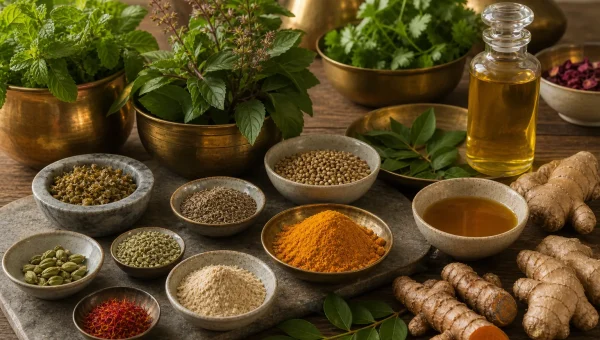
- Favor fresh Dhanyaka (coriander), Pudina (mint), fennel, cumin, and Ela (cardamom) over heavy masala.
- Limit raw onion, garlic, chili, vinegar-heavy dressings, sour curd, and very salty packaged foods through the week.
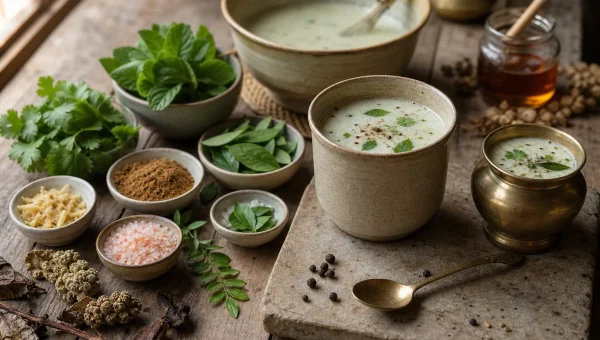
- Use freshly churned, diluted Takra instead of thick curd when a yogurt-based drink is included.
- Serve foods at room temperature or gently cool; avoid ice-cold drinks that can feel refreshing but may burden weak digestion.
The 7-Day Summer Meal Plan
This meal plan is vegetarian, mild, and flexible. Portions can be adjusted for appetite, activity level, body constitution, and medical needs.
Day 1 (Monday)
Breakfast: Soaked overnight oats with 1/2 cup rolled oats, 3/4 cup coconut milk or diluted milk, 1 tablespoon soaked Munakka (raisins), 5 soaked and peeled almonds, and 1/4 teaspoon cardamom powder. Assemble the night before and eat at room temperature.
Lunch: Cooling cucumber-mint rice. Cook 1 cup white basmati rice with 1 teaspoon ghee. Once it cools to warm, fold in 1/2 cup grated cucumber, 2 tablespoons chopped fresh mint, 1 tablespoon fresh coconut, and a small pinch of rock salt. Serve with plain Takra spiced with 1/4 teaspoon roasted cumin.
Dinner: Bottle gourd (Lauki) soup. Peel and cube 2 cups Lauki, simmer in 3 cups water with 1/4 teaspoon turmeric and a pinch of salt for 15 minutes, then blend smooth. Finish with 1 teaspoon ghee and fresh coriander. Pair with 1 small chapati.
Day 2 (Tuesday)
Breakfast: Sweet Poha with coconut. Rinse 1 cup thin Poha briefly and drain. Heat 1 teaspoon coconut oil or ghee, add 8-10 curry leaves and 1/4 teaspoon fennel seeds. Toss in the Poha, 1 tablespoon jaggery, and 2 tablespoons fresh grated coconut. Garnish with a small handful of pomegranate seeds.
Lunch: Moong dal khichdi with ghee. Cook 1/2 cup split Mudga (green gram) with 1/2 cup basmati rice, 1/4 teaspoon turmeric, and 3 cups water until soft. Temper with 1 tablespoon ghee, 1/2 teaspoon cumin seeds, and a pinch of Hingu (asafoetida). Keep it soft and slightly soupy rather than dry.
Dinner: Early melon bowl. Cube 2 cups of ripe muskmelon or watermelon, add a few fresh mint leaves, and eat it by early evening as a simple meal on its own. Do not combine it with milk, yogurt, or a heavy cooked meal.
Day 3 (Wednesday)
Breakfast: Coconut milk smoothie. Blend 1 cup coconut milk, 1 ripe banana, 1 teaspoon soaked Sabja (basil seeds), 1 teaspoon Gulkand (rose petal preserve), and 4 soaked almonds. Do not add ice.
Lunch: Ash gourd (Kushmanda) curry with rice. Cube 2 cups ash gourd and cook in 1 cup coconut milk with 1/4 teaspoon turmeric, 1/2 teaspoon coriander powder, and fresh curry leaves for 15 minutes. Finish with 1 teaspoon coconut oil or ghee and serve over basmati rice. Ash gourd is traditionally valued in Ayurveda as a cooling, soothing vegetable.
Dinner: Coriander soup. Blend 1 large bunch fresh coriander with 2 cups water and strain. Warm gently with 1/4 teaspoon cumin, a pinch of rock salt, and 1 teaspoon ghee. Serve with a small portion of soft rice or 1 small chapati if needed.
Day 4 (Thursday)
Breakfast: Sweet Sattu drink. Mix 2 tablespoons roasted chickpea Sattu with 300 ml room-temperature water, 1 teaspoon jaggery, a pinch of rock salt, and 1/4 teaspoon cardamom or fennel powder. Stir well and pair with 2 soaked dates.
Lunch: Coconut rice with cucumber Takra. Cook 1 cup basmati rice. Temper 2 tablespoons fresh grated coconut, 1/2 teaspoon mustard seeds, and 8 curry leaves in 1 teaspoon coconut oil or ghee, then mix into the rice. Serve with thin cucumber Takra made from freshly churned, non-sour yogurt diluted well with water, roasted cumin, mint, and a small pinch of rock salt.
Dinner: Ridge gourd (Turai) stir-fry with 1 chapati. Slice 2 cups Turai and cook with 1 teaspoon ghee or coconut oil, 1/4 teaspoon turmeric, and a pinch of cumin. Keep the seasoning gentle and the texture moist.
Day 5 (Friday)
Breakfast: Dalia porridge. Cook 1/2 cup broken wheat in 2 cups water until soft. Add 1/4 cup coconut milk or milk, 1 teaspoon ghee, 5 raisins, and a pinch of cardamom. Serve warm, not hot.
Lunch: Mild summer sambar with drumstick (Shigru) and ash gourd. Cook a light Toor Dal base with drumstick pieces and ash gourd. Season with coriander powder, turmeric, curry leaves, and a mild tempering of mustard seeds in coconut oil or ghee. Avoid chili powder and tamarind-heavy sourness. Serve with rice.
Dinner: Rose Takra. Churn 2 tablespoons fresh, non-sour yogurt with 1 cup water until thin, then add 1 teaspoon rose water and a small amount of sugar or jaggery if desired. Drink with 2-3 fennel seed crackers or plain toast.
Day 6 (Saturday)
Breakfast: Simple fruit breakfast. Choose one main fruit rather than mixing many: 1 cup ripe muskmelon, 1 cup sweet grapes, or 1 sliced ripe banana. Add a pinch of cardamom if desired and eat it separately from milk or cooked grains.
Lunch: Mint pulao with cucumber-coconut side. Cook basmati rice with a handful of fresh mint leaves, 1/2 teaspoon fennel seeds, 2 green cardamom pods, and 1 teaspoon ghee. Serve with grated cucumber mixed with fresh coconut, coriander, and a little roasted cumin.
Dinner: Tender coconut water with a light Murmura bowl. Mix puffed rice with grated cucumber, fresh coriander, mint, 1 tablespoon fresh coconut, and a small handful of roasted makhana or roasted chana. Keep it moist and eat soon after mixing.
Day 7 (Sunday)
Breakfast: Mild Rava Upma with vegetables. Dry-roast 1/2 cup semolina. Temper mustard seeds and curry leaves in 1 teaspoon ghee, add 1/4 cup each of diced carrot and green peas, then add 1.5 cups water. Stir in the semolina and cook for 5 minutes. Garnish with coriander.
Lunch: Sunday special: Paneer in mild coconut gravy. Cube 150 g paneer. Make a gentle gravy with 1/2 cup coconut milk, 1/4 cup cashew paste, 1/2 teaspoon coriander powder, 1/4 teaspoon fennel powder, and fresh mint. Avoid chili and heavy spice blends. Serve with jeera rice.
Dinner: Soft moong dal soup. Cook 1/3 cup split moong dal with 2.5 cups water, a pinch of turmeric, and cumin until very soft. Finish with 1 teaspoon ghee and coriander. If using watermelon-mint cooler, take it separately in the late afternoon rather than alongside the soup.
The Sunday Shopping List
This list supports the full seven-day plan. Buy according to household size and adjust grains, fruits, and dairy for appetite, climate, and individual constitution.
| Category | Items |
|---|---|
| Grains | Basmati rice (about 2 kg), rolled oats, thin Poha, Dalia, semolina, Sattu flour, chapati flour, Murmura |
| Lentils | Split moong dal (500 g), Toor Dal (250 g), roasted chana or makhana |
| Vegetables | Bottle gourd (2), ash gourd (1), ridge gourd (1), cucumber (4), drumstick (1 bunch), carrots, peas |
| Fruits | Muskmelon (1), watermelon (1/2), bananas (6), sweet grapes, dates, pomegranate (1) |
| Dairy and cooling bases | Ghee (500 g), milk, fresh non-sour yogurt for Takra, paneer (150 g), coconut milk (1 L), fresh coconut, tender coconut water |
| Fresh herbs | Coriander (3 bunches), mint (2 bunches), curry leaves (1 pack) |
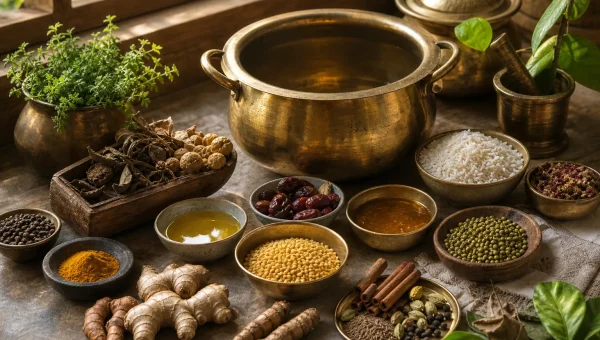
| Pantry | Coconut oil, jaggery, Gulkand, rose water, Sabja seeds, almonds, raisins, cashews |
| Spices | Cardamom, cumin, fennel, turmeric, coriander powder, mustard seeds, asafoetida, rock salt |
Making This Actually Stick
The easiest way to follow a summer meal plan is to prepare ingredients, not stale finished meals. On Sunday, wash herbs, soak almonds and raisins, roast cumin and fennel, portion dal and rice, grate coconut, and keep vegetables cleaned and ready. Cooked rice and dal are best made fresh or kept only briefly; fresh preparation preserves the lightness and taste of the food.
For busy weekdays, cook rice or khichdi in the morning, prepare soup bases in advance, and churn Takra fresh when needed. Keep the meals flexible: swap days, repeat a recipe that suits you, and simplify dinner whenever the heat or appetite is low. The framework matters more than rigid adherence.
Print the shopping list, buy the cooling staples, and begin with Day 1. A summer kitchen does not need to be complicated; it needs the right foods ready before hunger and heat make the decision for you.
Consult a qualified Ayurvedic practitioner or healthcare provider to customize this meal plan for your Prakriti, digestive strength, medications, pregnancy status, and existing health conditions. Individuals with diabetes should monitor carbohydrate intake and adjust portions with professional guidance.
The 38-degree kitchen spicy noodle scenario is literally my household in June. This meal plan is genuinely practical rather than aspirational. The shopping list format means I can actually implement it this week.
caloric adequacy for active people some of these meals look light for someone training. is there a modification for higher-activity individuals? धन्यवाद
This makes sense for Summer Meal Planning. The safety notes could be expanded a little.
This makes sense for Summer Meal Planning. The main idea is clear even if someone is new to Ayurveda.
This makes sense for Summer Meal Planning. This feels more usable than a long list of herbs.
The coconut and coriander emphasis throughout the week is strong. Is there an alternative protocol for someone who can’t tolerate coconut? I have a sensitivity to coconut and many of the cooling recipes rely on it heavily.
The shopping list is the practical innovation here. Every meal plan I’ve tried before required me to do the aggregation myself and I’d always miss something. Having the consolidated list means Sunday prep is actually doable.
Is this plan appropriate for children? My kids eat mostly what I cook and I’d like to implement the Pitta-pacifying approach for the household but want to know if any modifications are needed for the 8 to 12 age group.
The raw salad avoidance in Ayurveda is the part that always feels excessive to me. Some of the cooling Pitta-pacifying recommendations include cucumbers and other raw vegetables. Is the concern about raw food specifically about temperature or about the digestive load?
The idea of prepping cucumber mint rice the night before makes weeknight dinners feel less stressful.
Made the Thursday evening lauki sabzi with a small addition of amchur powder and it was the most genuinely cooling dinner I’ve had all summer. Skin felt different the next morning. Pitta heat from the previous week of irregular eating seemed to settle.
Swapping the bottle gourd soup for a light lentil dal might still keep pitta balanced, worth testing.
The caloric adequacy concern for active people is worth addressing. Some of the meals in this plan look light for someone training or doing physical work. Is there a modification for higher-activity individuals that maintains the cooling principles without under-fueling?
The Thursday lauki sabzi with amchur powder was the most genuinely cooling dinner I’ve had all summer. skin felt different the next morning
is this plan appropriate for children? want to implement the Pitta-pacifying approach for the household but need to know modifications for the 8-12 age group
raw salad avoidance in Ayurveda: is the concern about temperature specifically or about the digestive load?
Coconut sensitivity here. is there an alternative protocol for someone who can’t tolerate coconut? many of the cooling recipes rely heavily on it
@Anna coconut sensitivity here. is there an alternative protocol for someone who cant tolerate coconut? many of the cooling recipes rely heavily on it
I’ve been doing Pitta-pacifying summer eating for three years and the skin clarity difference alone is worth it. Summer acne that used to be consistent has essentially stopped when I eat this way through June and July.
I came for Summer Meal Planning and this answered the main question. The article avoids making it sound like a quick fix.
I’ve been defaulting to the same two or three dishes all summer because I just freeze up when it’s hot and I’m tired. Having an actual mapped-out week with Pitta-specific choices removes that decision fatigue entirely. Starting Monday with this plan.
caloric adequacy for active people some of these meals look light for someone training. is there a modification for higher-activity individuals?
The point about standing over a hot stove in a 38-degree kitchen is exactly why I abandoned cooking properly in June last year. Having a pre-planned list with genuinely quick cooling options changes the calculation. Would it be possible to add a column indicating prep time for each meal in the plan?
The shopping list format is the practical innovation. previous meal plans required me to aggregate myself and I always missed something
found this post helpful. will try the suggested approach. (ref 8312-51)
The 38-degree kitchen spicy noodle scenario is literally my household in June. this meal plan is genuinely practical
the Thursday lauki sabzi with amchur powder was the most genuinely cooling dinner ive had all summer. skin felt different the next morning
Seeing the shopping list with fresh coriander and mint bunches reminded me to check my herb garden before heading to the market.
3 years of Pitta-pacifying summer eating. summer acne that used to be consistent has essentially stopped when I eat this way through June and July
found this post helpful. will try the suggested approach. (ref 8312-11)
Noted!
the 38-degree kitchen spicy noodle scenario is literally my household in June. this meal plan is genuinely practical धन्यवाद
🌿 the 38-degree kitchen spicy noodle scenario is literally my household in June. this meal plan is genuinely practical
coconut sensitivity here. is there an alternative protocol for someone who can’t tolerate coconut? many of the cooling recipes rely heavily on it ✨
the 38-degree kitchen spicy noodle scenario is literally my household in June. this meal plan is genuinely practical ❤️
This makes sense for Summer Meal Planning. I appreciate that it does not oversell the result.
One thing that stood out is the emphasis on room temperature meals; I’ve always reached for cold smoothies, but this plan suggests warmth aids digestion.
the shopping list format is the practical innovation. previous meal plans required me to aggregate myself and I always missed something नमस्ते
found this post helpful. will try the suggested approach. (ref 8312-20)
❤️ coconut sensitivity here. is there an alternative protocol for someone who cant tolerate coconut? many of the cooling recipes rely heavily on it
found this post helpful. will try the suggested approach. (ref 8312-26)
found this post helpful. will try the suggested approach. (ref 8312-22)
found this post helpful. will try the suggested approach. (ref 8312-23)
The Thursday lauki sabzi with amchur powder was the most genuinely cooling dinner I’ve had all summer. skin felt different the next morning नमस्ते
Will try this.
found this post helpful. will try the suggested approach. (ref 8312-25)
The reference to Charaka Samhita’s sweet, unctuous, cool, liquid qualities helped me understand why the overnight oats with cardamom feel so soothing.
found this post helpful. will try the suggested approach. (ref 8312-27)
The khichdi’s protein bioavailability makes the moong dal version appealing even outside summer.
found this post helpful. will try the suggested approach. (ref 8312-28)
the Thursday lauki sabzi with amchur powder was the most genuinely cooling dinner ive had all summer. skin felt different the next morning 💯
The Thursday lauki sabzi with amchur powder was the most genuinely cooling dinner I’ve had all summer. skin felt different the next morning ✨
found this post helpful. will try the suggested approach. (ref 8312-31)
A practical tip: batch cooking basmati rice on Sunday really does cut down the evening rush when the kitchen feels like a sauna.
found this post helpful. will try the suggested approach. (ref 8312-32)
coconut sensitivity here. is there an alternative protocol for someone who can’t tolerate coconut? many of the cooling recipes rely heavily on it ❤️ धन्यवाद
Caloric adequacy for active people some of these meals look light for someone training. is there a modification for higher-activity individuals? ✨
❤️ the shopping list format is the practical innovation. previous meal plans required me to aggregate myself and I always missed something
Coconut sensitivity here. is there an alternative protocol for someone who can’t tolerate coconut? many of the cooling recipes rely heavily on it 🌿
the shopping list format is the practical innovation. previous meal plans required me to aggregate myself and I always missed something ठीक है
the shopping list format is the practical innovation. previous meal plans required me to aggregate myself and I always missed something ✨
✨ the shopping list format is the practical innovation. previous meal plans required me to aggregate myself and I always missed something
Not related to this post but does anyone know a good practitioner in Hyderabad?
found this post helpful. will try the suggested approach. (ref 8312-42)
found this post helpful. will try the suggested approach. (ref 8312-44)
🙌 caloric adequacy for active people some of these meals look light for someone training. is there a modification for higher-activity individuals?
🙌 coconut sensitivity here. is there an alternative protocol for someone who can’t tolerate coconut? many of the cooling recipes rely heavily on it
found this post helpful. will try the suggested approach. (ref 8312-60)
found this post helpful. will try the suggested approach. (ref 8312-47)
🌿 coconut sensitivity here. is there an alternative protocol for someone who can’t tolerate coconut? many of the cooling recipes rely heavily on it
caloric adequacy for active people some of these meals look light for someone training. is there a modification for higher-activity individuals? 🌿
🙏 the Thursday lauki sabzi with amchur powder was the most genuinely cooling dinner I’ve had all summer. skin felt different the next morning
found this post helpful. will try the suggested approach. (ref 8312-49)
found this post helpful. will try the suggested approach. (ref 8312-50)
caloric adequacy for active people some of these meals look light for someone training. is there a modification for higher-activity individuals? 💯
found this post helpful. will try the suggested approach. (ref 8312-54)
The shopping list format is the practical innovation. previous meal plans required me to aggregate myself and I always missed something धन्यवाद
found this post helpful. will try the suggested approach. (ref 8312-56)
found this post helpful. will try the suggested approach. (ref 8312-58)
found this post helpful. will try the suggested approach. (ref 8312-61)