
I Ditched Pre-Workout Powder 18 Months Ago, Here Is What Replaced It
I used to be the guy shaking a neon pre-workout drink in the gym parking lot. Caffeine, beta-alanine, citrulline, artificial sweeteners, and that familiar pre-lift buzz made training feel instantly switched on. It worked for short sessions, but the trade-off was obvious on evening training days: jitters, a wired post-workout feeling, and sleep that felt lighter than it should.
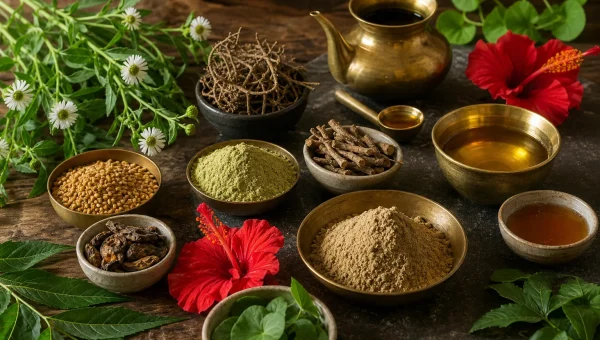
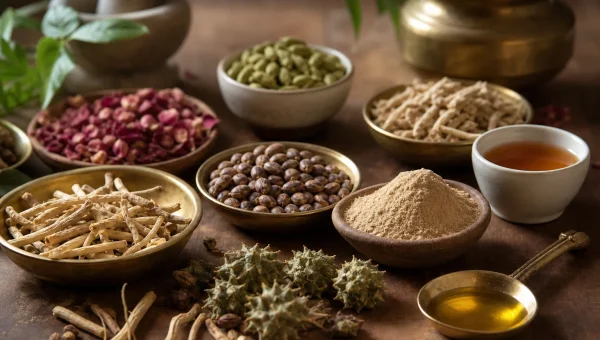
Eighteen months ago, I replaced that routine with a quieter stack built around Ashwagandha, purified Shilajit, beetroot with Pippali, Arjuna, and a strict timing protocol. My goal was not to reject modern sports nutrition. It was to keep the useful part of pre-workout support—energy, output, endurance, and focus—without relying on a late-day stimulant hit every time I trained.
Why I Moved Away from Standard Pre-Workouts
Caffeine is a legitimate ergogenic aid. It can improve exercise performance, and many pre-workout formulas use it because it acts quickly. The issue for me was not that caffeine is useless; the issue was that my training time, sleep needs, and tolerance for stimulants did not match a high-caffeine evening routine.
Ayurveda frames sustainable performance differently. Instead of pushing the nervous system harder for a short window, the focus is on building bala (strength), supporting recovery, maintaining clear digestion and absorption, and keeping the body’s stress response from becoming the limiting factor. That shift changed the way I think about pre-workout support.
- Strength and recovery support: using herbs that fit a longer training cycle rather than a one-hour rush.
- Cardiorespiratory efficiency: supporting circulation, oxygen delivery, and exercise economy where appropriate.
- Stress adaptation: keeping training productive without disturbing sleep and next-day energy.
The result is not a stimulant spike. It is a steadier style of training support that works best when used consistently, alongside food, sleep, progressive overload, and intelligent programming.
My Pre-Workout Stack: Four Main Supports, Zero Stimulants
This stack is not meant to mimic the sensation of 300 mg of caffeine. It is built for evening training, repeatability, and recovery. The herbs are not magic, and the effects are not all acute; some are cumulative and make more sense over weeks than minutes.
1. Ashwagandha (Withania somnifera): The Strength Foundation
Ashwagandha is the backbone of the stack. In Ayurveda, it is traditionally used as a Rasayana and for general debility, especially where strength, recovery, and nervous-system steadiness are part of the goal.
In an 8-week randomized, double-blind, placebo-controlled resistance-training trial, healthy young men taking 300 mg of Ashwagandha root extract twice daily had greater average improvements in bench-press strength, leg-extension strength, arm and chest muscle size, testosterone, and exercise-related recovery markers than the placebo group. The important correction is that this was a daily training-support herb in the trial, not an instant stimulant.
My dose: 600 mg standardized Ashwagandha root extract daily. I take it 45 minutes before training because that is convenient, but I treat the benefit as cumulative rather than purely acute.
2. Purified Shilajit: The Mineral-Rich Rasayana
Shilajit is a mineral-rich exudate used in Ayurveda and related traditional systems. Modern descriptions identify purified Shilajit as containing humic substances, including fulvic acids, humic acids, and dibenzo-alpha-pyrones, with composition varying by source and processing.
For training, the best human evidence is still limited but relevant. In an 8-week trial in recreationally active men, purified Shilajit at 500 mg per day was associated with better maintenance of muscular strength after fatigue and lower serum hydroxyproline compared with placebo. That makes it more of a recovery and fatigue-resilience support than a “feel it in 10 minutes” pre-workout.
My dose: 250–500 mg purified Shilajit, dissolved in warm water, taken 30–45 minutes before training.
Quality warning: I only use purified, third-party-tested Shilajit with heavy-metal testing. Raw or poorly tested Shilajit is not worth the risk because mineral-rich Ayurvedic products can vary widely in contamination and purity.
3. Beetroot Powder + Pippali (Piper longum): The Blood-Flow and Bioavailability Pair
Beetroot is not a classical Ayurvedic herb in the way Pippali is, so I treat this as a modern performance ingredient paired with an Ayurvedic bioavailability principle. Beetroot supplies dietary nitrate, which can be converted through the nitrate-nitrite-nitric oxide pathway and may support blood flow and exercise efficiency.
The timing matters. Beetroot is not like caffeine; nitrate conversion takes time, and practical pre-exercise use usually means taking it well before the session. I use it before higher-rep lifting, conditioning, loaded carries, and sessions where endurance matters more than aggression.
Pippali is the Ayurvedic part of this combination. It is traditionally valued as a sharp, warming digestive and carrier herb, and piperine from long pepper and black pepper is widely discussed as a bioavailability enhancer. I do not treat Pippali as a nitric-oxide booster by itself; I use it to keep the stack aligned with the Ayurvedic principle of supporting digestion, absorption, and delivery.
My dose: 6 g beetroot powder plus 250–500 mg Pippali powder in water, taken 90 minutes before training. If the beetroot powder does not list nitrate content, I treat it as food support rather than a standardized performance supplement.
4. Arjuna Bark (Terminalia arjuna): The Cardiac Tonic
Arjuna is one of Ayurveda’s best-known heart-support herbs. The Ayurvedic Pharmacopoeia of India identifies Arjuna as the stem bark of Terminalia arjuna, and it is traditionally used in formulas where cardiovascular strength and endurance are part of the clinical picture.
Human evidence is stronger for cardiovascular support than for bodybuilding-specific outcomes. In patients with stable angina, Arjuna bark extract improved treadmill-exercise parameters compared with placebo. In a small 8-week study in healthy young adults, Terminalia arjuna was associated with improved VO2 max and lower resting systolic blood pressure. For gym use, I see it as a long-term cardiorespiratory support, not an acute pump ingredient.
My dose: 500–1000 mg Arjuna bark powder or extract, taken with warm water 30–45 minutes before training.
The Timing Protocol
Timing matters more with this stack than with a conventional stimulant pre-workout. Caffeine can be felt quickly, but beetroot nitrate conversion and herb-based support work on a slower timeline. For a 6 PM training session, this is the protocol I use.
| Time | What I Take | How |
|---|---|---|
| 4:30 PM | Beetroot powder + Pippali | Mixed in water. This gets the longest lead time because nitrate conversion is not instant. |
| 5:15 PM | Ashwagandha + purified Shilajit + Arjuna | Taken with warm water. Warm water also helps dissolve resin-form Shilajit. |
| 5:45 PM | Light snack | Usually one banana or dates with a few soaked almonds. Enough fuel, not a full meal. |
| 6:00 PM | Training begins | I start with a longer warm-up because this stack does not create an artificial rush. |
On morning training days, I shift the same schedule earlier and keep the snack lighter. The biggest mistake is taking beetroot too close to the workout and expecting it to behave like caffeine.
What I Actually Feel During Training
This does not feel like a high-stimulant pre-workout. There is no sudden surge, no skin-tingling beta-alanine sensation, and no aggressive “charged” feeling. The change is steadier and more practical.
- Energy is flatter and more stable: warm-up, working sets, and accessories feel more even.
- Higher-rep work feels better: sets above 8 reps are where I notice the most difference.
- Conditioning feels less panicked: loaded carries, sled work, and intervals feel smoother when beetroot timing is right.
- Evening sleep is easier: removing late caffeine was the biggest win for recovery.
- The benefit feels cumulative: Ashwagandha, Shilajit, and Arjuna make more sense as a consistent training base than as one-off stimulants.
Who Should Not Use This Stack Without Supervision
These are active botanicals and supplements, not harmless gym candy. Anyone with a medical condition, anyone taking prescription medication, and anyone who is pregnant or breastfeeding should consult a qualified healthcare practitioner before using this stack.
Safety disclaimer: This article describes a personal supplement protocol for general educational purposes. It is not medical advice. Consult a qualified Ayurvedic practitioner, physician, or healthcare provider before starting Ashwagandha, Shilajit, Pippali, Arjuna, beetroot nitrate, or any supplement protocol, especially if you have heart disease, thyroid disease, liver disease, kidney disease, low blood pressure, high blood pressure, bleeding risk, or are taking prescription medication.
Specific cautions are important because this stack touches several body systems.
- Ashwagandha: use caution with thyroid disorders, sedatives, liver disease, pregnancy, and breastfeeding.
- Shilajit: use only purified, tested products; avoid unsupervised use if you have kidney disease, iron overload concerns, or are using multiple mineral supplements.
- Beetroot: it may lower blood pressure, so medical guidance matters if you use antihypertensive medicines or have low blood pressure.
- Arjuna: because it is used for cardiovascular support, combine it with heart or blood-pressure medication only under professional supervision.
- Pippali: piperine can affect drug absorption and metabolism, so separate it from prescription medication unless a clinician approves the combination.
Cost and Practicality
The monthly cost depends heavily on country, brand, extract quality, and testing standards. The most expensive item should usually be purified, lab-tested Shilajit; that is not the place to chase the cheapest option. Beetroot powder and Pippali are usually inexpensive, while standardized Ashwagandha and quality Arjuna vary by brand.
For me, the bigger value is not that this stack is always cheaper than commercial pre-workout. The value is that it does not push me into a cycle of stronger stimulants, later sleep, and poorer recovery. The protocol supports training without making the nervous system pay the bill at bedtime.
I still respect modern sports nutrition. Protein, creatine, carbohydrates, hydration, electrolytes, sleep, and progressive training matter more than any herb. But for evening sessions, this Ayurvedic-style pre-workout approach has become my default because it supports performance without stealing from recovery.
References
- International society of sports nutrition position stand: caffeine and exercise performance (2021), PubMed
- Webprod (webprod.hc-sc.gc.ca)
- Examining the effect of Withania somnifera supplementation on muscle strength and recovery: a randomized controlled trial (2015), PubMed
- NCBI
- Shilajit: a natural phytocomplex with potential procognitive activity (2012), PubMed Central
- Webprod (webprod.hc-sc.gc.ca)
- The effects of Shilajit supplementation on fatigue-induced decreases in muscular strength and serum hydroxyproline levels (2019), PubMed
- Effects of Beetroot Juice Supplementation on Cardiorespiratory Endurance in Athletes. A Systematic Review (2017), PubMed
- Effects of Beetroot Juice Supplementation on Cardiorespiratory Endurance in Athletes. A Systematic Review (2017), PubMed Central
- Inorganic nitrate and beetroot juice supplementation reduces blood pressure in adults: a systematic review and meta-analysis (2013), PubMed
- An appraisal of the bioavailability enhancers in Ayurveda in the light of recent pharmacological advances (2016), PubMed Central
- Influence of piperine on the pharmacokinetics of curcumin in animals and human volunteers (1998), PubMed
- Ayurvedic Pharmacopoeia of India
- Efficacy of Terminalia arjuna in chronic stable angina: a double-blind, placebo-controlled, crossover study comparing Terminalia arjuna with isosorbide mononitrate (2002), PubMed
- Effects of Withania somnifera (Ashwagandha) and Terminalia arjuna (Arjuna) on physical performance and cardiorespiratory endurance in healthy young adults (2010), PubMed
I appreciate that this doesn’t promise miracles or quick fixes. The honest timeline expectations and lifestyle requirements make this feel legitimate rather than like a sales pitch.
Your grandmother sounds like an amazing woman! Traditional knowledge passed through families is so precious.
My wife shared this with me and it’s prompted us to rethink our whole family’s approach to health. The constitutional framework makes sense and the recommendations are practical.
The crash description is painfully accurate. I could set a timer by my post-workout slump. What I’m curious about is whether the Ayurvedic stack takes a few weeks to build up before you feel the sustained energy, or was the difference noticeable from the first session?
Been following this for four months. Not only has my energy improved but my mood regulation and stress response are noticeably different. My wife says I seem calmer
The morning ritual described here gets me off my phone and into my body before the day takes over. That alone has improved my mental health significantly.
So encouraging to hear! Starting my first week and this is motivating me to stick with it
I shared this with three friends who are all dealing with similar energy and vitality issues. We’re doing a 90-day protocol together. Check back for our group results.
Been using the ashwagandha and shilajit combination in the morning instead of my old pre-workout for about six weeks now. The sustained energy is real. No crash, no 2 AM ceiling staring. I still miss the immediate hit of caffeine but my afternoon sessions are consistently better now than they were before.
Thank you for asking this! Ive been too shy to ask the same question and I really needed this answered.
I would like more detail on Pre-Workout Stack. Small daily changes are easier to follow than a perfect plan.
Thank you for sharing the practical tip about sourcing. That’s something I’ve been confused about
what about crossfit specifically? the intensity is quite different from standard lifting and the dosing might need adjusting
Interesting perspective, but I’ve read contradicting information from other Ayurvedic sources. How does a beginner know who to trust?
This makes sense for Pre-Workout Stack. I would like to know how long to try it before judging results.
Your comment about the dosage issue is so important. Getting it right makes all the difference.
Valid concerns. Ayurveda works best as a complementary approach, not a replacement for evidence-based medicine. Thank you for highlighting this important distinction.
Switched away from commercial pre-workout eight months ago and the sleep improvement alone was worth it. The article captures exactly what happened to me — I hadn’t connected the 2 AM wakeups to my gym supplement until I stopped taking it. The shatavari addition was new to me though, wasn’t expecting something typically considered a women’s herb in a training context.
I played professional sports and now work in athlete wellness. Integrating Ayurvedic recovery principles alongside sports science creates something more complete than either alone.
So encouraging to hear! Starting my first week and this is motivating me to stick with it.
I’m a personal trainer and I’ve been incorporating constitutional assessments into how I program for clients. The results-per-effort ratio is better when training aligns with constitution.
Thank you so much for sharing your experience! It’s really encouraging to hear from others on this journey
the performance-focused framing here is how I wish more Ayurvedic content was presented. Speaking the language of vitality and optimization rather than just sickness makes it accessible.
Been doing the neon pre-workout thing for three years and the 2 AM wide-awake problem is exactly why I started looking for alternatives. Which ashwagandha form do you use before training — KSM-66 or a straight root powder? Curious whether the timing matters as much as the dosage.
The relationship between Ojas and resilience is something I now explain to my high-performing executive clients. Ayurveda has a sophisticated model for sustainable performance.
I lift weights four times a week and the recovery protocol described here, the herbs, the diet timing, the sleep emphasis, has genuinely improved my training outcomes.
your comment about the dosage issue is so important. Getting it right makes all the difference
my father-in-law from India has been telling me about these practices for years. Reading this helped me understand why they work, which helped me actually commit to them
your comment prompted me to finally try this. Thank you for the push!
I’m 52 and started noticing the energy decline my friends were describing as ‘just aging.’ Six months of following this protocol and I feel more energetic than I did at 45.
The 2am ceiling-staring from evening pre-workout is exactly what stopped me from training in the evening for three years. You’ve described what I lived with precisely. I switched to Ashwagandha and Shatavari pre-training six months ago and my sleep quality reversed the damage.
Switching away from stimulant pre-workouts felt risky when I first tried it because I assumed the tingles meant something was actually happening. Reading about the adaptogen approach makes me realize I was just overtaxing my adrenals every session. Did you notice any drop in perceived intensity during the first few weeks of the transition?
The sleep quality section is what brought me here and it’s worth the read for that alone. The evening protocol has transformed my sleep architecture completely
I’ve been using it for a year and can confirm, the results you’re describing are consistent with my longer-term experience.
The Ashwagandha timing pre-training rather than morning supplementation as commonly recommended is the practical adjustment I hadn’t considered. Using it for the adaptogenic effect during the training stressor rather than for baseline nervous system support is a different therapeutic target.
Where’s the Shilajit in this stack? Any athlete-focused Ayurvedic protocol I’ve read includes Shilajit for mitochondrial support and ATP production. Its absence here seems like an oversight given the pre-workout focus.
I’ve been assembling my own pre-training stack and what helped most was the timing guidance here. Taking the warming herbs about 45 minutes before a session instead of right at the start made a real difference in how I felt during warm-up. Curious whether anyone adjusts the stack on heavy-lift days versus cardio days?
The lifestyle changes recommended here are excellent. The supplement recommendations, less so. Hard to know what dose actually works.
good stuff overall but the dosha assessment part is too simplified imo. you cant sum that up in one paragraph
Your skepticism is healthy and welcome. We never intend for our content to replace medical advice, and we’ll make that clearer going forward.
This helped me understand Pre-Workout Stack without too much jargon. This feels more usable than a long list of herbs.
The timing protocol looks detailed; I wonder if shifting everything 90 minutes earlier for morning workouts would affect nitrate conversion.
Followed this advice for a month. Not only did it not help, my symptoms actually got slightly worse before I went back to my doctor
The cost comparison is real. My monthly pre-workout powder bill was 70 dollars. Ashwagandha, Shatavari, Triphala, and Shilajit bought in bulk from quality suppliers total 35 dollars monthly. Same or better results, half the cost, no artificial sweeteners.
Sounds like the beetroot and Pippali combo needs that 60-90 minute window for nitric oxide to peak.
Combining Ashwagandha with Shatavari for male athletes surprises me given Shatavari’s primary reputation as a female reproductive tonic. The adaptogenic properties are gender-neutral but many practitioners don’t recommend Shatavari to male athletes. What’s the rationale here specifically?
I’m a female competitive cyclist and I adapted this stack for my training. The Shatavari and Ashwagandha timing protocol works as described for women too. The gender-specific marketing of Ayurvedic herbs is often more commercial than clinical.
Curious how the 1000 mg Arjuna bark dose lines up with the 2002 study on angina patients.
The Pre-Workout Stack section feels grounded enough to try carefully. A few more examples would still help.
The cost breakdown shows the Ayurvedic stack at about $60 a month, which seems reasonable compared to buying a new tub every few weeks.
I want the specific timing protocol. The article describes what to take but the exact timing relative to training session start is glossed over. Is Ashwagandha 30 minutes pre-training? 60 minutes? Does it matter whether the session is morning or evening?
Does anyone know if the Shilajit resin needs to be fully dissolved in warm water before taking Ashwagandha and Arjuna together?
The absence of jitters and that particular neon-powder stimulant crash is the most undervalued quality-of-life improvement from switching. Performance adaptogens provide a different kind of readiness than stimulant-based pre-workout. Calmer, more focused, and sustainable across a long session.
Noticed lower perceived exertion on compound lifts; could explain why the last few reps feel more controlled.
The idea of building efficacy over weeks instead of tolerance really clicks with my own experience using adaptogens.
Would the beetroot powder still work if I used a nitrate-rich juice instead, or does the Pippali need the dry mix?
It’s interesting that the stack avoids the typical beta-alanine tingle, yet still improves endurance on higher-rep sets.
Wonder if taking Pippali two hours apart from prescription meds is enough to avoid interactions.
The cortisol-lowering effect of Ashwagandha seems like a smart way to support testosterone without stimulants.
Has anyone tried this stack for evening sessions and still managed to fall asleep by 10:30 pm?
The protocol suggests a light snack of banana and almonds; would a small rice cake with peanut butter work just as well?
The Bala herb recommendation was new to me. Is it available in capsule form or only as oil?
Appreciate the safety disclaimer about thyroid monitoring, especially for those on levothyroxine.
The comparison between Safed Musli and creatine was interesting but the muscle protein synthesis mechanisms are very different. Comparing them is a stretch.
I tried adding Kapikacchu to the pre-workout and it made me nauseous during warmup. Is that normal initially?
tried the Shatavari-based recovery drink you mentioned after workouts. Soreness reduced noticeably by day 3.
How do you handle the timing when taking multiple adaptogens? Do they compete for absorption if taken together?
Does the protocol change for morning training vs evening? I work out at 6am and can’t do heavy digestion beforehand.
I’ve been using a commercial pre-workout for 2 years. Switching to this stack next month. Will share results.
I’ve tried 3 Ayurvedic pre-workout products from different brands and they don’t match what you describe here. The ingredients are heavily diluted.
Good reminder on Pre-Workout Stack. Good starting point for a cautious reader.
The timing window you mention 45 minutes before training, is that specific to the Shilajit absorption rate?
reading this in 2027 is Shilajit still the centerpiece of the Ayurvedic pre-workout or have better options emerged?
The section on Tridoshic balance before exercise is something no gym trainer ever discusses. Game changer in terms of knowing which days to push hard.
ashwagandha 300mg KSM-66 before training is in my stack now. energy is cleaner than caffeine based products
The electrolyte suggestion using rock salt and lemon before training is better than commercial sports drinks for me. Less bloating.
this article is more ‘what I take’ than actual Ayurvedic protocol. the title is misleading
Late to this post but starting the pre-workout stack you outlined this week. The rock salt lemon drink alone is great before training.
The Pitta-type athlete modifications you include at the end are something sports nutrition completely ignores. Appreciate the personalisation.
The Shilajit + Ashwagandha combination you describe is exactly what I’ve been taking before lifting sessions for 4 months. Performance gains are real.
Doing this
Will try
Same here
The Vidarikanda mention for muscle growth is something I’ve never seen in a fitness article. Is there any trial data?
I follow a vegan diet. Does any of the Ayurvedic pre-workout stack become more relevant for plant-based athletes?
Does this stack work for endurance training or is it better for strength? I’m a marathon runner.
The historical references add credibility. Knowing this has been used for centuries matters to me.
Does age affect how this works? I’m 52 and wondering if the protocol needs adjustment.
Skeptical but trying anyway because conventional medicine hasn’t helped. Will report back.
my grandmother used to do something similar. not exactly this but the core principle was the same