
The Calendar That Actually Tells You How to Eat and Move
Cycle syncing with Ayurveda prakriti is a practical way to stop treating every day of the menstrual month as if it asks for the same food, training, sleep, and emotional output. The modern cycle gives the timing: bleeding begins the cycle, follicular development builds toward ovulation, the luteal phase follows ovulation, and the next bleed begins when the endometrium is shed. Ayurveda adds the language of qualities: light or heavy, hot or cool, mobile or stable, dry or unctuous. Together, they create a calendar that can guide food, movement, rest, and herbs without expecting the body to perform the same way every day.
This protocol is not meant to force every body into a perfect 28-day schedule. Adult cycles can normally vary, and ovulation does not always happen on day 14. Use the day numbers below as a map for a typical ovulatory cycle, then adjust by your own pattern over several cycles. People using hormonal contraception, those who are pregnant, postpartum, perimenopausal, or managing PCOS, endometriosis, fibroids, thyroid disease, anemia, PMDD, or irregular bleeding need individualized guidance from a qualified practitioner or healthcare provider.
The Corrected Dosha-Phase Mapping
Classical Ayurvedic literature describes the menstrual rhythm as Rituchakra, commonly discussed through Rajahsrava Kala or the bleeding phase, Rutukala or the fertile/proliferative phase, and Rutuvyatit Kala or the post-ovulatory/secretory phase. It does not need to be forced into a rigid modern four-phase chart. A careful practical overlay is this: Vata and Apana Vayu are central during menstrual flow, Kapha supports rebuilding after bleeding, Pitta becomes more relevant around ovulation and transformation, and Vata-pacifying care becomes important again as the next period approaches.
Menstrual phase: This begins on the first day of bleeding. Ayurveda reads this as a Vata-Apana period because the body is releasing downward. The most supportive routine is warm, simple, grounding, and low in strain.
Post-menstrual follicular phase: After active bleeding, the body begins rebuilding the uterine lining while follicular activity progresses toward ovulation. This is the most Kapha-like part of the practical map because Kapha governs nourishment, structure, and restoration.
Ovulatory window: Around ovulation, the cycle becomes sharper, warmer, and more active. This is the Pitta-like point of the calendar. Many people feel more outward, communicative, and capable here, but Pitta-predominant people may also notice irritability, acne flares, heat, or overextension.
Luteal and premenstrual phase: After ovulation, progesterone becomes the dominant hormone, and toward the end of the cycle both progesterone and estradiol fall. Ayurveda can read the mid-luteal phase through secretory Pitta-Kapha qualities, while the premenstrual transition often needs Vata care: regularity, warmth, sleep, steadiness, and less sensory overload.
Phase-by-Phase Protocol
The goal is to match the routine to the phase without becoming rigid. Food, movement, and herbs should follow the actual presentation: cramps, heat, heaviness, anxiety, fatigue, constipation, sleep disruption, cravings, or fluid retention. The same calendar will look slightly different for Vata, Pitta, and Kapha prakriti.
Menstrual Phase, approximately days 1-5: Rest and Apana Vata Care
The bleeding phase is a time for downward movement and conservation. Classical menstrual care emphasizes simple food, calm conduct, and avoiding excessive exertion. In a modern routine, that means warm cooked meals, early nights, and a reduction in intense training for the heaviest days.
Dietary priorities are warm, moist, easy-to-digest meals: soft rice, mung soup, thin khichari, cooked vegetables, ghee in a modest amount, and warm water or herbal infusions. If bleeding is heavy or iron status is low, include iron-containing foods appropriate to your diet and ask your healthcare provider whether testing or supplementation is needed. Avoid iced drinks, large raw salads, fasting, and very pungent, salty, or irritating foods during the heaviest flow if they aggravate cramps, burning, loose stool, or fatigue.
Movement should be gentle. Rest is appropriate on the first one or two heavy days. Gentle walking, supported stretching, restorative yoga, and slow breathing can be resumed as comfort returns. Many yoga traditions avoid strong inversions during active menstruation because the practice is intended to support Apana Vayu’s downward flow.
Post-Menstrual Follicular Phase, approximately days 6-13: Building Without Kapha Stagnation
After bleeding, the body moves into rebuilding. This is the best time to gradually increase output, not because every person becomes instantly energetic, but because the cycle is no longer in its active release phase. The Ayurvedic aim is to nourish without becoming heavy.
Dietary priorities are warm, light-building meals: cooked grains, mung or other well-tolerated legumes, cooked greens, seasonal vegetables, moderate healthy fats, and digestive spices used according to tolerance. Kapha-predominant people should keep this phase lighter and more mobilizing; Vata-predominant people should keep enough moisture and oil in the meal; Pitta-predominant people should avoid turning the rising energy into overheating.
Movement can progress during this window. Strength training, dynamic yoga, brisk walking, cycling, or intervals may be suitable if energy, sleep, and bleeding have normalized. Increase intensity gradually rather than using the calendar as a reason to push through exhaustion.
Ovulatory Window, roughly 3-4 days around ovulation: Channel the Pitta Peak
The ovulatory window is the warm, sharp, outward-moving point of the cycle. In modern physiology, ovulation follows the mid-cycle hormonal surge. In Ayurveda, this is a practical Pitta window: focused, expressive, and capable, but also more vulnerable to heat signs in Pitta-predominant people.
Dietary priorities are cooling and non-irritating: meals built around sweet, bitter, and astringent tastes, adequate hydration, and a reduction in very hot, sour, salty, and pungent foods if they trigger irritability, flushing, acne, loose stool, or disturbed sleep. Culinary supports such as fennel, coriander, rose, and pomegranate can be used as food-level choices when they suit digestion.
Movement may be stronger here if the body feels well. This can be a good window for demanding workouts, important conversations, creative work, and social commitments. The correction is simple: do not waste the window, but do not overheat it. Hydrate, cool down properly, and reduce intensity if ovulation pain, pelvic discomfort, migraine, or irritability appears.
Luteal and Premenstrual Phase, after ovulation until the next period: Ground the System Early
The luteal phase is where many people experience PMS symptoms. Progesterone rises after ovulation, then the late-cycle fall in progesterone and estradiol precedes menstruation. Bloating, breast tenderness, fatigue, cravings, constipation or loose stools, mood changes, anxiety, irritability, and sleep disruption can all appear in this window.
Dietary priorities are regular meals, warm cooked foods, steady carbohydrates from whole grains or roots, adequate protein, and enough fat to keep the meal grounding. Nuts, seeds, legumes, leafy greens, and whole grains can help provide magnesium through food. In the last two weeks before the period, reducing excess caffeine, salt, and sugar can be useful for people whose PMS worsens with breast tenderness, bloating, sleep disturbance, or mood swings.
Movement should become more intelligent, not necessarily absent. Moderate strength training, walking, slow yoga, mobility work, and breath-led practices are often better tolerated than repeated high-intensity sessions when sleep, anxiety, cramps, or cravings are worsening. If you feel strong, train; if your body is clearly asking for steadiness, reduce intensity before the period forces the reduction for you.
| Phase | Approximate Timing | Ayurvedic Emphasis | Food Emphasis | Movement and Practice |
|---|---|---|---|---|
| Menstrual | Days 1-5 | Vata and Apana Vayu | Warm, simple, moist, cooked meals; avoid cold, raw, and irritating foods if they aggravate symptoms | Rest on heavy days, gentle walks, restorative yoga, avoid strong inversions during active flow |
| Post-menstrual follicular | Days 6-13 | Kapha rebuilding | Warm light-building meals, cooked grains, legumes, greens, seasonal vegetables, digestion-supporting spices | Progressive strength training, dynamic yoga, brisk walking, gradual intervals |
| Ovulatory | Around ovulation | Pitta focus | Cooling meals, sweet-bitter-astringent tastes, adequate fluids, less chili, excess caffeine, sourness, and salt if heat signs appear | Higher-intensity work if well tolerated, social and creative output, careful cooling and recovery |
| Luteal and premenstrual | After ovulation to next bleed | Pitta-Kapha mid-luteal, Vata care premenstrually | Warm grounding meals, steady carbohydrates, protein, magnesium-containing foods, less caffeine, salt, and sugar if PMS worsens | Moderate training, walking, slow yoga, breathwork, early bedtime, warm oil self-massage where suitable |
Adjustments by Prakriti Type
The base calendar becomes more accurate when filtered through prakriti. Ayurveda classifies constitution by the dominance of Vata, Pitta, Kapha, or combinations of these doshas, and diet and routine are traditionally adjusted according to that constitutional pattern.
Vata-predominant prakriti: The vulnerable points are menstrual cramping, anxiety, insomnia, constipation, irregular appetite, and late-luteal overwhelm. Vata types should not use cycle syncing as a reason for aggressive fasting, raw-food phases, excessive travel, or late nights. The most important supports are routine meal times, warmth, oiliness in the right amount, warm oil self-massage, gentle abdominal warmth, and reducing schedule chaos during the premenstrual and menstrual phases.
Pitta-predominant prakriti: The vulnerable points are ovulatory heat, irritability, acne, loose stool, migraine tendency, burning sensations, and inflammatory flares. Pitta types should use the ovulatory phase for focused action without adding too much heat. Favor cooling tastes and reduce excessive chili, alcohol, overheated workouts, sun exposure, and late-night work in the ovulatory and late-luteal windows. Heavy bleeding, large clots, severe pelvic pain, or bleeding between periods should not be treated as a dosha adjustment problem alone.
Kapha-predominant prakriti: The vulnerable points are water retention, breast heaviness, sluggishness, low motivation, and sweet cravings, especially in the rebuilding and luteal windows. Kapha types do best with warm, lighter meals, daily walking, progressive strength training, less daytime sleeping, and fewer heavy sweet, salty, oily, and dairy-heavy foods when heaviness is already present. The goal is not depletion; it is movement without stagnation.
Herbs and Safety
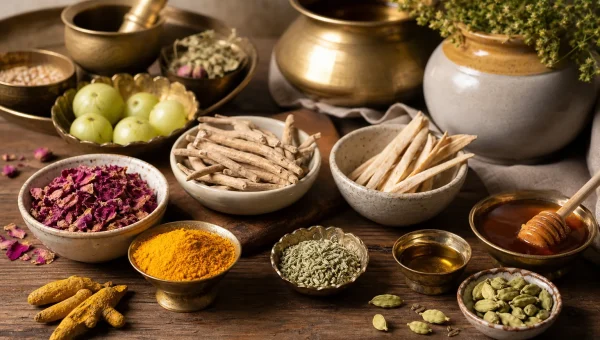
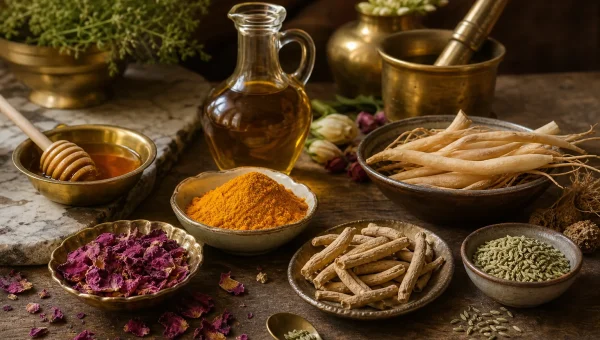
Herbs are supportive tools, not the foundation of the protocol. Shatavari root, Asparagus racemosus, is listed in the Ayurvedic Pharmacopoeia with sweet-bitter taste, heavy and unctuous qualities, cooling potency, sweet post-digestive effect, and actions that include Pitta-pacifying, Vata-pacifying, nourishing, and rasayana indications. This makes it more fitting for dry, depleted, hot, or Pitta-Vata presentations than for a heavy Kapha presentation.
Ashwagandha root, Withania somnifera, is listed as bitter-astringent, light, heating, sweet in post-digestive effect, rasayana, strengthening, and Vata-Kapha-reducing. Because it is heating, it is not the first choice when Pitta signs dominate, such as heat, irritability, acne flare, burning sensations, or heavy inflammatory symptoms. It should also not be treated as a universal follicular or luteal supplement.
Use herbs by constitution, symptoms, medication status, and reproductive context, not by a generic cycle chart. Ashwagandha should be avoided during pregnancy and breastfeeding unless specifically directed by a qualified clinician, and it needs medical review for liver disease, thyroid conditions, autoimmune disease, sedative use, thyroid medication, blood pressure or glucose medication, immunosuppressants, or planned surgery. Bring every herb, supplement, and extract label to a qualified Ayurvedic practitioner or healthcare provider before using it.
When to Get Individual Care
Cycle syncing is self-care for a basically healthy cycle; it is not a substitute for diagnosis or treatment. Seek medical care if cycles are consistently shorter than 21 days or longer than 35 days, if bleeding is absent for 90 days, if bleeding lasts more than 7 days, if you soak a pad or tampon every 1-2 hours, if clots are larger than a quarter, if pain is severe, if there is vomiting, if bleeding happens between periods, or if PMS symptoms interfere with daily life.
Disclaimer: This article is for educational purposes only and does not replace professional medical advice, diagnosis, or treatment. Consult a qualified Ayurvedic practitioner or healthcare provider before starting herbs, supplements, major diet changes, or a new exercise plan, especially if you have a health condition, take medication, are pregnant, breastfeeding, trying to conceive, or have unusual bleeding or pain.
References
- NCBI
- NCBI
- My (my.clevelandclinic.org)
- MedlinePlus
- Mayoclinic (mayoclinic.org)
- OASH Women’s Health
- Mayoclinic (mayoclinic.org)
- Link (link.springer.com)
- NIH Office of Dietary Supplements
- NIH Office of Dietary Supplements
- Charaka Samhita — Deha prakriti
- Charaka Samhita — Menstrual disorders
- Jahm (jahm.co.in)
- Easyayurveda (easyayurveda.com)
- Blog (blog.theayurvedaexperience.com)
- Easyayurveda (easyayurveda.com)
- Easyayurveda (easyayurveda.com)
- Ayurvedic Pharmacopoeia of India
- Miracledrinksclinic (miracledrinksclinic.com)
- Ssgcbams (ssgcbams.co.in)
- NCCIH
- NCCIH
For someone with irregular cycles (PCOS), does the Prakriti-based cycle syncing still apply or does the framework break down?
I have PCOS and this is exactly what I was wondering too. My cycles run 35-50 days so mapping phase-specific practices to a 28-day framework never quite fits. Would love to know whether the author recommends tracking by physical signs (cervical mucus, temperature) rather than calendar days in that case.
@Steve yes exactly, that was my experience as well.
The Shatavari supplementation throughout the cycle is there any concern about phytoestrogenic effect on someone with estrogen-sensitive conditions?
for women on hormonal contraceptives the cycle phase framework essentially doesn’t apply since natural hormonal fluctuations are suppressed.
I’ve been cycle syncing with modern hormone-based frameworks for 2 years but overlaying Prakriti analysis added a personalization layer that’s been missing.
How does perimenopause change the cycle-Prakriti mapping when cycles become unpredictable? 🌿
is the Pitta Kapha balance during menstruation universal or does it depend on the individual’s Prakriti?
My gynecologist was skeptical about restricting physical activity based on cycle phase. The recommendation to avoid exercise during menstruation goes against current research showing activity benefits during periods.
Matching my Prakriti (Vata) to my cycle was a revelation. The Vata phase of my cycle (ovulation to period) is where my anxiety peaks and the described grounding practices genuinely help.
The article recommends avoiding strenuous yoga during menstruation. Is this the Iyengar tradition position or specifically an Ayurvedic one?
Perimenopause is where I’d really want more guidance from this framework. My cycles went from 28 days to anywhere between 18 and 45 days, so the phase-based approach falls apart without anchoring it to something other than the calendar. Does Prakriti-based practice shift to a more fixed daily routine when cycles are no longer predictable?
Cycle syncing is a wellness trend without strong clinical evidence even in its conventional form. Adding dosha theory doesn’t strengthen the scientific basis. नमस्ते
Thanks!
The dosha-phase mapping makes a lot of sense when you see how energy shifts through the month.
tried that too and found similar results.
same question here actually. 💯
The Shatavari question feels important to me — I have a family history of estrogen-receptor-positive breast cancer and I’ve been avoiding phytoestrogenic herbs on my oncologist’s advice. Is there any guidance in classical texts or modern Ayurvedic literature on this specific concern, or is Shatavari considered safe regardless?