
At a glance
| Ayurvedic name | Amavata, commonly used as an Ayurvedic correlation for rheumatoid arthritis when ama and aggravated Vata affect the joints |
| Primary dosha(s) | Vata with ama; Kapha often contributes to heaviness and swelling, while Pitta may dominate in hot, inflamed flares |
| Affected system / srotas | Annavaha, Rasavaha, Asthivaha and Sandhivaha channels, with involvement of Agni and the joints |
| Key herbs | Guduchi, Guggulu, Rasna, Shunthi, Eranda, Nirgundi, Shallaki, Ashwagandha |
| Supportive therapies | Langhana, deepana-pachana, ruksha swedana, supervised virechana and basti, gentle movement and joint-protective routines |
Overview
Rheumatoid arthritis is a chronic autoimmune inflammatory disease in which the immune system attacks joint tissues, commonly causing pain, swelling, warmth, stiffness and reduced movement, often in a symmetrical pattern in the small joints of the hands and feet. In Ayurveda, a similar clinical picture is commonly discussed under Amavata, a condition in which poorly processed metabolic material called ama combines with aggravated Vata and localises in the joints. This correlation is useful for Ayurvedic assessment, but it should not replace modern diagnosis, blood tests, imaging or rheumatology care. Early treatment of rheumatoid arthritis is important because uncontrolled inflammation can permanently damage joints and may also affect organs such as the eyes, lungs and heart.
The Ayurvedic view
In Amavata, the root problem begins with weakened Agni, especially when digestion is unable to properly transform food and metabolic inputs. This produces ama, a heavy, sticky and obstructive factor. Aggravated Vata then carries this ama through the channels and deposits it in vulnerable sites, particularly the sandhi, or joints. The result is pain, stiffness, swelling, heaviness, fatigue, loss of appetite and restricted movement. In early or sama stages, ama signs such as heaviness, coating on the tongue, low appetite, lethargy and migrating pain may be prominent; in later or nirama stages, Vata-driven dryness, cracking, deformity, wasting or chronic pain may become more evident. Ayurvedic management therefore begins by kindling Agni, digesting ama and clearing obstruction before stronger Vata-pacifying oleation or basti therapies are used.
Causes & triggers
- Weak digestion, irregular meals, overeating or eating before the previous meal is digested.
- Heavy, oily, cold, stale, fried or difficult-to-digest foods, especially during poor appetite or sluggish digestion.
- Viruddha ahara, or incompatible food combinations, and frequent intake of curd, cold drinks or refrigerated leftovers when ama symptoms are present.
- Sedentary routine, day sleep, lack of movement and poor circulation of rasa dhatu.
- Exercising, travelling or doing strenuous activity immediately after a heavy or oily meal.
- Cold, damp weather, excessive exposure to cold wind and suppression of natural urges.
- Stress, poor sleep, smoking and unmanaged inflammatory disease activity, which may worsen rheumatoid arthritis flares.
Symptoms & dosha types
Typical symptoms include painful, swollen and stiff joints; morning stiffness; reduced grip strength; fatigue; heaviness; low appetite; body ache; and flare-ups that move between joints or affect both sides of the body. A Vata-dominant presentation tends to show severe, shifting, pricking or cracking pain, dryness and variable stiffness. A Pitta-dominant presentation shows more heat, redness, burning pain, thirst, irritability and inflammatory flares. A Kapha-dominant presentation shows marked swelling, heaviness, coldness, sluggishness and thick coating on the tongue. Mixed types are common, and treatment must be adjusted according to whether ama, inflammation, dryness or tissue depletion is most prominent.
Recommended herbs
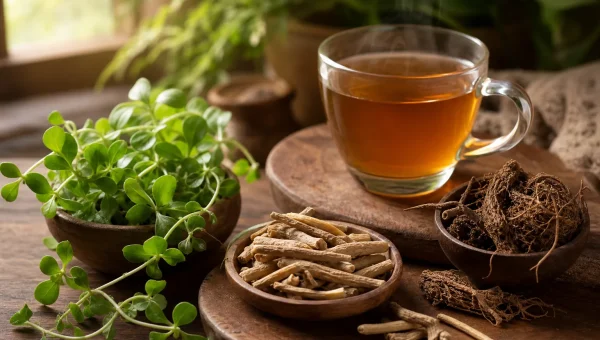
Commonly used herbs and formulations for Amavata include Guduchi for Agni, ama and inflammatory tendencies; Guggulu-based preparations such as Simhanada Guggulu, Yogaraja Guggulu or Kaishora Guggulu when appropriate; Rasna for Vata-related joint pain; Shunthi for deepana-pachana and stiffness associated with ama; Eranda under supervision for Vata and bowel-related clearing; Nirgundi for painful swelling; Shallaki for joint comfort; and Ashwagandha when weakness, poor strength or chronic Vata depletion is present. These herbs are not interchangeable and should be selected by a qualified Ayurvedic physician after assessing digestion, inflammation, bowel habits, medications, pregnancy status and disease activity.
Diet & lifestyle
Favour warm, freshly cooked, light and easy-to-digest meals such as mung dal soup, thin khichadi, barley preparations, old rice, cooked vegetables, ginger-spiced broths and warm water sipped through the day. Spices such as dry ginger, cumin, ajwain, coriander, fenugreek and turmeric may be useful when tolerated. Avoid cold drinks, ice cream, curd at night, stale food, deep-fried foods, excess sweets, heavy dairy, overeating and incompatible combinations. During active ama symptoms, keep meals simple and reduce heaviness rather than using rich tonics. Lifestyle should include regular sleep, gentle range-of-motion exercise, walking as tolerated, joint protection, stress reduction and avoiding sudden strain during flares. Do not stop prescribed DMARDs or steroids without a rheumatologist’s guidance.
Therapies & home remedies
Classical Ayurvedic management emphasises langhana, deepana-pachana, ruksha swedana and carefully timed shodhana. In early ama-dominant stages, dry fomentation such as valuka sweda may be preferred over heavy oil massage, because excessive oiling can worsen ama and Kapha-type swelling. Once ama is reduced and the condition becomes more nirama, supervised snehana, virechana and basti may be considered to pacify Vata and support chronic joint function. At home, a person may use warm water, simple digestible food, gentle stretching after stiffness settles and mild dry heat for non-red, non-hot stiffness. Avoid aggressive massage, strong heat, fasting, castor oil purgation, herbomineral medicines or panchakarma during acute hot swelling, fever, severe weakness, pregnancy or active medical instability unless directly supervised.
What the research says
Modern evidence for Ayurvedic approaches in rheumatoid arthritis is promising but still limited. NCCIH summarises two preliminary studies with 161 total participants in which Ayurvedic herbal preparations were compared with conventional drugs, noting that results suggested possible comparable effectiveness but that the studies used different preparations and comparators. A randomized double-blind trial of the standardized Ayurvedic plant-derived formulation RA-1 for rheumatoid arthritis was published in the Journal of Rheumatology in 2000. A 2011 pilot randomized controlled trial compared classical Ayurvedic treatment, methotrexate and their combination over 36 weeks. A 2012 randomized investigator-blind study compared a standardized Ayurvedic formulation with hydroxychloroquine sulfate and reported improvements in both groups. A 2015 open-label pilot study of Ashwagandha powder followed by Sidh Makardhwaj found symptom improvements but also increased urinary mercury levels; because it was short, non-randomized and uncontrolled, it cannot establish safety or efficacy, and mercury-containing preparations should not be self-used. Overall, Ayurveda may be considered as supportive integrative care under qualified supervision, not as a replacement for early rheumatology assessment and disease-modifying treatment.
When to see a doctor
- Joint pain, swelling or morning stiffness lasting more than a few weeks, especially in both hands, wrists or feet.
- Warm, red, swollen joints, fever, unexplained weight loss, marked fatigue or sudden worsening of symptoms.
- Reduced grip, difficulty walking, visible deformity or rapidly increasing stiffness.
- Eye pain/redness, chest pain, breathlessness, persistent cough or other possible systemic symptoms.
- Known rheumatoid arthritis with frequent flares, medication side effects or poor response to current treatment.
- Pregnancy, breastfeeding, kidney disease, liver disease, bleeding disorders or use of immunosuppressants, anticoagulants or steroids before taking herbs.
FAQ
No. Rheumatoid arthritis is a modern autoimmune diagnosis, while Amavata is an Ayurvedic disease concept based on ama, Vata and joint involvement. The two are commonly correlated because many clinical features overlap, but diagnosis and monitoring should include modern rheumatology evaluation.
Ayurveda aims to reduce ama, support Agni, pacify Vata, improve mobility and reduce flare tendency, but rheumatoid arthritis can be progressive and requires careful monitoring. Claims of a guaranteed cure are not trustworthy. Integrative care should focus on symptom control, function, inflammation management and prevention of joint damage.
It depends on the stage. During ama-dominant swelling, heaviness, low appetite or thick tongue coating, heavy oil massage may worsen obstruction. In chronic dry Vata-dominant stiffness after ama has reduced, gentle medicated oil therapy may be helpful under guidance.
Do not combine herbs with methotrexate or other rheumatoid arthritis medicines without professional supervision. Liver function, kidney function, immune activity, pregnancy status and drug interactions must be considered. Bring all supplements and Ayurvedic medicines to your rheumatologist and Ayurvedic physician for review.
References
- Bhavamishra. Bhavaprakasha, Madhyama Khanda, Chapter 26: Amavata Adhikara.
- Government of India, Department of AYUSH. The Ayurvedic Pharmacopoeia of India, Part I, Volume I; monographs including Guduchi and Guggulu. https://www.ayurveda.hu/api/API-Vol-1.pdf
- Centers for Disease Control and Prevention. Rheumatoid Arthritis. https://www.cdc.gov/arthritis/rheumatoid-arthritis/index.html
- American College of Rheumatology. Rheumatoid Arthritis patient information. https://rheumatology.org/patients/rheumatoid-arthritis
- National Center for Complementary and Integrative Health. Rheumatoid Arthritis: In Depth. https://www.nccih.nih.gov/health/rheumatoid-arthritis-in-depth
- Chopra A, Lavin P, Patwardhan B, Chitre D. Randomized double blind trial of an Ayurvedic plant derived formulation for treatment of rheumatoid arthritis. Journal of Rheumatology. 2000;27(6):1365-1372. https://pubmed.ncbi.nlm.nih.gov/10852255/
- Furst DE, Venkatraman MM, McGann M, et al. Double-blind, randomized, controlled, pilot study comparing classic Ayurvedic medicine, methotrexate, and their combination in rheumatoid arthritis. Journal of Clinical Rheumatology. 2011;17(4):185-192. https://pubmed.ncbi.nlm.nih.gov/21617554/
- Chopra A, Saluja M, Tillu G, et al. Comparable efficacy of standardized Ayurveda formulation and hydroxychloroquine sulfate in the treatment of rheumatoid arthritis: a randomized investigator-blind controlled study. Clinical Rheumatology. 2012;31(2):259-269. https://pubmed.ncbi.nlm.nih.gov/21773714/
- Kumar G, Srivastava A, Sharma SK, Rao TD, Gupta YK. Efficacy and safety evaluation of Ayurvedic treatment: Ashwagandha powder and Sidh Makardhwaj in rheumatoid arthritis patients; a pilot prospective study. Indian Journal of Medical Research. 2015;141(1):100-106. https://ijmr.org.in/efficacy-safety-evaluation-of-ayurvedic-treatment-ashwagandha-powder-sidh-makardhwaj-in-rheumatoid-arthritis-patients-a-pilot-prospective-study/
The way you connected weak Agni with ama and joint stiffness made the Amavata explanation really easy to follow.
Guduchi, guggulu, and shallaki seem like the core trio here, and I like that you also stress supervised care instead of self medicating.
How do you usually tell whether a case is still in the sama stage versus the nirama stage? That distinction seems important for choosing the right therapy.
The notes on diet were practical, especially avoiding leftovers, cold drinks, and heavy fried foods when digestion is already sluggish.
For someone with morning stiffness in the small joints of the hands, would gentle movement come before swedana, or is that decided by the amount of swelling and heat?
The herb list is interesting, but I would want to see more data on dosage, interactions with arthritis meds, and which preparations actually help in controlled studies.
nice breakdown of the Vata and Kapha patterns too, because swollen heavy joints look pretty different from the dry cracking pain some people get.