
At a glance
| Ayurvedic name | Amlapitta, commonly correlated with acidity, hyperacidity, acid dyspepsia and reflux-like burning |
| Primary dosha(s) | Pitta dominant, often associated with Kapha in nausea/heaviness or Vata in gas, pain and irregular digestion |
| Affected system / srotas | Annavaha srotas, Amasaya, Grahani and the function of Jatharagni |
| Key herbs | Amalaki, Guduchi, Yashtimadhu, Shatavari, Draksha, Dhanyaka, Musta, Usheera, Patola |
| Supportive therapies | Nidana parivarjana, Pitta-pacifying diet, supervised shamana medicines, selected Vamana or Virechana in suitable patients, stress and sleep correction |
Overview
Acidity and hyperacidity refer to burning, sour belching, regurgitation, nausea, indigestion and discomfort in the upper abdomen or chest. In Ayurveda, this pattern is most commonly discussed under Amlapitta, a condition in which aggravated Pitta, disturbed Agni and improperly processed food lead to sour, hot, irritating digestive symptoms. Amlapitta is not a one-to-one synonym for GERD, gastritis or peptic ulcer disease, but many people with these modern diagnoses may show an Amlapitta-like symptom pattern. Ayurvedic management focuses on removing triggers, calming aggravated Pitta, correcting Agni without overheating it, protecting the gastric lining and restoring regular meals, sleep and bowel habits.
The Ayurvedic view
Bhavaprakasha describes Amlapitta as arising from the intake of incompatible, spoiled, sour, burning and Pitta-aggravating foods and drinks, leading to a state in which Pitta becomes vidagdha, or abnormally sour and irritating. The samprapti begins with Pitta prakopa and Agni dushti in the Amasaya-Grahani region. Food is not digested cleanly; instead, it becomes acidic, sharp and reactive, producing amla udgara, daha, avipaka and aruchi. Although Pitta is central, Kapha may add heaviness, nausea, salivation, mucus and lethargy, while Vata may add bloating, variable appetite, pain, dryness, anxiety and irregular bowel movement. Classical management therefore does not simply “suppress acid”; it identifies the direction of the disorder, the associated dosha and the patient’s strength before choosing shamana, Vamana, Virechana, diet or home measures.
Causes & triggers
- Frequent intake of sour, fermented, very spicy, salty, fried, oily or excessively hot foods.
- Viruddha ahara, such as incompatible food combinations, stale food, reheated heavy meals or poorly digested leftovers.
- Irregular meal timing, overeating, fasting too long and then eating heavily, or eating before the previous meal is digested.
- Excess tea, coffee, alcohol, carbonated drinks, smoking, tobacco, vinegar-heavy foods and very acidic packaged foods.
- Lying down soon after meals, late-night dinners, disturbed sleep and lack of daily rhythm.
- Anger, stress, hurry, mental overwork and emotional heat, which aggravate Pitta and disturb digestion.
- Long-term self-medication with painkillers, steroids, iron tablets or other medicines that may irritate the stomach; these require medical review rather than home treatment alone.
Symptoms & dosha types
Common Amlapitta symptoms include sour or bitter belching, heartburn, burning in the chest, throat or upper abdomen, nausea, avipaka, heaviness after food, loss of taste, reduced appetite, bloating, bad taste in the mouth and occasional vomiting of sour or bitter material. In a Pitta-dominant pattern, burning, thirst, irritability, yellowish coating, hot sensation and sharp hunger may be prominent. In Kapha-associated Amlapitta, nausea, heaviness, salivation, coating on the tongue, lethargy and mucus tendency are common. In Vata-associated Amlapitta, gas, abdominal distension, variable appetite, chest or epigastric discomfort, constipation or irregular stools may accompany the acidity. Classical texts also distinguish urdhvaga Amlapitta, where symptoms move upward as sour belching or vomiting, and adhoga Amlapitta, where symptoms move downward with intestinal irritation and altered stools.
Recommended herbs
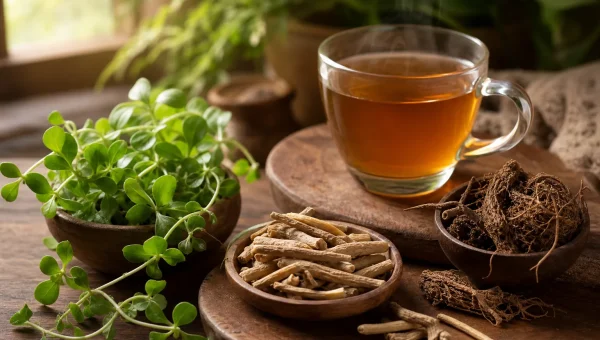
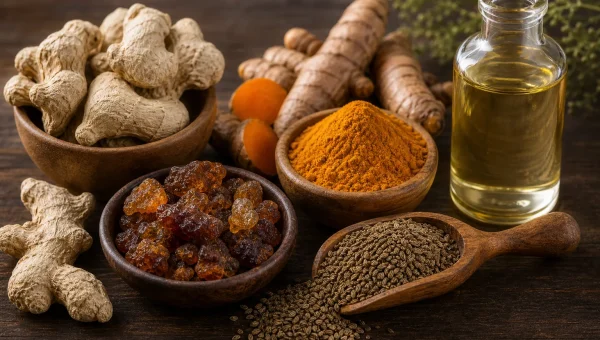
Useful herbs are selected according to the patient’s dosha, bowel pattern and strength. Amalaki is a key Pitta-pacifying rasayana traditionally used in sour burning conditions. Guduchi supports Pitta balance and digestion without excessive heat. Yashtimadhu is soothing for burning and throat irritation, but it should be avoided or used only under supervision in people with hypertension, kidney disease, low potassium, heart disease or diuretic use. Shatavari is cooling, nourishing and useful where dryness, burning and weakness coexist. Draksha, Dhanyaka and Usheera are gentle cooling supports. Musta can help when indigestion, nausea and Pitta-Kapha features are present. Patola and Nimba may be used in selected Pitta-Kapha cases, but bitter herbs should be prescribed carefully in thin, dry or Vata-dominant patients.
Diet & lifestyle
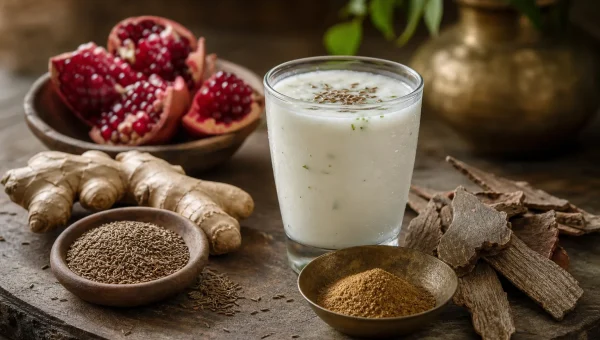
Favour freshly cooked, warm but not hot, mildly seasoned meals that are easy to digest. Old rice, wheat preparations, barley preparations, thin mung dal, bottle gourd, ash gourd, ridge gourd, tender coconut water, sweet pomegranate, soaked raisins, coriander water and small amounts of ghee may suit many Pitta-dominant patients. Eat at regular times, leave a gap of at least 2–3 hours before lying down, keep dinner light and elevate the head end of the bed if night reflux occurs. Avoid chilli, vinegar, pickles, deep-fried snacks, sour curd at night, fermented foods, excessive tomatoes, citrus during flare-ups, alcohol, smoking, carbonated drinks and late heavy meals. Do not overuse fasting; in Amlapitta, long empty gaps may aggravate burning in some people. Calm eating, slow chewing, regular sleep and reducing anger, hurry and screen use late at night are part of treatment, not optional extras.
Therapies & home remedies
The first therapy is nidana parivarjana: remove the foods, habits and medicines that are provoking the condition. Mild cases may benefit from simple measures such as coriander seed infusion, soaked black raisins, tender coconut water, small amounts of amla powder with honey if tolerated, or a cooling diet for a few days. Do not mix honey into hot water. A small cup of plain cool milk may temporarily ease burning in some people, but it is not suitable for everyone and may worsen heaviness, lactose intolerance or reflux when taken in excess. In clinical Ayurveda, shamana medicines are commonly used first. Classical cleansing therapies are not home remedies: Bhavaprakasha mentions Vamana for upward Amlapitta and Virechana for downward Pitta conditions, but these require careful assessment, preparation and supervision by a qualified physician. Rasaushadhi, bhasma and strong purgatives should never be self-prescribed for acidity.
What the research says
Modern clinical evidence for Ayurvedic management of acidity is promising but limited. A randomized double-blind placebo-controlled trial of Amla in adults with non-erosive reflux disease reported improvement in heartburn and regurgitation symptoms over four weeks, but larger independent trials are still needed. A randomized double-blind placebo-controlled study of a Glycyrrhiza glabra extract found benefit in functional dyspepsia symptoms; this supports possible digestive use of licorice preparations, but ordinary licorice can raise blood pressure and affect potassium in susceptible people. A small pilot randomized trial of Aloe vera syrup reported reduction in GERD symptoms and good tolerability, but it was not a large definitive Ayurveda trial. Conventional GERD guidelines also support practical measures such as avoiding meals close to bedtime, weight loss where appropriate and medical evaluation for alarm symptoms. Overall, herbs and diet can be useful supportive care, but persistent reflux, ulcer symptoms or alarm signs need diagnosis and evidence-based medical treatment.
When to see a doctor
- Chest pain, pressure, breathlessness, sweating or pain radiating to the arm, jaw or back; treat this as urgent until heart disease is ruled out.
- Difficulty swallowing, painful swallowing or food getting stuck.
- Vomiting blood, black tarry stools or unexplained anemia.
- Unintentional weight loss, persistent loss of appetite or progressive weakness.
- Repeated vomiting, dehydration or severe abdominal pain.
- New acidity after age 45–50, especially if persistent or worsening.
- Symptoms lasting more than two weeks despite diet correction, or frequent need for antacids or acid-suppressing medicines.
- Known ulcer disease, liver disease, kidney disease, pregnancy, breastfeeding or regular use of aspirin, NSAIDs, steroids, blood thinners or multiple medicines.
FAQ
Not exactly. Amlapitta is an Ayurvedic disease concept based on aggravated Pitta, disturbed Agni and sour irritating digestion. Acid reflux, GERD, gastritis and functional dyspepsia may overlap with Amlapitta symptoms, but a medical diagnosis is still important when symptoms are severe, persistent or unusual.
Lemon water is often promoted online, but in a Pitta-dominant Amlapitta flare it may aggravate sourness and burning in many people. Cooling, non-sour options such as coriander water, soaked raisins or tender coconut water are usually more suitable, though individual tolerance matters.
Cold or room-temperature milk may temporarily soothe burning for some people, but it is not a universal remedy. It may worsen heaviness, mucus, bloating, lactose intolerance or night reflux if taken in large amounts or close to sleep.
There is no single best medicine for everyone. Pitta-dominant, Kapha-associated and Vata-associated Amlapitta need different choices. Herbs such as Amalaki, Guduchi, Yashtimadhu and Shatavari are commonly considered, but dose, form and safety depend on the person. Mineral or herbo-mineral medicines should be used only under qualified supervision.
References
- Bhavaprakasha Samhita, Madhya Khanda, Dwitiya Bhaga, Chapter 10: Amlapitta-Shleshma-Pitta Adhikara. Sanskrit text available at Wikisource: https://sa.wikisource.org/wiki/भावप्रकाशः/मध्यखण्डे_द्वितीयो_भागः
- Charaka Samhita, Chikitsa Sthana, Chapter 15: Grahani Chikitsa, for the classical discussion of Jatharagni, Grahani and digestive impairment. Online reference: https://www.carakasamhitaonline.com/index.php/Grahani_Chikitsa
- Ayurvedic Pharmacopoeia of India, Part I, Government of India / Pharmacopoeia Commission for Indian Medicine & Homoeopathy, single-drug monographs for Ayurvedic raw drugs including Amalaki, Guduchi, Yashtimadhu and related herbs. Publication portal: https://pcimh.gov.in/show_content.php?lang=1&level=1&lid=54&ls_id=56
- Varnosfaderani SK, Hashem-Dabaghian F, Amin G, et al. “Efficacy and safety of Amla (Phyllanthus emblica L.) in non-erosive reflux disease: a double-blind, randomized, placebo-controlled clinical trial.” Journal of Integrative Medicine. 2018;16(2):126–131. https://pubmed.ncbi.nlm.nih.gov/29526236/
- Raveendra KR, Jayachandra, Srinivasa V, et al. “An Extract of Glycyrrhiza glabra (GutGard) Alleviates Symptoms of Functional Dyspepsia: A Randomized, Double-Blind, Placebo-Controlled Study.” Evidence-Based Complementary and Alternative Medicine. 2012;2012:216970. https://pubmed.ncbi.nlm.nih.gov/21747893/
- Panahi Y, Khedmat H, Valizadegan G, Mohtashami R, Sahebkar A. “Efficacy and safety of Aloe vera syrup for the treatment of gastroesophageal reflux disease: a pilot randomized positive-controlled trial.” Journal of Traditional Chinese Medicine. 2015;35(6):632–636. https://pubmed.ncbi.nlm.nih.gov/26742306/
The Amlapitta breakdown here is clear, especially how pitta can be the main driver while kapha or vata shape the symptoms. That makes the burning and sour belching feel more specific than just calling everything acidity.
nice to see the diet and sleep part getting as much attention as the herbs. regular meals and not lying down right after eating are the kinds of changes people can actually stick with.
How do practitioners decide between shamana and something like virechana when nausea and heaviness are part of the picture? Seems like bowel pattern and overall strength would matter a lot.
curious about the herb list, especially amalaki and yashtimadhu. Are they usually picked based on the dominant dosha, or do they get swapped around depending on whether the person has more gas, burning, or throat irritation?
The traditional framing is interesting, but I’d still want better human data than the small study sizes a lot of herbal articles end up relying on. For something that can overlap with GERD or an ulcer, supervised use seems more practical than self dosing at home.