
At a glance
| Ayurvedic name | Grahani roga / Grahani dosha; IBS is a modern functional bowel disorder and is only broadly correlated, not identical |
| Primary dosha(s) | Vata with Agni mandya; Pitta or Kapha may dominate according to stool pattern, burning, mucus, heaviness, and appetite |
| Affected system / srotas | Annavaha srotas and Purishavaha srotas, with Grahani, Jatharagni, Apana Vata, Samana Vata, Pachaka Pitta, and Ama involvement |
| Key herbs | Bilva, Kutaja, Musta, Shunthi / Nagara, Pippali, Dadima, Jeeraka, Ajwain, Hing, Haritaki when indicated |
| Supportive therapies | Pathya diet, takra preparations, warm water, gentle yoga, breathing practices, stress regulation, and physician-guided Panchakarma such as basti only when appropriate |
Overview
Irritable Bowel Syndrome (IBS) is a chronic disorder of gut function in which abdominal pain, bloating, gas, constipation, diarrhoea, or alternating bowel habits occur without a single structural disease explaining all symptoms. In Ayurveda, many IBS-like patterns are clinically understood through the lens of Grahani roga, a disorder of the digestive holding-and-processing function associated with weakened or irregular Agni. The aim of Ayurvedic management is not merely to suppress diarrhoea or constipation, but to restore digestive steadiness, reduce Ama, regulate Vata, and rebuild tolerance to food and routine.
The Ayurvedic view
Classical Ayurveda describes Grahani as the seat of Jatharagni, situated above the umbilical region, which holds food until it is properly digested and then releases it onward. When Agni becomes weak or irregular, incompletely digested food and vitiated doshas disturb this function, leading to stools that may be loose, constipated, mixed with undigested material, associated with bloating, pain, sour belching, heaviness, or variable appetite. The main samprapti begins with unsuitable food, irregular eating, stress, urge suppression, excessive dryness or heaviness in diet, and disturbed Samana and Apana Vata. Vishamagni produces alternating symptoms, Mandagni produces heaviness and mucus, and aggravated Pachaka Pitta may produce burning, sourness, urgency, and loose stools. This is why IBS-D, IBS-C, and mixed IBS may require different Ayurvedic approaches.
Causes & triggers
- Eating before the previous meal is digested, skipping meals, late-night meals, overeating, or constantly grazing.
- Excess cold, dry, raw, fried, heavy, stale, reheated, very spicy, sour, or processed foods according to individual tolerance.
- Stress, anxiety, poor sleep, irregular work hours, excessive travel, and mental overactivity, all of which aggravate Vata and the gut–brain axis.
- Suppression of natural urges, especially flatus and stool, disturbing Apana Vata.
- Post-infectious weakness of digestion after gastroenteritis, repeated antibiotics, or prolonged diarrhoea.
- Food intolerances such as lactose, excess wheat, certain pulses, onion, garlic, high-FODMAP foods, caffeine, alcohol, artificial sweeteners, or very high-fibre foods in sensitive people.
Symptoms & dosha types
Vata-dominant Grahani often resembles IBS with gas, distension, cramping pain, constipation or alternating stools, incomplete evacuation, dryness, variable appetite, anxiety, and symptoms that worsen with irregular meals or travel. Pitta-dominant Grahani presents with loose stools, urgency, burning, sour belching, acidity, thirst, irritability, yellowish stools, and sensitivity to spicy, sour, fermented, fried, or alcohol-containing foods. Kapha-dominant Grahani shows heaviness, nausea, sluggish digestion, mucus in stool, coating on the tongue, lethargy, poor appetite, and worsening after heavy, cold, oily, sweet, or dairy-rich foods. Sannipataja or mixed patterns include features of all three doshas and usually need careful physician-led treatment rather than self-medication.
Recommended herbs
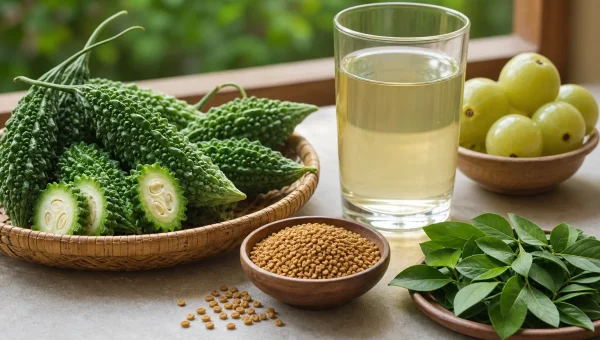
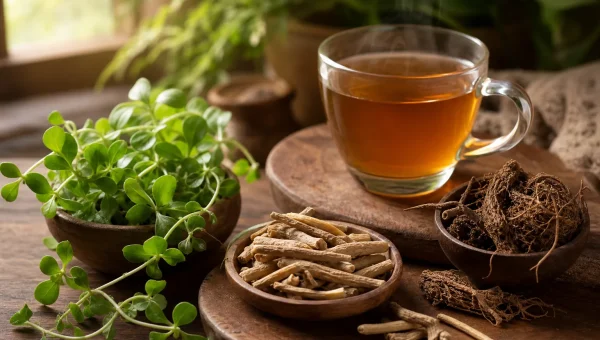
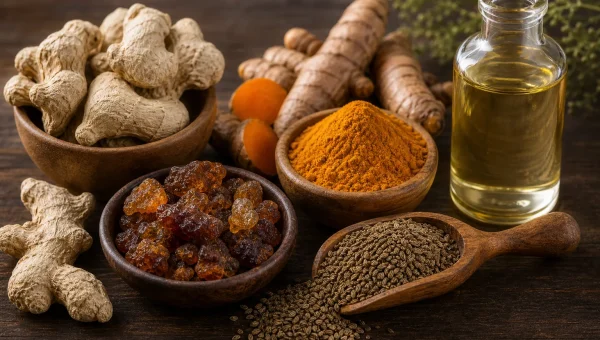
Commonly used herbs include Bilva for loose stools and weak intestinal tone, Kutaja for diarrhoeal and mucus-predominant patterns, Musta for impaired digestion with Ama and Pitta-Kapha involvement, Shunthi or Nagara for Vata-Kapha bloating and cold digestion, Pippali for deepana and Vata-Kapha regulation when tolerated, Dadima for appetite and mild grahi support, Jeeraka, Ajwain, and Hing for gas and Apana Vata regulation, and Haritaki for constipation-predominant patterns when properly selected. These herbs are not interchangeable: for example, hot pungent herbs may worsen burning or acidity, while astringent grahi herbs may aggravate constipation if used wrongly. Classical formulations such as Kutajarishta, Bilvadi preparations, Dadimashtaka churna, Hingvashtaka churna, Takrarishta, or buttermilk-based regimens should be chosen by a qualified Ayurvedic physician according to dosha, stool pattern, strength, age, and associated conditions.
Diet & lifestyle
Favour warm, freshly cooked, simple meals taken at regular times. During flare-ups, many people tolerate soft rice, moong dal, thin khichadi, vegetable soups, lightly spiced cumin-coriander-fennel water, pomegranate, cooked carrots, bottle gourd, ridge gourd, and small amounts of ghee if digestion allows. In diarrhoea-predominant patterns, freshly prepared takra with roasted cumin may be useful if dairy is tolerated; in constipation-predominant patterns, adequate warm fluids, cooked vegetables, gentle oiling, and soluble fibre may be more suitable. Avoid overeating, iced drinks, incompatible food combinations, excess caffeine, alcohol, carbonated drinks, artificial sweeteners such as sorbitol, deep-fried snacks, very spicy foods, and personal trigger foods. Eat slowly, avoid lying down immediately after meals, keep a food-and-stool diary, sleep on time, walk after meals, and practise daily stress regulation because IBS often worsens when the nervous system is over-aroused.
Therapies & home remedies
Useful home support includes sipping warm water, taking a light dinner, using freshly roasted cumin and fennel in food, and drinking a mild cumin-coriander-fennel infusion after meals if tolerated. For gas, a small pinch of hing in warm food may help some Vata-Kapha constitutions, but it may irritate Pitta-sensitive people. Fresh buttermilk diluted with water and churned well, with roasted cumin and a little rock salt, is a traditional Grahani support when there is no lactose intolerance, active acidity, severe diarrhoea, or infection. Gentle yoga postures, diaphragmatic breathing, anuloma-viloma, short walks, and abdominal relaxation practices can reduce Vata aggravation and stress-related flares. Strong purgation, emesis, frequent detoxes, castor oil, high-dose triphala, or unsupervised Panchakarma should be avoided in IBS because they may worsen dehydration, cramping, diarrhoea, or weakness.
What the research says
Modern research supports IBS as a disorder of gut–brain interaction, diagnosed by recurrent abdominal pain associated with changes in stool frequency or form, after appropriate assessment and absence of alarm features. Evidence is strongest for individualized dietary management, a limited trial of a low-FODMAP diet under guidance, soluble fibre in suitable patients, gut-directed psychological therapies, and peppermint oil for short-term relief of global IBS symptoms and abdominal pain. Probiotic evidence is mixed: some strains may help some patients, but results are inconsistent and strain-specific. Evidence for classical Ayurvedic treatment in IBS is much more limited. One older randomized trial of an Ayurvedic compound preparation containing Aegle marmelos and Bacopa monnieri reported benefit, especially in diarrhoea-predominant IBS, but relapse prevention was not better than placebo in longer follow-up; this is not enough to prove broad effectiveness of all Ayurvedic remedies. Curcumin and turmeric studies in IBS show possible but inconsistent benefit, and meta-analyses do not establish a strong, definitive effect. Therefore, Ayurveda should be used as individualized, professionally supervised care, integrated with appropriate medical diagnosis, rather than as a replacement for evaluation of persistent bowel symptoms.
When to see a doctor
- Blood in stool, black stools, persistent rectal bleeding, or unexplained anaemia.
- Unintentional weight loss, fever, persistent vomiting, severe dehydration, or progressive weakness.
- New bowel symptoms after age 50 to 60, or a sudden major change in bowel habit.
- Night-time diarrhoea that wakes you from sleep, severe pain, or pain that does not improve after passing stool or gas.
- Family history of colorectal cancer, ovarian cancer, inflammatory bowel disease, or coeliac disease.
- Persistent diarrhoea after travel, suspected infection, recent antibiotic use, or symptoms after starting a new medicine.
- Pregnancy, breastfeeding, chronic liver or kidney disease, diabetes, autoimmune disease, or use of blood thinners, steroids, immunosuppressants, or multiple medications.
FAQ
No. IBS is a modern diagnosis based on gut–brain interaction and bowel-pattern criteria. Grahani roga is an Ayurvedic disease concept centred on disturbed Agni and Grahani function. They overlap clinically in many cases, but they are not exactly the same.
Some people improve greatly with individualized Ayurvedic diet, herbs, routine, stress management, and correction of Agni, but IBS is often relapsing and trigger-sensitive. A trustworthy goal is long-term control, fewer flare-ups, better digestion, and early recognition of triggers rather than a guaranteed permanent cure.
There is no single best herb for every IBS patient. Loose stools with mucus may require grahi herbs such as Bilva or Kutaja; gas and constipation may need Vata-anulomana and mild deepana support; burning and urgency require Pitta-calming choices. Wrong herb selection can worsen symptoms.
Takra is classically valued in Grahani-style digestive weakness, especially when properly prepared and spiced for the dosha. However, it is not suitable for everyone. People with lactose intolerance, milk allergy, active acidity, severe diarrhoea, or clear dairy-triggered bloating should avoid it or use alternatives under guidance.
References
- Charaka Samhita, Chikitsa Sthana, Chapter 15, Grahani Chikitsa / Grahani Dosha Chikitsa. Charak Samhita Online: https://www.carakasamhitaonline.com/index.php/Grahani_Chikitsa
- Charaka Samhita, Chikitsa Sthana, Chapter 14, Arsha Chikitsa, verses discussing the relationship of Arsha, Atisara, Grahani and Agni-bala.
- Ashtanga Hridaya, Nidana Sthana, Chapter 8, Atisara-Grahani Dosha Nidana.
- The Ayurvedic Pharmacopoeia of India, Part I, Volume I, Government of India, monographs including Bilva and Kutaja: https://www.ayurveda.hu/api/API-Vol-1.pdf
- The Ayurvedic Pharmacopoeia of India, Part I, Volume III, Government of India, monograph including Musta: https://www.ayurveda.hu/api/API-Vol-3.pdf
- The Ayurvedic Pharmacopoeia of India, Part I, Volume IV, Government of India, monograph including Pippali: https://www.ayurveda.hu/api/API-Vol-4.pdf
- Rome Foundation. Rome IV Diagnostic Criteria for Irritable Bowel Syndrome: https://theromefoundation.org/rome-iv/rome-iv-criteria/
- Lacy BE, Pimentel M, Brenner DM, Chey WD, Keefer LA, Long MD, Moshiree B. ACG Clinical Guideline: Management of Irritable Bowel Syndrome. American Journal of Gastroenterology. 2021;116(1):17-44. https://pubmed.ncbi.nlm.nih.gov/33315591/
- National Institute for Health and Care Excellence (NICE). Irritable bowel syndrome in adults: diagnosis and management, CG61: https://www.nice.org.uk/guidance/cg61/chapter/1-recommendations
- Alammar N, Wang L, Saberi B, et al. The impact of peppermint oil on the irritable bowel syndrome: a meta-analysis of the pooled clinical data. BMC Complementary and Alternative Medicine. 2019;19:21. https://pmc.ncbi.nlm.nih.gov/articles/PMC6337770/
- Ng QX, Soh AYS, Loke W, Lim DY, Yeo WS. A Meta-Analysis of the Clinical Use of Curcumin for Irritable Bowel Syndrome. Journal of Clinical Medicine. 2018;7(10):298. https://pmc.ncbi.nlm.nih.gov/articles/PMC6210149/
- Yadav SK, Jain AK, Tripathi SN, Gupta JP. Irritable bowel syndrome: therapeutic evaluation of indigenous drugs. Indian Journal of Medical Research. 1989;90:496-503. PubMed PMID: 2697693. https://pubmed.ncbi.nlm.nih.gov/2697693/
The distinction between Grahani roga and IBS being broadly related but not identical was the clearest part for me.
The Vata, Pitta, and Kapha breakdown makes the stool pattern, mucus, heaviness, and appetite changes much easier to follow.
Nice to see the focus on Agni and pathya instead of just chasing diarrhea or constipation.
The herb list felt practical, especially how Bilva, Kutaja, and Musta are matched to different patterns.
warm water and gentle yoga together seem like a realistic starting point for a gut that reacts to stress.
The reminder that basti and other Panchakarma steps should stay physician guided felt sensible for a chronic digestive issue.
Urge suppression and irregular meals get overlooked a lot, so that section stood out.
How does a practitioner tell whether alternating stools are mostly Vata or if Pitta is getting mixed in too?
Would takra preparations still be appropriate for someone who is lactose sensitive, or does that depend on the recipe?
Curious how you tell the difference between Ama related bloating and a plain food intolerance when the symptoms overlap.
How long would a diet reset usually stay in place before the herb choices get adjusted?
The herbal suggestions are interesting, but I would want to see more human study data before treating them as dependable IBS options.
A lot of this seems very individualized, which makes me wonder how practical it is for someone trying to manage symptoms at home.
Hot pungent herbs like Pippali and Hing can be tricky when burning or acidity is already present, so the safety and dosing details matter a lot.